
Trolley
You have no items in your shopping cart

 Budgets
 Dumbers
 Discs
Discs
 Benches
 Racks and Rigs
 Weights Holders
 Isotonic machines
 Calisthenics
 Cardio
 Kettlebells
 Flooring
 Gym Set
 Accessories
 Combat
 ARTI MARZIALI
 CONTAINER GYM
 Tug-Of-War
 Used Gym Equipment
 PILATES MACCHINARI
 GINNASTICA ARTISTICA
 CAMPI DA PADEL
 Prodotti in Pronta Consegna
 Informazioni
 IRONMAN
 Gift Card
- Donatif
- General information
- 0 I like it
- 719 Views
- 0 comments
- gym flooring, safety flooring, gym safety, shock-absorbing materials
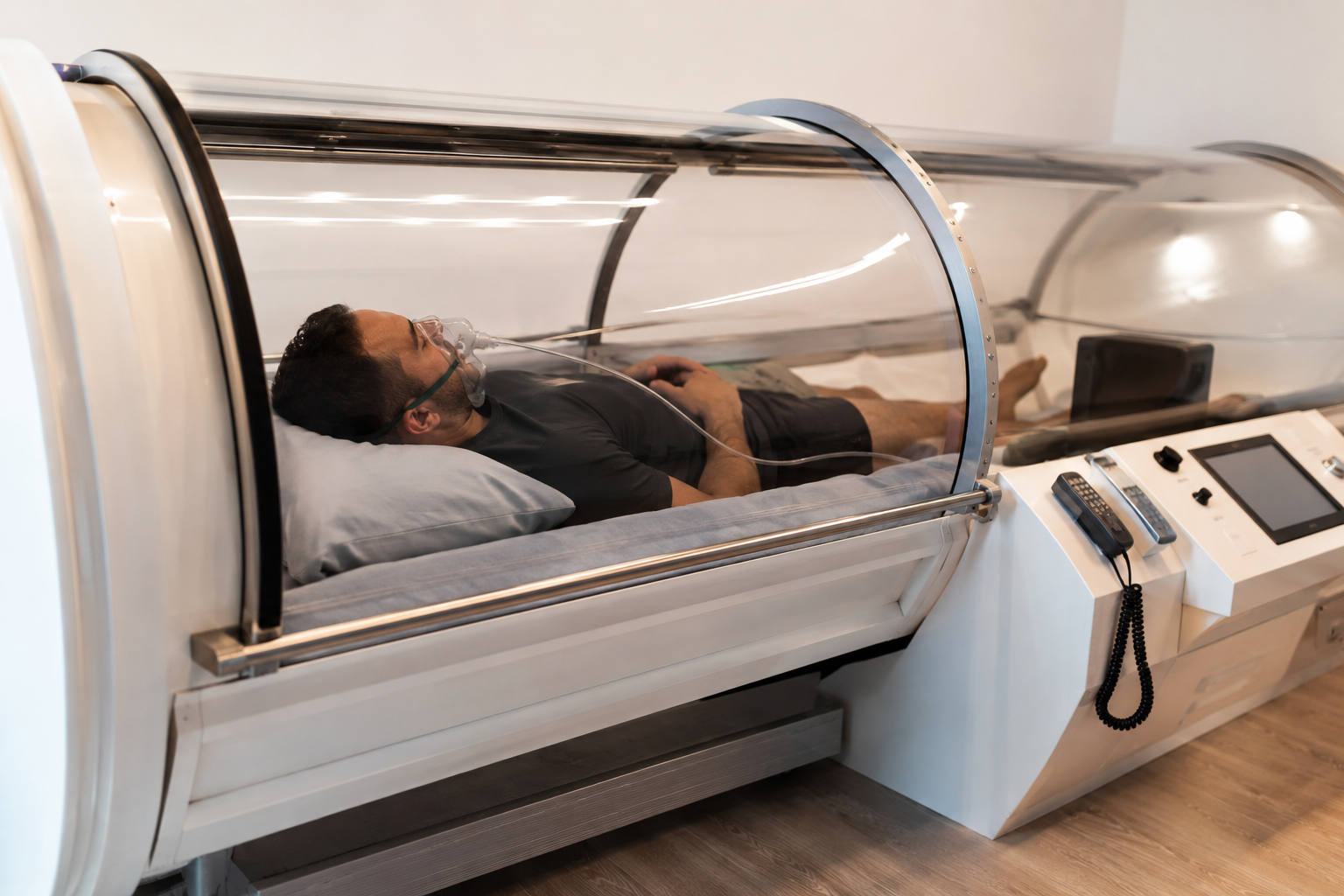
Oxygen Analyzers: calibration and precision for hypoxic chamber safety
In a professional hypoxic system, knowing precisely what oxygen concentration is actually present in the environment represents one of the most important aspects for ensuring safety, reliability, and service quality. A hypoxia generator may be designed to produce a specific percentage of oxygen, but without independent verification, it is impossible to be certain that the value reached corresponds exactly to the set parameter.
Oxygen analyzers perform exactly this function: they measure the real O2 concentration present in the chamber and allow for the validation of the correct operation of the entire system. This verification takes on particular importance in professional facilities, where athletes rely on precise protocols and where every session must be repeatable over time.
The choice of reliable and correctly calibrated oxygen sensors for hypoxic chambers allows for the transformation of a theoretical figure into a concrete measurement. The difference between a truly controlled environment and a simple setting on a display depends on the quality of the instruments used to verify the most important parameter of hypoxia: oxygen concentration.
Role of oxygen analyzers in hypoxic chambers
A professional hypoxic chamber is an environment in which atmospheric parameters are modified and maintained within defined values. The generator has the task of producing air with a reduced oxygen concentration compared to the normal environment, but the process cannot be considered complete without precise verification of the result.
The oxygen analyzer represents the instrument that allows for checking the actual value present inside the chamber. This means having an independent reference compared to the production system, useful for confirming that the plant is working correctly.
In a professional context, this double verification increases the level of system reliability. The generator produces, while the analyzer measures: two different functions that together allow for safer and more precise management of the hypoxic environment.
Checking the real oxygen value
When a protocol involves working at a certain oxygen percentage, the set value must correspond to the condition actually present. An analyzer allows for verifying this correspondence and identifying any differences.
Independent measurement thus becomes a fundamental tool for maintaining high technical standards.
Difference between generation and measurement
The generator and the analyzer perform complementary but different roles. The former modifies the environment, the latter checks the result obtained.
This separation of functions allows for reducing the risk of relying exclusively on the internal control system.
Why independent measurement is fundamental
Relying solely on the value displayed by the internal control system may not be sufficient in an environment where precision is an essential requirement. Every electronic component or sensor can, in fact, undergo variations over time that influence the quality of the measurement.
An independent analyzer allows for performing an external check and confirming that the data produced by the system is consistent with the environmental reality. This approach is particularly important in facilities that use the hypoxic chamber intensively.
The ability to validate the oxygen level increases the confidence of operators and users, creating a more controlled and professional environment.
Validation of generator performance
The generator represents the operational heart of the plant, but its effectiveness must be verified. An analyzer allows for confirming that the device is actually producing the expected oxygen level.
This verification helps to identify any performance variations before they can affect the service offered.
Importance for professional sports centers
For a gym or fitness center that offers hypoxic training, the quality of control represents a distinctive element. Users who choose an advanced service expect precision and reliability.
The use of adequate measurement tools contributes to building greater trust in the proposed program.
O2 analyzer calibration and system precision
The precision of an analyzer also depends on the correct calibration of the instrument. Over time, sensors can slightly change their behavior and require an adjustment procedure to maintain reliable values.
O2 analyzer calibration therefore represents a fundamental practice in the technical management of a hypoxic chamber. Through periodic procedures, it is possible to keep the instrument aligned with known references.
An uncalibrated analyzer may continue to show apparently normal values, but progressively lose accuracy. For this reason, preventive maintenance is more effective than simple correction after problems appear.
When to perform calibration
The frequency of calibration depends on the use of the system, the characteristics of the sensor, and the manufacturer's technical instructions. Systems used daily generally require more regular checks.
A scheduled plan allows for maintaining consistent measurement quality.
Advantages of periodic calibration
Correct calibration allows for reducing reading errors and improving the consistency of the collected data. This aspect is fundamental for those who use hypoxia as a scientifically controlled training tool.
Precision thus becomes a daily operational element and not just a theoretical requirement.
Electrochemical oxygen sensors and reliability
Many analyzers use sensors specifically designed for detecting oxygen concentration. Among these technologies, electrochemical oxygen sensors represent a solution used in numerous monitoring systems thanks to their ability to provide dedicated measurements.
The quality of the sensor directly influences the precision of the analyzer. Materials, internal design, and operating conditions determine the stability of the detection over time.
Like any technical component, the sensor also requires checks and replacements when it reaches the limit of its operational life.
Sensor service life
Sensors do not necessarily maintain the same performance forever. Over time, variations can occur that influence the precision of the data.
Knowing the status of the sensor allows for intervention before the quality of the measurement is compromised.
Signs of a sensor needing verification
Abnormal variations in values, difficulty in calibration, or differences compared to other control instruments may indicate the need for a check.
Careful monitoring allows for maintaining a high level of system reliability.
Hypoxic chamber safety and parameter control
The safety of a hypoxic chamber depends on the ability to precisely control internal conditions. Oxygen concentration represents the main parameter, but its value must always be verified through reliable instruments.
Professional management involves procedures for control, maintenance, and periodic verification of the instruments used. The goal is to reduce the margin of error and create a predictable environment for users.
Oxygen analyzers contribute precisely to this process, offering an independent reference on the quality of the system.
Reduction of operational risk
Accurate control of parameters allows for identifying any anomalies more quickly and intervening in a timely manner.
Prevention represents a fundamental element in the management of facilities that use advanced hypoxic technologies.
Professional standards and reliability
Using adequate verification tools demonstrates attention to the quality of service and the safety of users.
This approach strengthens the professionalism of the center and the trust of the athletes.
How to evaluate a professional analyzer
The choice of an oxygen analyzer must consider several technical aspects. Precision, sensor reliability, calibration capability, and ease of maintenance are fundamental elements for professional use.
Not all instruments on the market are designed for the same level of demand. A sports center that uses a hypoxic chamber must prioritize solutions designed for constant and verifiable measurements.
The quality of the instrument represents an investment in safety and service continuity.
Precision and repeatability of measurement
A good analyzer must provide consistent values over time. Repeatability allows for comparing different sessions and maintaining more scientific training management.
Data stability is therefore as important as the precision of a single reading.
Device support and management
The availability of technical support and clear maintenance procedures contributes to keeping the system efficient.
A professional device must be simple to check and integrate into the facility's operational routine.
Investment in monitoring precision
In a professional hypoxic chamber, the difference between a theoretical value and a truly verified value can influence the entire quality of the service. A setting on the display is not enough: what matters is knowing that the parameter present in the environment actually corresponds to the one expected.
Investing in reliable analyzers, calibration procedures, and quality sensors means creating a more solid technical foundation for controlled altitude training. Precision becomes a tool to improve safety, repeatability, and professionalism.
For gym owners, fitness centers, and specialized operators, independent oxygen monitoring represents a strategic element. An effective hypoxic system does not depend solely on the ability to generate a certain condition, but on the possibility of demonstrating that that condition is actually present and stable.
Technical quality as a service value
The choice of professional measurement tools communicates attention to every detail of the experience offered. Technology becomes a concrete element of reliability for operators and users.
Precise control allows for better leveraging the entire investment in the hypoxic plant.
Precision as the basis of safety
Safety arises from knowledge of the actual conditions of the environment. Analyzing, verifying, and keeping parameters precise represents the foundation of responsible hypoxia management.
The quality of monitoring determines the quality of the entire system.
Comments (0)