
Trolley
You have no items in your shopping cart

 Budgets
 Dumbers
 Discs
Discs
 Benches
 Racks and Rigs
 Weights Holders
 Isotonic machines
 Calisthenics
 Cardio
 Kettlebells
 Flooring
 Gym Set
 Accessories
 Combat
 ARTI MARZIALI
 CONTAINER GYM
 Tug-Of-War
 Used Gym Equipment
 PILATES MACCHINARI
 GINNASTICA ARTISTICA
 CAMPI DA PADEL
 Prodotti in Pronta Consegna
 Informazioni
 IRONMAN
 Gift Card
- Donatif
- General information
- 0 I like it
- 21 Views
- 0 comments
- gym flooring, safety flooring, gym safety, shock-absorbing materials
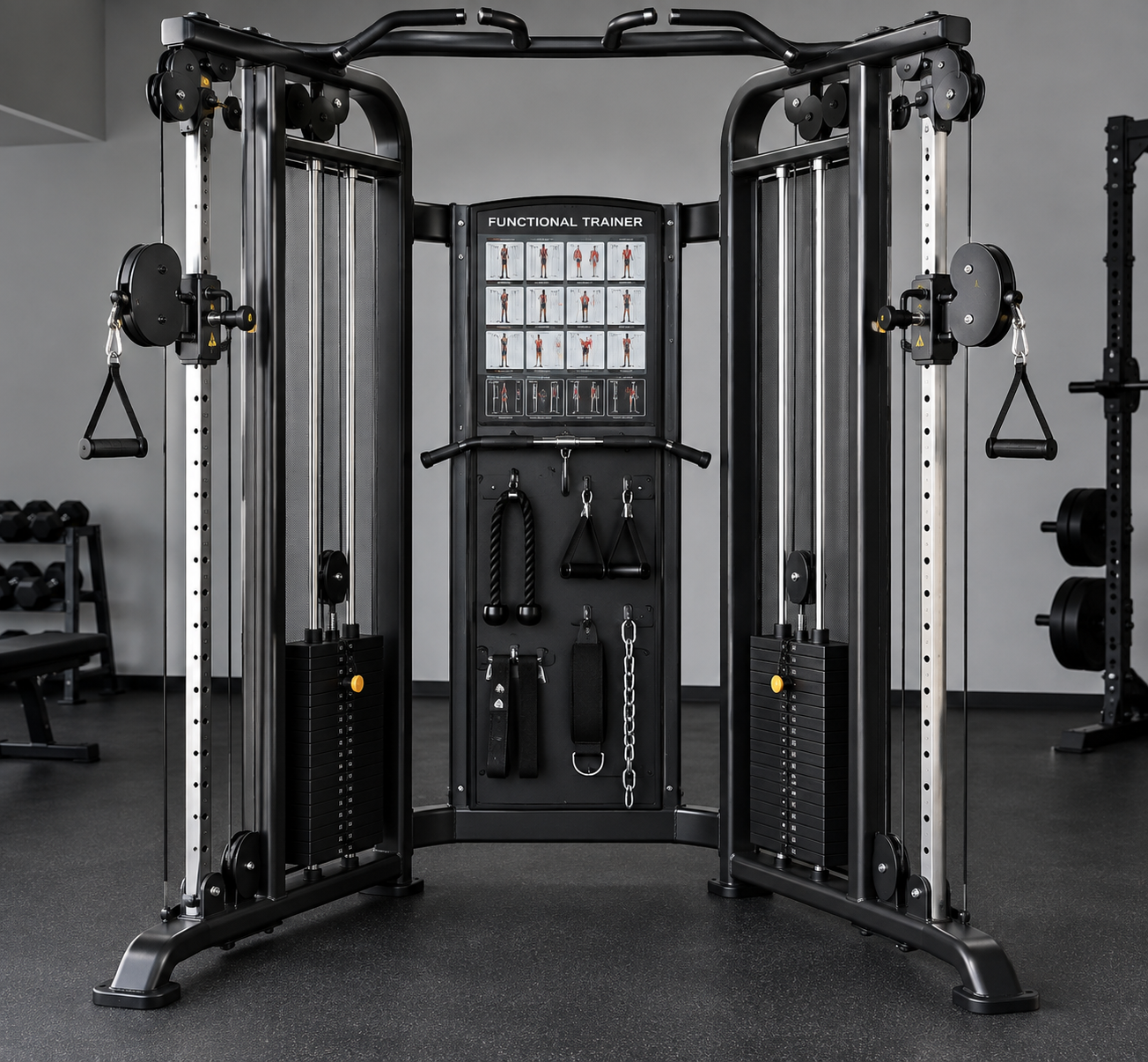
Functional trainer safety: worn cables and incorrect setup
A functional trainer is designed to offer high versatility thanks to the adjustable pulley system and numerous available accessories. To keep the machine safe and efficient, it is essential to periodically check the condition of the cables, verify the correct setup of the pulleys, and use the equipment following the manufacturer's instructions.
Many operational issues do not depend on machine defects but on incorrect adjustments, components subject to wear, or maintenance checks performed with poor regularity. A simple verification procedure before training helps reduce these risks and maintain a consistent quality of movement.
For gyms, personal training studios, and fitness centers, it is therefore useful to adopt verifiable technical criteria that allow timely identification of any anomalies and intervention before they compromise equipment safety.
- Quick answer
- What are the main risks
- Which requirements improve safety
- Checks before use
- How to verify the correct setup
- Errors to avoid
- Why invest in preventive maintenance
How to use the functional trainer safely
To use a functional trainer safely, it is necessary to periodically check the condition of the cables, inspect pulleys, adjustment systems, and accessories, correctly set up the machine, and follow the manufacturer's instructions. Every check should be carried out before training and integrated into a preventive maintenance program.
A correctly adjusted machine ensures smoother movements and allows for greater continuity during the session.
Before modifying the load or the position of the pulleys, it is advisable to verify that all locking systems are properly engaged.
Decision criteria
The main criteria concern the condition of the cables, the correct functioning of the pulleys, the adjustment of the columns, the integrity of the accessories, the stability of the structure, and the correct selection of the weight stack.
Technical references
Control operations must follow the instructions given in the manufacturer's manual. For fitness equipment, the standards of the EN ISO 20957 series can also represent a reference when applicable.
What are the main risks
One of the most common risks is represented by the use of cables that show signs of wear, coating deformations, or anomalies in sliding on the pulleys. Even an incorrect setup of the adjustable columns can compromise the quality of movement and increase component wear.
Additional critical issues can arise from accessories not fixed correctly, weight stack selectors inserted incompletely, or adjustments made during exercise without interrupting the movement.
The presence of anomalous noises, unusual friction, or irregular sliding represents a signal that requires a check before continuing the workout.
Worn cables
Damaged coating, visible metal wires, or irregular sliding constitute signs to be checked following the procedures provided by the manufacturer.
Incorrect setup
An inconsistent adjustment of the pulleys or accessories can limit the fluidity of the movement and reduce the functionality of the machine.
Which requirements improve safety
A stable structure, a fluid pulley system, and components kept in good condition form the basis for the correct use of the functional trainer. The availability of accessories compatible with the machine also contributes to preserving its operation.
It is advisable to exclusively use accessories provided by the manufacturer or declared compatible with the technical characteristics of the machine.
Scheduled maintenance allows for the early identification of any anomalies and reduces the risk of equipment downtime.
Main components
Cables, pulleys, adjustment systems, carabiners, handles, and weight stack selectors should be checked regularly.
Compatible accessories
The use of accessories designed for the machine helps maintain the correct functioning of the traction system.
Checks before use
Before each session, it is useful to visually check the condition of the cables, verify that the pulleys rotate regularly, and ensure that the accessories are fixed correctly.
It is also necessary to verify the position of the adjustable columns, the correct insertion of the weight stack selector, and the absence of obstacles in the operating area.
A brief daily checklist helps maintain high safety standards and continuity of use.
Cable check
It is advisable to check the integrity of the coating, regularity of sliding, and absence of visible deformations along the entire length of the cable.
Pulley check
The pulleys should rotate freely without anomalous friction, unusual noises, or excessive play.
How to verify the correct setup
The machine setup should be adapted to the planned exercise before starting the set. The pulleys must be positioned symmetrically when required by the training program, and the accessories must be completely secured.
Load selection should be carried out with the machine in the resting position, avoiding modifications during the execution of the exercise.
Every adjustment should be verified with a short test movement before starting the full set.
Initial adjustments
Checking the position of the pulleys, the fastening of accessories, and the selection of the load reduces the possibility of errors during training.
Movement verification
A test movement allows you to confirm the correct configuration of the machine before actual use.
Errors to avoid
One of the most frequent errors consists of using the functional trainer without checking the condition of the cables or modifying the setup during exercise. Neglecting periodic checks on the pulleys and adjustment systems can also compromise the correct functioning of the machine.
It is also appropriate to avoid the use of incompatible accessories and to postpone the replacement of components that show evident signs of wear.
The quality of the installation area also contributes to overall safety. An anti-shock flooring protects the floor and improves the stability of the workstation. To explore available solutions, you can consult gym anti-shock flooring.
Irregular checks
Performing checks only when a problem arises reduces the effectiveness of preventive maintenance.
Unsuitable accessories
Incompatible accessories can affect the correct functioning of the traction system and increase component wear.
Why invest in preventive maintenance
Scheduled maintenance allows you to keep the functional trainer efficient over time, reduce service interruptions, and offer users equipment that is always ready for use.
For gyms and personal training studios, it also represents a useful tool for planning technical interventions, monitoring component wear, and organizing the preventive replacement of parts subject to consumption.
Following the manufacturer's instructions, recording the checks performed, and periodically checking cables, pulleys, accessories, and adjustment systems is the most effective method to preserve reliability, safety, and operational continuity of the machine.
Comments (0)