
Trolley
You have no items in your shopping cart

 Budgets
 Dumbers
 Discs
Discs
 Benches
 Racks and Rigs
 Weights Holders
 Isotonic machines
 Calisthenics
 Cardio
 Kettlebells
 Flooring
 Gym Set
 Accessories
 Combat
 ARTI MARZIALI
 CONTAINER GYM
 Tug-Of-War
 Used Gym Equipment
 PILATES MACCHINARI
 GINNASTICA ARTISTICA
 CAMPI DA PADEL
 Prodotti in Pronta Consegna
 Informazioni
 IRONMAN
 Gift Card
- Donatif
- General information
- 0 I like it
- 9 Views
- 0 comments
- gym flooring, safety flooring, gym safety, shock-absorbing materials
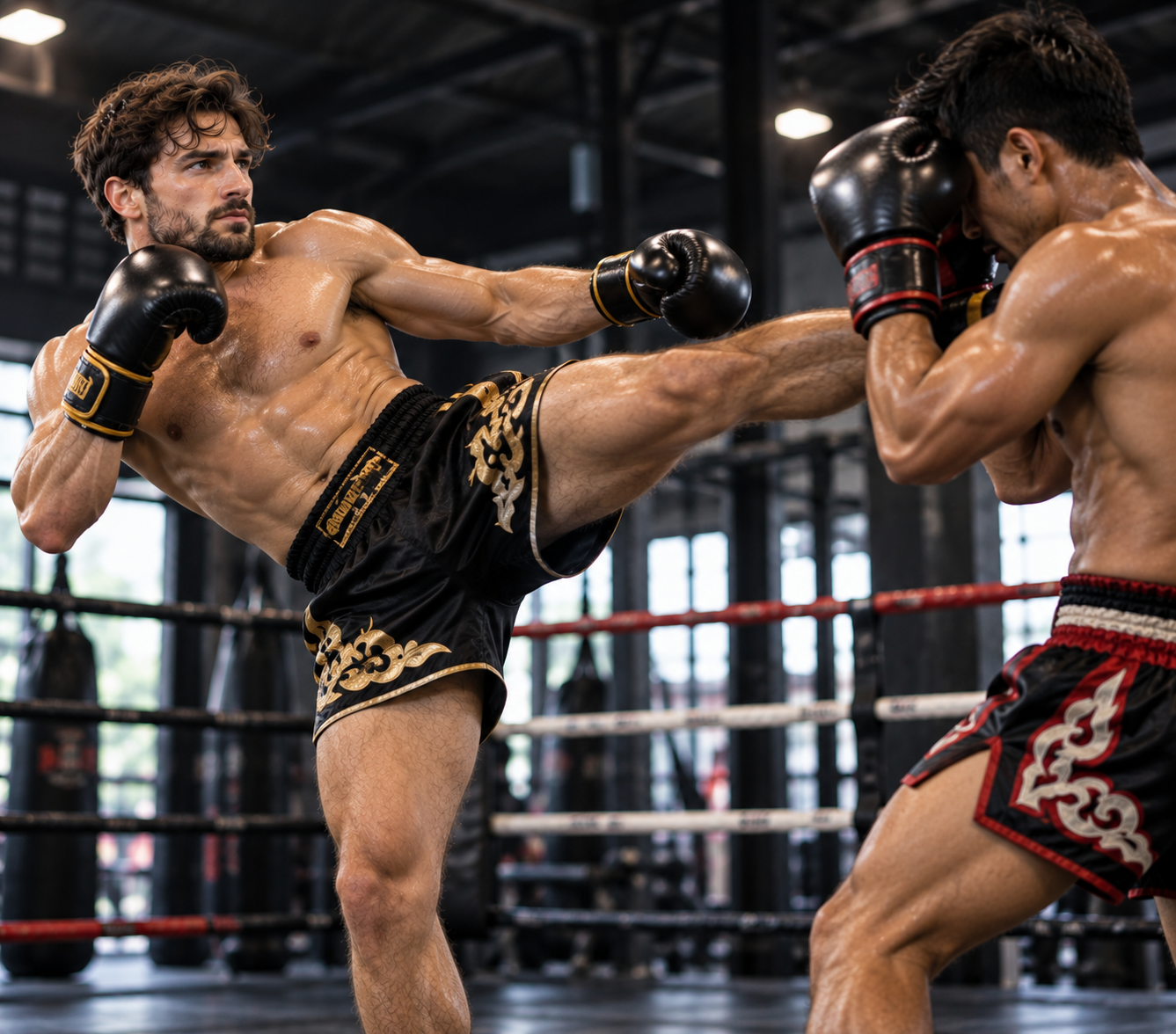
Muay Thai Equipment Safety: How to Recognize Unsuitable Gear and Worn Equipment
Safe Muay Thai equipment means using protections in good condition, properly maintained gear, and materials suited to the training level. Periodically checking the condition of gloves, heavy bags, pads, and training surfaces helps reduce risks associated with wear and guarantees more reliable conditions during every session.
Over time, any equipment is subject to deterioration. Frequent use, sweat, moisture, repeated impacts, and insufficient maintenance can compromise materials, padding, and fastening systems. For this reason, safety does not depend exclusively on the initial quality of the product, but also on its proper management.
Both practitioners and gym managers should adopt simple yet systematic checks before use. Promptly identifying signs of wear allows for scheduling repairs or replacements, preventing minor defects from turning into major issues.
- Quick answer
- What are the main risks
- Equipment safety requirements
- Pre-use checks
- Equipment maintenance
- Common mistakes
- Planning replacements and investments
How to quickly check equipment safety?
Before each training session, it is advisable to check the condition of surfaces, seams, padding, closures, and fastening systems. Any damaged, deformed, or unstable component should be excluded from use until repaired or replaced.
For shared equipment, it is useful to set up documented periodic checks, while each practitioner should regularly inspect their own personal gear.
A simple yet consistent procedure helps maintain high safety standards without interrupting the gym's activities.
Checking personal equipment
Gloves, handwraps, mouthguards, and protections must be kept clean, dry, and free of obvious damage that could compromise their proper use.
Checking gym equipment
Heavy bags, pads, supports, mounting structures, and the training area require scheduled periodic checks in addition to daily visual inspections.
What are the main risks?
One of the most frequent risks stems from using protections that no longer offer adequate support due to padding wear or material deterioration.
Heavy training bags can also present critical issues when the outer covering is damaged or the suspension system shows signs of failure.
An additional factor concerns space organization. Equipment positioned too close together can increase the likelihood of interference during exercises.
Unsuitable protections
A protection that is too large, too small, or deteriorated can reduce comfort and stability during training. It is advisable to always follow the manufacturer's instructions regarding choice and use.
Worn equipment
Open seams, torn coverings, permanent deformations, loose fasteners, and uneven padding are all signs that require evaluation before further use.
What safety requirements must be met?
Equipment should be installed according to the manufacturer's instructions and used exclusively for its intended purpose.
Suspension systems must be compatible with the expected load and checked periodically to verify their integrity.
When applicable, it is appropriate to refer to the manufacturer's technical manuals and general safety standards for sports facilities, without using components that do not comply with installation instructions.
Proper installation
Every suspended element should be mounted on adequate structures and checked after any maintenance work.
Space organization
A correct layout of training stations allows for full movement while reducing the risk of accidental contact between practitioners.
What checks should be performed before training?
A simple checklist helps quickly identify any anomalies before the class begins.
| Check | Verification |
|---|---|
| Seams | No openings or tears |
| Padding | Even distribution without noticeable deformations |
| Closures | Proper functioning |
| Suspensions | Stable fasteners |
| Surface | No significant cuts |
| Floor | Clear and stable area |
These checks take only a few minutes and can be integrated into the gym's opening routine.
Daily verification
A visual check before each session allows for quickly spotting any obvious anomalies.
Periodic checks
In addition to daily checks, it is advisable to schedule more thorough inspections with a record of the maintenance performed.
How to maintain Muay Thai equipment safely?
Muay Thai equipment maintenance includes regular cleaning, drying after use, checking parts subject to wear, and replacing deteriorated elements.
Gloves should be left to dry completely after each training session, avoiding closed and damp environments that promote material deterioration.
To explore the various categories dedicated to combat sports, you can consult combat equipment.
Routine cleaning
Cleaning should be carried out following the manufacturer's instructions, using products compatible with the materials used.
Proper storage
Storing equipment in dry and well-ventilated environments helps preserve its longevity.
Which mistakes most severely compromise safety?
Continuing to use clearly deteriorated materials is one of the most frequent mistakes.
Another mistake is neglecting the bag fastening systems while focusing exclusively on their outer covering.
Accumulating unused equipment in the training area can also hinder movement and reduce overall safety.
Postponing replacement
Scheduling the replacement of worn equipment is generally preferable to prolonging its use beyond necessity.
Neglecting checks
Irregular maintenance makes it harder to timely spot minor defects before they become major problems.
How to plan replacements and investments?
Safety management should be considered an integral part of gym organization. Planning periodic checks, maintenance, and replacements allows investments to be spread out over time, avoiding urgent interventions due to sudden equipment deterioration.
For practitioners, it is advisable to progressively replace protections when they show obvious signs of wear or no longer guarantee adequate comfort and functionality. For sports facilities, it is useful to maintain a log of verifications performed and schedule regular checks of the most frequently used equipment.
When applicable, the main references remain the manufacturer's instructions regarding the use, maintenance, installation, and storage of individual equipment, along with general safety regulations for sports facilities. An approach based on verifiable checks helps maintain a more reliable training environment without resorting to premature replacements or neglecting critical components.
Comments (0)