
Trolley
You have no items in your shopping cart

 Budgets
 Dumbers
 Discs
Discs
 Benches
 Racks and Rigs
 Weights Holders
 Isotonic machines
 Calisthenics
 Cardio
 Kettlebells
 Flooring
 Gym Set
 Accessories
 Combat
 ARTI MARZIALI
 CONTAINER GYM
 Tug-Of-War
 Used Gym Equipment
 PILATES MACCHINARI
 GINNASTICA ARTISTICA
 CAMPI DA PADEL
 Prodotti in Pronta Consegna
 Informazioni
 IRONMAN
 Gift Card
- Donatif
- General information
- 0 I like it
- 66 Views
- 0 comments
- gym flooring, safety flooring, gym safety, shock-absorbing materials
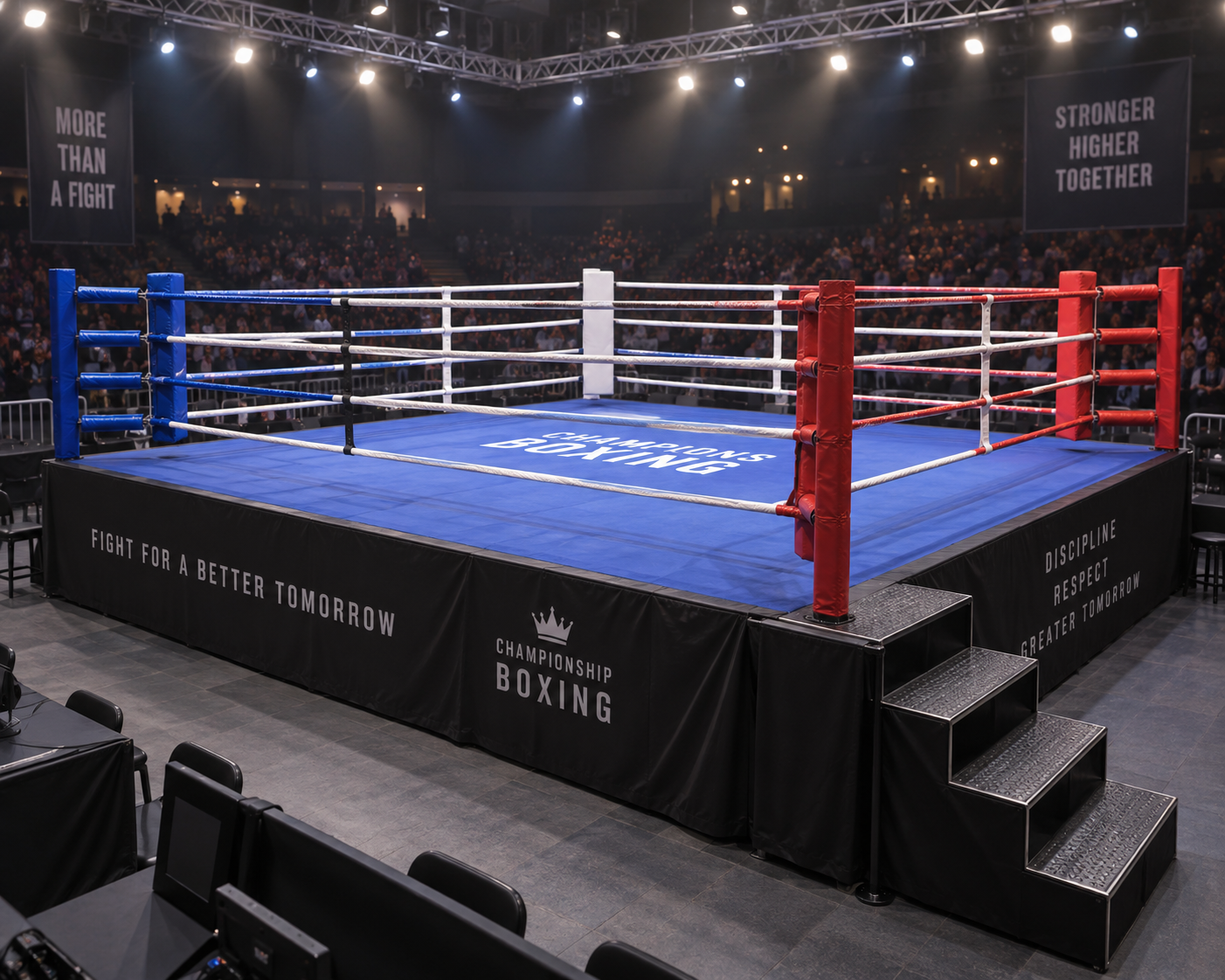
Boxing ring safety: falls, rope tension, and essential checks
The safety of a boxing ring depends on the correct combination of structure, fastening systems, ropes, platform, protections, and periodic checks. A preliminary inspection before use makes it possible to identify any anomalies and keep the ring compliant with the manufacturer's instructions throughout its operating life.
The main risks are linked to the wear of components, the loss of correct rope tension, the integrity of protections, and the presence of obstacles in the surrounding area. For this reason, it is advisable to adopt a standardized and documented control procedure, especially in professional gyms and combat sports centers.
Each model may have different procedures. The instructions in the manufacturer's manual always represent the main reference for checks, maintenance, component replacement, and methods of use of the ring.
- Quick answer
- What are the main risks?
- What safety requirements to check?
- Checks before use
- Maintenance of ropes and structure
- Errors to avoid
- Manuals and technical documentation
- FAQ
- Why invest in safety
How to check the safety of a boxing ring?
The safety of a boxing ring is verified by checking the structure, the stability of the platform, the tension of the ropes, the fastening systems, the accesses, the protections, and the conditions of the flooring. All checks should follow the manufacturer's instructions and be documented in professional facilities.
A systematic check before activities allows you to quickly identify worn components or anomalies that require intervention.
Any non-compliant element should be restored before using the ring for workouts or sparring sessions.
Why carry out regular checks
Preventive checks help maintain the constant efficiency of the structure and facilitate maintenance scheduling.
Who should carry out the checks
In professional facilities, it is advisable to entrust checks to designated personnel following documented procedures.
What are the main risks to monitor?
Checks must focus on components subject to wear and elements that affect the stability of the structure.
Particular attention should be paid to rope tension, the state of protections, fastening systems, accesses, and the platform surface.
To complete an area dedicated to combat sports, you can consult the range of combat sports equipment.
Rope inspection
The ropes must be intact, correctly fastened, and maintain the tension expected by the manufacturer. Loosening or damage requires inspection before use.
Risk of falling
Orderly accesses, protections in good condition, and the surrounding area free of obstacles help reduce risk during training and technical activities.
What safety requirements to check?
Before each use, it is advisable to check the stability of the structure, the condition of the platform, the correct installation of the ropes, and the integrity of the protections.
Ring accesses must also be kept clear and compatible with the intended modes of use.
Checks should always be compared with the manufacturer's manual.
Platform verification
The surface must be stable, clean, and free from obvious anomalies that could compromise normal use.
Access control
Ladders, entrances, and surrounding paths must allow easy and orderly access to the training area.
What checks to perform before training?
A standardized procedure helps quickly check the state of the ring before activities begin.
Always following the same sequence of checks makes verifications more complete and easily repeatable.
In professional facilities, it is useful to record the interventions carried out.
| Component | Check | Objective |
|---|---|---|
| Structure | Visual check | Identify anomalies |
| Ropes | Integrity and tension | Verify correct state |
| Platform | Surface conditions | Maintain stability |
| Protections | Integrity check | Verify protection |
| Accesses | Clear area | Encourage orderly use |
Daily check
A visual inspection before each workout allows you to quickly identify any critical issues.
Scheduled check
In-depth checks should follow the maintenance plan indicated by the manufacturer.
How to keep ropes and structure safe?
Maintenance includes cleaning, component inspection, rope tension verification, and replacement of worn elements when provided by the manufacturer.
Fastening systems and protections must also be checked regularly to ensure they maintain their expected characteristics.
Every intervention should be documented within the gym's maintenance plan.
Ring cleaning
Regular cleaning facilitates surface inspection and contributes to material preservation.
When to intervene
Deteriorated components, damaged ropes, or compromised protections should be replaced following the manufacturer's instructions.
What errors are best avoided?
One of the most frequent errors consists of using the ring despite the presence of loose ropes, worn protections, or structural anomalies.
It is equally important to avoid unauthorized modifications or improvised repairs that do not respect technical documentation.
Postponing maintenance interventions can increase the risk of equipment downtime and make facility management more complex.
Ignoring rope tension
Rope verification should be an integral part of the control routine before activities.
Neglecting the manufacturer's manual
Official procedures represent the main reference for use, maintenance, and safety.
Manuals and technical documentation
The manufacturer's manual defines control methods, maintenance, component replacement, and structural checks.
It is advisable to keep the intervention log, technical documentation, and information relating to installed spare parts.
When applicable, the manufacturer's prescriptions and current regulations regarding sports equipment must be respected.
Manufacturer's manual
Contains official instructions for checks, installation, maintenance, and use of the ring.
Verification log
Documenting checks and interventions facilitates monitoring the state of the structure over time.
FAQ
How often should rope tension be checked?
Frequency depends on the intensity of use and the manufacturer's instructions. In professional facilities, it is advisable to carry out regular and documented checks.
Why check ring accesses?
Keeping the area free of obstacles facilitates movement and contributes to a more orderly use of the structure.
Is it useful to use a checklist?
Yes. A standardized checklist makes checks more complete, repeatable, and easily documentable.
Why ring safety is an investment
Scheduling regular checks on the structure, ropes, platform, protections, and accesses allows you to keep the boxing ring efficient over time and plan maintenance interventions before wear compromises normal use. Basing all checks on the manufacturer's instructions, documenting interventions, and using compatible components represents an organized approach to professional equipment management.
Comments (0)