
Trolley
You have no items in your shopping cart

 Budgets
 Dumbers
 Discs
Discs
 Benches
 Racks and Rigs
 Weights Holders
 Isotonic machines
 Calisthenics
 Cardio
 Kettlebells
 Flooring
 Gym Set
 Accessories
 Combat
 ARTI MARZIALI
 CONTAINER GYM
 Tug-Of-War
 Used Gym Equipment
 PILATES MACCHINARI
 GINNASTICA ARTISTICA
 CAMPI DA PADEL
 Prodotti in Pronta Consegna
 Informazioni
 IRONMAN
 Gift Card
- Donatif
- General information
- 0 I like it
- 521 Views
- 0 comments
- gym flooring, safety flooring, gym safety, shock-absorbing materials
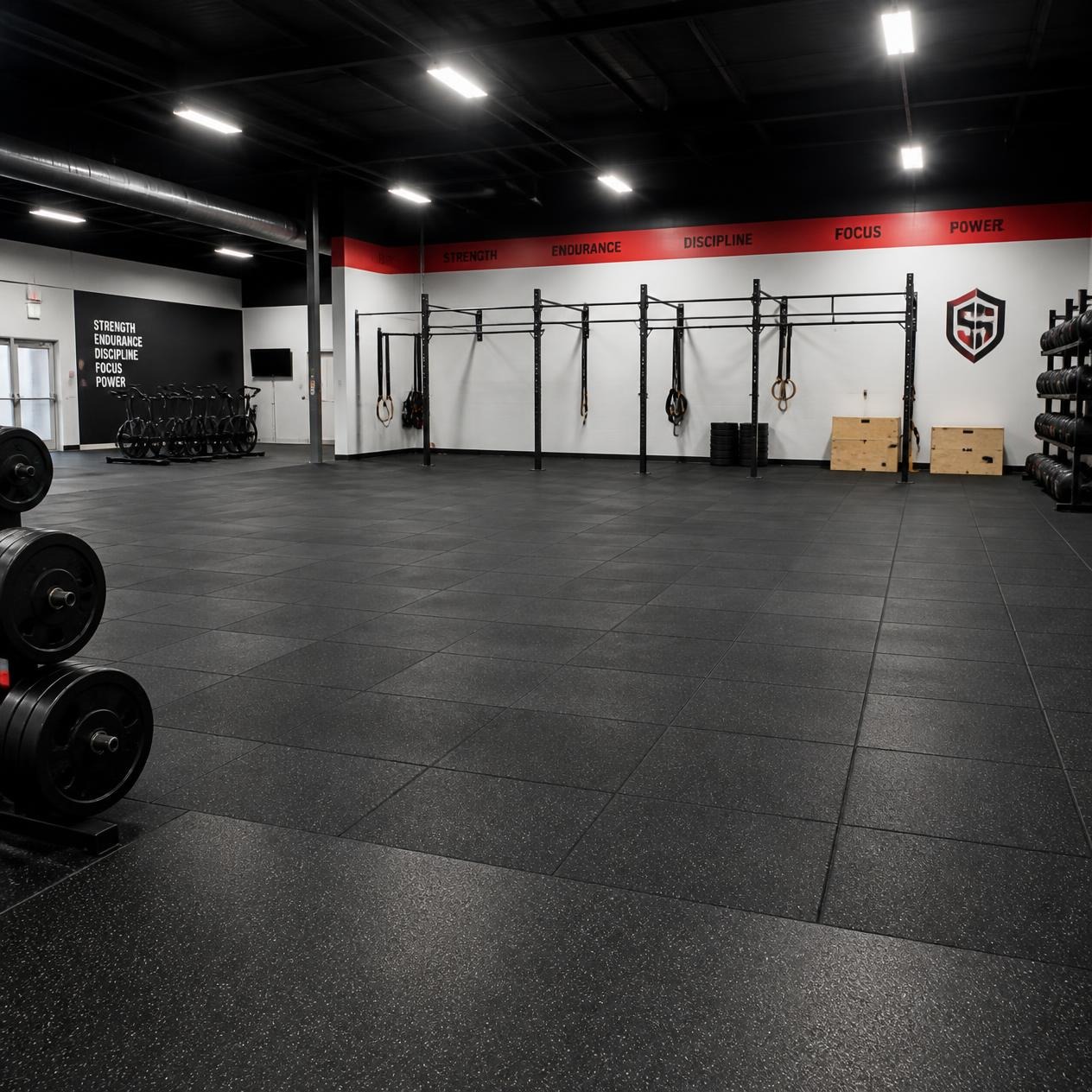
Rubber Flooring and Underfloor Heating: Are They Really Compatible?
Anyone planning a home gym within a newly built or recently renovated home often faces a very common doubt: can installing technical rubber flooring compromise the efficiency of underfloor heating? The answer is more complex than a simple yes or no and depends mainly on the type of material chosen, the thickness of the flooring, and the design of the entire room.
Modern radiant systems are increasingly widespread in mid-to-high-end homes thanks to their ability to ensure comfort, energy efficiency, and uniform heat distribution. At the same time, the number of people wanting to transform a room in their home into a private gym without sacrificing high-quality finishes and domestic comfort is growing. For this reason, it is important to understand how technical flooring and radiant systems interact.
In this guide, we analyze the technical aspects of rubber flooring underfloor heating, delving into thermal conductivity, thicknesses, the behavior of rubber during heating, usage comfort, and criteria for choosing a professional solution capable of preserving both the efficiency of the system and the quality of the workout.
- Compatibility between rubber and radiant heating
- The thermal conductivity of rubber
- Why thickness is decisive
- Comfort during training
- Does heat increase the smell of rubber?
- How to design a home gym
- How to choose certified materials
- An investment that combines comfort and performance
Compatibility between rubber and radiant heating
The belief that any rubber floor prevents the proper functioning of a radiant system is one of the most widespread myths. In reality, modern technical flooring can be perfectly compatible with underfloor heating, provided that products designed with adequate characteristics are chosen and installed correctly.
The radiant system works by slowly transferring heat to the floor surface. Every material offers a certain resistance to the passage of heat: this characteristic is defined as thermal resistance. The greater the resistance, the lower the speed at which heat reaches the room.
Rubber has a higher insulating capacity compared to ceramic or stoneware, but this does not mean it makes the system inefficient. In most home gyms, where the surfaces dedicated to training do not occupy the entire home and appropriate thicknesses are used, the impact on the overall performance of the system is limited.
How the radiant system works
Underfloor heating distributes heat uniformly through pipes or electric heating elements installed under the screed. Energy is transferred gradually to the surface, ensuring homogeneous temperatures and high living comfort.
Is rubber really an insulator?
Rubber offers a natural insulating capacity, but its behavior depends on the density of the material, its composition, and above all, its thickness. A properly sized professional flooring still allows for effective heat transfer while maintaining high athletic performance.
The thermal conductivity of rubber
One of the most important aspects concerns SBR rubber thermal conductivity. This parameter indicates the material's ability to transmit heat from the radiant system to the walkable surface.
SBR rubber, widely used in sports flooring, has lower values compared to ceramic materials but is perfectly compatible with many residential radiant systems. Choosing the correct thickness and the right density allows for a good balance between acoustic insulation, shock absorption, and thermal comfort.
During design, it is advisable to always evaluate the overall thermal resistance of the floor package, considering any underlays, mats, and installation systems that could have a greater impact than the rubber alone.
The role of density
Higher density contributes to improving the stability of the flooring and also influences heat transmission. Professional products are designed to offer an optimal balance between mechanical performance and energy efficiency.
Why certifications matter
Qualified manufacturers provide technical data on the conductivity and thermal resistance of materials, allowing designers and installers to verify compatibility with the planned radiant system.
Why thickness is decisive
Thickness is one of the parameters that most affects the overall performance of the flooring. The greater the thickness of the rubber, the greater the ability to absorb shocks and vibrations, but the resistance to heat passage will also increase.
A gym dedicated primarily to light functional training may require lower thicknesses compared to an area intended for powerlifting or weightlifting, where protecting the screed takes priority.
The ideal choice therefore stems from the correct balance between training comfort, equipment protection, and radiant system performance.
Low-impact training
For yoga, stretching, bodyweight exercises, and cardio, it is often possible to use thinner flooring, favoring better heat transmission.
Weight training
If the gym houses racks, barbells, and frequent dropping of weight plates, it will be appropriate to choose a greater thickness, evaluating the correct sizing of the radiant system together with the designer.
Comfort during training
Training on a heated floor offers a particularly pleasant experience, especially during the winter months. Contact with a tempered surface improves comfort during floor exercises and makes using the home gym more enjoyable.
Uniform heat also helps maintain a stable temperature in the room without generating annoying drafts, a feature highly appreciated during long workouts or disciplines like Pilates and mobility.
The presence of rubber also adds an important benefit in terms of acoustic insulation, reducing vibrations and noise produced by movements and equipment.
Greater well-being
The combination of a radiant system and technical flooring creates a comfortable environment throughout the year, promoting the continuity of training even in the coldest seasons.
Controlled temperatures
Radiant systems generally work at low surface temperatures, which are perfectly compatible with modern quality sports flooring.
Does heat increase the smell of rubber?
Among the most frequent doubts is that regarding the possible appearance of odors when rubber is heated. In reality, professional products made with quality raw materials are designed to maintain stability even at the normal operating temperatures of radiant systems.
The low temperatures reached by the radiant floor are very far from values that could alter the structure of the rubber or cause its deterioration. Any odors perceptible in the first few weeks generally depend on the natural settling of the material and tend to decrease progressively.
Good ventilation of the room further contributes to improving comfort, especially in the first phases following installation.
The importance of quality
Certified products made according to high standards significantly reduce the presence of unwanted emissions and ensure a better user experience.
The relationship between gym rubber smell heat
With professional materials and correct operating temperatures, radiant heating does not represent a problem. Proper ventilation is always recommended to maintain maximum comfort.
How to design a home gym
Designing a modern home gym requires a comprehensive vision that takes into account both sporting needs and the characteristics of the home.
It is important to evaluate the type of training planned, the weight of the equipment, the available surface area, and the presence of the radiant system already in the initial phase of the project, avoiding more expensive subsequent interventions.
Collaborating with specialized suppliers allows you to identify the most suitable product, optimizing both sports performance and the energy efficiency of the home.
A proper home gym radiant heating
Integrating technical flooring and a radiant system from the beginning allows you to obtain an elegant, functional environment that is perfectly consistent with the standards of modern homes.
Errors to avoid
Choosing flooring based solely on price or neglecting technical data can compromise both comfort and the longevity of the investment.
How to choose certified materials
The differences between cheap and professional flooring do not only concern aesthetics. Density, manufacturing precision, quality of raw materials, and certifications directly influence durability, comfort, and thermal behavior.
Products made in Italy and developed specifically for the fitness sector generally guarantee high quality standards, rigorous controls, and constant performance over time.
For those who want a reliable solution, it is advisable to rely on specialized manufacturers capable of providing complete technical documentation and assistance in choosing the most suitable flooring. A valid solution is available in the range of rubber flooring underfloor heating offered by Donatif.
The value of consultation
Qualified technical support allows you to avoid design errors and select the product most suitable for the characteristics of the home and the system.
Thinking long-term
Quality flooring maintains its performance for many years, helping to preserve the value of the entire home gym.
An investment that combines comfort and performance
The presence of underfloor heating does not represent an obstacle to creating a professional home gym. With certified materials, adequate thicknesses, and careful design, it is possible to obtain a warm, comfortable, and perfectly functional environment.
Evaluating thermal conductivity, rubber density, and system characteristics allows you to avoid compromises between living comfort and sports performance, while at the same time enhancing the real estate investment.
Choosing quality technical flooring means being able to count on an elegant, resistant environment designed to accompany thousands of workouts without sacrificing the energy efficiency of your home.
Comments (0)