
Trolley
You have no items in your shopping cart

 Budgets
 Dumbers
 Discs
Discs
 Benches
 Racks and Rigs
 Weights Holders
 Isotonic machines
 Calisthenics
 Cardio
 Kettlebells
 Flooring
 Gym Set
 Accessories
 Combat
 ARTI MARZIALI
 CONTAINER GYM
 Tug-Of-War
 Used Gym Equipment
 PILATES MACCHINARI
 GINNASTICA ARTISTICA
 CAMPI DA PADEL
 Prodotti in Pronta Consegna
 Informazioni
 IRONMAN
 Gift Card
- Donatif
- General information
- 0 I like it
- 0 Views
- 0 comments
- gym flooring, safety flooring, gym safety, shock-absorbing materials
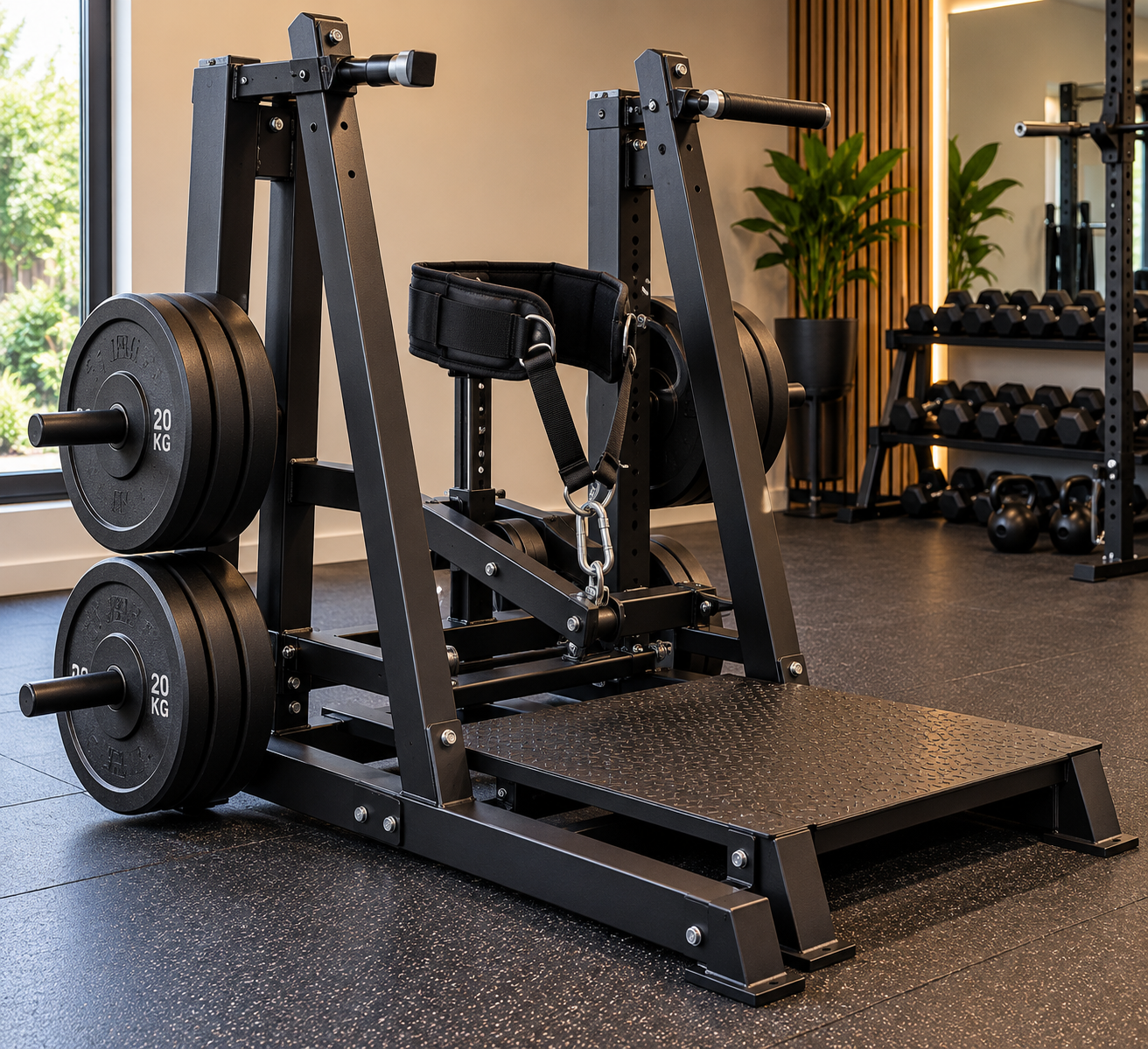
How to choose a belt squat machine: purchasing criteria guide
The belt squat machine is a piece of equipment designed to perform squats by loading weight through a belt connected to a mechanical system, reducing direct load on the spine compared to the barbell squat. To choose the most suitable model, it is necessary to evaluate construction features, the load transmission system, dimensions, and compatibility with the needs of the gym or athlete.
Not all belt squat machines are designed the same way. Differences in movement kinematics, platform structure, load capacity, and available accessories influence both the user experience and the machine's versatility.
To make an informed choice, it is therefore useful to analyze verifiable technical parameters rather than focusing exclusively on price or design.
- Quick answer
- What specifications really matter
- How to choose a belt squat machine
- Compatibility with space and the gym
- Comparison table
- Purchasing mistakes to avoid
- How to evaluate the investment
How to choose a belt squat machine
To choose a belt squat machine, it is important to evaluate the operating system, structural stability, platform quality, load capacity, movement fluidity, and the space required for installation. The choice should be consistent with the number of users, training goals, and the context of use.
A machine intended for a professional fitness center may have different requirements compared to one used in a private gym or a room dedicated to athletic training.
Pre-analyzing technical features allows you to compare different models using objective criteria.
Decision-making criteria
The main criteria concern the lever or cable system, structure quality, load capacity, platform stability, required maintenance, adjustment possibilities, and accessory availability.
Technical references
It is advisable to consult the manufacturer's manual and verify that the machine is designed according to standards applicable to fitness equipment, such as the EN ISO 20957 series when relevant.
What specifications really matter
Construction quality represents one of the most important elements in the choice. A rigid structure contributes to stability during exercise execution and maintains consistent performance even with frequent use.
The load transmission system influences the feel during movement. Some models use a lever system, others a cable system with pulleys. Each solution has different characteristics in terms of fluidity and maintenance.
The platform also plays a fundamental role because it must guarantee stable support, a non-slip surface, and sufficient space for different foot positions.
Lever or cable system
Both solutions can be effective. The evaluation should consider movement fluidity, maintenance simplicity, and the characteristics of the planned training program.
Load capacity
The maximum capacity declared by the manufacturer must be compatible with the user level and the intended use within the facility.
How to choose based on use
A commercial gym might prioritize robustness, ease of adjustment, and quick use by users with varying levels of experience.
For athletic training, movement precision, the possibility of integrating accessory exercises, and compatibility with specific strength programs may instead become more important.
Before purchasing, it is also useful to evaluate the expected frequency of use and the average number of people who will use the machine during the day.
Commercial use
Robustness, ease of adjustment, and low maintenance represent particularly relevant characteristics for gyms open to the public.
Athletic training
A versatile machine allows you to integrate different exercises beyond the traditional squat, increasing programming possibilities.
Compatibility with space and the gym
Before installation, it is necessary to check the machine's dimensions, the space required for user access, and the usable area for loading weight plates when applicable.
The quality of the support surface also contributes to equipment stability and floor protection during intensive use.
An anti-shock flooring represents a suitable solution for areas dedicated to strength training. To learn more about the characteristics of dedicated surfaces, you can consult anti-shock gym flooring.
Operational dimensions
It is advisable to check not only the dimensions of the machine but also the space required for comfortable use and routine maintenance.
Compatible accessories
The availability of optional accessories can increase the machine's versatility and adapt it to different training programs.
Comparison table
To compare multiple models, it is useful to evaluate the same technical parameters.
| Feature | What to check | Why it matters |
|---|---|---|
| Loading system | Lever or cable | Influences movement behavior |
| Platform | Dimensions and stability | Improves safety and comfort |
| Load capacity | Manufacturer specifications | Compatibility with users |
| Structure | Rigidity and construction quality | Durability and stability |
| Accessories | Availability and compatibility | Greater operational versatility |
| Maintenance | Ease of intervention | Reduces downtime |
How to read the comparison
Comparing multiple models using the same criteria allows you to evaluate differences without focusing exclusively on price.
Defining priorities
The most important features can change depending on the type of gym and the planned training program.
Purchasing mistakes to avoid
One of the most common mistakes is choosing a machine without verifying compatibility with available spaces or without considering the expected volume of use.
It is also advisable to avoid comparing load capacity exclusively while neglecting structure quality, platform stability, and maintenance simplicity.
Another critical issue is failing to verify the availability of spare parts and technical assistance over time.
Insufficient space
A correctly installed machine requires space not only for its physical footprint but also for use and maintenance operations.
Price-limited evaluation
Considering only the initial cost can lead to overlooking elements that affect the reliability and durability of the machine.
How to evaluate the investment
A belt squat machine represents an investment that should be evaluated by considering construction quality, ease of maintenance, the possibility of use in different training programs, and expected durability over time.
For professional facilities, it is useful to choose a machine that can adapt to users with different characteristics while maintaining adjustment simplicity and operational continuity.
Carefully analyzing technical specifications, manufacturer manuals, compatibility with available spaces, and material quality allows you to make an informed choice consistent with the needs of the gym or athlete.
Comments (0)