
Trolley
You have no items in your shopping cart

 Budgets
 Dumbers
 Discs
Discs
 Benches
 Racks and Rigs
 Weights Holders
 Isotonic machines
 Calisthenics
 Cardio
 Kettlebells
 Flooring
 Gym Set
 Accessories
 Combat
 ARTI MARZIALI
 CONTAINER GYM
 Tug-Of-War
 Used Gym Equipment
 PILATES MACCHINARI
 GINNASTICA ARTISTICA
 CAMPI DA PADEL
 Prodotti in Pronta Consegna
 Informazioni
 IRONMAN
 Gift Card
- Donatif
- General information
- 0 I like it
- 47 Views
- 0 comments
- gym flooring, safety flooring, gym safety, shock-absorbing materials
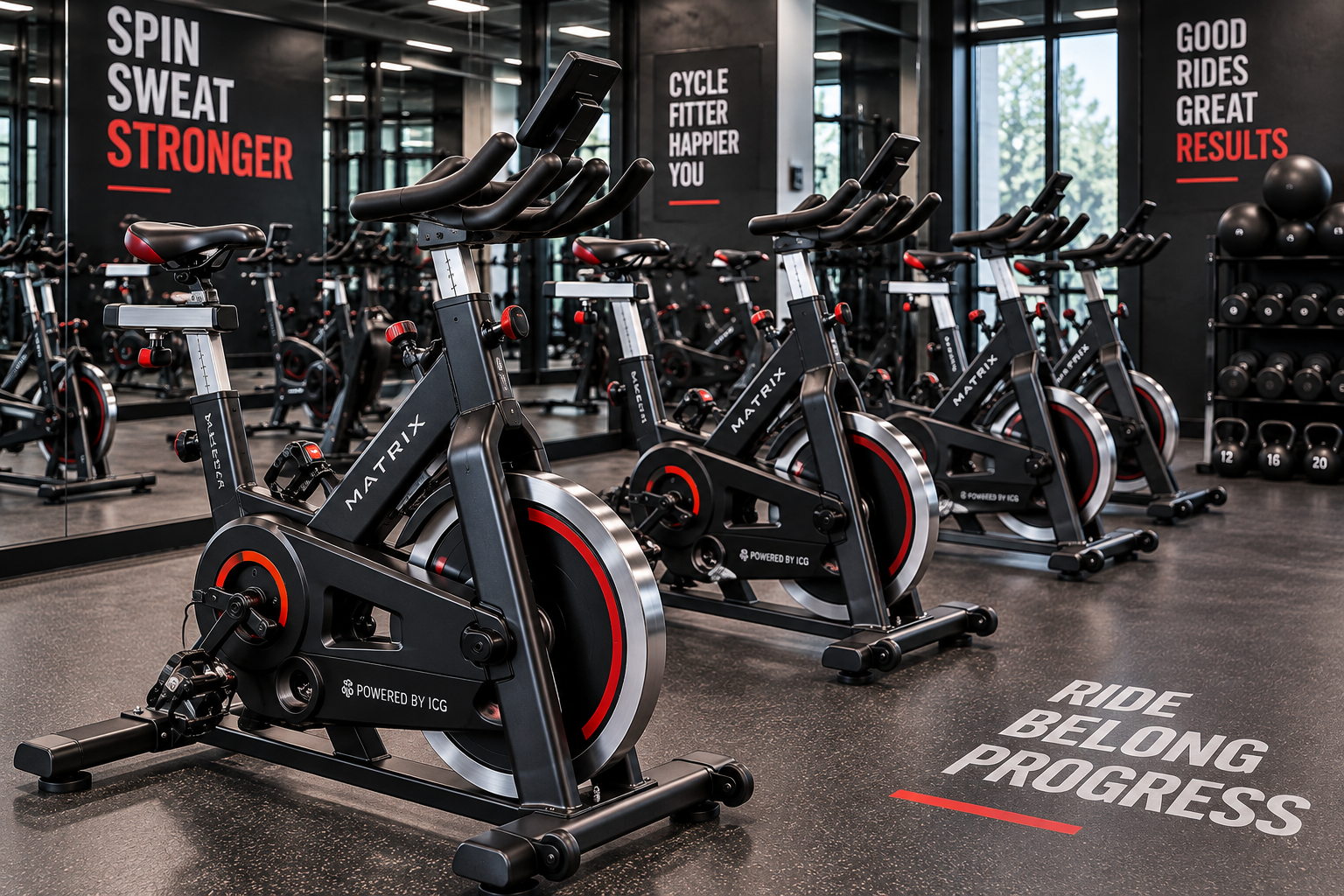
Professional Gym Spin Bikes: Station Density, Ventilation, and Fleet Maintenance
A spin bike intended for a professional gym is not just a piece of equipment for cardiovascular training, but represents one of the central elements in the design of an area dedicated to group classes and interval training. An effective configuration requires a joint assessment of available space, station layout, user flow management, and maintenance planning.
The operational success of a spinning room depends in fact on the ability to keep all bicycles efficient, easily adjustable, and always available during classes. Proper design helps improve the user experience, simplifies staff work, and reduces equipment downtime.
This guide analyzes verifiable criteria for organizing a room with professional spin bikes, focusing on station density, environmental ventilation, fleet maintenance, and design errors to avoid.
- Quick Answer
- What requirements must a spin bike room have
- How to design space and layout
- How to configure the stations
- Why ventilation is crucial
- How to manage fleet maintenance
- Design errors to avoid
- How to evaluate the investment
How to design an area with professional spin bikes?
A room dedicated to spinning should be designed considering simultaneously available space, ease of movement, ventilation, scheduled maintenance, and simplicity of bicycle adjustment. The goal is to ensure operational continuity and comfort during classes with numerous participants.
Before purchasing, it is advisable to evaluate build quality, availability of spare parts, technical assistance, and documentation provided by the manufacturer, so as to plan efficient long-term management.
A well-organized design also helps reduce the time required to prepare the room between one class and the next.
What is the primary goal?
To create a functional environment that allows users to train safely and staff to easily manage the equipment.
What criteria should be used?
Layout, ventilation, adjustments, maintenance, and space organization represent the main elements to verify.
What requirements must a professional spin bike room have?
A room dedicated to spinning must allow users to easily access the bicycles and make necessary adjustments before the start of the class.
Saddle and handlebar adjustments should be intuitive to facilitate rapid adaptation of the bike to different users. It is also important to verify that the resistance system is simple to use during training.
The design should also provide smooth pathways for instructors and participants, avoiding interference between different stations.
Why do adjustments matter?
Quick adjustment reduces class preparation time and improves the user experience.
How to improve accessibility?
An orderly arrangement facilitates entry, exit, and room management even during shift changes.
How to design space and layout?
The arrangement of spin bikes should ensure sufficient space to easily get on and off the bicycle, as well as allow instructors to move between rows when necessary.
It is advisable to design a layout that promotes instructor visibility from all stations and allows an orderly flow of users during entry and exit phases.
The flooring should be stable, durable, and suitable for the continuous use typical of rooms dedicated to spinning.
How to evaluate station density?
The arrangement should prioritize operational comfort and ease of movement while avoiding excessively close configurations.
Why does instructor visibility matter?
A good line of sight facilitates class leadership and makes it easier to follow instructions during training.
How to correctly configure the stations?
Each station should be easily identifiable and allow rapid adjustments before the start of the class.
The presence of useful accessories such as a water bottle holder or device supports can help improve the user experience without complicating room management.
To complete an area dedicated to cardiovascular training, it is possible to integrate spin bikes with other professional cardio machines depending on the services offered by the facility.
How much does the flywheel matter?
The characteristics of the flywheel affect the pedaling feel and should be evaluated together with the other technical specifications declared by the manufacturer.
Why verify the transmission?
The transmission system affects the fluidity of use and represents one of the elements to include in scheduled maintenance.
Why is ventilation crucial?
Spinning classes generally involve high-intensity exercise and can involve numerous participants simultaneously.
Properly designed ventilation contributes to improving environmental comfort and making the stay in the room more pleasant during training sessions.
The design of the system should be evaluated together with the overall layout and the characteristics of the environment.
Why consider air exchange?
Appropriate management of the environment contributes to general comfort during group classes.
How does temperature affect things?
Maintaining adequate environmental conditions improves the usability of the room and facilitates activity management.
How to organize fleet maintenance?
A room with numerous spin bikes requires scheduled and documented maintenance that allows for the distribution of checks throughout the year.
Verifications should include adjustments, transmission systems, wear-and-tear components, and the correct functioning of adjustment mechanisms.
The availability of spare parts and a structured assistance service represent important aspects for reducing bicycle downtime.
Why set up a maintenance program?
Preventive planning facilitates the organization of interventions and reduces the risk of equipment unavailability.
Why record interventions?
A maintenance history helps monitor the state of the fleet and schedule any replacements.
What design errors are best avoided?
One of the most frequent errors consists of crowding too many stations into a limited space without considering comfort, accessibility, and room management.
It is also advisable to avoid neglecting scheduled maintenance or designing an environment without considering ventilation and user pathways.
Even the choice of equipment should be based on verifiable technical criteria and not exclusively on the initial price.
Why avoid a room that is too dense?
A balanced arrangement facilitates user movements and improves operational management during classes.
Why not postpone maintenance?
Scheduled interventions help keep the fleet efficient and reduce the risk of sudden breakdowns.
How to evaluate the long-term investment?
The choice of a professional spin bike should consider build quality, simplicity of adjustments, assistance, availability of spare parts, and maintenance organization.
A correctly designed room allows for the optimization of class management, improved user experience, and more effective planning of technical interventions throughout the lifecycle of the equipment.
Requesting technical sheets, manuals, warranty conditions, and documentation relating to maintenance represents the most reliable way to make an informed evaluation of the investment.
How to compare multiple spin bike models?
It is useful to prepare a checklist that includes build quality, flywheel, transmission, adjustments, assistance, spare parts, and maintenance provided by the manufacturer.
What documents should be requested before purchase?
Technical sheets, user manuals, warranty conditions, and maintenance instructions constitute an objective basis for comparing the different solutions available.
Comments (0)