
Trolley
You have no items in your shopping cart

 Budgets
 Dumbers
 Discs
Discs
 Benches
 Racks and Rigs
 Weights Holders
 Isotonic machines
 Calisthenics
 Cardio
 Kettlebells
 Flooring
 Gym Set
 Accessories
 Combat
 ARTI MARZIALI
 CONTAINER GYM
 Tug-Of-War
 Used Gym Equipment
 PILATES MACCHINARI
 GINNASTICA ARTISTICA
 CAMPI DA PADEL
 Prodotti in Pronta Consegna
 Informazioni
 IRONMAN
 Gift Card
- Donatif
- General information
- 0 I like it
- 9 Views
- 0 comments
- gym flooring, safety flooring, gym safety, shock-absorbing materials
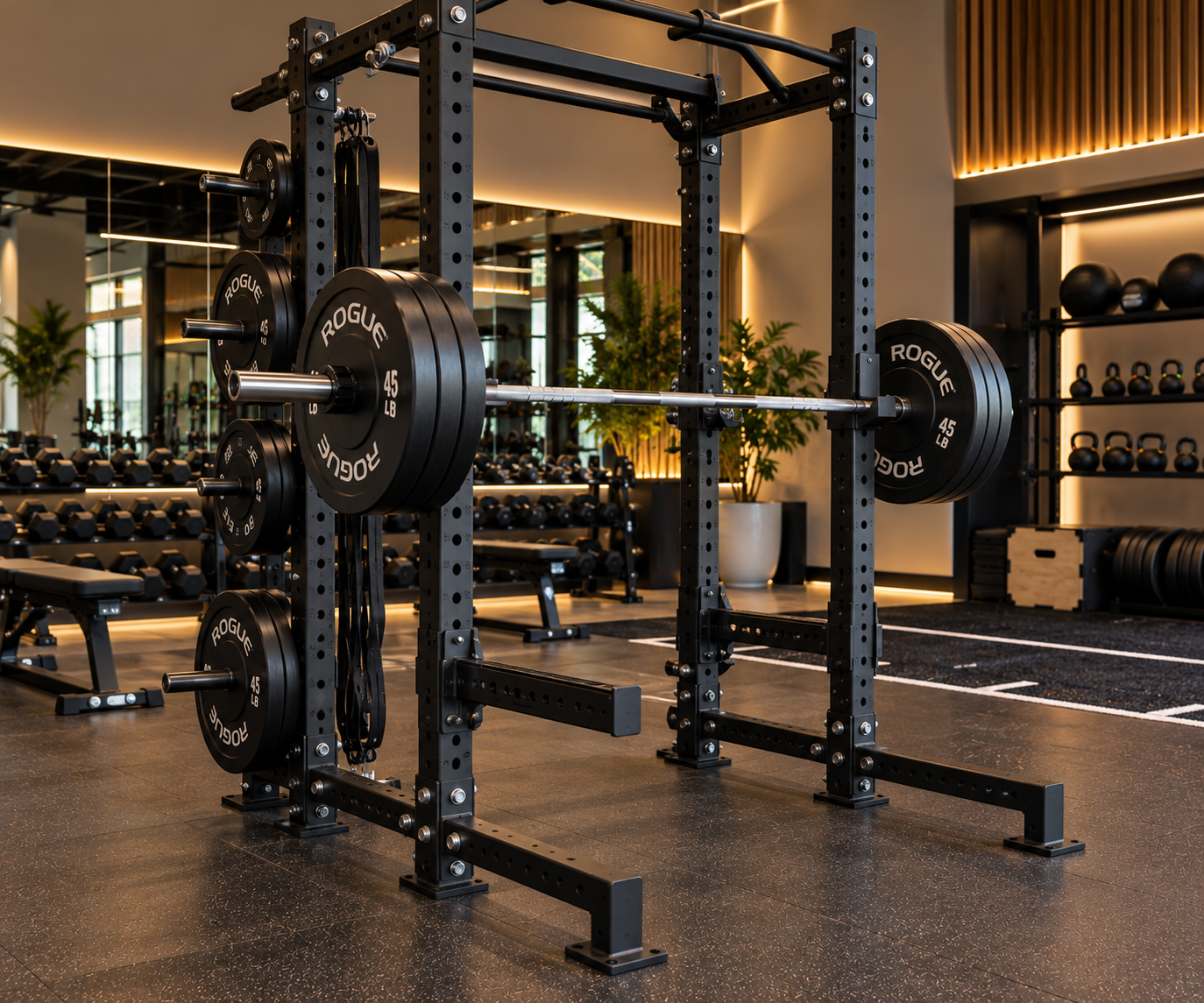
Opening a gym: traditional gym vs. boutique gym
The choice between a traditional gym and a boutique gym represents one of the most important strategic decisions for anyone looking to open a gym. The two business models cater to different needs in terms of investment, space organization, customer demographics, service offerings, and operational management.
The operational reality is this: there is no single best format overall. The most suitable solution depends on the target market, available capital, property size, value proposition, and entrepreneurial goals. Before investing, it is advisable to compare verifiable elements such as surface area, capacity, operating costs, necessary equipment, and the economic sustainability of the project.
This guide compares the two models using practical and verifiable criteria, helping entrepreneurs and fitness professionals identify the format most consistent with their development plan without overlapping with in-depth guides dedicated to regulatory aspects or opening costs.
- Quick answer
- Key differences
- Selection criteria
- When to choose a traditional gym or a boutique gym
- Mistakes to avoid
- How to evaluate the investment
- FAQ
Traditional gym or boutique gym: which model should you choose?
A traditional gym generally offers a wide variety of training areas, equipment, and services designed for a diverse audience.
Conversely, a boutique gym focuses its offerings on a specific discipline, training method, or experience, often featuring smaller groups and highly personalized services.
The decision should be based on market analysis, a business plan, financial availability, property size, and competitive positioning.
Where to start?
Defining the target clientele and the business model represents the first step before choosing the facility's format.
What data should be compared?
Available surface area, projected traffic, operating costs, technical equipment, and financial sustainability constitute concrete evaluation criteria.
What are the main differences between the two models?
The traditional gym normally proposes a broad offering that may include a weight room, cardio area, group classes, larger locker rooms, and numerous training stations.
On the other hand, the boutique gym develops a highly specialized service, often focused on disciplines such as functional training, indoor cycling, pilates, personal training, or other vertical activities.
Both models can be sustainable if designed consistently with the target market.
Comparative table
Model: traditional gym | Boutique gym.
Offering: multi-service | specialization.
Spaces: generally larger | generally more contained.
Equipment: numerous categories | focused selection.
Management: greater organizational complexity | more vertical organization.
Customer experience
The level of personalization, the type of classes, and the relationship with instructors can differ significantly between the two models.
What criteria help in making the choice?
The choice should start with an analysis of local demand, competition, available budget, and medium-term development goals.
It is important to verify whether the available space is consistent with the selected format and the expected number of users.
The availability of qualified staff and the financial plan also represent decisive elements.
Space evaluation
Internal layout, ceiling heights, pathways, technical areas, and expansion possibilities directly affect the organization of the facility.
Equipment selection
The technical equipment must be consistent with the business model, avoiding purchases that are not functional to the project.
In which scenarios should one model be chosen over the other?
A traditional gym can be considered when the project involves numerous activities, a broad offering, and the simultaneous management of different types of users.
A boutique gym can be consistent when the goal is to develop a highly specialized service with a well-defined identity.
In both cases, it is essential to verify the economic sustainability of the initiative through a realistic business plan.
Traditional gym scenario
It can be suitable for projects intending to offer multiple fitness services within the same facility.
Boutique gym scenario
It can be considered when the strategy focuses on a highly specialized and differentiating proposition.
What mistakes are made most often?
One of the most frequent mistakes consists of choosing a format without having performed a preliminary analysis of demand and competition.
Another critical issue concerns undersizing the spaces or purchasing equipment that is inconsistent with the service intended to be offered.
It is also important to avoid building an economic project based on undocumented hypotheses or without safety margins.
Incorrect sizing
An inefficient layout of the environments can limit the quality of the service and the future growth of the facility.
Inconsistent investments
Purchasing equipment without precise planning can unnecessarily increase immobilized capital.
How to evaluate the initial investment?
Before opening a gym, it is advisable to estimate setup costs, systems, equipment, flooring, furnishings, personnel, and operational management.
The selection of equipment should be carried out based on the overall project of the facility. To explore available solutions, you can consult the section dedicated to gym equipment and compare the categories best suited for your format.
Design documentation, the business plan, and consultation with qualified suppliers represent useful tools to build a consistent and sustainable investment.
Business plan
The financial plan should include initial costs, recurring costs, revenue projections, cash flows, and safety margins.
Supplier selection
In addition to price, it is advisable to compare equipment quality, technical assistance, spare parts availability, and provided documentation.
FAQ
Does a boutique gym always require a lower investment?
not necessarily. The investment depends on the type of facility, equipment, systems, and the level of finish planned by the project.
Must a traditional gym offer all disciplines?
No. The offering can be built according to the target market and entrepreneurial goals.
What is the first document to prepare?
A realistic business plan represents one of the main tools for evaluating the sustainability of the project before starting the business.
What sources should be consulted before opening a gym?
For regulatory aspects, it is appropriate to refer to applicable national and local regulations, building codes, and the requirements set by competent authorities. For equipment and systems, it is advisable to consult the technical documentation and manufacturer manuals. The setup of this content follows an answer-first structure with verifiable criteria, consistent with the brief provided.
Comments (0)