
Trolley
You have no items in your shopping cart

 Budgets
 Dumbers
 Discs
Discs
 Benches
 Racks and Rigs
 Weights Holders
 Isotonic machines
 Calisthenics
 Cardio
 Kettlebells
 Flooring
 Gym Set
 Accessories
 Combat
 ARTI MARZIALI
 CONTAINER GYM
 Tug-Of-War
 Used Gym Equipment
 PILATES MACCHINARI
 GINNASTICA ARTISTICA
 CAMPI DA PADEL
 Prodotti in Pronta Consegna
 Informazioni
 IRONMAN
 Gift Card
- Donatif
- General information
- 0 I like it
- 79 Views
- 0 comments
- gym flooring, safety flooring, gym safety, shock-absorbing materials
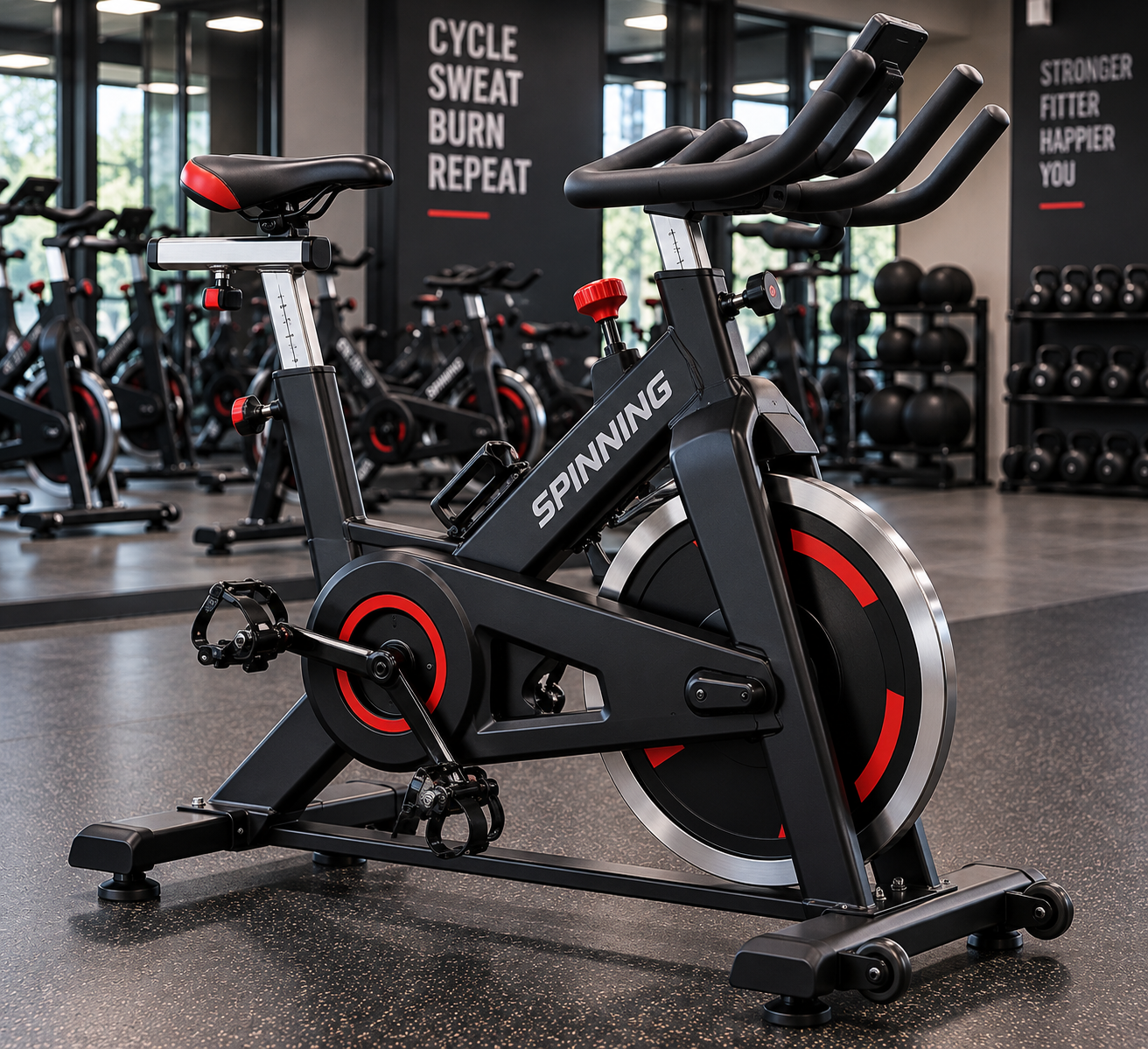
Spin bike maintenance: complete guide to checks and prevention
Proper maintenance of a spin bike represents one of the most important aspects for ensuring reliability, operational continuity, and a quality training experience. Whether the bicycle is used in a gym, a cycling studio, or in a private setting with high frequency, scheduling periodic checks helps preserve its performance and reduce the risk of sudden breakdowns.
Maintenance does not consist exclusively of replacing wearing parts, but includes a series of preventive checks concerning the transmission, pedals, adjustment systems, structural components, and resistance mechanisms. Promptly identifying any anomalies makes it possible to intervene before they turn into more complex problems.
This guide gathers practical criteria for organizing spin bike maintenance, planning checks, recognizing signs of wear, and adopting procedures consistent with the manufacturer's technical documentation.
- Quick answer
- What maintenance includes
- What checks to perform
- How to use the spin bike correctly
- How to prevent wear
- Errors to avoid
- Operational checklist
- Why maintenance protects the investment
Why is spin bike maintenance important?
Scheduled maintenance makes it possible to keep the spin bike efficient, reduce the risk of interruptions during use, and plan technical interventions according to the manufacturer's instructions. Periodic checks also help promptly identify any signs of wear.
Following a structured procedure facilitates equipment management both in professional facilities and in environments with intensive use.
Every intervention should be documented to monitor the bicycle's history and schedule subsequent checks.
What is the main objective?
To maintain reliability, safety, and operational continuity through scheduled checks and preventive maintenance.
Why follow the manufacturer's manual?
Official instructions represent the main reference for check frequencies, component replacement, and maintenance procedures.
What does spin bike maintenance include?
Maintenance includes visual inspections, functional checks, surface cleaning, and inspection of the components most subject to use.
Among the elements that require particular attention are the flywheel, the transmission, the resistance system, the pedals, the saddle and handlebar adjustments, and all fastening points.
Effective maintenance also provides for recording interventions and complying with the schedule suggested by the manufacturer.
Which components should be checked?
Pedals, transmission, adjustments, fastening elements, and the general structure should be checked regularly.
Why document interventions?
A maintenance history allows you to monitor the evolution of wear and plan future interventions.
What checks should be performed periodically?
A periodic check should include checking the stability of the bicycle, the correct tightening of adjustments, and the general state of visible components.
It is also advisable to observe the fluidity of pedaling, verify the absence of abnormal noises, and check that the adjustment mechanisms work correctly.
Every anomaly should be evaluated following the procedures indicated in the manufacturer's technical documentation.
What visual checks are recommended?
Checking the condition of the structure, pedals, adjustment systems, and the absence of easily identifiable damage.
When to perform a functional test?
After a maintenance intervention, after installation, or when abnormal behaviors are reported during use.
How to use the spin bike correctly?
Before each workout, it is advisable to adjust the saddle and handlebar according to the manufacturer's instructions and verify that all tightening systems are correctly locked.
Appropriate adjustment improves comfort and ergonomics and helps limit unnecessary stress on the bicycle's components.
To create a complete cardiovascular training area, it is possible to integrate the spin bike with other professional cardio machines while maintaining uniform control procedures.
Why check the adjustments?
Adjustments are modified frequently and should be checked before each use.
How much does available space matter?
Proper placement of the bicycle facilitates access, improves safety, and simplifies maintenance operations.
How to prevent wear?
Prevention is based on scheduled checks, regular cleaning, and compliance with the instructions contained in the manufacturer's technical documentation.
Intervening at the first signs of anomaly often makes it possible to limit more complex interventions and maintain the bicycle's performance constant.
Preventive management also helps to plan technical interventions more precisely during the year.
Why is cleaning important?
A bicycle kept clean facilitates the identification of any anomalies during periodic checks.
How to organize maintenance?
Setting up a control calendar and recording every intervention allows for more efficient equipment management.
What errors are best avoided?
One of the most common errors consists of postponing maintenance until an obvious problem appears.
It is also advisable to avoid modifications not foreseen by the manufacturer, the use of non-compatible components, or interventions carried out without following the technical documentation.
Neglecting small signs of wear can also increase the likelihood of more demanding interventions over time.
Why not postpone checks?
Preventive checks make it possible to identify anomalies when they are still easily manageable.
Why always follow the documentation?
Manufacturer manuals and instructions represent the main reference for every maintenance intervention.
Maintenance checklist
| Check | Objective |
|---|---|
| Bicycle stability | Verify the absence of wobbling |
| Pedals | Check fastening and general condition |
| Transmission | Verify the fluidity of movement |
| Adjustments | Ensure correct locking |
| Structure | Identify any visible anomalies |
| Maintenance log | Document interventions performed |
When to use the checklist?
Before use in professional facilities and after every significant maintenance or adjustment intervention.
Why keep a history?
Monitoring interventions facilitates maintenance planning and the management of the bicycle's entire life cycle.
Why does maintenance protect the investment?
Scheduled management of the spin bike helps maintain high equipment reliability and reduces the risk of unscheduled machine downtime.
Periodic checks, recording of interventions, and compliance with the manufacturer's instructions make it possible to preserve performance and operational continuity over time.
Integrating maintenance into the ordinary management of the cardio area represents an effective approach to enhance the investment and offer users equipment that is always efficient.
How often should maintenance be performed?
The frequency depends on the intensity of use and the manufacturer's instructions. It is advisable to combine regular visual checks with scheduled technical verifications.
What documents to consult?
User manuals, technical data sheets, and the maintenance plan provided by the manufacturer constitute the main reference for organizing checks and interventions.
Comments (0)