
Trolley
You have no items in your shopping cart

 Budgets
 Dumbers
 Discs
Discs
 Benches
 Racks and Rigs
 Weights Holders
 Isotonic machines
 Calisthenics
 Cardio
 Kettlebells
 Flooring
 Gym Set
 Accessories
 Combat
 ARTI MARZIALI
 CONTAINER GYM
 Tug-Of-War
 Used Gym Equipment
 PILATES MACCHINARI
 GINNASTICA ARTISTICA
 CAMPI DA PADEL
 Prodotti in Pronta Consegna
 Informazioni
 IRONMAN
 Gift Card
- Donatif
- General information
- 0 I like it
- 10 Views
- 0 comments
- gym flooring, safety flooring, gym safety, shock-absorbing materials
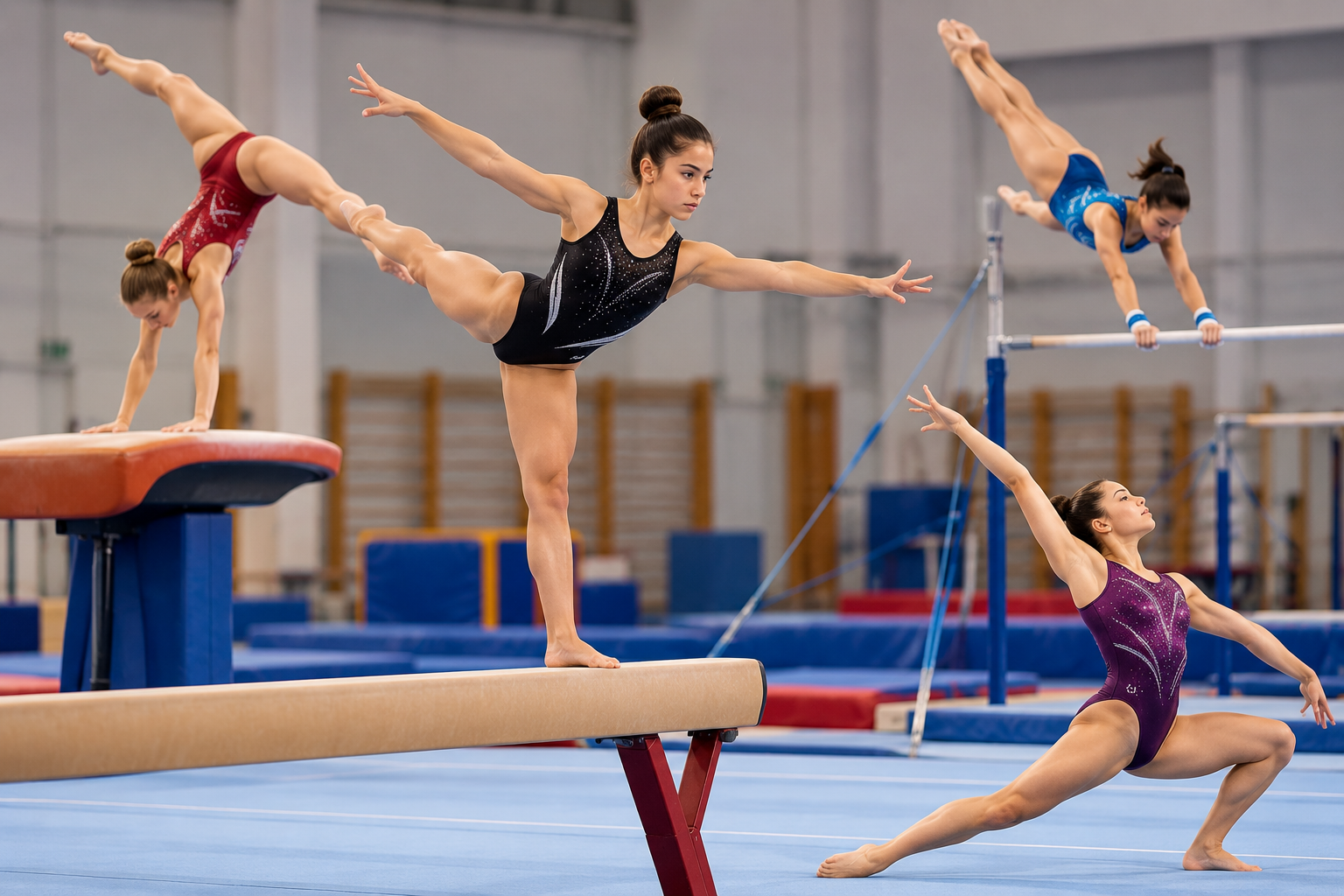
Artistic gymnastics equipment maintenance: practical guide to inspections, wear, and prevention
Artistic gymnastics equipment requires scheduled maintenance to ensure safety, operational continuity, and durability of the equipment. Regular inspections, cleaning, anchor checks, wear monitoring, and logging of interventions form the basis of professional management in gyms, sports associations, and dedicated facilities.
Equipment intended for artistic gymnastics is subject to repeated stress and must maintain the characteristics provided by the manufacturer over time. For this reason, it is essential to establish a maintenance plan that distinguishes daily checks, periodic inspections, and extraordinary interventions.
Proper management does not only concern the main equipment but also includes mats, fastening systems, flooring, accessories, and technical documentation. Keeping a history of inspections makes it possible to schedule interventions and improve facility management.
- Quick answer
- What to inspect
- Frequencies and signs of wear
- Cleaning and maintenance
- When to intervene or replace
- Errors to avoid
- FAQ
- Management and planning
How to manage artistic gymnastics equipment maintenance?
Effective maintenance includes visual checks before use, periodic inspections according to the manufacturer's instructions, regular cleaning, wear monitoring, and logging of each intervention. Any anomalies must be evaluated before returning the equipment to service.
The frequency of inspections depends on the intensity of use and the facility's maintenance plan.
Every check should be documented to ensure continuity in management.
Objective of maintenance
Maintain reliable and safe equipment throughout its lifecycle.
Operational approach
Schedule routine and extraordinary checks following the technical documentation.
What to inspect?
Inspections should cover stability, fastening systems, contact surfaces, adjustments, moving components, and the condition of safety mats.
Sports flooring must also be kept intact and free of anomalies.
Manuals and maintenance logs should always be available.
Equipment
Check stability, wear, and proper operation.
Accessories
Verify mats, protections, and complementary components.
What frequencies to adopt and what signs to observe?
Frequencies must follow the manufacturer's instructions and the gym's level of use.
| Element | Inspection | Reference |
|---|---|---|
| Equipment | Stability and adjustments | Manufacturer's manual |
| Anchors | Tightening and fastenings | Maintenance plan |
| Mats | Integrity and positioning | Visual inspection |
| Flooring | Wear and continuity | Periodic inspection |
| Accessories | General conditions | Scheduled check |
Unusual noises, instability, deformations, evident wear, or difficulty in adjustments require a technical inspection.
Routine checks
To be carried out before the start of activities.
Scheduled checks
Allow the identification of critical issues that are not immediately visible.
How to organize cleaning and maintenance?
Cleaning operations should be carried out regularly using procedures compatible with the equipment materials.
Maintenance interventions must follow the manufacturer's instructions.
To learn more about dedicated solutions, you can consult artistic gymnastics equipment.
Maintenance log
Recording inspections and interventions facilitates future planning.
Prevention
Intervening promptly reduces operational downtime.
When to intervene or replace?
Any component that presents anomalies, instability, or wear incompatible with the manufacturer's instructions should be checked before further use.
Replacements must be planned considering spare parts availability and the general condition of the equipment.
It is advisable to suspend the use of the equipment until the necessary inspections are completed.
Repair
Always follow the manufacturer's technical documentation.
Replacement
Evaluate interventions as part of the maintenance plan.
What errors to avoid?
Neglecting periodic inspections, modifying anchors without following the manufacturer's instructions, using equipment that presents anomalies, or failing to log interventions are the most frequent errors.
Failure to plan maintenance can also compromise the operational continuity and organization of the gym.
Documented management reduces the risk of unscheduled interventions.
Insufficient inspections
Verifications should follow a defined schedule.
Incomplete documentation
Manuals and logs are an integral part of professional management.
FAQ
How often should maintenance be performed?
According to the manufacturer's instructions, the intensity of use, and the facility's maintenance plan.
Is it useful to log every intervention?
Yes, to maintain a maintenance history and plan subsequent checks.
What references to follow?
Manufacturer manuals, applicable technical standards, and the facility's internal procedures.
How to plan long-term maintenance?
A maintenance plan should start with an inventory of the equipment, define routine and extraordinary checks, identify operational responsibilities, and schedule interventions based on the actual use of the facility.
When applicable, references include current building regulations, technical standards applicable to sports equipment, instructions from the competent federation, and manufacturer manuals regarding installation, use, and maintenance. Every inspection should be carried out in compliance with the intended use of the equipment.
Preventive management, supported by updated documentation and regular inspections, improves reliability, equipment lifespan, and the continuity of sports activities.
Comments (0)