
Trolley
You have no items in your shopping cart

 Budgets
 Dumbers
 Discs
Discs
 Benches
 Racks and Rigs
 Weights Holders
 Isotonic machines
 Calisthenics
 Cardio
 Kettlebells
 Flooring
 Gym Set
 Accessories
 Combat
 ARTI MARZIALI
 CONTAINER GYM
 Tug-Of-War
 Used Gym Equipment
 PILATES MACCHINARI
 GINNASTICA ARTISTICA
 CAMPI DA PADEL
 Prodotti in Pronta Consegna
 Informazioni
 IRONMAN
 Gift Card
- Donatif
- General information
- 0 I like it
- 10 Views
- 0 comments
- gym flooring, safety flooring, gym safety, shock-absorbing materials
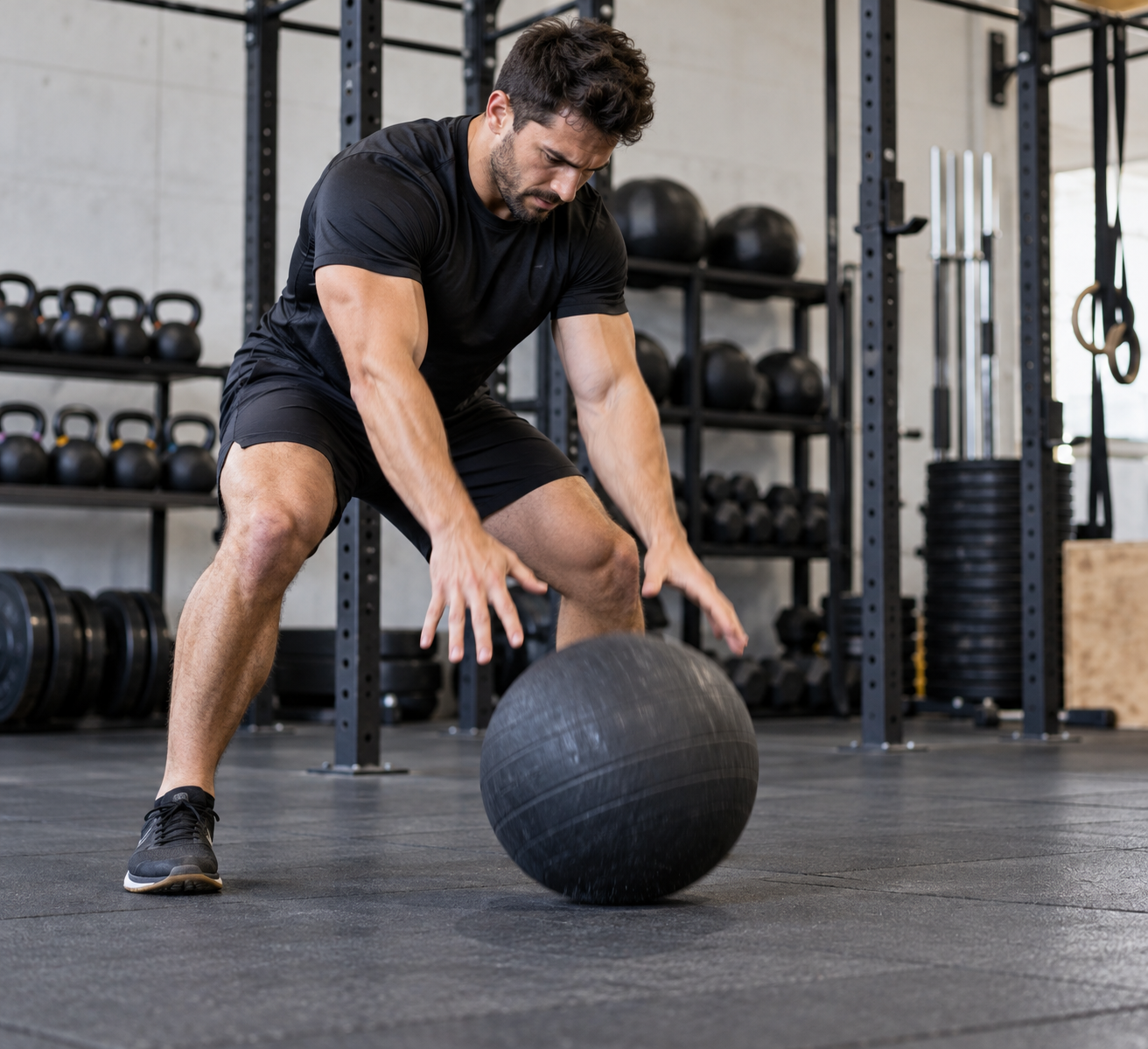
Slam Ball Maintenance: Cleaning and Crack Inspection
The slam ball is designed to withstand repeated impacts during floor slams and functional training exercises. Even though built for intensive use, it requires regular checks and proper maintenance to keep its characteristics unchanged and ensure safe use over time.
Routine maintenance includes cleaning the coating, visually inspecting the equipment, and checking for any signs of wear. Acting promptly when cracks, cuts, or deformations appear makes it possible to avoid using a damaged slam ball and to plan for replacement when necessary.
This guide compiles practical criteria for gym slam ball maintenance, illustrating what to check, what signs to look for, and what preventive actions to take. For specific cleaning and storage methods, it is always advisable to follow the manufacturer's instructions.
- Quick response
- What to check
- Frequencies and signs of wear
- How to clean the slam ball
- When to replace the equipment
- Preventive actions
- FAQ
- Evaluating the investment
How to keep a slam ball in good condition?
The slam ball should be cleaned regularly, checked before use, and inspected periodically to spot cracks, cuts, deformations, or other signs of wear. Any anomaly that could compromise the equipment's integrity requires verification and, when necessary, product replacement according to the manufacturer's instructions.
Consistent maintenance helps preserve the functionality, safety, and durability of the equipment.
Cleaning and storage methods must always comply with the manufacturer's instructions.
Decision criteria
Coating condition, surface integrity, frequency of use, training environment, and storage methods represent the main elements to monitor.
Technical sources
For compatible detergents, maintenance methods, and replacement criteria, it is necessary to consult the technical documentation provided by the slam ball manufacturer.
What to check during inspection?
Before training, it is advisable to perform a visual check of the equipment, verifying the absence of obvious anomalies.
Attention should focus on the state of the surface, the presence of cuts, cracking, deformations, or other alterations that could modify the ball's behavior during use.
Any variations in the consistency of the coating also deserve further investigation before continuing to train.
Coating check
The coating must appear uniform and free of obvious damage. Deep cracks, cuts, or extensive abrasions may indicate the need to stop use until a check is performed.
Shape check
A permanent deformation of the slam ball can affect the quality of the workout and represent a sign of wear to be investigated further.
How frequently should checks be performed?
The frequency of checks depends on the intensity of use and the number of users employing the equipment.
A quick visual inspection before sessions is good practice, while more thorough checks can be scheduled as part of routine gym maintenance.
Verifications should be documented according to the facility's organizational procedures.
Pre-use checks
Quickly checking the surface, cleanliness, and absence of visible damage helps identify any anomalies in a timely manner.
Scheduled inspections
Periodic checks allow you to monitor the evolution of wear and plan equipment replacement when necessary.
How to clean a slam ball?
Regular cleaning helps maintain a consistent grip and reduces the accumulation of dust, sweat, and residue on the surface.
It is appropriate to use exclusively products compatible with the ball's material, following the manufacturer's instructions.
After cleaning, it is advisable to let the equipment dry completely before putting it away or reusing it.
Cleaning products
Using non-aggressive detergents when indicated by the manufacturer helps preserve the material's characteristics over time.
Storage
Storing the slam ball in a clean and dry environment helps keep it in optimal condition between sessions.
When to replace the slam ball?
Replacement should be considered when the equipment shows damage that can compromise its correct use.
Obvious cracks, significant cuts, permanent deformations, or alterations of the coating represent signs that require evaluation.
Continuing to use a deteriorated slam ball can reduce workout quality and increase the risk of inconveniences.
Crack inspection
Cracks must be monitored carefully. If they are extensive or significantly affect the coating, it is advisable to stop use and follow the manufacturer's instructions.
Permanent deformations
A stable modification of the ball's shape can indicate deterioration that deserves further checks.
What preventive actions help prolong durability?
Proper organization of the training area helps reduce equipment wear.
Use on a shock-absorbing flooring compatible with slams and compliance with the usage methods indicated by the manufacturer help preserve the slam ball over time.
To complete a station dedicated to functional training, it is possible to integrate the ball with functional training accessories, organizing the spaces in an orderly and functional way.
Correct use
Using the slam ball exclusively for the exercises intended by the manufacturer helps limit premature wear.
Storage organization
Storing balls in dedicated and easily accessible areas reduces accidental impacts and facilitates periodic checks.
FAQ
How often should a slam ball be cleaned?
Frequency depends on the intensity of use. Regular cleaning helps maintain a consistent grip and good hygiene of the equipment.
How to recognize a significant crack?
Any damage that noticeably alters the integrity of the coating should be checked before continuing to use the ball.
Can I use any detergent?
No. It is preferable to use exclusively products compatible with the slam ball's material according to the manufacturer's instructions.
Does flooring affect durability?
Yes. A surface compatible with slams helps reduce wear on both the ball and the floor compared to surfaces not designed for repeated impacts.
Evaluating the investment
Proper maintenance of the slam ball makes it possible to preserve equipment efficiency and plan any replacements with greater awareness. Regular cleaning, visual checks, crack monitoring, and use on suitable surfaces represent simple but fundamental practices to keep a training station functional, orderly, and suitable for continuous gym use.
Comments (0)