
Trolley
You have no items in your shopping cart

 Budgets
 Dumbers
 Discs
Discs
 Benches
 Racks and Rigs
 Weights Holders
 Isotonic machines
 Calisthenics
 Cardio
 Kettlebells
 Flooring
 Gym Set
 Accessories
 Combat
 ARTI MARZIALI
 CONTAINER GYM
 Tug-Of-War
 Used Gym Equipment
 PILATES MACCHINARI
 GINNASTICA ARTISTICA
 CAMPI DA PADEL
 Prodotti in Pronta Consegna
 Informazioni
 IRONMAN
 Gift Card
- Donatif
- General information
- 0 I like it
- 9 Views
- 0 comments
- gym flooring, safety flooring, gym safety, shock-absorbing materials
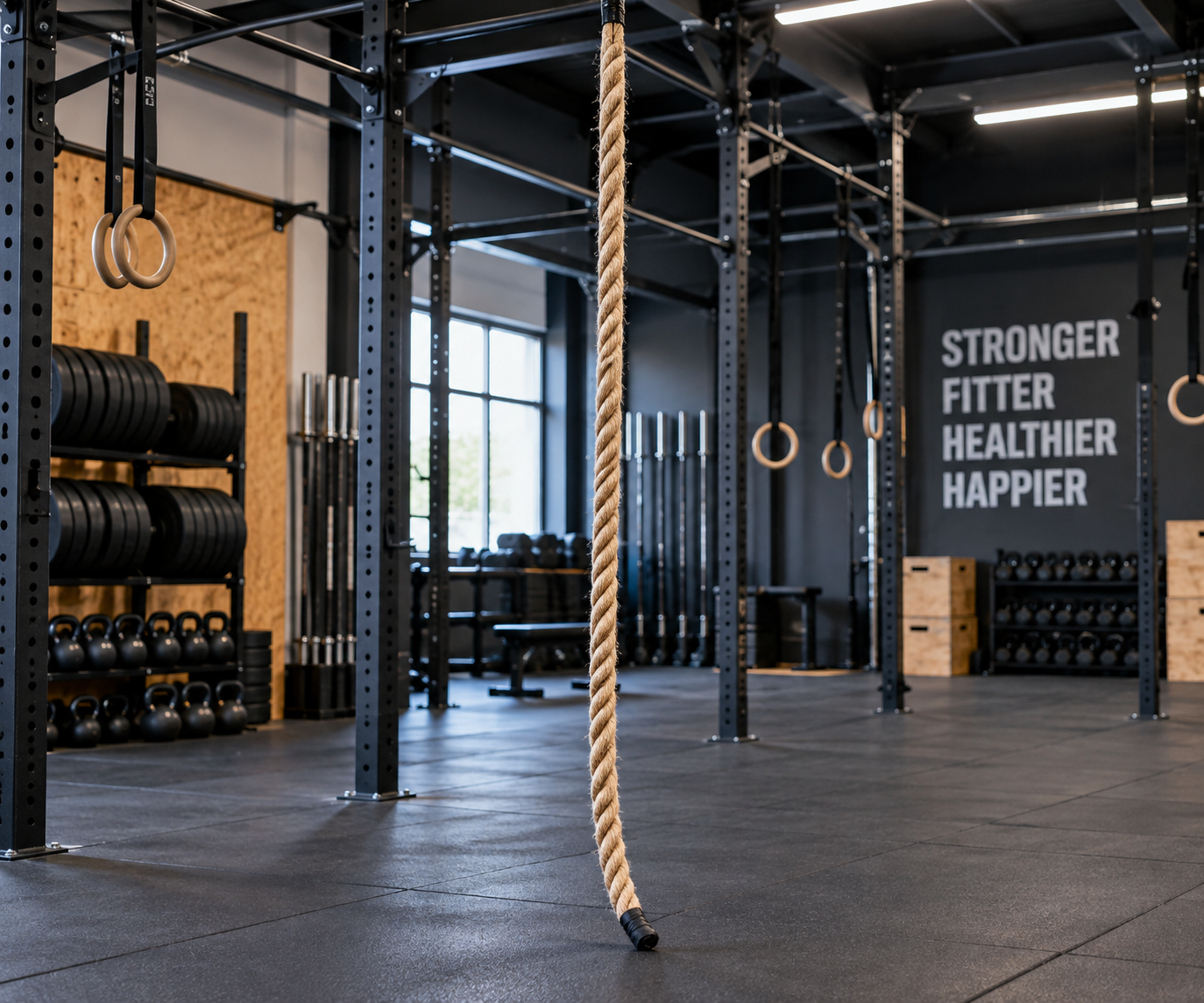
How to securely fix a climbing rope
A climbing rope is equipment used in functional training, athletic preparation, and rope climbing courses. The safety of the installation depends primarily on the quality of the anchorage structure, the correct choice of fastening components, and compliance with the manufacturer's instructions.
Fixing a climbing rope does not simply mean connecting a rope to a beam. It is necessary to verify that the load-bearing structure is suitable for the expected loads, use compatible connection systems, and arrange periodic checks to keep the system efficient over time.
This guide provides practical criteria for installing a climbing rope in a professional gym, highlighting the main risks, checks to be carried out before use, and the most common mistakes to avoid. For specific technical data, you must always refer to the manufacturer's documentation and, when necessary, to the verification of the structure by qualified personnel.
- Quick answer
- What are the main risks?
- What requirements must the anchorage meet?
- Checks before use
- How to organize the workstation
- Mistakes to avoid
- FAQ
- Evaluating the investment
How to securely fix a climbing rope?
A climbing rope must be installed exclusively on a structure designed or verified to support the expected loads. The anchorage system must use components compatible with the rope and the load-bearing structure, always following the manufacturer's instructions and a schedule of periodic inspections.
Before commissioning, it is advisable to check the available technical documentation, the integrity of the structure, and the correct assembly of all connection elements.
The safety of the installation depends on the entire system and not on a single component.
Decision criteria
Verifying the load-bearing structure, compatibility of fasteners, methods of use, accessibility for inspections, and scheduled maintenance represents the most reliable method to evaluate an installation.
Technical sources
Crucial information must be obtained from the climbing rope manufacturer's manuals, the documentation of the anchorage system, and any technical standards applicable to the sports facility.
What are the main risks?
The most significant risk stems from using an unverified structure or incompatible fastening components.
Even a high-quality rope cannot compensate for an improperly designed anchorage or one installed without following the manufacturer's instructions.
Additional critical issues may stem from lack of maintenance, rope wear, or the absence of periodic checks on the structure.
Structural risks
Corrosion, deformations, loose elements, and unauthorized modifications to the structure can compromise the safety of the workstation.
Risks during use
Improper use, crowding of the area, and lack of supervision increase the risk of accidents during training sessions.
What requirements must the anchorage system meet?
The anchorage must be compatible with the load-bearing structure and the installed climbing rope.
All components must belong to a coherent system and be installed according to the manufacturer's instructions, avoiding improvised adaptations.
It is important that the fixing point remains accessible for checks and maintenance operations.
Structure verification
The structure should be checked before installation and subsequently according to the maintenance schedule provided by the gym.
Fastening components
Connectors, connection systems, and accessories must be compatible with the rope model and the support used.
What checks to perform before use?
Before each session, it is advisable to perform a visual check of the rope, anchorage, and structure.
In-depth inspections must be planned periodically and recorded according to the procedures adopted by the facility.
Any sign of wear, damage, or unforeseen modification requires verification before putting the equipment back into service.
Daily check
Verify the integrity of the rope, the correct positioning of components, and the absence of obvious anomalies.
Scheduled checks
Periodic checks should follow the manufacturer's instructions, including inspections of the rope, fasteners, and load-bearing structure.
How to organize the training workstation?
A well-designed workstation must offer sufficient space for climbing, descending, and supervising the activity.
The presence of adequate shock-absorbing flooring contributes to the protection of the training area.
The climbing rope can be integrated with other stations dedicated to functional training while maintaining orderly paths free of interference.
Layout and space
The arrangement of the rope must guarantee freedom of movement and an adequate distance from other equipment.
Complementary equipment
Peg boards, pull-up bars, and other functional training equipment can complete a workstation dedicated to rope climbing.
What mistakes should be avoided?
Installing the rope without checking the structure is one of the most frequent mistakes.
It is equally important to avoid modifications to the fastening systems not provided by the manufacturer or to use components belonging to incompatible systems.
Neglecting scheduled maintenance or continuing to use a worn rope can compromise the safety of the entire installation.
Improvised anchorage
Fixing points must be designed or verified for the intended use and not adapted with temporary solutions.
Lack of checks
Proper management includes regular checks, recording of inspections, and replacement of components when indicated by the manufacturer.
FAQ
Can I fix a climbing rope to any beam?
No. The structure must be verified and prove compatible with the expected loads and the anchorage system used.
How often should the rope be checked?
Checks must follow the maintenance schedule provided by the manufacturer and the procedures adopted by the gym.
Is specific flooring needed?
Yes. The choice of surface must be consistent with the type of activity performed and the safety requirements of the facility.
What characteristics matter when choosing the rope?
Material, length, diameter, installation method, and compatibility with the anchorage system represent the main evaluation criteria.
Evaluating the investment
Installing a climbing rope in a professional gym requires a design approach that considers the load-bearing structure, fastening system, available space, and scheduled maintenance. Safety derives from the integration of all these elements and compliance with the manufacturer's instructions. Accurate design allows for the creation of a reliable workstation, easily inspectable, and suitable for progressive training programs aimed at both beginners and experienced athletes.
Comments (0)