
Trolley
You have no items in your shopping cart

 Budgets
 Dumbers
 Discs
Discs
 Benches
 Racks and Rigs
 Weights Holders
 Isotonic machines
 Calisthenics
 Cardio
 Kettlebells
 Flooring
 Gym Set
 Accessories
 Combat
 ARTI MARZIALI
 CONTAINER GYM
 Tug-Of-War
 Used Gym Equipment
 PILATES MACCHINARI
 GINNASTICA ARTISTICA
 CAMPI DA PADEL
 Prodotti in Pronta Consegna
 Informazioni
 IRONMAN
 Gift Card
- Donatif
- General information
- 0 I like it
- 8 Views
- 0 comments
- gym flooring, safety flooring, gym safety, shock-absorbing materials
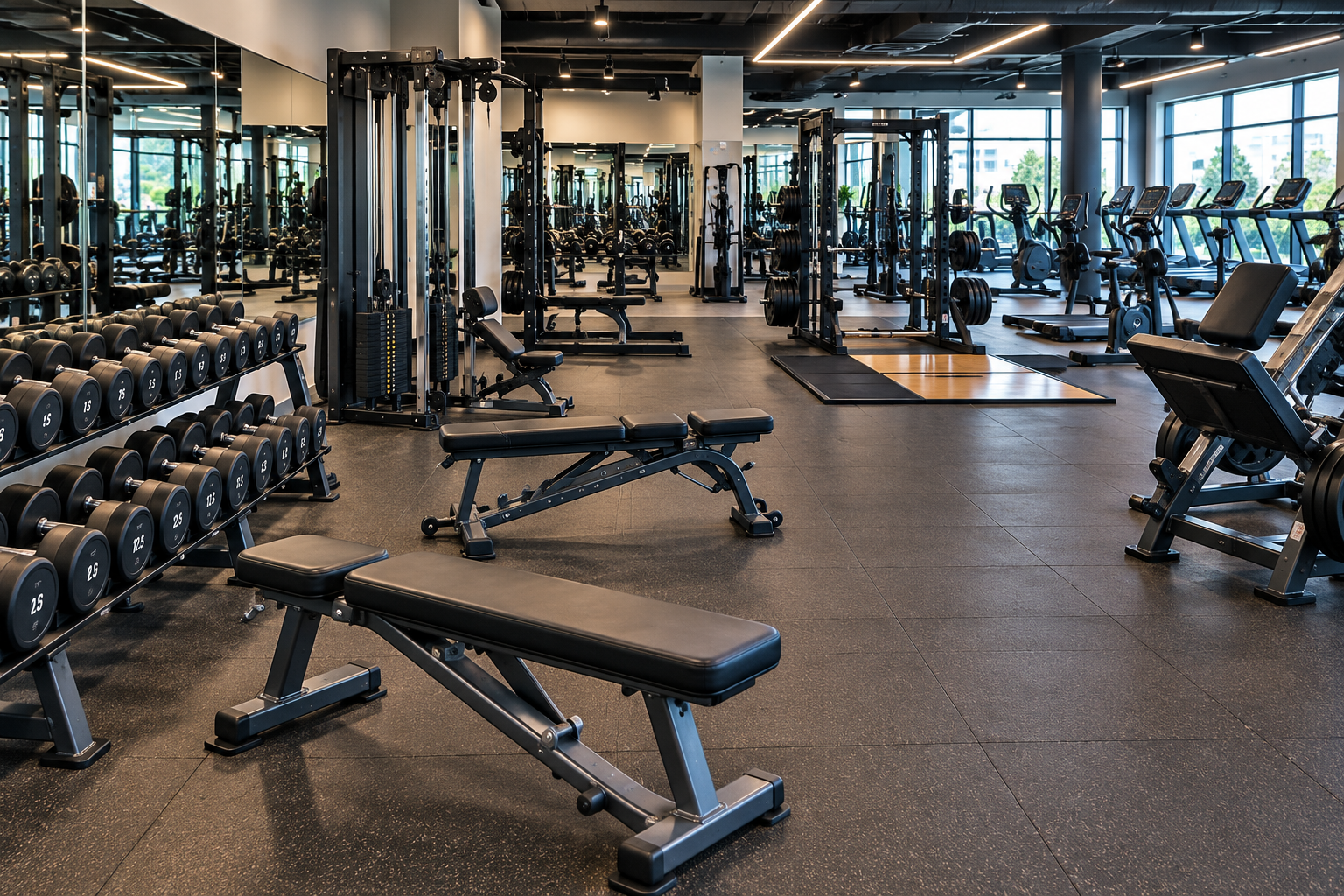
How to open a gym in Italy: a practical guide to planning business startup
Opening a gym in Italy requires careful planning that involves entrepreneurial, technical, organizational, and economic aspects. Before starting the business, it is essential to define the business model, verify the feasibility of the project, and prepare an investment plan consistent with the goals of the future facility.
The operational answer is to start with a detailed business plan, identify a property compatible with the project, verify applicable requirements, and plan the choice of equipment only after defining the gym layout. A methodical approach helps reduce errors and approach all startup phases with greater awareness.
This guide compiles verifiable criteria and practical indications dedicated to those who wish to start a gym in Italy, without replacing the specific insights dedicated to regulatory requirements, costs, or the technical design of the facility.
- Quick answer
- Where to start
- What steps to follow
- Practical criteria for design
- Mistakes to avoid
- How to plan the investment
- FAQ
How to open a gym in Italy?
The first step consists of defining the business model and verifying the economic sustainability of the initiative through a realistic business plan.
Subsequently, it is advisable to identify a suitable property, verify applicable requirements, design the facility layout, and select equipment consistent with the services that will be offered.
Only after these verifications is it advisable to proceed with the investments necessary to start the business.
What is the first step?
Defining the gym's positioning, target clientele, and value proposition represents the foundation of the entire entrepreneurial project.
Why prepare a business plan?
The business plan allows you to estimate investments, operating costs, expected revenues, and financial requirements before opening.
Where to start to design a gym?
Every project should start with an analysis of the reference market and potential demand in the area where you intend to operate.
It is useful to identify the format of the facility, define the services to offer, and establish the type of users the gym will target.
These decisions directly influence the choice of property, equipment, and space organization.
Target definition
Knowing the needs of future clients allows you to design environments and services consistent with the chosen positioning.
Format selection
A traditional gym, boutique gym, or specialized studio require different organizations and specific investments.
What steps to follow before opening?
After defining the project, it is advisable to identify the most suitable property by verifying its dimensions, internal layout, accessibility, and compatibility with the planned layout.
Subsequently, it is appropriate to prepare the space design, plan purchases, and schedule the activities necessary for setup.
Before opening, all technical, administrative, and organizational verifications planned for the project should be completed.
Property selection
The available space must be consistent with the expected number of users, the offered activities, and the organization of the gym.
Layout design
A functional distribution of areas improves facility management and facilitates user experience.
What practical criteria help with design?
Every choice should be supported by concrete data and a preliminary assessment of costs and benefits.
Among the elements to consider are available surface area, internal pathways, systems, expansion possibilities, and equipment quality.
Future maintenance and the availability of technical support should also be evaluated in the design phase.
Equipment selection
Equipment must be selected based on the project, avoiding purchases inconsistent with the business model.
Space organization
Reception, weight room, class areas, locker rooms, and technical rooms should be designed to ensure functionality and ease of management.
What mistakes to avoid?
One of the most frequent mistakes consists of starting purchases without having completed the gym design.
Another critical issue concerns the underestimation of overall investment costs or the failure to provide resources dedicated to unforeseen events.
Even choosing a property poorly suited to the facility's format can lead to costly modifications during setup.
Unrealistic budget
An incomplete financial plan can make it harder to sustain necessary expenses in the early stages of the business.
Early purchases
Equipment selection should only take place after defining the layout and operational needs of the gym.
How to plan the investment?
Before opening a gym, it is advisable to prepare a detailed estimate that includes property, systems, equipment, flooring, furnishings, management software, and startup costs.
The choice of equipment should be made by comparing construction quality, technical documentation, maintenance, and support. To explore the various available categories, you can consult the section dedicated to gym equipment and evaluate the solutions most consistent with your project.
Gradual investment planning also allows you to leave margins for future expansions without compromising the facility's functionality from opening day.
Financial programming
The financial plan should include initial investments, recurring costs, expected cash flows, and resources dedicated to future updates.
Supplier selection
In addition to price, it is advisable to compare equipment quality, spare parts availability, technical support, and provided documentation.
FAQ
What is the first document to prepare?
The business plan represents one of the main tools to evaluate the economic sustainability of the initiative before startup.
When to choose the equipment?
After defining the facility project, space layout, and the characteristics of the services that will be offered.
Is it useful to plan for future expansion?
Yes. Flexible design can facilitate the introduction of new equipment or services without radical structural modifications.
What sources to consult before opening a gym in Italy?
For administrative and regulatory aspects, it is appropriate to refer to applicable national and local regulations, building codes, and instructions from competent authorities. For equipment and systems, it is advisable to consult manuals, technical documentation, and instructions provided by manufacturers. The structure of this content follows an answer-first approach with verifiable criteria, consistent with the provided brief.
Comments (0)