
Trolley
You have no items in your shopping cart

 Budgets
 Dumbers
 Discs
Discs
 Benches
 Racks and Rigs
 Weights Holders
 Isotonic machines
 Calisthenics
 Cardio
 Kettlebells
 Flooring
 Gym Set
 Accessories
 Combat
 ARTI MARZIALI
 CONTAINER GYM
 Tug-Of-War
 Used Gym Equipment
 PILATES MACCHINARI
 GINNASTICA ARTISTICA
 CAMPI DA PADEL
 Prodotti in Pronta Consegna
 Informazioni
 IRONMAN
 Gift Card
- Donatif
- General information
- 0 I like it
- 480 Views
- 0 comments
- gym flooring, safety flooring, gym safety, shock-absorbing materials
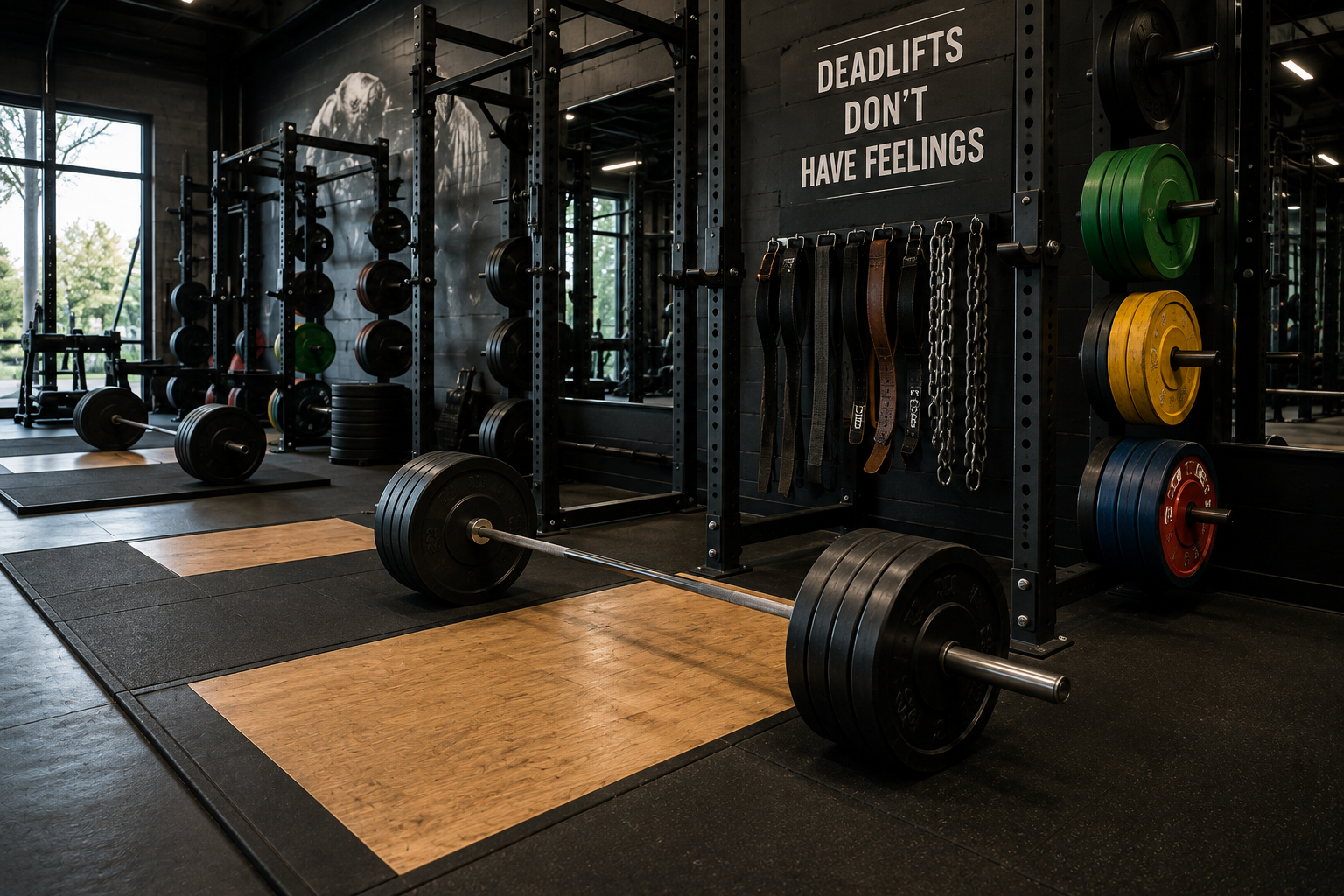
How to set up a safe Deadlift area in an apartment building
Training with deadlifts in an apartment is possible, but it requires careful planning of the training station. The deadlift is one of the most effective exercises for developing strength, muscle mass, and power, but it is also the one that generates the most vibrations, especially when the barbell is set down rapidly at the end of the repetition. Without an adequate setup, the noise can disturb neighbors and housemates, while repeated impacts can damage floors, screeds, and coverings.
Fortunately, there are solutions designed specifically for this type of need. The combination of gym bumper plates, quality technical flooring, and proper execution technique allows for a significant reduction in noise, vibrations, and stress on the building's structure, without sacrificing training quality.
In this guide, we will analyze all the elements necessary to create an efficient and safe deadlift area even in an apartment building, evaluating materials, configurations, accessories, and practical tips that allow you to train with greater peace of mind both in home gyms and small professional studios.
- Why design a dedicated deadlift area
- Why choose bumper plates
- The importance of technical flooring
- How to reduce noise and vibrations
- Deadlift platform: bought or DIY?
- What equipment to use
- The most common mistakes to avoid
- How to create a quiet and long-lasting home gym
Why design a dedicated deadlift area
The deadlift involves large muscle groups and allows for the use of heavy loads. For this very reason, the forces transmitted to the floor are higher compared to many other exercises performed with a barbell.
In a commercial gym, the flooring is designed to absorb such stresses, whereas in an apartment, the domestic flooring is not intended for this use. Proper planning of the station protects both the floor and the building, while simultaneously improving training comfort.
Creating a dedicated area also helps maintain order, increase safety, and create an optimized space for one of the fundamental strength exercises.
Why a dedicated station is worth it
A surface designed specifically for deadlifts distributes loads better and reduces wear on the domestic floor.
This allows you to train with greater peace of mind even several times a week.
Greater safety during workouts
A stable base improves balance, precision of execution, and barbell management during all phases of the movement.
A well-organized station also makes it easier to keep the training area tidy.
Why choose bumper plates
Bumper plates represent the ideal solution for those who want to train at home. Thanks to their high-density rubber coating, they absorb a significant portion of the energy generated when setting down the barbell.
Unlike traditional cast iron plates, bumpers reduce the noise produced by impacts and limit the transmission of vibrations to the floor.
These features make them particularly suitable for strength and Cross Training workouts performed in residential environments.
Protection of floor and barbell
The rubber protects both the plates and the barbell from repeated impacts, helping to increase the overall durability of the equipment.
The floor covering also benefits from a lower concentration of forces during each drop.
Workouts with controlled drops
Although it is not advisable to drop the barbell unnecessarily in an apartment, bumper plates allow you to handle any more energetic drops with greater safety compared to traditional plates.
This feature represents one of the main reasons for their popularity in modern home gyms.
The importance of technical flooring
Even the best bumper plates cannot replace flooring designed to absorb impacts. The floor is, in fact, the second fundamental element for reducing noise and vibrations.
Technical rubber surfaces distribute forces over a wider area and limit the transmission of stresses to the building's structure.
A correct combination of plates and flooring significantly improves acoustic comfort during workouts.
Choosing gym rubber flooring
High-density rubber flooring offers a good balance between stability, protection, and vibration absorption.
The thickness should be evaluated based on the loads used and the frequency of workouts.
How thick should it be?
The higher the load usually used, the greater the importance of a surface with adequate absorption capacity.
Choosing the correct thickness helps protect both the equipment and the existing flooring.
How to reduce noise and vibrations
In addition to the equipment, training technique also significantly influences the level of noise produced. Controlling the eccentric phase of the deadlift reduces impacts and simultaneously improves movement control.
The layout of the station within the home can also make a difference. Positioning the deadlift area away from shared walls and using well-insulated surfaces helps limit the propagation of vibrations.
A combination of good technique and adequate equipment represents the most effective solution.
Technique before equipment
Guiding the barbell during the descent instead of letting it drop significantly reduces noise and improves exercise control.
This approach also protects the barbell, plates, and floor.
Managing deadlift noise at home
Training at appropriate times, using technical flooring and bumper plates, and always controlling the final phase of the movement allows you to significantly limit disturbances for neighbors.
Small daily adjustments make a big difference in the long run.
Deadlift platform: bought or DIY?
A dedicated platform represents one of the most interesting investments for those who regularly practice deadlifts. It allows you to create a stable surface and effectively protects the floor underneath.
There are professional solutions ready to use or configurations that can be built independently using quality panels and rubberized surfaces.
The choice depends on the available space, budget, and intensity of the workouts.
Professional platform
Dedicated platforms guarantee materials specifically designed to absorb impacts and offer a stable base during deadlift execution.
They are particularly suitable for frequent use and heavy loads.
Building a DIY deadlift platform
Those with adequate skills can build a custom platform using structural panels and rubberized surfaces, always paying attention to stability and material quality.
Careful planning is essential to achieve safety and durability over time.
What equipment to use
An effective deadlift area is born from the integration of multiple elements. Barbell, bumper plates, quality collars, technical flooring, and dedicated racks contribute to creating an orderly and functional environment.
The choice of barbell also influences the training experience, especially when using heavy loads regularly.
Evaluating each component as part of a single system allows you to achieve better results in terms of both performance and safety.
Barbell suitable for deadlifting
A barbell built with quality materials offers greater reliability and maintains constant performance during intensive workouts.
Compatibility with bumper plates is naturally a fundamental requirement.
Organizing accessories
Plate supports, collars, and racks improve the order and safety of the station, making workouts smoother.
A well-organized gym also facilitates equipment maintenance.
The most common mistakes to avoid
Many enthusiasts invest exclusively in plates, completely neglecting the role of flooring. Others buy mats that are too thin and not designed to support the impacts generated during deadlifts.
Another mistake consists of dropping the barbell unnecessarily even when it is not required, increasing noise and stress without any technical benefit.
Balanced planning of the station allows you to avoid these problems and improve the overall training experience.
Underestimating the floor
An inadequate surface can be progressively damaged even when using quality bumper plates.
Floor protection should always be considered an integral part of the investment.
Thinking only about the weight
Training in an apartment also requires attention to acoustic comfort, vibrations, and respect for other residents.
Responsible management makes it possible to practice deadlifts without compromising coexistence.
How to create a quiet and long-lasting home gym
Creating a dedicated deadlift area requires a holistic view. The use of gym bumper plates, adequate technical flooring, and correct movement execution allows you to significantly reduce noise and vibrations, preserving both the equipment and the home.
To choose components designed for strength and Cross Training workouts, you can consult the range of Donatif bumper plates, developed to offer high performance, long durability, and greater protection during home and professional workouts.
Investing in the right combination of barbell, bumper plates, and flooring means building an efficient, safe home gym capable of supporting your training for many years, even when the available space is that of an apartment in a building.
Comments (0)