
Trolley
You have no items in your shopping cart

 Budgets
 Dumbers
 Discs
Discs
 Benches
 Racks and Rigs
 Weights Holders
 Isotonic machines
 Calisthenics
 Cardio
 Kettlebells
 Flooring
 Gym Set
 Accessories
 Combat
 ARTI MARZIALI
 CONTAINER GYM
 Tug-Of-War
 Used Gym Equipment
 PILATES MACCHINARI
 GINNASTICA ARTISTICA
 CAMPI DA PADEL
 Prodotti in Pronta Consegna
 Informazioni
 IRONMAN
 Gift Card
- Donatif
- Training and exercises
- 0 I like it
- 1748 Views
- 0 comments
READING TIME: 7 MINUTES ➤➤
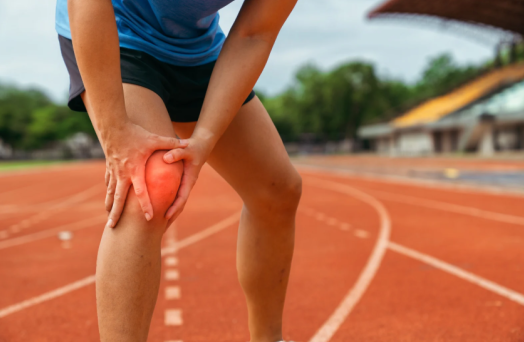
It’s not uncommon to feel discomfort or persistent knee pain after a run. For many amateur runners, especially those who have only recently started practicing this sport, this type of issue can become a major obstacle to training consistency. But knee pain is not inevitable: often, the problem is not running itself, but the way you run. In this article, we’ll analyze the five most common mistakes that can overload the joints and provide practical solutions to prevent them, allowing you to improve your performance without compromising your health.
You don’t necessarily have to stop running: perhaps you simply need to change how you do it. Proper running technique not only reduces the risk of injury, but also makes the activity more efficient, enjoyable, and sustainable over time. Let’s discover where the mistakes hide and how to correct them.
- Why does the knee hurt after running?
- Mistake 1: Heavy heel striking
- Mistake 2: Wearing shoes that don’t suit your stride
- Mistake 3: Running too fast without progression
- Mistake 4: Always running on the same surface
- Mistake 5: Ignoring pain signals
- How to run without hurting your knees
Why does the knee hurt after running?
Knee pain after running is one of the most common complaints among recreational runners. It often appears as general discomfort, soreness, or, in more serious cases, sharp localized pain that limits movement. This symptom can have many causes, but the most common include technical mistakes, unsuitable footwear, poor joint mobility, and training plans that progress too quickly.
The so-called “runner’s knee”, also known as patellofemoral pain syndrome, is a common condition caused by mechanical overload and worsened by inefficient running mechanics. The important thing is to recognize the warning signs before they turn into actual injuries. Identifying the causes and correcting them early means being able to train consistently without risking long forced breaks.
Mistake 1: Heavy heel striking
One of the most common biomechanical mistakes is an excessively hard heel strike. This type of impact creates a force that travels up to the knee, significantly increasing stress on the joint. When the foot lands too far in front of the body’s center of gravity, the movement loses fluidity and the knee has to work harder to absorb the shock.
Correcting this does not necessarily mean switching to a forefoot strike, but rather aiming for a more controlled landing beneath the body, with a slightly higher cadence (around 170–180 steps per minute). This small adjustment can make a major difference by reducing impact and improving running stability.
Mistake 2: Wearing shoes that don’t suit your stride
Running with unsuitable shoes is like driving with the wrong tires: sooner or later, something gets damaged. Every runner has a different stride mechanics, and using shoes that are too rigid, overly minimalist, or worn out can increase joint stress. Shoes should be selected according to body weight, foot strike, running surface, and experience level.
A common mistake is choosing the most advertised or lightest model without considering that an overly reactive or thin shoe can increase microtrauma to the knee, especially if the runner has not yet developed solid running technique. Having a gait analysis or consulting a specialized running store can help identify footwear that truly fits your needs.
Mistake 3: Running too fast without progression
Chasing an overly ambitious pace is one of the most common beginner mistakes. Many people run faster than they should without building a proper aerobic base or following a gradual progression. This attitude can lead to chronic overload that manifests as joint pain, especially in the knees.
The principle to follow is gradual progression: increase pace, mileage, and intensity only when the body is ready. Alternating slow sessions with faster intervals, listening to your body, and introducing changes progressively is the best strategy to improve performance without paying the price of injury.
Mistake 4: Always running on the same surface
Many runners always choose the same route, often asphalt or track, believing they are doing the right thing. In reality, surface monotony can increase stress on the knees and hips, because the foot strike repeats itself in exactly the same way without activating supporting muscles differently.
Varying the running surface — alternating between dirt paths, trails, grass, and asphalt — helps distribute stress more evenly and improves muscular balance. Uneven terrain also forces the ankles and core muscles to work more actively, reducing movement stiffness and easing the load placed on the knees.
Mistake 5: Ignoring pain signals
The desire not to stop can become a boomerang. One of the most dangerous mindsets is to minimize pain and consider it an unavoidable part of sports. But pain is a signal sent by the body to indicate imbalance, overload, or poor technique.
Running through pain is not a sign of determination, but a risk. The best way to prevent more serious issues is to listen to your body, intervene at the first signs with mobility exercises, recovery strategies, and technique improvements, and — if necessary — temporarily reduce or pause training to avoid chronic problems.
How to run without hurting your knees
Changing the way you run is often more effective than stopping altogether. Small adjustments in technique, greater body awareness, choosing the right shoes, and smarter training programming can make a huge difference. The goal is not only to prevent injuries, but also to make running a sustainable long-term habit.
Prevention starts with proper movement mechanics, listening to your body’s signals, and adapting training to your current condition. Running well means running longer: with less pain, greater efficiency, and more freedom of movement. And your knees will thank you for it.
Comments (0)