
Trolley
You have no items in your shopping cart

 Budgets
 Dumbers
 Discs
Discs
 Benches
 Racks and Rigs
 Weights Holders
 Isotonic machines
 Calisthenics
 Cardio
 Kettlebells
 Flooring
 Gym Set
 Accessories
 Combat
 ARTI MARZIALI
 CONTAINER GYM
 Tug-Of-War
 Used Gym Equipment
 PILATES MACCHINARI
 GINNASTICA ARTISTICA
 CAMPI DA PADEL
 Prodotti in Pronta Consegna
 Informazioni
 IRONMAN
 Gift Card
- Donatif
- General information
- 0 I like it
- 694 Views
- 0 comments
- gym flooring, safety flooring, gym safety, shock-absorbing materials
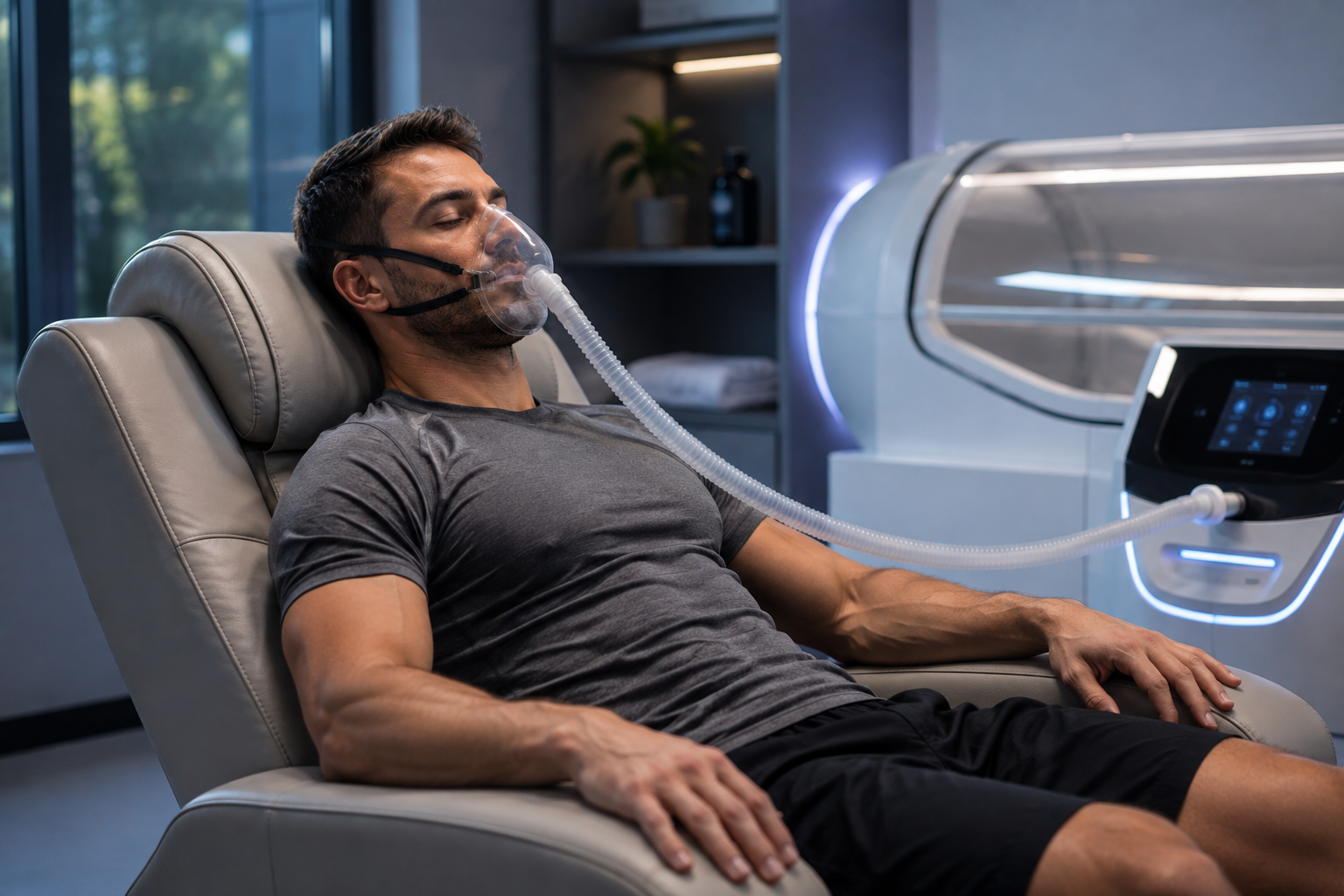
Hypoxic Recovery Accessories: Beyond Training
Hypoxic training is often associated exclusively with the active phase of performance, such as endurance sessions, altitude acclimatization protocols, or preparation for competitions in high-altitude environments. However, an increasingly important part of the modern approach concerns recovery and rest in controlled hypoxic conditions. For many athletes, in fact, the quality of time spent outside of training represents a determining element for optimizing physiological adaptations.
Correctly integrating hypoxia during sleep or relaxation phases requires careful environmental design. It is not enough to have a generator or a dedicated structure: comfort, parameter control, and the quality of accessories directly influence the user's experience. A well-configured solution allows for the creation of a more natural and sustainable environment in the long term.
Hypoxic recovery accessories include various elements designed to improve the daily use of hypoxic systems, from tents dedicated to rest to devices for humidity control and ergonomic elements. Choosing these supplements correctly means transforming hypoxia from a simple training technology into a true tool integrated into the athlete's recovery routine.
The role of hypoxic recovery
Recovery represents a fundamental component of any athletic preparation program. Sleep quality, stress management, and the body's ability to adapt to stimuli received during training directly influence the continuity and effectiveness of the athletic journey.
Hypoxia protocols applied during rest phases are used by some athletes to integrate preparation strategies oriented toward simulating an altitude environment. In these contexts, the goal is to create controlled conditions that can be inserted into the routine without interfering with natural recovery.
To obtain an effective experience, however, the environment must be designed considering all elements that contribute to the user's well-being. Temperature, air quality, physical comfort, and ease of management become central aspects in the choice of accessories.
Hypoxia during sleep
Sleep represents a particularly interesting phase for those who use hypoxic systems because it allows for the integration of the protocol during a prolonged period of rest. A hypoxic sleep tent allows for the creation of a dedicated environment without necessarily modifying an entire room.
This solution is particularly appreciated by athletes who wish to maintain flexibility in managing their home space. The ability to install and use the system in a modular way allows it to be adapted to one's daily needs.
Recovery and performance optimization
Performance-oriented athletes increasingly seek solutions capable of supporting every phase of preparation. Recovery is no longer considered a passive moment, but a strategic part of the improvement path.
The integration of tools dedicated to hypoxia during rest allows for the creation of a more complete approach, in which training and recovery work in a coordinated manner.
Hypoxic sleep tents
Hypoxic tents represent one of the most widespread solutions for those who wish to use hypoxia during sleep. Their main characteristic is the ability to create a controlled space around the bed, connected to a generator that modifies the composition of the internal air.
Compared to a complete hypoxic chamber, a tent offers greater flexibility and requires simpler space organization. This makes it an interesting solution for athletes who train at an advanced level but do not have environments dedicated exclusively to hypoxia.
The quality of the experience, however, depends on the choice of connected components. The generator, air distribution systems, sensors, and comfort accessories must work together to ensure stable conditions during rest.
Advantages of the modular solution
Modularity is one of the main advantages of hypoxic tents. The athlete can start with an essential configuration and subsequently add components based on their needs.
This feature allows for the progressive customization of the system and its adaptation to the evolution of athletic goals.
Choosing the right generator
The generator represents the heart of the system and must be sized correctly in relation to the structure used. An adequate device allows for maintaining more stable conditions and improving the overall quality of the protocol.
The choice must consider the volume of the tent, frequency of use, and the specific needs of the athlete.
Accessories for comfort during rest
When a hypoxic system is used during sleep, comfort becomes a determining element. An uncomfortable environment can make it difficult to maintain the continuity of the protocol and reduce the value of the investment made.
Accessories dedicated to recovery therefore have the task of improving the daily experience, making use more natural and integrable into the athlete's routine.
These elements can include ergonomic solutions, systems to improve environmental quality, and components designed to make device management easier.
Ergonomics and position during recovery
Physical comfort directly influences the quality of rest. Ergonomic elements can contribute to creating a more relaxed position during recovery phases, especially when hypoxia is also used during moments of relaxation.
Proper space organization allows for the integration of technology without turning it into an invasive element.
User experience and protocol continuity
Continuity represents one of the most important aspects in recovery paths. A system that is simple to use and comfortable increases the probability that the athlete will be able to maintain the planned routine.
Accessories therefore become tools for improving the sustainability of the entire path.
Managing the hypoxic chamber environment
The quality of the internal environment deeply influences the perceived effectiveness of a hypoxic system. Even when the main goal is recovery, it is necessary to maintain controlled and consistent conditions.
The management of air, temperature, and humidity contributes to creating a more pleasant and functional space. A complete design therefore considers not only the oxygen level, but the entire environmental balance.
Accessories represent an important part of this management because they allow the system to be adapted to the specific characteristics of the user.
Air quality control
During rest, spending many hours inside a controlled environment requires attention to air quality. Filtration, exchange, and correct distribution are elements that contribute to comfort.
Adequate management allows for maintaining a more balanced and pleasant environment.
System customization
Every athlete has different needs based on their goals, the discipline practiced, and their own habits. The ability to customize the system through specific accessories represents an important advantage.
A personalized configuration allows for an experience that is more consistent with one's own path.
Humidification and air quality
Humidity management is an aspect often underestimated in hypoxic systems used for recovery. Spending many hours in a controlled environment requires attention to respiratory comfort and perceived air quality.
A hypoxic chamber humidifier can be a useful supplement to improve environmental conditions, especially in contexts where the air tends to be particularly dry.
Like any component, the humidification system must also be chosen considering compatibility, ease of management, and the specific needs of the environment.
Balance between humidity and comfort
A correct level of humidity contributes to the perception of comfort during rest. An environment that is too dry or excessively humid can negatively affect the user's experience.
Regulation must therefore be managed in a balanced way.
Maintenance of humidification systems
Like all technical accessories, humidifiers also require proper maintenance. Cleaning and periodic management allow the system to remain efficient over time.
Adequate maintenance protects comfort and environmental quality.
How to choose hypoxia accessories
The choice of accessories must start from the user's goals. A professional athlete will have different needs compared to someone who uses hypoxia as a tool for general well-being.
Correctly evaluating the context allows for avoiding unnecessary purchases and building a truly effective system.
The main elements to consider concern comfort, technical compatibility, ease of use, and the possibility of future evolution.
Evaluating the athlete's needs
A performance-oriented athlete must consider how the system fits into their routine. Accessories must support goals without complicating daily management.
Operational simplicity represents an important value.
Quality and reliability of components
The quality of accessories directly influences the durability and effectiveness of the system. Reliable components reduce operational problems and improve the overall experience.
Choosing products designed to work with hypoxic systems allows for greater peace of mind in the long term.
Investment in athletic recovery
The integration of hypoxia into recovery strategies represents an approach increasingly oriented toward personalization and performance optimization. However, the value of the system depends on the ability to create an environment truly suitable for daily use.
Accessories are not simple additional elements, but components that improve comfort, control, and practicality. A well-configured tent, an adequate air management system, and tools dedicated to well-being contribute to making the protocol more sustainable over time.
For performance-driven athletes and enthusiasts of technologies applied to well-being, correctly designing one's hypoxic environment means going beyond simple training. The quality of recovery becomes a strategic part of the path, where every detail can contribute to creating a more complete and personalized experience.
Total path optimization
A complete approach considers training, recovery, and environment as connected elements. Accessories allow for building a solution closer to individual needs.
Customization therefore becomes a tool for improving the continuity and quality of the path.
Innovation and well-being in recovery
Modern hypoxic technologies offer new possibilities for those who wish to integrate advanced tools into their preparation. Accessories represent the link between technology and daily use.
A carefully designed system allows for transforming recovery into an active and strategic phase of performance.
Comments (0)