
Trolley
You have no items in your shopping cart

 Budgets
 Dumbers
 Discs
Discs
 Benches
 Racks and Rigs
 Weights Holders
 Isotonic machines
 Calisthenics
 Cardio
 Kettlebells
 Flooring
 Gym Set
 Accessories
 Combat
 ARTI MARZIALI
 CONTAINER GYM
 Tug-Of-War
 Used Gym Equipment
 PILATES MACCHINARI
 GINNASTICA ARTISTICA
 CAMPI DA PADEL
 Prodotti in Pronta Consegna
 Informazioni
 IRONMAN
 Gift Card
- Donatif
- General information
- 0 I like it
- 9975 Views
- 0 comments
READING TIME: 3 MINUTES ➤➤
Martial Arts: Origins, Styles and Benefits
- Introduction
- History and Origins of Martial Arts
- Main Martial Arts Disciplines
- Types and Styles of Martial Arts
- Benefits of Martial Arts
- Traditional vs Modern Martial Arts
- Conclusion
Introduction
Martial arts have fascinated humanity for centuries thanks to their balance between mental discipline, technique and philosophy. They are not just fighting techniques, but real cultural systems that have evolved through the centuries, shaping both the body and the spirit of practitioners. In this article we will explore the history of martial arts, the main existing styles, their psychological and physical benefits, and their role in the modern world.
From the Eastern warrior’s path to the sport-oriented approach of modern disciplines, each martial art tells a story of identity, values and personal growth. Whether you are a curious beginner or an experienced practitioner, this guide will accompany you in discovering the diverse universe of martial arts.
History and Origins of Martial Arts
Martial arts have their roots in ancient times, when civilizations developed techniques for self-defense and warfare strategies. In Asia in particular, these techniques intertwined with religious and moral philosophies, giving rise to codified systems such as Kung Fu in China, born in the Shaolin monasteries, or Karate in Japan, influenced by Okinawan culture and Chinese techniques.
Over the centuries, martial arts spread throughout the world, evolving according to cultural and social contexts. Medieval Europe had forms of hand-to-hand combat and armed dueling, while in South America capoeira emerged, born from the fusion of African and Brazilian culture. The history of martial arts is therefore a complex mosaic of experiences and cultural exchanges.
Main Martial Arts Disciplines
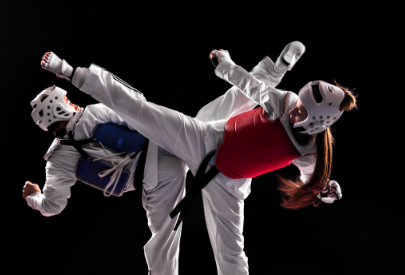
Among the most well-known disciplines are Karate, focused on punches and kicks; Judo, which emphasizes throws and joint locks; Taekwondo, the Korean art famous for its spectacular kicks; and Aikido, based on harmonious defense and control of the opponent’s aggression. There is also Kung Fu, which includes hundreds of Chinese styles, and Brazilian Jiu Jitsu, specialized in ground fighting.
Each discipline has its own identity, distinctive techniques and values, yet they all share the goal of cultivating self-control, respect and perseverance. Martial arts are not only about fighting, but about growing as human beings.
Types and Styles of Martial Arts
Martial arts can be divided into traditional and modern styles, depending on their technical and philosophical structure. Traditional arts include codified forms such as Shotokan Karate, Ueshiba’s Aikido or Shaolin Quan, often linked to rituals and precise hierarchies. Modern styles, such as Krav Maga or Jeet Kune Do, instead focus on immediate effectiveness and adaptability.
Another important distinction concerns their origin: there are Eastern martial arts, deeply spiritual, and Western disciplines born from sporting and military evolution. Each style represents a different response to a common goal: learning to defend oneself, train both body and mind, and improve oneself.
Benefits of Martial Arts
Regular practice of martial arts provides numerous physical and mental benefits. It improves coordination, balance, cardiovascular endurance and muscular strength. From a psychological perspective, it helps manage stress, strengthens self-confidence and develops inner discipline.
It is no coincidence that more and more schools and sports centers offer martial arts for children as an educational and social development tool. For adults, it is an effective way to maintain physical and mental well-being while learning useful self-defense techniques for everyday life.
Traditional vs Modern Martial Arts
When comparing traditional and modern martial arts, the question is not which one is “better”, but what one seeks from practice. Traditional arts offer a deep spiritual and cultural journey, often enriched with rituals and philosophical teachings. Modern systems appeal to those looking for fast, practical and effective tools for self-defense and physical conditioning.
MMA (mixed martial arts) represent today the peak of martial arts integration, combining techniques from different styles into a competitive and global system. They symbolize a martial world that is constantly evolving, one that respects its roots while looking toward the future.
Conclusion
Martial arts are much more than combat techniques: they are a universal language, a bridge between cultures and a true school of life. Through practice, every individual can discover their limits, overcome them and find balance between body and mind.
Whether you want to learn self-defense, improve your physical fitness or explore an ancient tradition, there is a martial art suited to you. Discover the martial arts course that suits you best and start your journey today.
Comments (0)