
Trolley
You have no items in your shopping cart

 Budgets
 Dumbers
 Discs
Discs
 Benches
 Racks and Rigs
 Weights Holders
 Isotonic machines
 Calisthenics
 Cardio
 Kettlebells
 Flooring
 Gym Set
 Accessories
 Combat
 ARTI MARZIALI
 CONTAINER GYM
 Tug-Of-War
 Used Gym Equipment
 PILATES MACCHINARI
 GINNASTICA ARTISTICA
 CAMPI DA PADEL
 Prodotti in Pronta Consegna
 Informazioni
 IRONMAN
 Gift Card
- Donatif
- General information
- 0 I like it
- 48 Views
- 0 comments
- gym flooring, safety flooring, gym safety, shock-absorbing materials
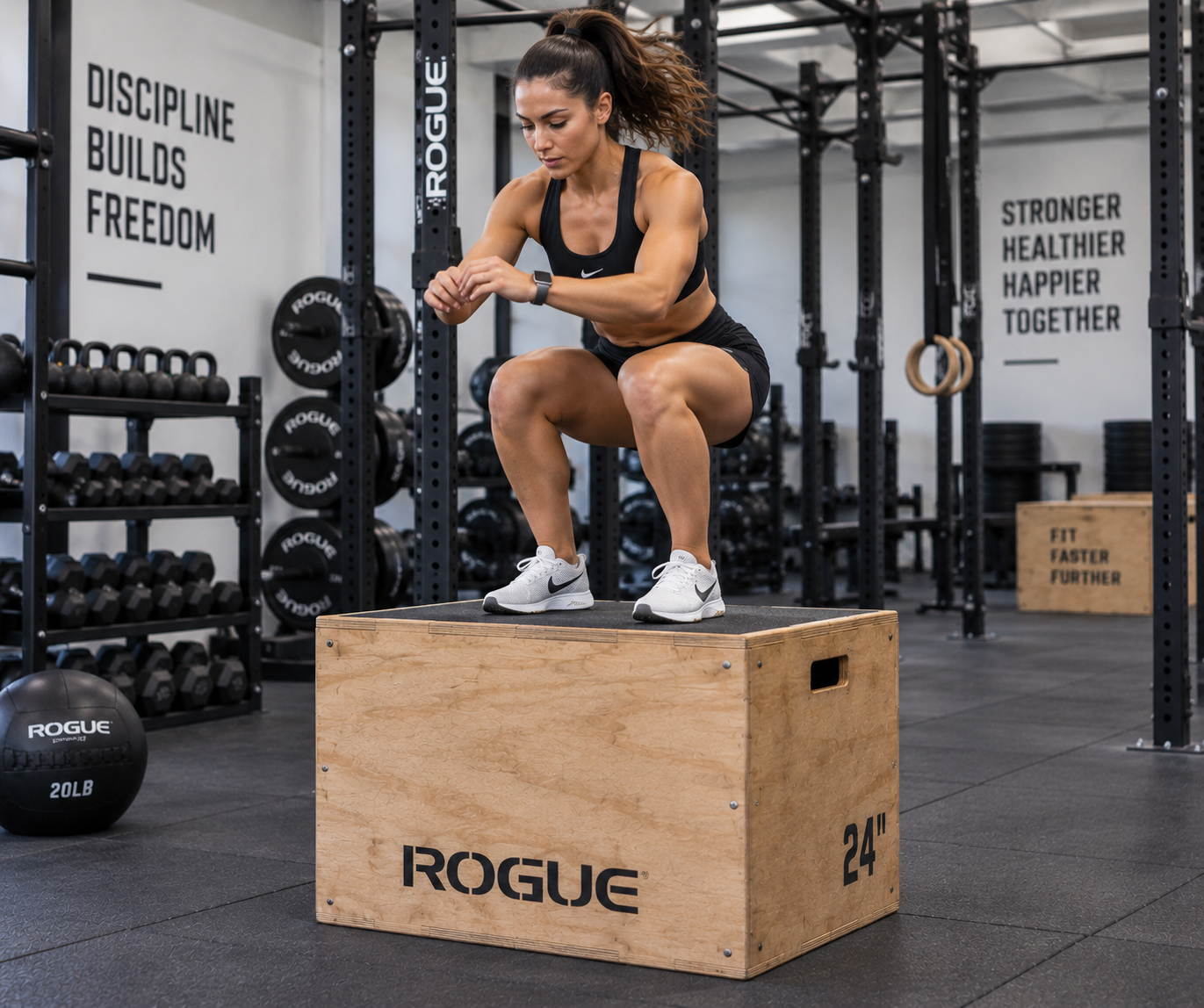
Plyo box in a professional gym: functional area equipment
A plyo box intended for a professional gym should be placed within a functional area designed to allow safe movements, technical progressions, and continuous use. The choice of configuration depends not only on the box, but also on the available space, flooring, equipment distribution, and the organization of training flows.
Effective design allows for the integration of the plyo box into programs dedicated to athletic preparation, functional training, and conditioning without interfering with other stations. A rational layout also improves user safety and facilitates the work of instructors during individual and group sessions.
Before purchasing one or more plyo boxes, it is advisable to define the area layout, identify the type of users, and verify that each station has the necessary space to perform jumps, step-ups, and other exercises in a controlled manner.
- Quick answer
- What requirements must the functional area have
- How to configure the layout
- Comparison table
- How to integrate the plyo box with other equipment
- Safety and maintenance
- Design errors to avoid
- FAQ
- How to evaluate the investment
How to design a functional area with plyo boxes?
A station dedicated to the plyo box should provide a stable surface, free space around the equipment, and a configuration that allows exercises to be performed without interference with other stations. The layout must be designed considering the type of training, the number of users, and the possibility of using boxes with different heights.
An orderly distribution facilitates class management and makes access to the various equipment present in the functional area easier.
The design should always start with the analysis of available space and the facility's goals.
What is the first element to evaluate?
The starting point consists of defining the operating area dedicated to plyometric exercises and verifying that each station can be used without obstacles.
Why does the type of user matter?
A gym frequented by beginners presents different needs compared to a center dedicated to athletic preparation or advanced functional training.
What requirements must the functional area have?
The area should allow the execution of movements with sufficient space to step up, step down, and land in a controlled manner.
The distribution of stations must favor user circulation while avoiding congestion points during peak hours.
The choice of surface also contributes to the overall quality of the area destined for plyometric exercises.
Organizing the operating space
Each station should maintain a free area around the box to allow the execution of movements without interference.
Managing internal pathways
Access pathways must remain clear even during group sessions to facilitate movement between different stations.
How to configure the area layout?
The layout should allow a natural progression between the various stations of the functional circuit, keeping the plyo box easily accessible.
An orderly configuration facilitates instructor control and improves the organization of individual and collective workouts.
The arrangement of the boxes should also allow the replacement and maintenance of the equipment without interrupting activities.
Linear configuration
A linear arrangement is often suited for areas dedicated exclusively to plyometric exercises.
Circuit configuration
In circuits, the plyo box can be paired with a professional step, bodyweight exercises, and other conditioning stations as long as each activity has the necessary space.
Comparison table
This summary helps evaluate the main elements of the design.
| Element | To verify | Objective |
|---|---|---|
| Space | Free area around the box | Movements without obstacles |
| Heights | Compatibility with users | Technical progression |
| Material | Intended use | Durability and practicality |
| Layout | Training flows | Efficient organization |
| Flooring | Surface protection | Reduce wear and improve stability |
The table highlights that effective design stems from the joint evaluation of space, equipment, and area organization.
How to interpret the comparison
Each element should be analyzed based on the type of training and the expected frequency of use.
Which aspects take priority?
Operating space, surface safety, and the correct distribution of stations represent the most important criteria.
How to integrate the plyo box with other equipment?
The plyo box is often placed within areas dedicated to functional training where different training tools coexist.
Correct integration allows for the construction of fluid circuits without creating overlaps between different activities.
The choice of equipment should maintain a logic consistent with the facility's goals.
Use for the box jump
Stations dedicated to jumps should be separated from passageways and easily identifiable.
Complementary exercises
The plyo box can also be used for step-ups, balance work, and athletic preparation, expanding the possibilities of use for the station.
How to ensure safety and maintenance?
Safety depends on the stability of the box, the condition of the surface, and regular equipment checks.
Periodic inspection makes it possible to identify any signs of wear and schedule maintenance interventions before they can affect use.
Cleaning the area also contributes to maintaining a high level of safety during workouts.
Periodic checks
It is advisable to regularly check the stability of the box and the general state of the structure.
Surface protection
An anti-shock flooring helps improve station stability and protect the floor during repeated workouts.
Which design errors are best avoided?
One of the most common errors consists of placing the plyo box in passageways or too close to other equipment.
Another critical issue concerns the choice of boxes with heights inconsistent with the users' level or the planned training program.
Neglecting flooring quality can also limit the overall functionality of the station.
Dysfunctional layout
A cluttered arrangement makes session management more difficult and increases the risk of interference between users.
Non-uniform configuration
Using different equipment without design logic can complicate the organization of the functional area.
FAQ
How many plyo boxes are needed in a professional gym?
The number depends on the available space, the number of users, and the organization of the planned activities.
Is it better to use boxes with different heights?
Yes. Having multiple heights facilitates technical progression and allows exercises to be adapted to users with different levels.
Can the plyo box be included in functional circuits?
Yes. It can be easily integrated as long as the layout guarantees adequate spaces and safe movements.
Is flooring important?
Yes. An adequate surface contributes to station stability and protects the floor during repeated workouts.
How to evaluate the investment in the functional area
The choice of the plyo box should be included within the overall design of the functional area. Considering configuration, layout, user type, available heights, and surface characteristics right from the start makes it possible to create an efficient station that is easily manageable over time.
For professional facilities, it is advisable to adopt uniform criteria in the arrangement of equipment to simplify maintenance, class organization, and the daily use of the area.
A design based on verifiable criteria allows for the creation of a space dedicated to functional plyometric exercises that is orderly, and suitable for continuous use without turning the choice of the plyo box into a simple comparison between products.
Comments (0)