
Trolley
You have no items in your shopping cart

 Budgets
 Dumbers
 Discs
Discs
 Benches
 Racks and Rigs
 Weights Holders
 Isotonic machines
 Calisthenics
 Cardio
 Kettlebells
 Flooring
 Gym Set
 Accessories
 Combat
 ARTI MARZIALI
 CONTAINER GYM
 Tug-Of-War
 Used Gym Equipment
 PILATES MACCHINARI
 GINNASTICA ARTISTICA
 CAMPI DA PADEL
 Prodotti in Pronta Consegna
 Informazioni
 IRONMAN
 Gift Card
- Donatif
- General information
- 0 I like it
- 645 Views
- 0 comments
- gym flooring, safety flooring, gym safety, shock-absorbing materials
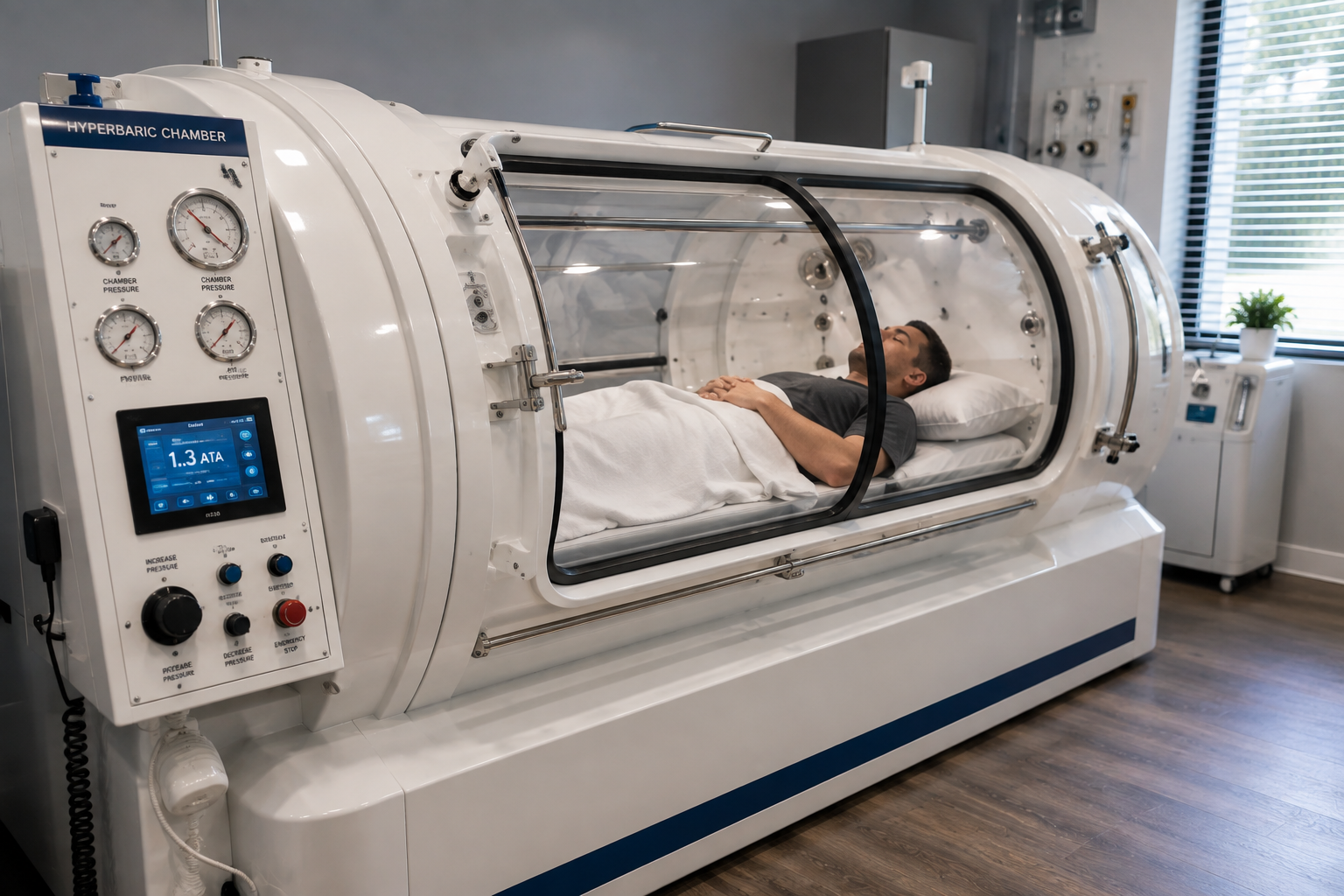
Portable vs. Fixed Hyperbaric Chamber: Weight, Structure, and Safety Compared
The comparison between a portable vs. fixed hyperbaric chamber represents one of the most important evaluations for anyone looking to introduce hyperbaric technology into a professional or personal setting. At first glance, a lighter and easily transportable solution may always seem advantageous, especially when available space is limited or when mobility is an important requirement. However, the weight of a hyperbaric chamber is not the only parameter to consider when evaluating the quality, safety, and reliability of the system.
A hyperbaric chamber is the result of a balance among structure, materials, the ability to maintain controlled conditions, and intended usage methods. The difference between a portable model and a fixed solution does not only concern the possibility of moving the equipment, but involves fundamental aspects such as stability, durability, user comfort, and daily management.
For homeowners with specific space needs, professional athletes who travel frequently, and facilities evaluating a technological investment, understanding the relationship between weight and performance helps avoid choices based exclusively on lightness. The real question is not which chamber weighs less, but which configuration is best suited to the objectives and usage needs.
- Why weight is not the only selection parameter
- Portable hyperbaric chamber: advantages and limits
- Fixed hyperbaric chamber structure and operational stability
- Hyperbaric chamber weight and impact on design
- Hyperbaric chamber assembly and space management
- Hyperbaric chamber footprint and configuration choice
- When to choose a portable or a fixed chamber
- Hyperbaric safety stems from design choices
Why weight is not the only selection parameter
When evaluating a hyperbaric chamber, weight is often one of the first data points observed. A lighter structure may automatically seem more practical, especially for those with reduced spaces or who need greater flexibility. However, weight represents only one of the system's technical characteristics and cannot be considered an absolute indicator of quality.
The structure of a hyperbaric chamber must in fact guarantee a stable and reliable environment during operation. The materials used, manufacturing design, and the ability to maintain the expected operating conditions are aspects that directly affect the final experience.
An informed choice therefore requires a broader analysis. Lightness can be an advantage in certain contexts, but solidity can become a priority element when the chamber is used frequently and for professional objectives.
Lightness and operational practicality
A lighter chamber can offer advantages in terms of handling and installation. For some users, such as athletes who move frequently, the ability to transport the system represents an important element.
However, practicality must be evaluated together with the other characteristics necessary to guarantee effective use.
Balance between mobility and reliability
The ideal choice stems from balancing mobility needs with stability requirements. The solution that is easiest to move is not always the most suitable for one's scenario.
Analyzing the context of use allows you to identify the most coherent configuration.
Portable hyperbaric chamber: advantages and limits
The portable hyperbaric chamber is primarily designed to offer flexibility. Its main feature is the ability to be moved or installed more easily compared to a fixed solution. This aspect can be interesting for users who need to use the technology in different locations.
Professional athletes traveling or people with space limitations may find portability a significant advantage. The ability to adapt the place of use makes these systems more flexible than permanent configurations.
However, portability also entails some design considerations. A structure designed to be moved must necessarily meet different criteria compared to a chamber installed in a stable manner.
Advantages of the portable solution
The main advantage of the portable chamber is flexibility. It can be an interesting choice for those who need a solution adaptable to multiple environments.
This feature makes it possible to respond to specific needs where mobility represents a priority.
Aspects to evaluate in portability
Portability must also be analyzed by considering assembly, management, and frequency of use. A system that is moved often requires coherent organizational procedures.
The choice must therefore take into account the entire operational cycle of the technology.
Fixed hyperbaric chamber structure and operational stability
A fixed hyperbaric chamber structure is designed for stable and continuous installation. This configuration is generally chosen when the priority is to create a dedicated environment with permanent characteristics that is easily integrated into the available space.
Stability represents one of the main advantages of fixed solutions. A permanently installed chamber can be integrated into a broader project, whether in a professional facility or a dedicated home environment.
For fitness centers and users who anticipate frequent use, the fixed configuration can offer advantages related to organization and service continuity.
Advantages of structural stability
A fixed solution allows you to design the space around the technology. This facilitates the organization of sessions and improves daily management.
Stability becomes an important element especially when usage is regular.
Comfort and service continuity
A dedicated environment can offer greater comfort to the user and more orderly management of activities.
For professional facilities, this aspect can directly influence the perceived quality.
Hyperbaric chamber weight and impact on design
The hyperbaric chamber weight is the result of numerous design choices. Materials, dimensions, internal structure, and technical components all contribute to the overall weight of the system.
Greater mass may stem from the use of materials designed to offer greater strength and stability. For this reason, weight must be interpreted within the overall project and not evaluated in isolation.
For a quality-conscious buyer, understanding the relationship between weight and construction allows for a more complete evaluation of the investment.
Materials and structural solidity
The materials used directly influence the chamber's behavior during use. Careful design must find the right balance between resistance, durability, and practicality.
Solidity is a fundamental element when the technology must operate continuously.
Weight as a design indicator
Weight can provide information on the system's configuration, but it should not be considered solely as an index of quality.
Correct evaluation requires an analysis of the entire technical assembly.
Hyperbaric chamber assembly and space management
Hyperbaric chamber assembly is an important element when choosing between a portable and a fixed solution. The installation method actually influences space planning and the future management of the technology.
A portable chamber can offer greater initial flexibility, while a fixed solution requires more structured space planning but can guarantee greater stability over time.
The installation phase must be evaluated considering not only the entry of the chamber into the environment, but also the overall organization of the dedicated area.
Installation planning
Correct planning helps avoid logistical problems and ensures more efficient use.
The space must be designed according to the actual needs of the user.
Flexibility and modularity of the system
Modularity can represent an advantage for those who wish to adapt the technology over time.
A well-designed solution allows greater freedom in space management.
Hyperbaric chamber footprint and configuration choice
The hyperbaric chamber footprint is a fundamental parameter especially for homeowners or facilities with limited spaces. The dimensions of the system must be compatible with the available environment without compromising the quality of the experience.
A correct evaluation of the space makes it possible to choose among different possible configurations. The most suitable solution depends on the frequency of use, the users involved, and the project objectives.
Space planning must therefore precede the final choice of technology.
Optimizing limited spaces
For home environments or small professional studios, it is important to find a balance between dimensions and functionality.
Compactness can represent a value when it responds to real needs.
When space must not limit quality
A choice based exclusively on dimensions could lead to overlooking fundamental aspects.
The quality of the system must remain the primary criterion in the evaluation.
When to choose a portable or a fixed chamber
The decision between a portable chamber and a fixed chamber depends primarily on the context of use. There is no universally better configuration: there is the solution best suited to the user's specific needs.
Those who require frequent mobility might find greater value in portability. Those who instead desire a dedicated environment and constant use might prefer a stable configuration.
The goal must be to choose a technology capable of offering the best balance among practicality, safety, and operational continuity.
Needs of the professional on the move
Athletes who travel frequently may have different needs compared to those who always use the chamber in the same place.
Flexibility becomes a strategic element.
Needs for continuous use
For frequent and scheduled uses, stability can become a higher priority.
The choice must reflect the intended usage model.
Hyperbaric safety stems from design choices
The comparison between portable and fixed hyperbaric chambers demonstrates that weight and mobility are only part of the overall evaluation. Effective hyperbaric technology must be chosen by considering structure, usage methods, available space, and personal or professional objectives.
A lightweight solution can be advantageous in certain scenarios, while a more stable structure can represent a better investment when continuity and reliability over time are required.
Hyperbaric safety stems from the combination of design decisions: materials, construction, configuration, and correct installation. It is not lower weight that defines the quality of a chamber, but the system's ability to offer consistent performance consistent with the user's needs.
Comments (0)