
Trolley
You have no items in your shopping cart

 Budgets
 Dumbers
 Discs
Discs
 Benches
 Racks and Rigs
 Weights Holders
 Isotonic machines
 Calisthenics
 Cardio
 Kettlebells
 Flooring
 Gym Set
 Accessories
 Combat
 ARTI MARZIALI
 CONTAINER GYM
 Tug-Of-War
 Used Gym Equipment
 PILATES MACCHINARI
 GINNASTICA ARTISTICA
 CAMPI DA PADEL
 Prodotti in Pronta Consegna
 Informazioni
 IRONMAN
 Gift Card
- Donatif
- General information
- 0 I like it
- 456 Views
- 0 comments
- gym flooring, safety flooring, gym safety, shock-absorbing materials
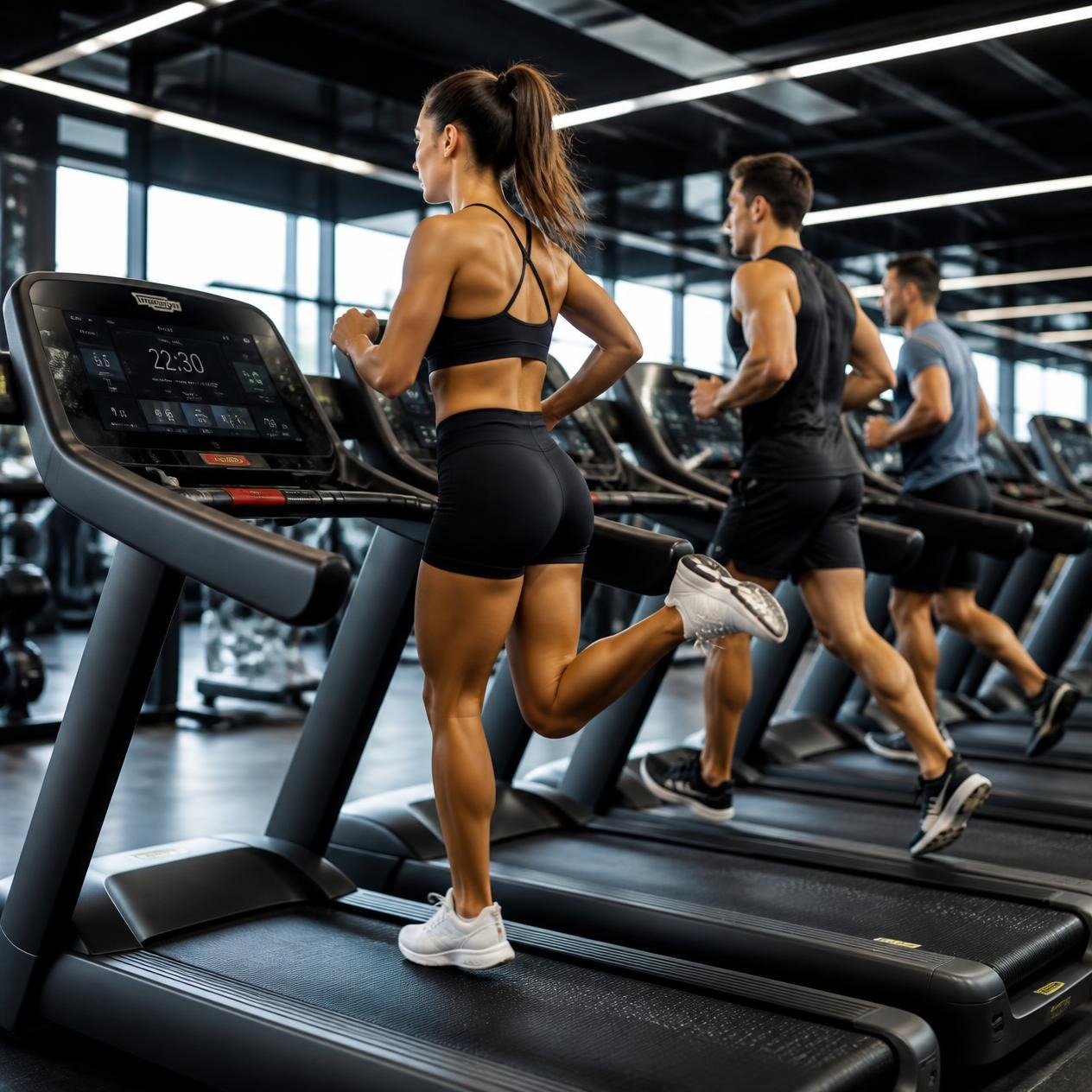
Professional Treadmills for Rehabilitation Centers: Essential Features
The rehabilitation treadmill represents one of the most important tools within clinics, physiotherapy centers, outpatient clinics, and facilities dedicated to motor recovery. Unlike traditional treadmills intended for fitness, models designed for rehabilitation must meet extremely rigorous requirements in terms of safety, movement precision, stability, and speed control. The goal is not exclusively to improve athletic performance, but to accompany the patient during a recovery journey that requires gradualness, reliability, and constant monitoring.
After surgery, an orthopedic trauma, a neurological condition, or a period of immobilization, the resumption of walking must take place under controlled conditions. For this reason, the professional treadmill becomes a therapeutic tool capable of offering repeatable movements, extremely precise adjustments, and a safe environment in which the physiotherapist can follow the patient during every phase of rehabilitation.
In this guide, we analyze the technical characteristics that distinguish a rehabilitation treadmill from a traditional cardio machine, delving into the essential requirements for healthcare facilities, physiotherapy practices, and centers specializing in motor rehabilitation.
- The role of the treadmill in rehabilitation
- Essential safety features
- Why minimum speed is fundamental
- The importance of extended handrails
- Technology and patient monitoring
- How to choose equipment for a clinic
- Reliability and maintenance
- Evaluating the long-term investment
The role of the treadmill in rehabilitation
The rehabilitation treadmill allows for the progressive restoration of a correct gait pattern, favoring the recovery of coordination, muscle strength, and balance. Thanks to precise speed control, the therapist can adapt the intensity of the exercise to the patient's clinical conditions, gradually increasing the workload without exposing them to unnecessary risks.
This approach is particularly effective in orthopedic rehabilitation after knee, hip, or ankle surgery, but also finds application in the neurological recovery of patients affected by stroke, Parkinson's, multiple sclerosis, or other pathologies that compromise walking.
The controlled repetition of the motor gesture improves neuromuscular learning and allows for monitoring the patient's progress over time, making the treadmill a central tool within numerous therapeutic protocols.
Orthopedic rehabilitation
After surgery or joint trauma, the treadmill helps to gradually recover the correct gait pattern, favoring a more balanced distribution of loads and reducing motor compensations.
Neurological rehabilitation
In neurological patients, speed control and the support offered by the machine allow for working safely on the quality of movement, improving balance and coordination.
Essential safety features
Safety represents the primary criterion in choosing a treadmill intended for rehabilitation. The structure must be extremely stable, the running surface sufficiently wide, and the emergency stop system easily reachable by both the patient and the physiotherapist.
A robust frame reduces vibrations and oscillations during walking, increasing the patient's confidence and improving movement control. The quality of the running surface also influences safety, offering a stable and predictable support during every phase of walking.
Electronic systems must guarantee progressive acceleration and deceleration, avoiding sudden variations that could compromise the user's balance.
Immediate stop
The emergency button and the magnetic key allow for quickly interrupting the machine's operation in any risk situation.
Structural stability
A rigid structure improves comfort during treatment and offers the therapist a safer and more controlled work environment.
Why minimum speed is fundamental
One of the features that distinguishes a low-speed treadmill from a traditional fitness model is the ability to start movement at extremely low speeds. In many rehabilitation paths, the patient is unable to sustain a high pace and requires a very gradual progression.
Initial speeds of a few tenths of a kilometer per hour allow the physiotherapist to correct the motor gesture, work on gait symmetry, and constantly monitor the patient's reactions without creating situations of instability.
The precision of the adjustments also allows for increasing the load progressively, respecting the biological recovery times and reducing the risk of relapses or overexertion.
Progressive increments
Small variations in speed allow for customizing the treatment based on the needs of each patient.
Gait control
Precise adjustment facilitates gait analysis and improves the effectiveness of rehabilitation sessions.
The importance of extended handrails
Treadmills with long handrails offer continuous support during walking, allowing the patient to maintain stability and safety even in the early stages of recovery. The length of the handrails allows for support throughout the entire gait cycle, reducing the risk of losing balance.
For the physiotherapist, the presence of ergonomic handrails facilitates manual assistance without hindering the patient's movement. This aspect is particularly relevant for elderly subjects or people with neuromotor deficits.
Professional facilities favor adjustable, resistant, and easily sanitizable handrails, capable of ensuring reliability even in the presence of intensive use.
Support ergonomics
A comfortable grip increases perceived safety and encourages greater patient participation during treatment.
Support for the therapist
The correct positioning of the handrails also improves the work of the healthcare professional during patient assistance.
Technology and patient monitoring
Modern physiotherapy treadmills integrate advanced electronic systems that allow for monitoring parameters such as speed, distance traveled, exercise time, and heart rate. This information helps the professional evaluate the effectiveness of the treatment and plan subsequent sessions.
Some models can be integrated with software dedicated to rehabilitation, gait analysis platforms, or body weight support systems, expanding the facility's therapeutic possibilities.
The user interface must be intuitive, allowing for quick adjustments during the session without interrupting the treatment.
Digital integration
Data management systems allow for documenting patient progress and improving the planning of the rehabilitation path.
Parameter control
Continuous monitoring makes training safer and allows for timely adaptation of the therapeutic protocol.
How to choose equipment for a clinic
When choosing cardio equipment for clinics, it is fundamental to consider not only technical performance but also the manufacturer's reliability, the availability of support, and the quality of the overall design.
Every facility has different needs based on the number of patients treated, the specializations present, and the available space. A preliminary analysis allows for identifying the most suitable model, avoiding investments not proportional to actual operational needs.
To learn more about solutions dedicated to the medical and professional sector, you can consult rehabilitation treadmills, where further information is available on equipment designed for intensive use.
Evaluating usage volume
Clinics with a high number of patients require machines designed to operate continuously while maintaining constant performance.
Importance of the supplier
A specialized partner guarantees consulting, installation, training, and technical support throughout the entire life cycle of the equipment.
Reliability and maintenance
Healthcare facilities require reliable machines that are simple to sanitize and characterized by reduced downtime. Operational continuity is, in fact, a fundamental requirement to ensure the regular conduct of therapeutic sessions.
Preventive maintenance programs allow for preserving performance and safety, reducing the risk of sudden breakdowns and extending the useful life of the investment.
Resistant materials, quality components, and a design oriented toward maintenance facilitate the daily work of technical and healthcare personnel.
Periodic checks
Regular inspections guarantee the correct functioning of the machine and contribute to patient safety.
Long operational life
Investing in professional products means reducing management costs and maintaining high quality standards over time.
Evaluating the long-term investment
The choice of a rehabilitation treadmill must be considered a strategic investment for any physiotherapy center or healthcare facility. Safety, speed precision, extended handrails, reliability, and technological integration are elements that directly affect the quality of the therapeutic path.
Equipment designed specifically for rehabilitation improves the patient experience, facilitates the work of healthcare professionals, and contributes to building the facility's reputation as a center of excellence.
Carefully evaluating technical characteristics, after-sales support, build quality, and customization possibilities allows for making an investment destined to generate value in the long term, ensuring operational continuity and concrete results in motor recovery paths.
Comments (0)