
Trolley
You have no items in your shopping cart

 Budgets
 Dumbers
 Discs
Discs
 Benches
 Racks and Rigs
 Weights Holders
 Isotonic machines
 Calisthenics
 Cardio
 Kettlebells
 Flooring
 Gym Set
 Accessories
 Combat
 ARTI MARZIALI
 CONTAINER GYM
 Tug-Of-War
 Used Gym Equipment
 PILATES MACCHINARI
 GINNASTICA ARTISTICA
 CAMPI DA PADEL
 Prodotti in Pronta Consegna
 Informazioni
 IRONMAN
 Gift Card
- Donatif
- General information
- 0 I like it
- 482 Views
- 0 comments
- gym flooring, safety flooring, gym safety, shock-absorbing materials
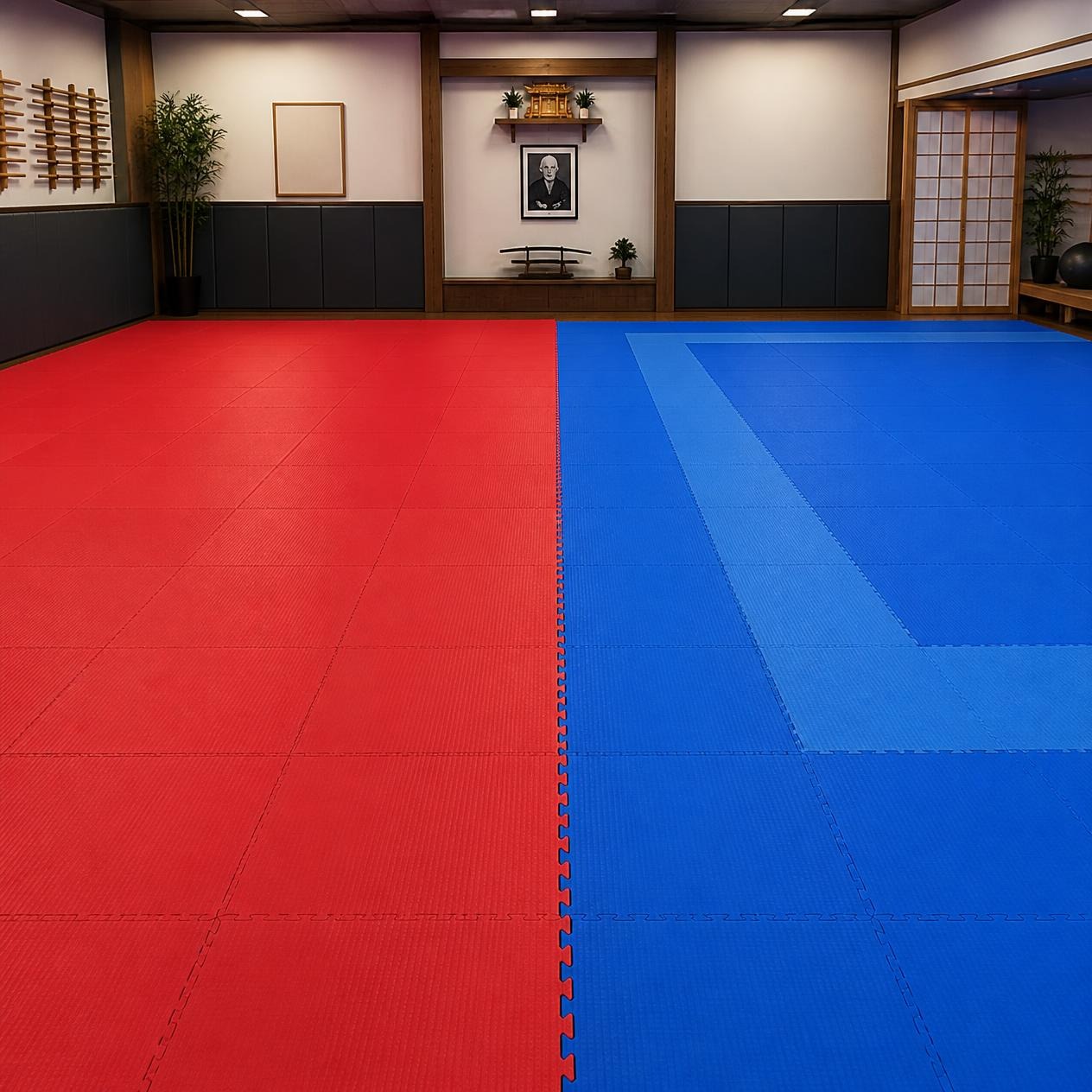
Judo Mat vs Karate Tatami: What Are the Differences?
Choosing a judo mat or a specific tatami for karate represents one of the most important aspects in the design of a gym dedicated to martial arts. Although at first glance both surfaces may seem similar, they are actually designed to meet completely different needs. Throwing disciplines, such as judo and traditional jiu-jitsu, require high impact absorption, while striking disciplines like karate, kickboxing, and taekwondo prioritize stability, reactivity, and grip during movement.
Many sports entrepreneurs make the mistake of choosing a single type of flooring, thinking it can adapt indiscriminately to any discipline. This decision can compromise athlete safety, reduce comfort during training, and accelerate material wear. The ideal surface must be selected by considering the type of techniques practiced, the intensity of training, the level of the athletes, and the daily use of the room.
Understanding the technical differences between the various types of tatami allows for the creation of a safer, more professional, and longer-lasting training environment. In this guide, we analyze the characteristics that distinguish surfaces dedicated to throwing disciplines from those designed for striking sports, helping gym managers and sports centers make a truly informed choice.
- Why different surfaces exist
- The characteristics of the judo mat
- The characteristics of the karate tatami
- The importance of Shore hardness
- Athlete safety and performance
- How to design a multidisciplinary gym
- Durability and maintenance of surfaces
- How to choose the best solution
Why every discipline requires a different surface
Every martial art generates different stresses on the flooring. In judo, techniques involve continuous throws, falls, and rolls that subject the body to considerable impacts. In karate, however, the focus is on the stability of the stance, the speed of movement, and the effective transmission of force during strikes and footwork.
Using an unsuitable surface means compromising both the quality of training and the safety of the athletes. A tatami that is too rigid for judo increases stress on the back and joints during falls, while a surface that is too soft for karate can reduce balance, precision, and execution speed.
The choice of flooring must therefore start with an analysis of the prevailing disciplines and the actual operational needs of the gym.
Different technical requirements
Grappling disciplines prioritize protection from impacts, while striking disciplines require a stable surface that facilitates movement control.
The most frequent mistakes in choosing
Basing the decision exclusively on price or the thickness of the tatami often leads to unsatisfactory results and higher costs in the long run.
The characteristics of the judo mat
The mat intended for judo is designed to absorb the energy generated by throws. The combination of foam density and thickness allows for a significant reduction in the stress transmitted to the body during falls.
The surface must offer a good balance between grip and comfort, avoiding both excessive slipperiness and friction that is too high, which could cause abrasions during ground work.
Facilities hosting judo, wrestling, or Brazilian Jiu-Jitsu classes should look toward solutions specifically designed to withstand intensive use and frequent impacts.
Protection during falls
Energy absorption is the main characteristic required of a surface dedicated to throwing disciplines.
Thickness and density
The combination of foam density and thickness determines the behavior of the mat during impacts and its ability to maintain consistent performance over time.
The characteristics of the karate tatami
In karate, the priority is not to absorb high-intensity falls, but rather to ensure stability during stances and speed in changes of direction. For this reason, the tatami generally presents a more rigid response compared to mats intended for judo.
A stable surface allows athletes to develop greater technical precision during kicks, punches, and movement, improving force transmission and balance control.
The level of surface grip also plays a fundamental role, as it must allow for rapid movements without compromising safety.
Stability during movement
A controlled elastic response improves the control of techniques and promotes the efficiency of movements.
Grip and surface
The texture of the coating must ensure a correct balance between adherence and fluidity, avoiding both excessive friction and slipperiness.
The importance of tatami Shore hardness
Among the most important technical parameters in choosing flooring is Shore hardness, which is the index used to measure the material's resistance to deformation. This value allows for the comparison of different surfaces and an understanding of their behavior during use.
A lower Shore value generally identifies softer materials, suitable for absorbing significant impacts. Higher values indicate more rigid surfaces, which are preferable when seeking stability and precision in stances.
Hardness should never be evaluated in isolation, but together with the density, thickness, and construction quality of the tatami.
How to interpret Shore hardness
The Shore parameter represents a useful tool for comparing different products, but it must be contextualized with respect to the discipline practiced.
The correct balance between rigidity and comfort
Professional flooring always seeks the best compromise between protection, stability, and durability.
Athlete safety and performance
Flooring directly influences the quality of training and injury prevention. A correctly designed surface allows athletes to focus on technical execution without having to compensate for instability or excessive rigidity.
In throwing disciplines, greater absorption capacity reduces joint stress during repeated falls. In striking sports, however, a stable surface promotes balance, explosiveness, and precision.
Investing in the correct flooring means protecting the health of members and improving the perceived quality of the gym.
Reducing the risk of injury
An adequate surface helps to limit impact trauma and excessive stress on joints and the spine.
Improving training quality
Training on flooring designed for your discipline promotes better technical execution and greater continuity in training.
How to design a multidisciplinary gym
Many sports centers host judo, karate, kickboxing, MMA, and other disciplines simultaneously. In these cases, it is essential to carefully evaluate the intended use of the room.
When possible, the best solution consists of creating dedicated areas, each with specific flooring. This approach allows for the highest level of safety and performance for each discipline.
If only one surface must be used, it is important to identify the best compromise while taking into account the prevailing activities.
Dividing spaces
The specialization of areas improves the athlete experience and reduces flooring wear.
Relying on technical advice
A specialized supplier can help choose the density, thickness, and surface finish best suited to the facility's goals.
Durability and maintenance of the flooring
The quality of the material represents only one of the elements that determine the useful life of the tatami. Proper maintenance also contributes decisively to preserving its performance and aesthetics.
Regular cleaning, sanitization with compatible products, and periodic checks of the interlocking joints allow for the maintenance of high safety standards and the reduction of premature deterioration.
Professional flooring, if properly maintained, can offer high performance for many years even in the presence of intensive use.
Daily cleaning
Eliminating dirt and sweat after every day of training helps to preserve the characteristics of the material.
Scheduled checks
Periodically checking the state of the surface allows for the timely replacement of any worn modules.
How to choose the best solution
The choice between judo mats and karate tatami should never be random. Each discipline requires specific characteristics that directly affect athlete safety, training quality, and the durability of the flooring.
Carefully analyzing the type of activity performed, the level of users, and the intensity of use of the facility allows you to identify the solution best suited to your needs. To evaluate professional flooring dedicated to martial arts, you can consult the range of judo mats, designed to offer high standards of safety, resistance, and comfort.
Investing in the correct surface means improving the athlete experience, enhancing the professionalism of the gym, and building a training environment capable of supporting the growth of the facility in the long term.
Comments (0)