
Trolley
You have no items in your shopping cart

 Budgets
 Dumbers
 Discs
Discs
 Benches
 Racks and Rigs
 Weights Holders
 Isotonic machines
 Calisthenics
 Cardio
 Kettlebells
 Flooring
 Gym Set
 Accessories
 Combat
 ARTI MARZIALI
 CONTAINER GYM
 Tug-Of-War
 Used Gym Equipment
 PILATES MACCHINARI
 GINNASTICA ARTISTICA
 CAMPI DA PADEL
 Prodotti in Pronta Consegna
 Informazioni
 IRONMAN
 Gift Card
- Donatif
- General information
- 0 I like it
- 464 Views
- 0 comments
- gym flooring, safety flooring, gym safety, shock-absorbing materials
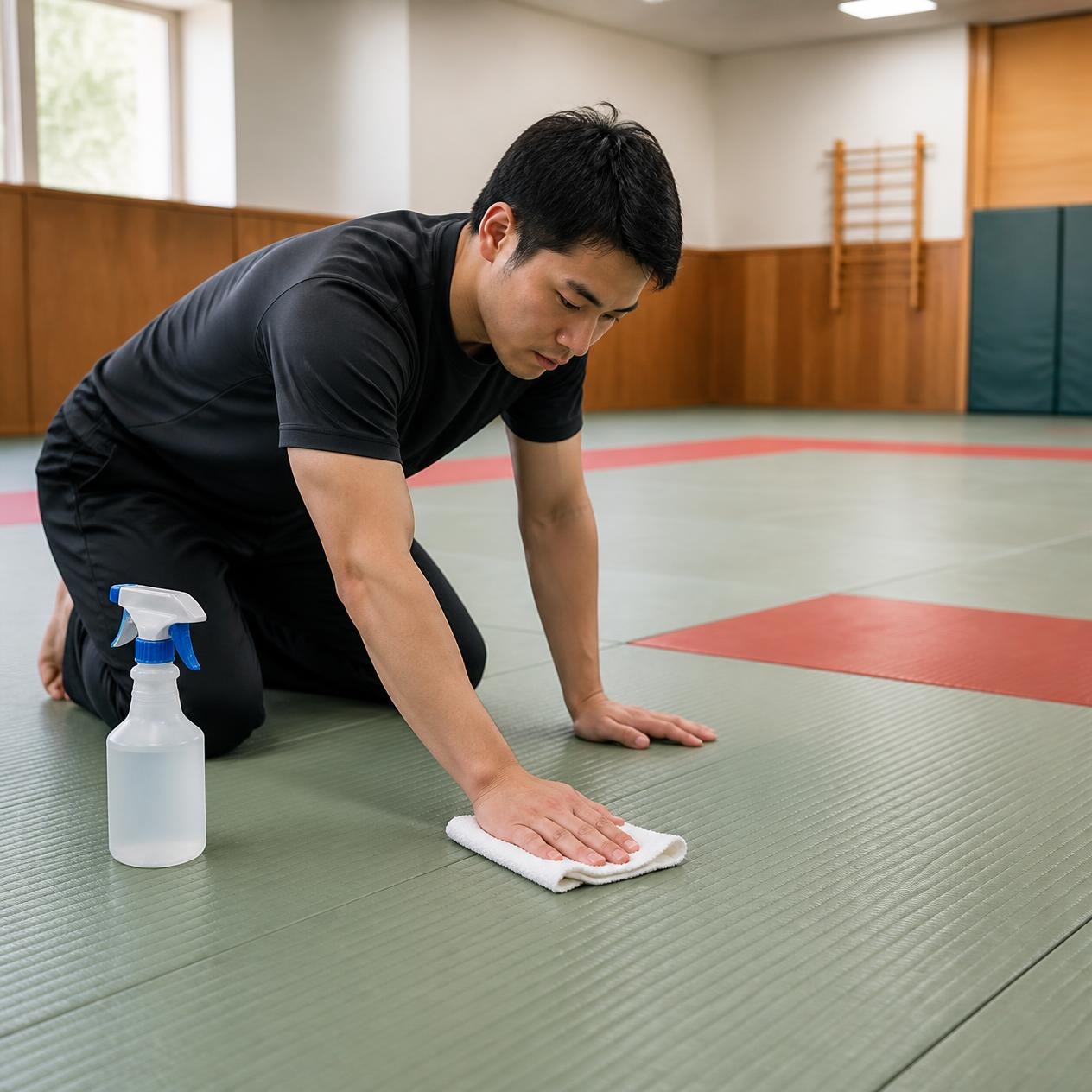
How to Clean and Sanitize Tatami: A Guide for Gyms
Proper maintenance of tatami flooring is one of the most important aspects of ensuring safety, hygiene, and durability within a gym or martial arts center. Every day, the tatami comes into contact with sweat, dust, bacteria, skin residue, and moisture, creating an environment that requires accurate and constant cleaning protocols. Neglecting these aspects does not only compromise the appearance of the surface, but also increases the risk of microbiological proliferation and accelerates the deterioration of the material.
Whether the tatami is made of EVA, PVC, or other professional foam materials, its lifespan depends largely on the maintenance procedures adopted. Cleaning performed with unsuitable products can alter the surface, reduce its mechanical properties, and decrease athlete comfort. Conversely, a correct sanitization routine allows you to preserve the original characteristics of the flooring even after years of intensive use.
For gym owners, martial arts schools, and advanced home gyms, defining a maintenance protocol is an investment that improves the user experience, protects the facility's reputation, and helps reduce flooring replacement costs. In this guide, we analyze the best professional practices for keeping tatami clean, sanitized, and high-performing over time.
- Why clean tatami regularly
- The daily cleaning routine
- How to properly sanitize tatami
- Which products to use
- Errors to avoid
- Periodic flooring maintenance
- How to extend the life of tatami
- Hygiene as an investment for the gym
Why clean tatami regularly
During every training session, dozens of people come into direct contact with the tatami surface. Sweat, dust, hair, organic residue, and dirt from footwear can accumulate rapidly, especially in facilities characterized by high foot traffic.
A warm and humid environment also encourages the proliferation of bacteria, mold, and fungi. Although proper personal hygiene of the athletes represents the first level of prevention, the responsibility for cleaning the flooring falls on the facility manager.
Keeping the tatami perfectly clean improves safety, increases member trust, and helps convey a professional image of the gym.
Protecting athlete health
A sanitized surface reduces the risk of cross-contamination and helps create a safer environment for those practicing contact sports.
The importance of the gym's image
A clean tatami communicates attention, professionalism, and customer care—fundamental elements for retaining members and fostering positive word-of-mouth.
The daily cleaning routine
Proper maintenance begins with a simple but rigorous daily procedure. At the end of classes, it is advisable to remove dust and residue using microfiber cloths or vacuum systems suitable for foam materials.
After removing surface dirt, proceed with washing using specific detergents compatible with EVA or PVC, avoiding overly aggressive products that could alter the surface finish.
The frequency of interventions must be proportional to the number of users and the intensity of gym usage. Facilities with consecutive classes throughout the day may require multiple cleaning cycles.
How often to clean tatami
Routine cleaning should be carried out at least once a day, increasing the frequency in high-intensity usage areas.
The importance of drying
After washing, it is essential to let the surface dry completely before the next use, avoiding moisture stagnation.
How to properly sanitize tatami
Simple cleaning eliminates most visible dirt but does not guarantee the complete reduction of the microbiological load. For this reason, it is necessary to periodically integrate a sanitization procedure.
Using a martial arts disinfectant compatible with the flooring material allows you to reduce the presence of bacteria, viruses, and fungi without compromising the characteristics of the covering.
Always follow the manufacturer's instructions regarding contact times and application methods to achieve maximum effectiveness while avoiding damage to the surface.
A professional protocol
Establishing a standard procedure shared by all staff ensures uniformity in the quality of sanitization and reduces the risk of errors.
When to perform full sanitization
In addition to the daily routine, it is advisable to schedule more in-depth interventions on a regular basis, especially during periods of high traffic.
Which products to use on the flooring
Not all detergents are suitable for the materials used in professional tatami. Aggressive solvents, concentrated bleach, and abrasive substances can alter the color, elasticity, and resistance of the surface.
The choice should fall on neutral detergents or formulations expressly developed for sports flooring. These products allow for effective cleaning while preserving the technical characteristics of the material.
Always following the tatami manufacturer's instructions is the best solution to avoid premature deterioration.
Verify compatibility
Before using a new product, it is appropriate to ensure that it is suitable for EVA, PVC, or the specific material of the installed flooring.
Respect recommended dilutions
Concentrations higher than those indicated do not increase cleaning effectiveness but can compromise the durability of the surface.
Errors to avoid
One of the most frequent errors consists of using very aggressive household detergents, thinking they will achieve more effective sanitization. In reality, these products can accelerate the deterioration of the flooring.
Also, letting water stagnate between the interlocking joints or neglecting the cleaning of the edges encourages the formation of mold and bacteria that are difficult to eliminate later.
Finally, postponing maintenance interventions often leads to accumulations of dirt that require much more demanding operations compared to a simple daily routine.
Avoid stagnant moisture
Drying the surface correctly reduces the risk of microbiological proliferation and preserves the material's characteristics.
Beware of abrasive products
Overly aggressive sponges and non-specific detergents can damage the surface finish of the tatami.
Periodic flooring maintenance
In addition to routine cleaning, it is important to carry out scheduled checks on the entire surface. Verifying the condition of the interlocking joints, identifying any deformations, and replacing damaged elements in a timely manner allows you to keep the floor efficient at all times.
In the case of interlocking modules, it is useful to periodically separate the sections to also check the underside of the flooring, especially in environments characterized by high humidity.
Proper puzzle tatami cleaning therefore includes both surface maintenance and checking the entire modular system.
Scheduled inspections
Regularly verifying the integrity of the modules allows you to intervene before small damages compromise the entire area.
When to replace a module
Obvious signs of permanent deformation, loss of elasticity, or deterioration of the coating indicate that the module should be replaced.
How to extend the life of tatami
The longevity of the flooring depends on the balance between product quality, correct usage, and constant maintenance. Avoiding unsuitable shoes, limiting the dragging of heavy equipment, and respecting the manufacturer's instructions helps keep the tatami in optimal condition.
Controlling environmental conditions also plays an important role. Extreme temperatures, prolonged exposure to direct light, and high levels of humidity can affect the material's performance in the long term.
For those who wish to keep their tatami looking like new even after years of use, prevention always remains the most effective strategy.
Manage temperature and humidity
Stable environmental conditions help preserve the elasticity, color, and dimensional stability of the flooring.
Preventive maintenance
Small, regular interventions are much more effective and economical than extraordinary repairs performed when the damage is already evident.
Hygiene as an investment for the gym
Clean and well-maintained flooring represents a distinctive element for any gym or martial arts school. In addition to improving athlete safety, it contributes to strengthening the facility's reputation and conveying professionalism in every detail.
Defining clear cleaning protocols, using compatible products, and scheduling periodic checks allows you to reduce surface deterioration, limit extraordinary interventions, and significantly extend the useful life of the tatami. To choose solutions designed for professional use, you can consult the range of tatami flooring, designed to offer resistance, ease of maintenance, and high performance.
Proper hygiene management is not just an organizational obligation, but a true investment in the quality of service offered to members, in protecting health, and in enhancing the value of the gym in the long term.
Comments (0)