
Trolley
You have no items in your shopping cart

 Budgets
 Dumbers
 Discs
Discs
 Benches
 Racks and Rigs
 Weights Holders
 Isotonic machines
 Calisthenics
 Cardio
 Kettlebells
 Flooring
 Gym Set
 Accessories
 Combat
 ARTI MARZIALI
 CONTAINER GYM
 Tug-Of-War
 Used Gym Equipment
 PILATES MACCHINARI
 GINNASTICA ARTISTICA
 CAMPI DA PADEL
 Prodotti in Pronta Consegna
 Informazioni
 IRONMAN
 Gift Card
- Donatif
- General information
- 0 I like it
- 530 Views
- 0 comments
- gym flooring, safety flooring, gym safety, shock-absorbing materials
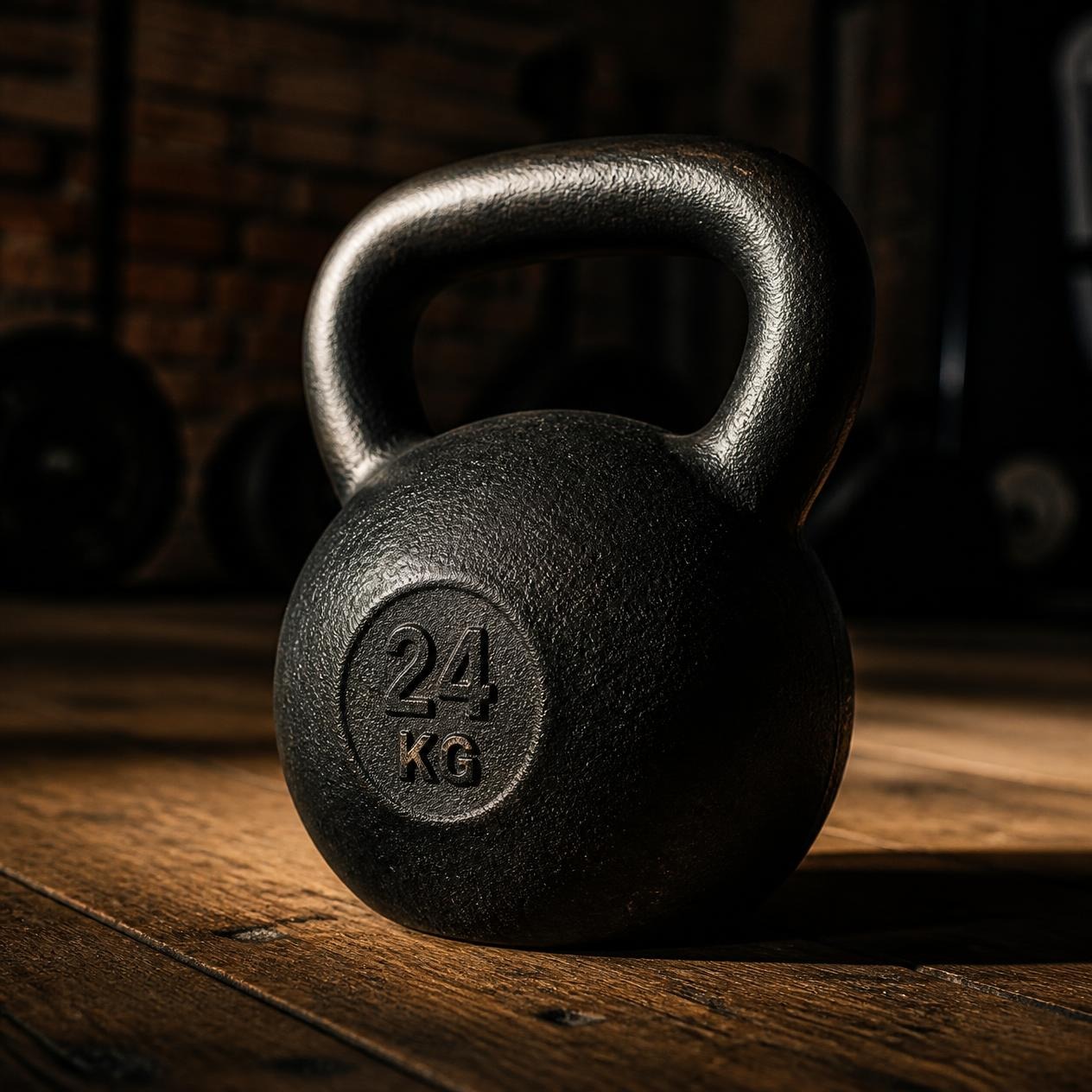
Kettlebell Competition vs Cast Iron: Which to Choose for Your Home Gym?
Choosing the right kettlebell is a more important decision than it might seem. Those approaching functional training quickly discover that there isn't just one type of kettlebell: competition and traditional cast iron models have very different construction, ergonomic, and functional characteristics. Understanding these differences allows you to invest in the product best suited to your needs, avoiding purchases dictated solely by price or aesthetics.
In recent years, the spread of home gyms has increased interest in professional equipment. More and more enthusiasts want to replicate the training experience of the best gyms at home, while personal trainers and athletic coaches look for reliable tools to use daily with clients of different levels. In this context, the comparison between competition kettlebells and traditional cast iron models arises.
The question is not which kettlebell is the best in absolute terms, but which represents the smartest choice based on your goals, technical level, and type of training. In this guide, we will analyze every aspect of the kettlebell competition vs cast iron comparison, highlighting advantages, disadvantages, and usage scenarios to help you choose with greater awareness.
- The main differences between the two models
- Materials and construction
- Why dimensions change
- How they influence training
- Which to choose for a home gym
- Why professionals prefer competition models
- How to evaluate a purchase
- Which represents the best investment
The main differences between the two models
The most obvious difference concerns the design philosophy. Traditional cast iron kettlebells increase in size as the weight increases. An 8 kg kettlebell is significantly smaller than a 24 kg one. Conversely, competition versions maintain practically the same external dimensions regardless of the load, by modifying the internal distribution of the material.
This design choice stems from kettlebell sport competitions, where athletes must perform repetitive movements with different weights while always maintaining the same technical references. Having an identical handle and body allows for the development of very precise automatisms.
For the user training at home, both solutions can be valid, but understanding the differences helps to understand which model best suits your goals.
Origin of the two models
Cast iron kettlebells derive from the strength training tradition, while competition models were developed specifically for kettlebell sport competitions, a discipline characterized by long continuous sets and great technical precision.
Two different construction philosophies
The traditional model focuses on simplicity, robustness, and versatility. Competition models, on the other hand, prioritize uniformity, ergonomics, and repeatability of the technical gesture.
Materials and construction
Many users mistakenly associate the difference exclusively with the material. In reality, the cast iron vs steel kettlebell comparison concerns above all the production process. Competition kettlebells are generally made of welded steel, while traditional ones are cast in iron.
Steel allows for thinner walls and a hollow structure that enables more mass to be inserted while keeping external dimensions constant. Cast iron, on the other hand, offers an extremely resistant construction, also ideal for intensive use and commercial environments.
Both materials guarantee a long lifespan if manufactured to high standards. The quality of the surface finish, the handle, and the paint often matters more than the material itself.
Advantages of cast iron
Cast iron offers great robustness, generally lower costs, and a wide availability of weights. It is the most common solution in traditional gyms and home gyms.
Advantages of steel
Steel allows for very precise construction tolerances, uniform surfaces, and constant dimensions, features particularly appreciated by more experienced athletes.
Why dimensions make the difference
One of the aspects that most distinguishes the two types concerns competition kettlebell dimensions. All competition models, regardless of weight, maintain practically the same sphere diameter and the same overall height.
This means that moving from 12 kg to 24 kg does not change the contact point on the forearm or the distance between the handle and the kettlebell body. The athlete can therefore focus exclusively on increasing the load without modifying the technique.
Cast iron kettlebells, on the other hand, progressively change shape and volume. This requires small biomechanical adjustments when moving to higher weights, especially in overhead exercises and Olympic movements.
Greater technical precision
Constant dimensions favor the learning of repetitive movements and reduce variations in the trajectory during cleans, jerks, and snatches.
Comfort during the rack position
The positioning on the forearm is more predictable, a feature particularly useful during long or high-volume sessions.
How they influence daily training
For most users who train two or three times a week, both types allow for excellent results. However, the user experience changes significantly in some exercises.
Competition kettlebells facilitate technical repeatability, while cast iron models are often more practical for mixed circuits, metabolic training, and general strength programs.
The feel of the handle can also vary. Some prefer the more uniform handle of competition models, others find the traditional kettlebell handle more natural.
Strength training
For squats, deadlifts, presses, and farmer's carries, both solutions offer very similar performance, provided the construction quality is high.
Kettlebell sport and advanced technique
Those who regularly practice competitions or follow specific programs generally benefit more from the uniformity of competition kettlebells.
Which to choose for a home gym
In most home gyms, the choice depends on the available budget and goals. If training includes functional training, athletic preparation, and general strength, cast iron kettlebells often represent the solution with the best price-quality ratio.
Those who wish to build a highly specialized station, with precise technical progressions and great attention to detail, may find competition models a particularly interesting investment.
The available space also deserves reflection. Competition kettlebells occupy the same volume regardless of weight, while traditional models become progressively bulkier.
Price-quality ratio
Cast iron kettlebells generally allow you to purchase more weights by investing a lower amount, making them ideal for those who are gradually building their home gym.
Space management
Organizing a rack composed exclusively of competition models ensures aesthetic uniformity and ease of arrangement, but requires a higher initial investment.
Why many professionals choose competition models
Observing international competitions, one notices that almost all athletes use competition kettlebells. The reason is not linked exclusively to construction quality, but to the need to keep all technical references constant during thousands of repetitions.
Numerous personal trainers also appreciate this uniformity because it facilitates the teaching of technique and makes it easier to program student progressions.
This does not mean that traditional kettlebells are inferior. Many athletic coaches continue to prefer them for their versatility and robustness in environments with high user turnover.
Consistency of the athletic gesture
Reducing dimensional variations allows for the development of extremely precise motor patterns, a fundamental element in performance sports.
Ease of teaching
Using identical tools simplifies technical correction and makes the learning path more linear.
How to evaluate a kettlebell before purchasing
In addition to the type, it is essential to analyze the quality of the welds, handle finish, paint uniformity, and accuracy of the declared weight. A cheap but poorly finished kettlebell can compromise comfort and durability.
It is also worth checking for stable bases, surfaces free of imperfections, and handles that allow for a secure grip without being abrasive.
For those wishing to purchase professional kettlebells, turning to specialized retailers allows you to find products designed for intensive use and compatible with advanced-level training.
Elements to check
Balance, finish quality, measurement precision, and handle comfort directly affect the training experience.
An investment that lasts for years
A well-built kettlebell maintains its characteristics unchanged for a very long time, becoming one of the longest-lasting tools in any home gym.
Which represents the best investment
The answer depends mainly on the type of training you want to perform. Cast iron kettlebells offer great versatility, low costs, and represent the ideal choice for most home fitness enthusiasts.
Competition versions, on the other hand, are designed for those seeking maximum technical precision, uniformity, and an experience very similar to that of official competitions. They are particularly suitable for advanced athletes, coaches, and industry professionals.
Truly understanding the best kettlebells for home gym comparison means evaluating not only the material or price, but the way each tool supports your training path. Choosing consciously allows you to obtain greater continuity, improve technical quality, and transform every session into a concrete investment in your performance.
Comments (0)