
Trolley
You have no items in your shopping cart

 Budgets
 Dumbers
 Discs
Discs
 Benches
 Racks and Rigs
 Weights Holders
 Isotonic machines
 Calisthenics
 Cardio
 Kettlebells
 Flooring
 Gym Set
 Accessories
 Combat
 ARTI MARZIALI
 CONTAINER GYM
 Tug-Of-War
 Used Gym Equipment
 PILATES MACCHINARI
 GINNASTICA ARTISTICA
 CAMPI DA PADEL
 Prodotti in Pronta Consegna
 Informazioni
 IRONMAN
 Gift Card
- Donatif
- General information
- 0 I like it
- 1 Views
- 0 comments
- gym flooring, safety flooring, gym safety, shock-absorbing materials
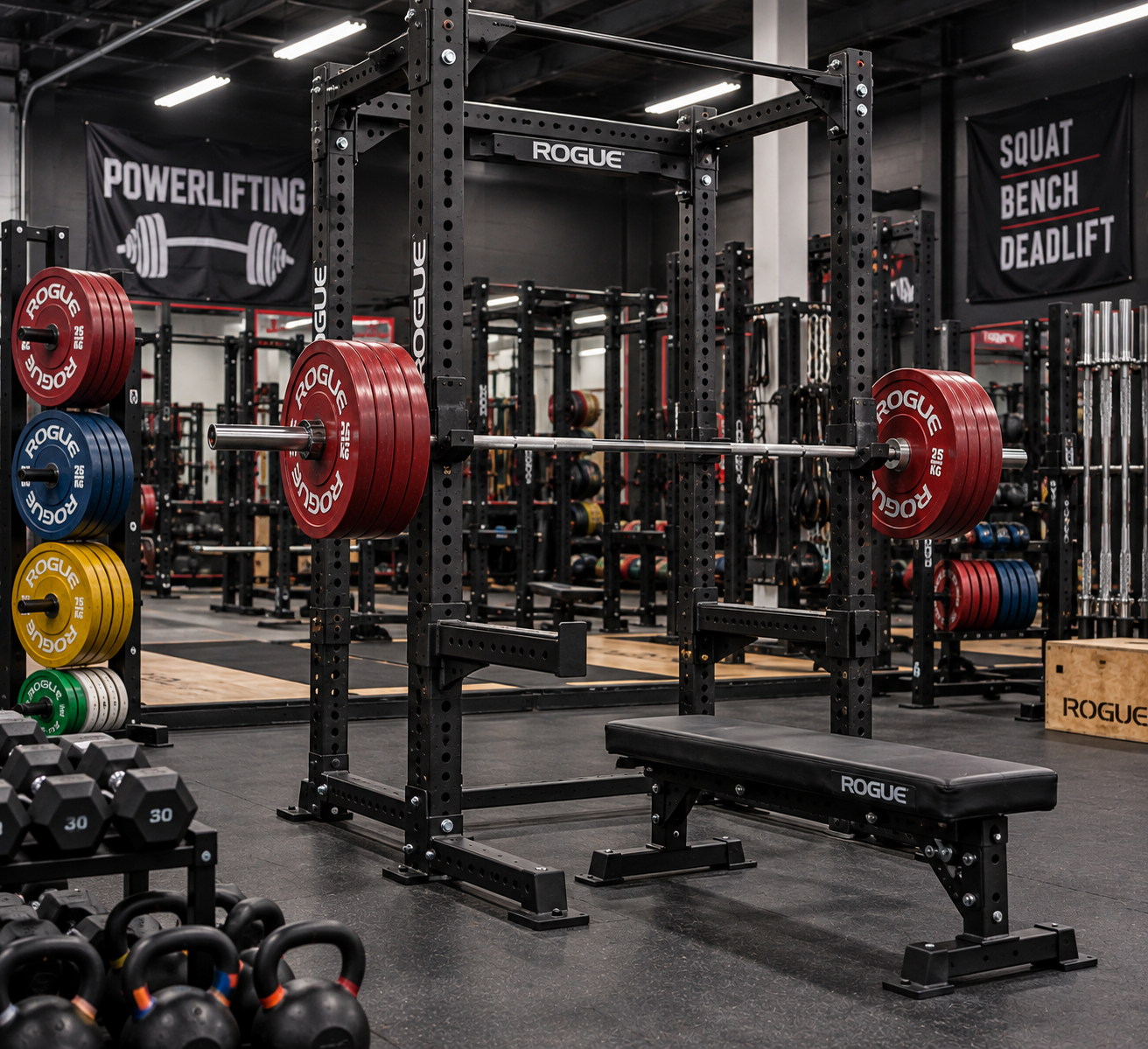
Weightlifting equipment vs powerlifting: differences and selection criteria
Weightlifting and powerlifting are disciplines united by the use of the barbell but characterized by different technical requirements. Consequently, the equipment used also has specific features that influence gym design, component selection, and space organization.
In weightlifting, the focus is on the snatch and clean and jerk, dynamic exercises that require specific barbells, bumper plates, and dedicated platforms. In powerlifting, the goal is instead the execution of the squat, bench press, and deadlift, with structures designed to support heavy loads and allow precise adjustments.
The choice of equipment should be made by evaluating the type of training planned, the level of users, the available space, and the possibility of integrating new components over time. Analyzing these aspects allows for designing a room consistent with the actual needs of the facility.
- What are the main differences?
- How the equipment changes
- Comparison table
- When to choose a weightlifting configuration
- When to choose a powerlifting configuration
- How to design spaces
- Errors to avoid
- How to plan the investment
What are the main differences between weightlifting and powerlifting?
The main difference concerns the exercises provided by the two disciplines. Weightlifting includes the snatch and clean and jerk, explosive movements that require a controlled release of the barbell and a training area designed for this use.
Powerlifting instead includes the squat, bench press, and deadlift. The equipment prioritizes stability, precise adjustments, and dedicated structures such as racks, benches, and safety systems compatible with high-load training.
Understanding these differences represents the first step in choosing a configuration truly suited to the goals of the gym or home gym.
Why do exercises influence the choice?
Each discipline requires different characteristics in terms of barbells, plates, support surfaces, and space organization.
Do the athlete's goals change the equipment?
Yes. The configuration should be consistent with the type of training performed and the discipline practiced predominantly.
How does the equipment change between the two disciplines?
In weightlifting, the barbell is chosen considering characteristics such as grip diameter and barbell whip, while bumper plates normally represent the solution used to manage loads during Olympic lifts.
In powerlifting, racks, benches, and safety systems that allow facing the squat and bench press with dedicated adjustments take on greater importance. The workstation configuration also responds to different needs compared to those of weightlifting.
Both disciplines require adequate flooring and mutually compatible components, but the organization of the area changes depending on the mode of use.
How does the barbell change?
Manufacturers make barbells with specific characteristics for each discipline. Before purchasing, it is advisable to check the technical specifications reported in the product documentation.
Which plates to use?
The choice of plates depends on the discipline practiced and the compatibility with the selected barbell.
Comparison table
The following table summarizes the main design differences.
| Element | Weightlifting | Powerlifting |
|---|---|---|
| Main exercises | Snatch and clean and jerk | Squat, bench press, and deadlift |
| Barbell | Specific for weightlifting | Specific for powerlifting |
| Plates | Bumper plates | Compatible with the discipline |
| Structures | Dedicated platforms | Racks and benches |
| Layout | Open areas for dynamic movements | Structured workstations |
| Flooring | Platform protection | Support for strength workstations |
The table represents a general comparison. The final characteristics always depend on the specifications of the chosen products.
Comparing technical documentation in advance allows evaluating the real compatibility between the different components.
Why verify compatibility?
Barbells, plates, and structures must be able to be used together without operational limitations.
Are there reference standards?
For competitive activities, it is advisable to check the technical regulations of the reference federation and the compliance of the equipment used.
When to choose a weightlifting configuration?
A configuration dedicated to weightlifting is indicated when the facility mainly hosts snatch and clean and jerk training or Olympic preparation programs.
In these cases, it is advisable to provide dedicated platforms, specific barbells, bumper plates, and sufficient space to allow the performance of dynamic movements.
Accurate design also facilitates the organization of workstations and the maintenance of the entire area.
Why use dedicated platforms?
Platforms delimit the technical area and contribute to the protection of the flooring during training.
How to organize the layout?
Workstations should be distributed leaving sufficient space between athletes and providing dedicated areas for equipment storage.
When to choose a powerlifting configuration?
Structures dedicated predominantly to maximal strength normally require adjustable racks, benches, and safety systems designed for the squat and bench press.
The configuration must allow quick adjustments, component compatibility, and an orderly arrangement of workstations.
Even in this case, it is useful to plan any future expansions while maintaining uniformity among all installed equipment.
What role does the rack play?
The rack constitutes the operational center of the workstation dedicated to the main powerlifting exercises.
Why check safety systems?
Adjustments and compatibility with the rack represent important elements in workstation design.
How to design spaces for the two disciplines?
A gym that hosts both weightlifting and powerlifting should clearly distinguish the areas dedicated to the two activities, avoiding interference between the different training methods.
Weightlifting workstations require more open spaces for the execution of Olympic lifts, while those dedicated to powerlifting are organized around racks and benches.
The presence of adequate technical flooring and well-distributed storage systems improves the overall organization of the room.
Why provide storage areas?
Barbell holders and plate racks help keep the zone destined for training free.
Why design a modular layout?
A flexible configuration allows adapting the gym to new needs without completely modifying the initial project.
What errors to avoid when choosing equipment?
One of the most common errors consists of mixing components designed for different needs without verifying their technical compatibility.
It is also advisable to avoid underestimating the space necessary for Olympic exercises or neglecting flooring protection.
Also, choosing equipment exclusively based on price can lead to configurations poorly suited to the facility's goals.
Is price the main criterion?
No. Compatibility, materials, maintenance, and expansion possibilities represent equally important criteria.
Why design before purchasing?
Initial planning allows selecting mutually coherent components and reducing subsequent modifications.
How to plan the investment in the weight room?
The choice between a configuration dedicated to weightlifting or powerlifting should be guided by the facility's goals, the profile of the users, and the type of training planned. A modular configuration allows integrating both disciplines while maintaining distinct and easily manageable areas.
Carefully evaluating the weightlifting barbell, bumper plates, workstation layout, and equipment compatibility allows developing a functional room ready to evolve over time.
To complete a workstation dedicated to Olympic exercises, it can be useful to integrate a supply of bumper plates compatible with the selected barbell, maintaining consistency between equipment, flooring, and the overall organization of the training area.
Comments (0)