
Trolley
You have no items in your shopping cart

 Budgets
 Dumbers
 Discs
Discs
 Benches
 Racks and Rigs
 Weights Holders
 Isotonic machines
 Calisthenics
 Cardio
 Kettlebells
 Flooring
 Gym Set
 Accessories
 Combat
 ARTI MARZIALI
 CONTAINER GYM
 Tug-Of-War
 Used Gym Equipment
 PILATES MACCHINARI
 GINNASTICA ARTISTICA
 CAMPI DA PADEL
 Prodotti in Pronta Consegna
 Informazioni
 IRONMAN
 Gift Card
- Donatif
- General information
- 0 I like it
- 12 Views
- 0 comments
- gym flooring, safety flooring, gym safety, shock-absorbing materials
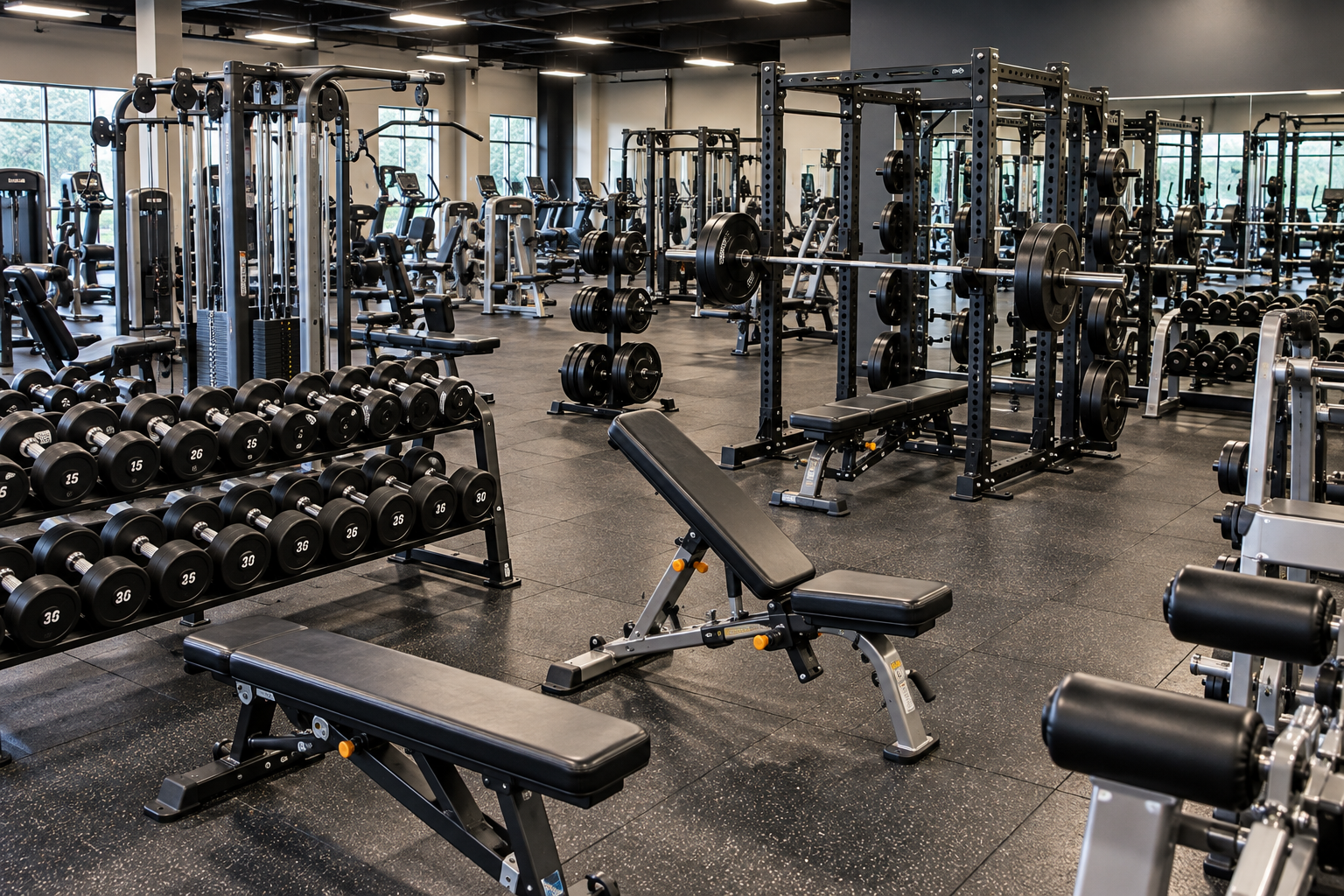
Boutique gym vs traditional gym: differences, organization, and criteria for choice
The boutique gym and the traditional gym represent two different organizational models, while sharing the goal of offering dedicated training services. The main difference concerns the way spaces are designed, equipment is selected, and user experience is organized.
A boutique gym typically concentrates its proposal on specific training methodologies and small groups of clients, whereas a traditional gym offers a broader range of activities and requires environments intended for different disciplines. Understanding these differences allows for the development of a project consistent with the business model and the target audience.
Before designing a new facility, it is advisable to evaluate available surface area, type of services, area organization, operational flows, and future expansion possibilities. These elements form the basis for an informed choice.
- What are the main differences?
- Comparison table
- When to choose a boutique gym
- When to choose a traditional gym
- How the layout changes
- What equipment to use
- Design errors to avoid
- How to plan the investment
What are the main differences between a boutique gym and a traditional gym?
The boutique gym is designed around a highly specialized offering. Activities are generally concentrated on one or a few training methodologies, and spaces are organized to foster a uniform and easily recognizable experience.
The traditional gym, on the other hand, normally hosts numerous areas dedicated to different disciplines such as weight training, cardio, group classes, and functional activities. This greater variety requires a more articulated subdivision of environments and a wider provision of equipment.
Both models can be effective if designed according to the reference public and entrepreneurial objectives.
How does the offering change?
The boutique gym develops a focused service, while the traditional gym generally proposes a wider range of activities.
Why does the target audience influence the project?
The user profile determines the distribution of spaces, the selection of equipment, and the operational organization of the facility.
Comparison table
The following table summarizes the main differences between the two models.
| Element | Boutique gym | Traditional gym |
|---|---|---|
| Offering | Specialized | Multidisciplinary |
| Layout | Flexible and focused | Subdivided into multiple areas |
| Equipment | Versatile and multi-function | Wide variety of machinery |
| Experience | Contained groups | Simultaneous use of many areas |
| Organization | Dedicated programs | Differentiated services |
| Development | Expansion through services | Expansion through new areas |
This table represents a general comparison and should be adapted to the specific characteristics of the project.
The final choice depends on the activity model, the available surface area, and the services you wish to offer.
What criteria to evaluate?
Surface area, operational organization, expected number of users, and training type represent the main decision-making elements.
Why plan for future development?
A modular project makes it simpler to expand the facility while maintaining consistency among spaces.
When to choose a boutique gym?
A boutique gym is particularly suitable when the entrepreneurial project focuses on a highly specialized experience, with small groups and well-defined training methodologies.
In this model, environments are designed prioritizing flexibility, order, and ease of reconfiguration, so as to quickly adapt to the different sessions planned throughout the day.
The selection of equipment should be consistent with the adopted training method and the operational capacity of the facility.
Why focus on specialization?
A focused proposal facilitates the design of spaces and allows for maintaining a strong consistency between services and equipment.
Why are flexible spaces needed?
The ability to quickly modify the layout allows the same area to be used for different types of training.
When to choose a traditional gym?
A traditional gym is indicated when the project involves numerous different activities and contemporary management of users with diverse needs.
The structure requires a subdivision of environments into dedicated areas and careful planning of pathways to avoid interference between various activities.
The choice of equipment also follows a different logic, favoring broad coverage of the offered disciplines.
Why subdivide environments?
The presence of multiple activities makes it useful to organize dedicated zones to improve management and usability of the facility.
How does management change?
A traditional gym requires a more articulated organization of equipment, schedules, and internal pathways.
How does the layout change?
In the boutique gym, the layout is generally built around a central space that is easily reconfigured, whereas in the traditional gym, environments are distributed based on the various activities present.
The design should provide clear pathways, easily accessible storage areas, and operational surfaces adequate for the expected number of users.
The flooring should also be chosen considering the characteristics of the activities performed and the equipment manufacturers' guidelines.
Why design orderly pathways?
A rational distribution facilitates movement and improves the operational management of the gym.
How much does storage matter?
Effective organization of equipment helps maintain order and continuity between different training sessions.
What equipment to use?
The boutique gym tends to favor multi-function equipment that allows numerous modes of use within the same space. This approach fosters flexibility and speed in preparing classes.
The traditional gym, instead, often requires a broader and more diversified provision to cover the needs of different training areas.
In both cases, it is advisable to verify compatibility, dimensions, installation methods, and maintenance requirements prior to purchase.
Why choose versatile equipment?
Multi-function tools allow for optimizing spaces and quickly adapting the room configuration.
Why verify compatibility?
A consistent configuration makes it simpler to expand the facility and keep the organization of environments uniform.
What errors to avoid?
One of the most frequent errors consists in designing a boutique gym following the logic of a traditional gym, filling the space with an excessive amount of equipment.
It is also advisable to avoid developing a traditional gym without a clear subdivision of operational areas, creating pathways that are poorly functional and difficult to manage.
Neglecting the planning of future expansions can also limit the evolution of the entrepreneurial project.
Does more equipment always improve the project?
No. The quality of space organization is often more important than the quantity of installed equipment.
Why design before purchasing?
Initial planning allows for optimizing investments, layout, and future development of the facility.
How to plan the investment?
The choice between a boutique gym and a traditional gym should be guided by the business model, the user demographic, and the organization of services. Defining these elements from the beginning allows for designing a facility that is coherent and easily manageable over time.
Carefully evaluating boutique gym layout, multi-function equipment, space organization, and expansion possibilities allows for developing a more effective and sustainable project.
To complete a facility oriented toward versatile workouts, it can be useful to integrate a professional dumbbell set compatible with the planned layout, maintaining order, flexibility, and potential for future growth.
Comments (0)