
Trolley
You have no items in your shopping cart

 Budgets
 Dumbers
 Discs
 Benches
 Racks and Rigs
 Weights Holders
 Isotonic machines
 Calisthenics
 Cardio
 Kettlebells
 Flooring
 Gym Set
 Accessories
 Combat
 ARTI MARZIALI
 CONTAINER GYM
 Tug-Of-War
 Used Gym Equipment
 PILATES MACCHINARI
 GINNASTICA ARTISTICA
 CAMPI DA PADEL
 Prodotti in Pronta Consegna
 Informazioni
 IRONMAN
 Gift Card
- Donatif
- General information
- 0 I like it
- 62 Views
- 0 comments
- gym flooring, safety flooring, gym safety, shock-absorbing materials
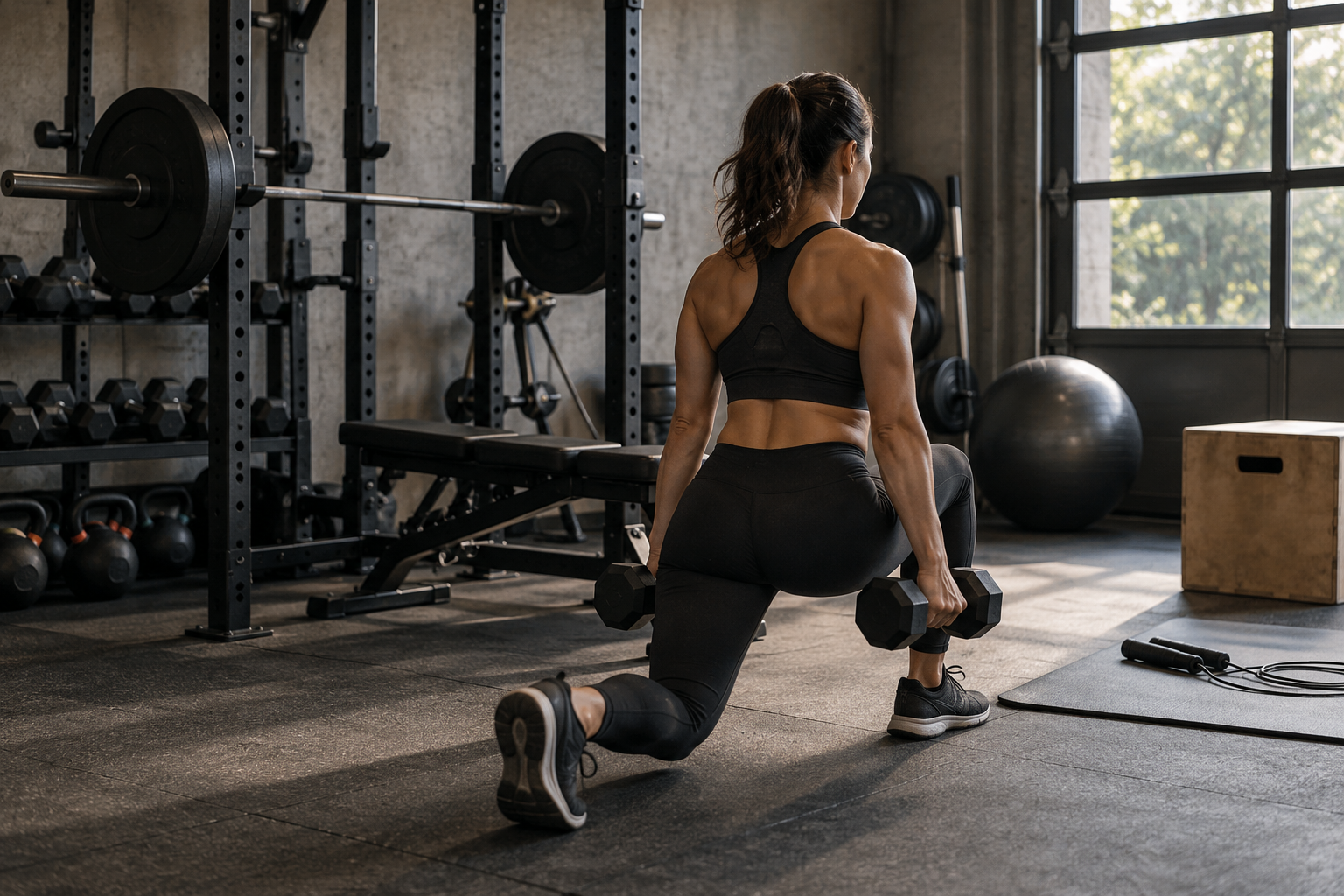
Home gym equipment checklist: practical guide for a complete training space
Designing a home space dedicated to training requires an assessment that goes beyond simply choosing equipment. A home gym equipment checklist allows you to organize decisions systematically, considering available dimensions, training goals, safety, equipment compatibility, and maintenance. For an advanced user or a personal trainer using a home space, these aspects directly affect the quality of sessions and the continuity of use over time.
A well-designed home gym does not necessarily need to contain numerous machines. It is more important to select versatile equipment that is correctly sized and consistent with the exercises that will be performed. Compact racks, adjustable benches, dumbbells, cardio systems, and technical flooring can form a functional base, provided they are integrated into an environment that allows for safe movement and organized load management.
This guide proposes an operational method for planning, verifying, and maintaining a home gym. The goal is not to present a list of products to buy, but to identify the practical criteria that help distinguish truly necessary equipment from accessory items, reducing sizing errors and costs not justified by use.
- Analyze available space and training needs
- Select fundamental strength equipment
- Evaluate compact racks and benches for the home gym
- Organize dumbbells, barbells, and load progression
- Choose appropriate flooring and protections
- Integrate cardio without compromising space
- Maintenance checklist and periodic checks
- Organize sessions and manage equipment
- Plan the investment and future upgrades
Analyze available space and training needs
The first step in designing a home gym is to accurately measure the environment. Floor space, ceiling height, the position of doors and windows, and the presence of structural elements determine which equipment can be installed. It is not enough to verify that a rack or bench physically fits in the room: you must also consider the space required to access the equipment, load weights, and perform movements.
An apparently large environment can become dysfunctional when equipment is inserted without preliminary planning. A barbell requires lateral space for loading plates, while an adjustable bench needs a clear area to change the incline and allow the user to position themselves correctly. Even the presence of a treadmill requires specific safety distances, especially in the rear area.
The assessment must start from training goals. A personal trainer using the space for individual sessions may prioritize versatile and easily adjustable equipment. A user oriented towards powerlifting, on the other hand, might place greater importance on rack stability and load capacity. Defining the main activities avoids occupying space with rarely used tools.
Measure dimensions and movement spaces
Before purchasing, it is useful to create a floor plan with the actual dimensions of the room and the planned equipment. You must also consider the footprint during use, not just when at rest. For example, a compact rack may occupy a relatively small surface area, but require additional space for the barbell, loading plates, and access to safety systems.
Define goals before equipment
Selection should derive from the fundamental movements planned in the program. Workouts based on squats, pushes, pulls, and hip movements require a different configuration than predominantly cardiovascular sessions. Identifying priority exercises allows for choosing tools that cover multiple functions, improving the ratio between occupied space and training possibilities.
Select fundamental strength equipment
A home gym dedicated to strength should be organized around movement categories rather than the number of available tools. Push, pull, squat, hip extension, and complementary work represent useful references for checking if the equipment allows for a sufficiently complete workout. This approach allows you to identify any gaps before making new purchases.
Multifunctional equipment is particularly important in home environments. A rack with compatible accessories can support different exercises, while an adjustable bench allows you to modify the angle of presses and perform complementary movements. Versatility must still be evaluated along with stability and the load limits declared by the manufacturer.
It is important to avoid letting the search for maximum compactness compromise safety. A foldable or modular tool can offer logistical advantages, but it must be used according to the provided instructions. Load capacity, the quality of locking systems, and stability during movements are priority criteria over the quantity of advertised functions.
Verify coverage of fundamental movements
A practical assessment consists of taking your training program and associating the necessary equipment with each exercise. If multiple movements can be performed with the same tool without compromising technique, the investment is more efficient. It is useful to distinguish essential equipment from items that improve comfort or expand variety but are not necessary in the initial configuration.
Evaluate versatility without sacrificing stability
The presence of numerous adjustments can be advantageous only when every configuration is stable and easily verifiable. Before use, it is necessary to check that pins, supports, and locking systems are correctly inserted. For modular tools, it is also advisable to verify that accessories are explicitly compatible with the main structure.
Evaluate compact racks and benches for the home gym
The rack often represents one of the central elements of a home gym dedicated to free weights. It allows for organizing barbell exercises and, when properly configured, can integrate safety supports and pull-up accessories. The choice between a power rack, half rack, and compact solutions depends on available space, planned loads, and the level of autonomy during training.
For those who train without a spotter, the presence of correctly sized safety systems takes on particular importance. Protection bars and adjustable supports must be positioned according to the exercise and the physical characteristics of the user. Not all racks offer the same adjustment possibilities, so it is advisable to check the specifications before purchasing.
The bench must also be evaluated as a structural component of the strength area. Stability, overall load capacity, seat height, and ease of adjustment affect the experience. An adjustable bench can expand training possibilities, but a sturdy flat bench may be sufficient when the program mainly involves horizontal exercises.
Size the rack based on space
The verification must include overall height, width, depth, and the space required to use the barbell. You should also consider any accessories that increase the footprint, such as pull-up bars, plate storage supports, or cable systems. If the rack requires anchoring, compatibility with the floor and structure must be assessed according to the manufacturer's instructions and, when necessary, with a competent technician.
Choose a stable and adjustable bench
The bench's load capacity must include the weight of the user and that of the equipment used, according to the manufacturer's specifications. It is important to verify that the backrest does not exhibit abnormal movement and that the adjustment mechanisms are simple to use. Transport wheels can facilitate movement, but they must not compromise stability during exercise.
Organize dumbbells, barbells, and load progression
Load management is one of the most important aspects of home gym design. A well-organized setup must allow for gradual progression without requiring continuous changes to the entire system. The choice between fixed dumbbells, adjustable dumbbells, and barbells depends on the type of training, space, and the frequency with which weights are changed.
Adjustable dumbbells can reduce the footprint compared to a complete set of fixed pairs, but they require attention to selection mechanisms and usage limits. Fixed dumbbells, on the other hand, allow for immediate load changes, a useful feature during circuits or sessions with multiple consecutive exercises. There is no universally better solution: the determining criterion is compatibility with the program and operational habits.
For barbells, it is necessary to check length, weight, sleeve diameter, and compatibility with plates. Even the availability of small load increments can be useful for managing sustainable progressions. A configuration that allows only very high increases can be impractical for complementary exercises or in the initial learning phases.
Fixed or adjustable dumbbells
The choice should consider the time required to change weight, the robustness of the system, and the range of available loads. For a personal trainer who works with users of different abilities, the speed of adjustment can be a significant advantage. For a single user with a stable program, however, a simpler solution may be sufficient, provided it is adequate for the planned progressions.
Plan sustainable load increments
Progression should not depend exclusively on weight increases. The number of repetitions, sets, movement control, and recovery periods can all be modified according to goals. However, having sufficiently small increments makes load adjustment easier when the user has achieved good technical mastery and requires a gradual progression.
Choose appropriate flooring and protections
Home gym flooring plays an important role in protecting surfaces and managing the training area. The choice of material must consider the type of exercises, weight of the equipment, characteristics of the subfloor, and environmental conditions. A surface suitable for working with small dumbbells might not be sufficient for activities involving heavy loads or repeated impacts.
Rubber flooring is frequently used in fitness spaces for its resistance and the possibility of creating modular surfaces. Thickness, density, and mechanical characteristics influence the material's behavior. However, it is important to avoid considering thickness as the only indicator of protection: the type of subfloor and the distribution of loads also affect the result.
Flooring does not replace a check of the building's load-bearing capacity. In particular, when a home gym is installed on upper floors or involves heavy equipment, it may be necessary to request a structural assessment. Vibrations transmitted to adjacent rooms must also be considered, especially in shared residential buildings.
Evaluate materials and thicknesses
Selection should start from the intended use. Bodyweight exercises, dumbbell training, and heavy lifting generate different stresses. It is appropriate to request technical data on the material's performance and check the installation indications. Modular tiles can facilitate replacements, while continuous surfaces require planning consistent with the room's conditions.
Protect the subfloor and limit vibrations
Technical flooring can help attenuate some impacts, but it does not guarantee the elimination of structural noise. For activities with heavy loads, it may be necessary to provide specific platforms and solutions designed for stress distribution. It is important to avoid uncontrolled dropping of weights and verify that the area is compatible with the intended activities.
Integrate cardio without compromising space
A complete home gym can include cardiovascular equipment, but their presence should be evaluated based on training habits and the space actually available. Treadmills, bikes, and rowers have different footprints and usage methods. The choice must also consider noise, ventilation, power consumption, and ease of maintenance.
A treadmill requires an adequate surface and safety distances defined by the manufacturer. A bike can be easier to place in compact environments, while a rower requires longitudinal space during use. It is important to evaluate operational footprints and not just the dimensions declared when the equipment is stored.
For a personal trainer who uses the home space with clients, cardio equipment should integrate with programming without hindering access to strength stations. In some cases, it may be more useful to prioritize a single versatile machine and leave free space for dynamic exercises, rather than installing multiple items used occasionally.
Choose the cardio machine based on usage
The assessment should consider average session duration, planned intensity, and user preferences. For continuous activities, it is important to verify that the machine is designed to support the desired frequency of use. The availability of adjustable programs and console readability can also influence the experience, but they should not outweigh mechanical quality and reliability.
Ventilation, noise, and power
Cardiovascular activities can significantly increase the perceived temperature in a small room. It is therefore advisable to provide adequate air exchange and check the environmental conditions recommended by the manufacturer. For electrically powered machines, consider the position of outlets, cable management, and the suitability of the electrical system, avoiding makeshift connections in high-traffic areas.
Maintenance checklist and periodic checks
A home gym maintenance checklist allows you to turn equipment care into a regular and verifiable procedure. Even tools used exclusively in a home environment are subject to wear, loosening, and surface deterioration. The frequency of checks should be proportional to the intensity of use and the manufacturers' recommendations.
Before every session, it is useful to perform a visual check of the main equipment. The control can include the stability of supports, correct insertion of pins, conditions of locking systems, and absence of obstacles in the movement area. This procedure takes little time and can help identify anomalies before they compromise use.
Periodic interventions must be documented, especially when the space is also used for professional activities. A simple log with date, equipment checked, anomaly found, and intervention performed allows you to track the state of the equipment. Technical operations must be performed according to the manufacturer's instructions and, when required, by qualified personnel.
Checks before each session
Before training, it is appropriate to verify that the floor is dry and free of obstacles, that plates are fixed correctly, and that racks and benches do not show abnormal movement. Adjustable dumbbells require special attention to selection mechanisms. If damaged components or uncertain locking systems are present, the equipment must not be used until the problem is resolved.
Scheduled maintenance and recording of interventions
Periodic maintenance can include cleaning grips, checking hardware according to specifications, inspecting moving parts, and inspecting surfaces subject to wear. For cardio machines, it is necessary to follow the procedures for the belt, transmission, and electronic components. Do not apply lubricants or perform adjustments without verifying compatibility with the model used.
Organize sessions and manage equipment
The functionality of a home gym also depends on the layout of the tools and the ease with which they can be used. An organized environment reduces the time needed to prepare exercises and limits the risk of leaving equipment in high-traffic areas. Dumbbell racks, plate racks, and storage systems should be chosen based on loads and available space.
For those who use the home gym daily, the layout should follow the usual sequence of sessions. Most used equipment should be easily accessible, while occasional items can be placed in less central positions. However, it is important to avoid requiring the moving of heavy loads or crossing occupied operational areas to retrieve an accessory.
When the space is used by a personal trainer with clients, organization also takes on a professional dimension. Adjustments must be quick, surfaces easily cleanable, and usage procedures understandable. Equipment management should allow for adapting sessions to people with different characteristics without compromising safety.
Storage and accessibility of tools
Plates, dumbbells, and accessories should be stored on supports sized for the expected loads. It is important to respect the declared capacities and distribute weight according to the manufacturer's instructions. Heavier objects should be placed in positions that allow for controlled handling, avoiding unnecessarily complex lifting.
Preparation of sessions and configuration changes
Effective programming takes into account the time needed to change equipment configurations. If each exercise requires long movements or complex adjustments, the session can become less fluid. Organizing movements by station and preparing necessary accessories in advance allows for improving workout continuity without sacrificing execution quality.
Plan the investment and future upgrades
Building a home gym should be considered a progressive investment, based on real needs and verifiable technical criteria. Buying all equipment at once can involve high costs and increase the risk of choosing tools that will be used rarely. Phased planning allows you to verify the effectiveness of the initial configuration before expanding it.
The first level of investment should focus on space safety and covering fundamental movements. Adequate flooring, stable equipment, and loads compatible with the program are priority elements. Subsequent additions can concern greater exercise variety, more precise load increments, or tools that improve operational comfort.
To compare alternatives, it is useful to consider the total cost of ownership, not just the initial price. Expected durability, maintenance, accessory compatibility, and the ability to replace components affect the investment value. Cheap but unstable or difficult-to-repair equipment may be less cost-effective than a solution designed for continuous use.
Compatibility between components is an additional selection criterion. Before buying accessories for a rack, it is necessary to verify dimensions, fastening systems, and manufacturer indications. The same principle applies to plates, barbells, supports, and storage systems. Avoiding non-certified or non-compatible combinations helps reduce operational problems and unexpected costs.
A home gym can evolve along with the user's skills and goals. Those who start with a general strength program might subsequently require heavier loads, specific equipment, or a dedicated cardio station. For this reason, it is useful to leave room for expansion and evaluate solutions that allow for growth without having to completely replace existing equipment.
For a personal trainer, the investment must also be consistent with the type of service offered and the conditions of space use. When professional activities are carried out with clients, it is necessary to verify any applicable requirements regarding safety, intended use of the premises, and insurance coverage. The presence of professional equipment does not automatically make a home environment suitable for any commercial activity.
Periodically using the home gym equipment checklist allows you to verify if the space continues to meet training needs. The analysis should include equipment condition, frequency of use, load availability, ease of movement, and maintenance needs. In this way, every new purchase can be motivated by a concrete requirement, keeping the home gym functional, organized, and sustainable in the long term.
Comments (0)