
Trolley
You have no items in your shopping cart

 Budgets
 Dumbers
 Discs
 Benches
 Racks and Rigs
 Weights Holders
 Isotonic machines
 Calisthenics
 Cardio
 Kettlebells
 Flooring
 Gym Set
 Accessories
 Combat
 ARTI MARZIALI
 CONTAINER GYM
 Tug-Of-War
 Used Gym Equipment
 PILATES MACCHINARI
 GINNASTICA ARTISTICA
 CAMPI DA PADEL
 Prodotti in Pronta Consegna
 Informazioni
 IRONMAN
 Gift Card
- Donatif
- General information
- 0 I like it
- 56 Views
- 0 comments
- gym flooring, safety flooring, gym safety, shock-absorbing materials
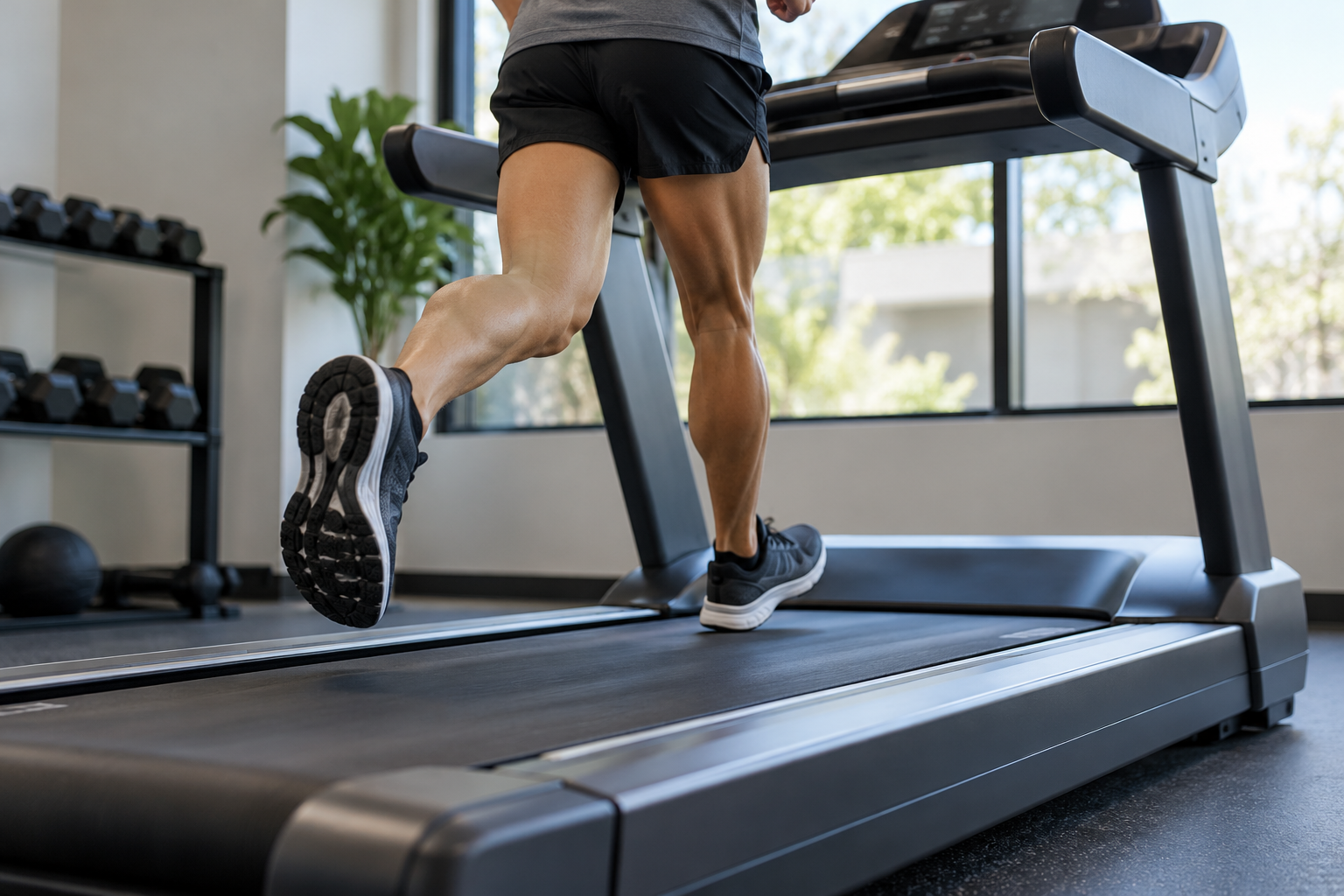
How to choose a treadmill based on maximum speed: a guide for professional gyms
Choosing a professional treadmill requires a careful analysis of technical performance and the needs of the users who will attend the facility. Among the parameters most highlighted in product sheets, maximum speed is one of the most immediate indicators, but also one of the most easily interpreted superficially. A high value does not automatically guarantee higher quality equipment, just as a limited maximum speed does not necessarily indicate insufficient performance.
Understanding how to choose a treadmill based on maximum speed means linking this parameter to the type of training, the motor's capacity, the stability of the system, and the expected intensity of use. For gym managers and fitness room supervisors, the goal is to identify a machine capable of offering performance consistent with the target audience, avoiding investments that are disproportionate to actual needs.
A general-purpose gym, a centre dedicated to athletic training, and a hotel fitness room may require very different characteristics. In this guide, we analyse practical criteria for evaluating a treadmill's maximum speed, delving into its relationship with motor performance, safety, maintenance, and overall management costs. Attention will be focused primarily on aspects that affect the quality of service and the operational continuity of the equipment.
- What a treadmill's maximum speed really indicates
- How to choose speed based on gym users
- Relationship between maximum speed and motor performance
- Stability and safety at high speeds
- Running surface dimensions and comfort
- Maximum speed and training programs
- Reliability and maintenance in professional use
- How to compare treadmill technical specifications
- How to evaluate the investment for a professional gym
What a treadmill's maximum speed really indicates
Maximum speed expresses the highest value that the running belt can reach under the conditions provided by the manufacturer. It is generally indicated in kilometres per hour and is a useful parameter for understanding which types of training can be performed on the machine. However, the nominal data must be interpreted by also considering the user's load, continuous operation, and the system's ability to keep the set speed stable.
In the professional cardio equipment market, there are treadmills available with different maximum speeds, often between 16 and 25 km/h, with specialist solutions capable of reaching higher values. These ranges are indicative and do not automatically identify the quality or commercial category of the machine. The correct choice depends on the intended use and the performance actually guaranteed by the manufacturer.
For a purchasing manager, it is important to distinguish between declared maximum speed and the capacity to sustain repeated workouts at high intensities. A treadmill intended for a fitness centre must function predictably even during consecutive sessions, without showing abnormal speed variations or overheating incompatible with operating conditions.
Nominal speed and effective performance
The value shown in the technical sheet represents the declared operating limit, but it does not necessarily describe the machine's behaviour under all conditions of use. The presence of a heavy athlete, rhythm variations, and the duration of the session can influence the stress on the transmission system.
For this reason, it is useful to request information on the conditions under which the maximum speed is guaranteed and on the intended use. The ability to maintain a uniform gait is an important indicator of the system's overall quality.
Difference between speed and running pace
Speed expressed in kilometres per hour can be converted into running pace, generally indicated in minutes per kilometre. At 10 km/h, the pace corresponds to 6 minutes per kilometre, while at 12 km/h it is equivalent to 5 minutes per kilometre. A speed of 15 km/h corresponds instead to 4 minutes per kilometre.
This conversion allows you to link the treadmill's characteristics to the users' performance. A centre frequented mainly by people who practise fast walking and jogging may have different needs than a facility dedicated to training competitive runners.
How to choose speed based on gym users
Defining the necessary maximum speed should start with an analysis of the public that will use the machine. Not all sports facilities require treadmills designed to reach particularly high speeds. In many contexts, most sessions focus on walking, moderate running, and controlled-intensity cardiovascular training.
For a hotel fitness room or a wellness centre, a machine with a maximum speed around 16 km/h can be adequate for numerous general training programs, provided it has construction and safety features compatible with the intended use. In a general-purpose gym, a maximum speed indicatively between 18 and 20 km/h can offer more flexibility for users with different levels of preparation.
Facilities dedicated to athletic training may instead require higher speeds, especially when intense intervals or specific exercises are scheduled. In these cases, the selection must also consider acceleration, deceleration, and the characteristics of the running surface. The indicated values are guidelines, not universal thresholds.
Walking, jogging, and general training
Beginner users and people who use the treadmill for moderate cardiovascular activity generally work at lower speeds than experienced athletes. For these categories, the regularity of movement, ease of adjustment, and the presence of intuitive controls are of particular importance.
A very high maximum speed does not necessarily produce additional benefits when the training program does not require its use. In these contexts, it is often more useful to prioritize reliability, comfort, and simplicity of management.
Experienced runners and athletic training
Advanced athletes can use the treadmill for intervals, progressions, and high-intensity sessions. A machine capable of reaching 20 km/h allows, for example, setting a pace equivalent to 3 minutes per kilometre, while higher speeds may be necessary for more specific exercises.
The evaluation must in any case consider the actual level of the athletes and the characteristics of the program. For high-speed workouts, it is fundamental that the treadmill is expressly designed for such use and that the staff knows how to correctly manage safety procedures.
Relationship between maximum speed and motor performance
Maximum speed cannot be evaluated separately from the characteristics of the motor system. The motor is responsible for moving the belt and maintaining the set speed despite the variations in load produced by the user. The quality of the regulation influences the fluidity of the run and the machine's ability to respond to intensity changes.
A professional treadmill must be designed to support repeated sessions throughout the day. In this context, the nominal power of the motor represents only one of the parameters to consider. The efficiency of the transmission system, thermal management, and electronic control also contribute to actual performance.
When comparing different professional cardio equipment, it is appropriate to verify that power data are expressed according to comparable criteria. Values referring to peak power must not be interpreted as equivalent to the continuous power available during ordinary operation.
Continuous power and peak power
Continuous power describes the system's ability to deliver a certain performance under the conditions specified by the manufacturer. Peak power, on the other hand, indicates a value that can be reached for limited intervals and does not necessarily represent operating capacity during a prolonged session.
For a fitness centre that expects frequent use, it is important to request clear and verifiable data. The comparison between machines should consider not only the declared values but also the test conditions and operating limitations.
Electronic control and speed regularity
The electronic system regulates the motor's operation and helps maintain the selected speed. Effective management allows for compensating for load variations and offering a smooth movement during training.
This aspect becomes particularly important in programs that involve frequent changes in pace. Predictable accelerations and progressive transitions improve exercise management, while sudden or poorly controllable variations can compromise comfort and increase operational difficulties.
Stability and safety at high speeds
As speed increases, the requirements regarding the stability of the treadmill and the user's control of movement grow. The machine must maintain regular behaviour without excessive oscillations, abnormal vibrations, or displacement from the installation position. The quality of the frame and the support system contributes directly to these characteristics.
For a professional gym, safety does not only depend on the presence of stop devices. It is also necessary to consider the ease of access to controls, the visibility of information on the display, and the space available around the machine. The layout of the fitness room must allow users to get on and off in appropriate conditions.
The selection should also verify the presence of safety instructions and compliance information pertinent to the type of treadmill. Manufacturer indications regarding clearance, usage, and maintenance must be integrated into the daily management of the facility.
Frame rigidity and vibration control
The frame supports the running system and helps distribute the stresses produced by the user. Proper design limits unwanted movements and promotes the machine's stability even during intense workouts.
It is important to evaluate the treadmill's behaviour under expected conditions of use, avoiding considering only the overall weight as a sufficient indicator of structural quality. Geometry, connections, and material characteristics influence the dynamic response.
Emergency stop and user management
Emergency stop systems must be easily accessible and used according to the manufacturer's instructions. In professional contexts, it is advisable for staff to explain how the safety devices work to users before training.
Particular attention must be paid to high-speed sessions. The presence of a qualified instructor, when required by the program or the user's condition, can contribute to more controlled exercise management.
Running surface dimensions and comfort
Maximum speed must be evaluated together with the dimensions of the running surface. As the pace increases, the frequency and stride length change, making the availability of adequate space particularly important. A belt that is too short or narrow relative to the user's characteristics can limit the naturalness of the movement.
The length and width of the deck must be considered in relation to the stature of the users, the expected speed, and the type of exercise. For a general-purpose gym, it is useful to choose a configuration that can accommodate people with different physical characteristics while maintaining an adequate operating margin.
In addition to dimensions, it is necessary to evaluate the behaviour of the cushioning system and the regularity of the belt. The perceived comfort depends on the interaction between the surface, footwear, running technique, and individual characteristics. It is therefore incorrect to automatically attribute universal benefits to a single cushioning system.
Belt length and stride length
The length of the belt must allow the user to maintain a stable position during movement. Taller athletes or those with a long stride may require larger surfaces, especially when running at high speeds.
For a purchasing manager, it is useful to compare the actual dimensions of the usable surface, distinguishing them from the machine's external dimensions. This allows for correctly evaluating the ratio between space occupied and available functionality.
Cushioning and running quality
The cushioning system helps determine the surface's response during foot strike. Construction solutions can differ in rigidity, distribution of elastic elements, and behaviour at different speeds.
The evaluation should consider the comfort and stability perceived by users, as well as the durability of the components. A system suitable for prolonged sessions must maintain characteristics consistent with the intended use and allow for the maintenance interventions indicated by the manufacturer.
Maximum speed and training programs
Maximum speed assumes concrete meaning when it is linked to the programs offered by the gym. A machine intended primarily for fast walking has different needs than a treadmill used for interval training or athletic preparation. Defining activities beforehand allows avoiding choices based exclusively on the highest available values.
For general cardiovascular training, the ability to precisely adjust speed and incline may be more important than reaching extreme speeds. Slope variations allow for modifying the exercise intensity without necessarily requiring a proportional increase in speed.
In athletic training programs, on the other hand, the speed and predictability of transitions become relevant factors. A machine intended for fast intervals must also be evaluated in terms of acceleration and deceleration times, not just the maximum limit reachable.
Continuous training and progressions
Continuous sessions involve maintaining a certain intensity for a prolonged period. In these cases, speed stability and continuous operation capacity are fundamental requirements.
Progressions, on the other hand, allow for gradually increasing intensity. A precise adjustment system facilitates programming and allows instructors to adapt the work to the users' characteristics.
Interval training and rhythm changes
Interval training alternates phases of intense work and recovery. For this type of training, the maximum speed must be sufficient to reach the expected goals, but the management of transitions also takes on great importance.
It is advisable to verify the availability of customisable programs and the ability to modify parameters intuitively. Accelerations must remain compatible with user safety and the machine's operating instructions.
Reliability and maintenance in professional use
A treadmill installed in a gym can be used by numerous people during the same day. This condition requires a design adequate for frequent operation and careful maintenance management. The declared maximum speed does not provide sufficient information on wear resistance or operational continuity.
The belt, the running deck, the rollers, the transmission system, and the electronic components are subject to stresses that depend on the intensity and frequency of use. Proper maintenance contributes to maintaining regular performance and identifying any anomalies before they cause service interruptions.
For the fitness room manager, it is useful to prepare a check program based on the manufacturer's indications. Recording interventions allows for monitoring the status of the machines and planning assistance activities more effectively.
Wear of the belt and mechanical components
The running belt and the underlying deck are fundamental components for the treadmill's operation. Friction, tension, and alignment must remain within the conditions provided by the manufacturer. Any anomalies can influence the regularity of movement and increase the stress on the motor system.
Maintenance must include the checks and any lubrication procedures specified for the model. Not all treadmills require the same interventions, so it is important to avoid generic procedures that are not compatible with the machine.
Technical assistance and operational continuity
The availability of spare parts and qualified assistance is an important criterion in the selection of professional equipment. A breakdown can make the machine unusable and temporarily reduce the cardio room's capacity.
Before purchasing, it is advisable to verify the warranty conditions, the availability of major components, and the methods of technical intervention. These aspects affect the economic management of the equipment and the quality of the service offered to members.
How to compare treadmill technical specifications
The comparison between models should be based on a series of parameters consistent with the facility's needs. Maximum speed is the starting point, but it must be accompanied by information on the motor, running surface dimensions, declared weight capacity, incline, and intended use. A complete evaluation allows for identifying differences that do not emerge from a simple price comparison.
For an effective selection, it is useful to prepare a comparison sheet with uniform criteria. Each parameter should be accompanied by the conditions under which it is declared, avoiding comparing values obtained according to different methodologies. This procedure is particularly important when evaluating machines belonging to different commercial segments.
The choice can be deepened by comparing the characteristics of the professional cardio machines available for different training needs. Comparison with other types of equipment, such as ellipticals and bikes, can help define the overall composition of the cardio room, without replacing the specific evaluation of the performance required from the treadmill.
Priority parameters in the evaluation
Among the elements to verify are maximum speed, adjustment range, motor characteristics, belt dimensions, and maximum user weight. It is also useful to consider incline, control interface, and available programs.
These data must be interpreted according to the intended use. A machine with high performance but dimensions poorly suited to users might be less appropriate than a technically balanced solution.
Practical tests and performance verification
When possible, a practical test allows for evaluating aspects that are difficult to describe through a technical sheet. Fluidity of movement, stability, noise, and simplicity of controls can significantly influence the user's experience.
The test should be carried out by competent personnel, respecting the safety conditions provided by the manufacturer. It is particularly useful to verify the machine's behaviour at the speeds that will actually be used in the facility, rather than focusing exclusively on the maximum value.
How to evaluate the investment for a professional gym
The selection of a treadmill must be included in an economic evaluation that considers the entire life cycle of the equipment. The initial price represents only part of the total cost. Energy consumption, maintenance, spare parts, assistance, and possible periods of unavailability contribute to determining the actual economic commitment for the facility.
A treadmill with a particularly high maximum speed may be justified when the centre offers training programs that require such performance. If, on the other hand, most users use the machine for walking and moderate running, it might be more rational to allocate part of the budget to other features, such as reliability, comfort, and the availability of an adequate number of stations.
For a general-purpose gym, distributing the investment among several machines may be more important than seeking maximum performance on every single unit. A cardio room composed of equipment consistent with the profile of the members allows for better managing usage flows and reducing wait times during peak hours.
Total cost of ownership and operational return
The total cost of ownership of a treadmill includes purchase, installation, consumption, scheduled maintenance, and extraordinary interventions. To correctly compare several solutions, it is useful to consider a homogeneous period of use and estimate the main items of expenditure.
The expected life of the equipment must be evaluated in light of operating conditions and manufacturer's instructions. A machine designed for frequent professional use may offer management advantages compared to a solution not intended for the same workload, even when the initial price is higher.
Defining maximum speed based on the service offered
The most effective criterion consists of starting from training programs and user characteristics. A fitness room dedicated to general wellness may prioritize ease of use and performance regularity, while an athletic training centre might require higher speed, controlled accelerations, and running surfaces particularly suitable for intense exercises.
Understanding how to choose a treadmill based on maximum speed therefore allows for transforming a simple technical figure into a planning tool. The speed must be sufficient for the intended goals, but the value of the investment also depends on the machine's ability to maintain reliable performance during daily use.
Before proceeding with the purchase, the fitness manager should verify the consistency between maximum speed, motor, structure, running surface, and assistance conditions. A selection based on verifiable technical criteria allows for organizing a functional cardio room that is sustainable in costs and adequate for customer needs, maintaining focus on the actual quality of the training experience.
Comments (0)