
Trolley
You have no items in your shopping cart

 Budgets
 Dumbers
 Discs
 Benches
 Racks and Rigs
 Weights Holders
 Isotonic machines
 Calisthenics
 Cardio
 Kettlebells
 Flooring
 Gym Set
 Accessories
 Combat
 ARTI MARZIALI
 CONTAINER GYM
 Tug-Of-War
 Used Gym Equipment
 PILATES MACCHINARI
 GINNASTICA ARTISTICA
 CAMPI DA PADEL
 Prodotti in Pronta Consegna
 Informazioni
 IRONMAN
 Gift Card
- Donatif
- General information
- 0 I like it
- 55 Views
- 0 comments
- gym flooring, safety flooring, gym safety, shock-absorbing materials
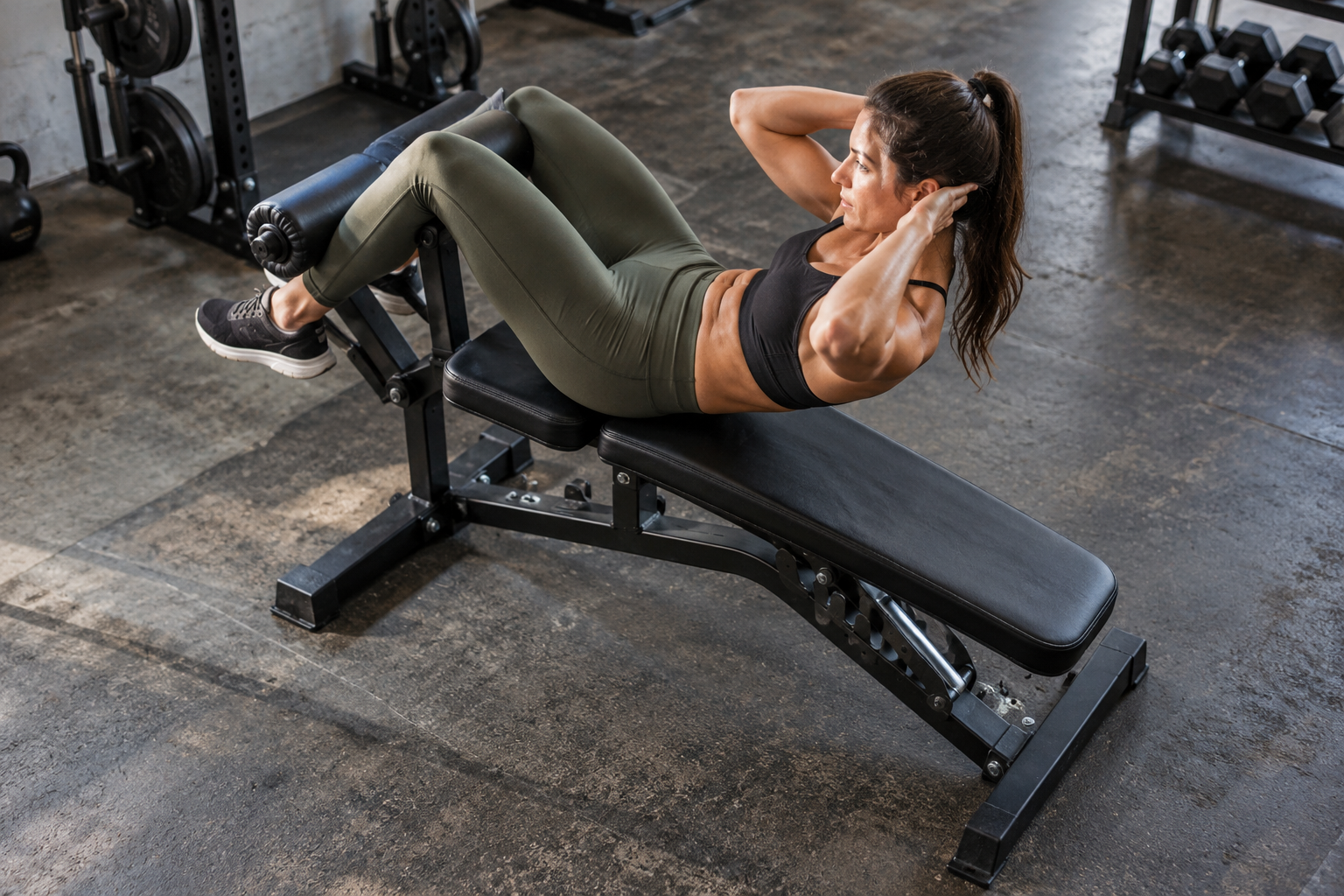
High Muster Bench: features and use for a professional weight room
Choosing a bench for strength training requires an assessment that goes beyond aesthetic appearance and purchase price. For a weight room manager or a strength area technician, delving into the topic of High Muster bench: features and usage means understanding which parameters affect equipment stability, quality of execution, and compatibility with the needs of a professional facility. Frame, support surface, load capacity, and workstation configuration are elements to be verified before any decision.
A bench intended for resistance training must provide adequate support during exercises that can generate significant loads. The quality of the support influences the ability to maintain a stable position, while the geometry of the structure determines accessibility and integration with barbells, dumbbells, and support systems. These aspects are particularly relevant in gyms dedicated to powerlifting and athletic training, where the repeatability of training conditions represents an important operational requirement.
This in-depth guide proposes practical criteria for evaluating a High Muster bench and its possible use in the strength area, without attributing dimensional, performance, or structural characteristics to the product not confirmed by a specific technical data sheet. The goal is to provide an analytical method useful for verifying the actually available configuration, comparing it with the needs of the gym, and identifying the necessary conditions for professional use.
- Identify the model and intended use
- Evaluate structure, stability, and load capacity
- Examine ergonomics and support surfaces
- Define exercises and methods of use
- Integrate the bench with racks, barbells, and dumbbells
- Organize safety in the strength area
- Plan maintenance and periodic checks
- Evaluate technical documentation and supplier
- Plan an investment consistent with the weight room
Identify the model and intended use
The first step consists of precisely identifying the High Muster bench being evaluated. The commercial name alone does not allow one to establish dimensions, load capacity, adjustment possibilities, or compatibility with specific exercises. It is therefore essential for a technical manager to have the product code, manufacturer documentation, and information regarding the configuration actually proposed.
The distinction between a flat, incline, adjustable, or integrated bench in a dedicated structure significantly changes the possibilities of use. A flat bench offers a support surface with fixed geometry, while an adjustable model can allow different backrest angles. Any integrated workstations also require an assessment of barbell supports and safety systems.
It is also important to check the declared intended use. Equipment designed for a home environment should not be automatically considered equivalent to a solution intended for a commercial weight room. The frequency of training, user rotation, and repeated stresses make it necessary to evaluate the product characteristics relative to the intended operational context.
Verify configuration and product code
Before purchasing, it is advisable to request a technical data sheet that clearly identifies the configuration of the bench. Dimensions, equipment weight, type of backrest, and the presence of adjustable elements must refer to the model actually supplied. This check avoids basing the choice on indicative photographs or descriptions related to different versions.
Distinguish professional and occasional use
Professional intent must be supported by verifiable manufacturer indications. It is useful to know the expected conditions of use, declared limits, and maintenance procedures. A bench intended for numerous daily sessions should allow for accessible checks and organized management of components subject to wear, without requiring complex interventions for every verification.
Evaluate structure, stability, and load capacity
The supporting structure constitutes one of the most important elements in the evaluation of a strength training bench. The frame must correctly transfer to the floor the stresses generated by the user and the loads used, maintaining a stable position during the exercise. Materials, geometry, connections, and distribution of supports contribute to the overall behavior of the equipment.
The stability of the gym bench does not depend exclusively on the weight of the structure. A properly designed base can offer effective support without making the machine unnecessarily bulky. Conversely, an apparently sturdy bench may present limitations when the geometry of the supports is not consistent with the intended stresses.
Another fundamental parameter concerns the load capacity declared by the manufacturer. It is necessary to understand whether the indicated value represents the total allowable load, the maximum user weight, or a limit referring to specific conditions. It is not correct to arbitrarily add up or interpret commercial values without knowing the method by which they were defined.
Frame, welds, and connections
Evaluating the frame should consider the quality of workmanship and the absence of obvious deformations. Welds, bolted elements, and connection points must be consistent with the manufacturer's design. During a practical test, carried out within the permitted usage limits, it is useful to observe any abnormal oscillations or unwanted movements. The simple thickness of the tubing is not a sufficient measure of structural resistance.
Correctly interpret the declared load capacity
The maximum load must be verified through the technical documentation of the specific High Muster bench. For a station intended for barbell pressing, the evaluation must consider the conditions of use and the stresses that can occur during the movement. The nominal capacity does not automatically authorize dynamic exercises, impacts, or uses other than those provided by the manufacturer.
Examine ergonomics and support surfaces
Ergonomics affects the ability to assume and maintain an adequate position during training. Bench height, backrest width, surface length, and conformation of the supports must be evaluated in relation to the intended exercises and the characteristics of the users. Inappropriate geometry can make preparing for the movement difficult and limit stability.
For a professional weight room, the support surface must offer a balance between comfort and support. Excessively deformable padding can make the position less stable, while a surface that is too rigid or has inadequate geometry can be uncomfortable during prolonged sessions. The evaluation must therefore consider the actual behavior of the upholstery under load.
Attention must also be paid to the surface material. The coating must allow for proper cleaning and offer grip characteristics consistent with the intended use. Abrasion resistance and the quality of the stitching can affect durability, especially in facilities where the same bench is used by numerous members.
Height and geometry of the backrest
The height of the surface relative to the floor influences foot placement and the ability to build a stable base. In competitive powerlifting, specific dimensional requirements may be provided for equipment used in competitions. When the gym intends to offer training oriented toward such contexts, it is advisable to check the applicable regulations rather than assuming that any professional bench is automatically compliant.
Padding, upholstery, and grip
The quality of the padding must be evaluated by considering deformation, shape recovery, and support stability. An adequate coating should limit unwanted slipping without hindering the user's correct positioning. It is also useful to check the cleaning methods recommended by the manufacturer and the possibility of replacing the padded components in case of deterioration.
Define exercises and methods of use
The possibilities for using the bench depend on the actual configuration. A flat surface can be used in numerous exercises with dumbbells and, when paired with compatible supports, for barbell pressing. Adjustable versions can expand the available angles, but they also introduce mechanisms that must be correctly verified and maintained.
For the weight room manager, it is important to distinguish between theoretical versatility and truly necessary functionality. A bench dedicated to flat pressing may be appropriate for a specialized strength area, while an adjustable configuration may be useful in a room intended for different exercises. The choice should reflect the training programming and not just the number of advertised movements.
It is also necessary to consider the ways in which users access the station, prepare the loads, and finish the exercise. The available space and the position of surrounding equipment can affect safety and operational efficiency. A correctly selected bench must be integrated into a functional workstation, not evaluated as an isolated element.
Flat bench press
The barbell bench press requires a stable support for the body and an adequate system for load management. It is important to verify the compatibility between the bench, barbell supports, and safety devices. The correct position of the supports must allow the user to prepare the movement without interference. For heavy loads, it is necessary to provide for assistance and protection procedures consistent with the training context.
Dumbbell exercises and accessory movements
A bench can also be used for dumbbell exercises, unilateral movements, and complementary activities, provided they are compatible with the declared intended use. In these cases, lateral accessibility, stability during position changes, and the availability of space to set down or move loads are of particular importance. Not all exercises commonly performed on a bench are necessarily authorized for every model.
Integrate the bench with racks, barbells, and dumbbells
A bench intended for the strength area must also be evaluated in relation to the equipment with which it will be used. Racks, barbell supports, plates, and dumbbells influence the organization of the station and training possibilities. Geometric and functional compatibility therefore represents an essential criterion in the design of the room.
For those managing a facility oriented toward weight rooms and powerlifting, the layout of equipment must allow for controlled movements and adequate access. The presence of a stable bench does not eliminate the need to verify the position of the supports, the barbell's range of motion, and any potential interference with the structural elements of the rack.
It is also advisable to evaluate the flooring and the management of free weights. Adequate surfaces, plate organization, and the availability of supports contribute to keeping the workstation orderly. The choice should consider the entire training system, avoiding separate purchases that could generate operational incompatibilities.
Compatibility with racks and supports
Before using the bench inside a rack, it is necessary to verify the width, length, and position of the supports. The frame must allow for correct insertion into the structure without interfering with the bases or safety elements. The height of the barbell supports must also be adjustable in a way that is consistent with the user's position. Compatibility must be verified on the actually installed system.
Management of barbells, plates, and loads
The choice of barbells and plates must be consistent with the intended exercises and the characteristics of the station. It is important to consider the length of the barbell, available lateral space, and loading methods. The use of appropriate plate collars and the availability of organized storage areas contribute to training management, reducing unnecessary interference and handling.
Organize safety in the strength area
The safety of a bench workstation depends on the combination of equipment, space organization, and usage procedures. A sturdy structure does not eliminate the risks associated with handling free weights, especially when performing barbell presses. For this reason, the manager must define operational modes consistent with the level of the users and the characteristics of the room.
The presence of adequate safety devices can contribute to limiting the consequences of a loss of load control, but their effectiveness depends on their correct positioning and compatibility with the station. It is not enough to generically install a pair of bars or supports without verifying that they are designed for the intended use.
It is also important to establish rules for supervising exercises, managing loads, and reporting anomalies. Staff should know the equipment's limitations and the procedures to adopt when a bench shows instability, loose components, or deterioration of support surfaces.
Protection and assistance systems
In barbell pressing, the use of compatible and correctly adjusted safety supports represents an important element of risk management. When provided for by gym procedures, the presence of a qualified spotter can contribute to exercise supervision. Assistance methods must be consistent with the user's level and should not replace the correct setup of the workstation.
Maneuvering spaces and access paths
The bench must be placed in a position that allows access without interfering with other users. It is necessary to consider the movement of plates, the passage of spotters, and the space required to enter and exit the station. Congested paths and equipment placed too close together can compromise the functionality of the room even when each individual product is technically adequate.
Plan maintenance and periodic checks
The maintenance of professional benches helps to preserve the stability, functionality, and durability of the equipment. Even a bench without complex mechanisms requires periodic checks of connections, surfaces, and support elements. The frequency of interventions must be defined based on manufacturer indications and intensity of use.
Routine operations may include cleaning, visual inspection of accessible welds, verification of bolted connections, and inspection of the padding. In adjustable models, it is necessary to also pay attention to locking systems and pivot points. Any interventions must respect the procedures provided by the manufacturer, avoiding modifications that could alter the structural behavior.
For a weight room with high foot traffic, it is useful to prepare a maintenance log. Documentation of checks allows for identifying recurring problems and scheduling any replacements. When anomalies potentially relevant to safety are encountered, the equipment must be excluded from use until an appropriate assessment is made.
Checks of the frame and supports
During inspections, it is advisable to verify the absence of obvious deformations, abnormal movements, and deterioration of structural components. Floor support elements must maintain adequate conditions and not show damage that compromises stability. In models with adjustable parts, locking systems must function correctly in all authorized positions.
Spare parts, padding, and wear-prone components
The availability of spare parts represents an important element in the economic evaluation. Upholstery, padding, feet, and adjustment components may require replacements during the bench's service life. It is advisable to verify the possibility of obtaining compatible parts and to know the authorized procedures for interventions. An improvised repair can compromise the equipment's functionality and should not replace manufacturer instructions.
Evaluate technical documentation and supplier
Supplier selection must be based on the availability of verifiable technical information. For a High Muster bench, it is important to request model identification, dimensions, declared load capacity, intended use, and warranty conditions. In the absence of these elements, the comparison with other equipment risks being based on commercial impressions rather than objective parameters.
A purchasing manager can compare the desired configuration with a selection of professional gym benches, verifying the characteristics actually declared for each model. The goal is not to automatically identify the product with the lowest price, but to understand which features are necessary for the intended exercises and which services are included in the supply.
The quote should specify shipping, any assembly, included accessories, and delivery conditions. It is also useful to verify the availability of support and spare parts. An economically attractive offer may be less convenient when information on maintenance is missing or when the replacement of wear-prone components requires long lead times.
Documentation to request before purchase
The technical data sheet should report the dimensional and functional characteristics of the proposed model. The manual must clarify usage methods, expected limits, and maintenance procedures. It is also advisable to verify the applicable compliance documentation, distinguishing between declarations referred to the product and any specific requirements requested for use in sports competitions.
Warranty and commercial conditions
The evaluation of the warranty must consider duration, covered components, exclusions, and how to request service. It is important to verify that the conditions are consistent with the intended professional use. Shipping, any assembly, and subsequent support must be clarified before ordering, so as to avoid additional costs not considered in the planning.
Plan an investment consistent with the weight room
The choice of a High Muster bench should be included in an overall assessment of the strength area. The initial price represents only a part of the investment, while durability, maintenance, availability of spare parts, and compatibility with existing equipment affect the operational value. An economically convenient bench may be inappropriate if it does not allow for the required exercises or presents limitations compared to the room's configuration.
To compare alternatives, it is useful to prepare a matrix with mandatory requirements and preferential characteristics. Among the former may be adequate intended use, documented load capacity, stability, compatible dimensions, and availability of instructions. Among the latter may be ease of movement, characteristics of the upholstery, and the possibility of quickly replacing wear-prone components. Prioritizing the truly important parameters makes the choice more transparent.
A further indicator concerns the cost relative to the intended use. Assuming, for purely illustrative purposes, a bench purchased for 800 euros and used for five years with an average of 1,000 annual sessions, the initial quota attributable to the equipment would be equal to approximately 0.16 euros per session. The calculation does not include maintenance, occupied space, and other operational costs, but allows for comparing different scenarios using homogeneous hypotheses.
Evaluate total cost of ownership
The total cost should include purchase, shipping, any assembly, maintenance, and replacement of wear-prone components. It is also useful to consider the indirect cost of periods when the station is unavailable. A reliable and easily maintainable bench can contribute to the continuity of activities, especially in rooms that host numerous training sessions throughout the day.
Define checks before approval
Before confirming the purchase, the manager should verify that the model has been identified correctly and that the declared characteristics meet the goals of the strength area. It is important to check for compatibility with racks, barbells, and available spaces, as well as define delivery and maintenance procedures. Involving the technicians who supervise the training can help identify any ergonomic criticalities before installation.
A well-documented choice allows for integrating the bench into the weight room programming while maintaining consistency between requested performance, safety, and economic sustainability. The availability of verifiable technical information, the correct organization of the station, and the planning of checks constitute determining elements for evaluating the investment over time. For a professional facility, the value of the equipment depends on its ability to respond continuously to the needs of users and the operational procedures of the gym.
Comments (0)