
Trolley
You have no items in your shopping cart

 Budgets
 Dumbers
 Discs
 Benches
 Racks and Rigs
 Weights Holders
 Isotonic machines
 Calisthenics
 Cardio
 Kettlebells
 Flooring
 Gym Set
 Accessories
 Combat
 ARTI MARZIALI
 CONTAINER GYM
 Tug-Of-War
 Used Gym Equipment
 PILATES MACCHINARI
 GINNASTICA ARTISTICA
 CAMPI DA PADEL
 Prodotti in Pronta Consegna
 Informazioni
 IRONMAN
 Gift Card
- Donatif
- General information
- 0 I like it
- 66 Views
- 0 comments
- gym flooring, safety flooring, gym safety, shock-absorbing materials
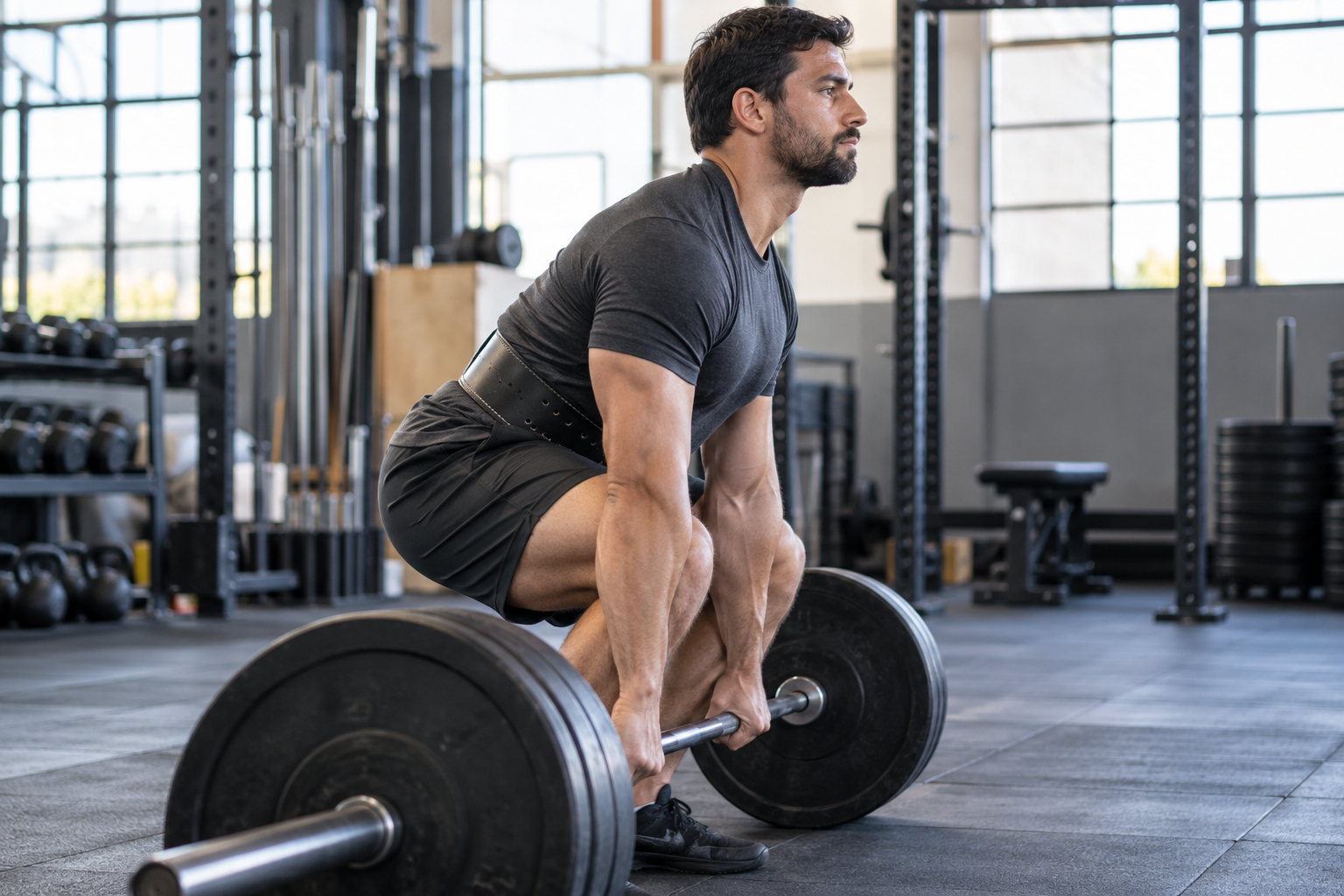
Mistakes in using the weightlifting belt: how to avoid them in the weight room
The weightlifting belt is one of the most widely used accessories in weight rooms dedicated to strength training, powerlifting, and athletic conditioning. Its use is often associated with the management of heavy loads, but its real usefulness depends on the athlete's ability to properly integrate it into their execution technique. Wearing a belt does not automatically guarantee greater safety, nor does it allow for compensating for deficiencies in movement control.
Understanding the mistakes in using the weightlifting belt is particularly important for gym managers, strength area supervisors, and instructors who oversee workouts with barbells and external loads. Improper use can compromise the quality of abdominal bracing, unnecessarily limit mobility, or create a perception of safety not supported by the athlete's actual capabilities. The belt must be considered a tool to support intra-abdominal pressure management and not a device capable of eliminating the risks associated with lifting.
In a professional weight room, the goal should be to develop usage procedures consistent with the characteristics of the exercises and the technical level of the users. This guide analyzes the most frequent mistakes, the consequences on training quality, and the practical criteria for choosing, adjusting, and correctly using the belt during squats, deadlifts, and other strength exercises.
- Understanding the function of the weightlifting belt
- Positioning and adjustment mistakes
- Mistakes in breathing and abdominal bracing
- Using the belt too often or at the wrong times
- Mistakes in use during squats and deadlifts
- Choosing a belt not suited to the athlete
- Safety management in the professional weight room
- Maintenance and user training
- Evaluating investment in strength area management
Understanding the function of the weightlifting belt
One of the most common mistakes is considering the belt as a passive support that automatically protects the spine. In reality, its main function is to provide a surface against which the athlete can exert pressure through the expansion of the abdominal wall and trunk. This mechanism can help increase system stiffness during the lift, provided it is accompanied by a correct breathing strategy.
The belt does not replace the work of the abdominal musculature, spinal erectors, and other groups involved in stabilization. On the contrary, it requires the active participation of the athlete. The benefit depends on the ability to coordinate breathing, muscle contraction, and movement, adapting the pressure to the characteristics of the load and the exercise.
For a strength area coach, it is essential to explain that the belt does not make an excessive load safe and does not automatically correct inadequate technique. Its use should be part of a progression that includes motor learning, trunk control, and appropriate intensity management.
The role of intra-abdominal pressure
During a demanding lift, the coordinated contraction of the trunk musculature helps create stiffness and control movement. The belt can provide a tactile reference that facilitates abdominal expansion and the maintenance of tension.
Intra-abdominal pressure in powerlifting does not depend exclusively on the presence of the belt. It is the result of a neuromuscular strategy involving the diaphragm, abdominal wall, and trunk musculature. For this reason, it is important to develop bracing even without accessories.
The false perception of safety
Wearing a belt can increase the subjective feeling of stability. This effect must not be confused with a guarantee of injury protection. An athlete who interprets the belt as authorization to rapidly increase the load might expose themselves to stresses exceeding their control capacity.
Instructors should therefore maintain the same technical evaluation criteria used in exercises without a belt. Movement quality, execution speed, fatigue management, and the ability to abort a repetition remain priority elements.
Positioning and adjustment mistakes
The positioning of the belt directly influences comfort and the ability to generate effective pressure against its surface. A frequent mistake consists of wearing it too high or too low without considering the trunk conformation and the type of exercise. There is no identical position for all athletes, as body proportions, mobility, and movement geometry may require minor adjustments.
An improperly positioned belt can interfere with torso flexion, create annoying pressure points, or limit abdominal expansion capacity. During the deadlift, for example, some people may prefer a slightly different position compared to that used in the squat. These variations must be evaluated through controlled trials.
Another mistake consists of adjusting the belt exclusively based on the feeling of compression. A very tight closure does not necessarily correspond to better stabilization. The athlete must be able to breathe and actively generate pressure against the belt without experiencing excessive limitations.
Tightening the belt excessively
A belt that is too tight can make it difficult for the abdominal wall to expand and alter the breathing strategy. In some cases, it can also cause discomfort during the starting position of the deadlift or in the deepest phases of the squat.
Adjustment should allow for stable contact with the trunk while leaving enough space to develop bracing. The coach can verify that the athlete manages to generate pressure in a controlled manner without excessively modifying posture.
Using a belt that is too loose
An excessively loose belt can offer insufficient tactile reference and shift during movement. This behavior reduces the predictability of the accessory and can distract the athlete during the most demanding phases of the exercise.
Adjustment must be verified in the specific working position. A belt that seems adequate when the athlete is standing might behave differently during hip flexion or the bottom of the squat.
Mistakes in breathing and abdominal bracing
Breathing management represents one of the most important aspects of using the belt. A widespread mistake is simply contracting the abdomen inward without developing distributed pressure against the belt surface. This strategy can limit the ability to create effective trunk stiffness.
Abdominal bracing with a belt requires a coordinated contraction of the trunk musculature. The athlete should learn to expand the abdominal region in a controlled manner, using the belt as a reference and maintaining a position consistent with the exercise. It is not necessary to seek exclusively anterior push, since stabilization involves the entire circumference of the trunk.
A further mistake is maintaining an identical breathing strategy for any exercise and intensity. Breath management during a single heavy repetition may differ from that necessary in a prolonged set. Techniques involving breath-holding and increased pressure must be taught carefully, also considering the user's health conditions.
Learning to generate pressure against the belt
An effective educational progression can start with breathing and trunk control exercises performed without load. Subsequently, the belt can be used to provide a tactile reference and help the athlete perceive the distribution of pressure.
The coach should observe that the search for stability does not cause evident compensations, such as excessive lumbar extension or an unnecessary modification of pelvic position. Trunk control must remain compatible with exercise technique.
Holding the breath without control
During some high-intensity lifts, a brief breath-holding maneuver is used to contribute to trunk stiffness. However, applying it without preparation or prolonging it unnecessarily can cause significant cardiovascular effects, including temporary increases in blood pressure.
Instructors must pay particular attention to users with known cardiovascular conditions or symptoms during exertion. In these cases, it is appropriate to request an appropriate health evaluation before proposing particularly demanding breathing strategies.
Using the belt too often or at the wrong times
Wearing the belt during every exercise does not necessarily represent an effective choice. Systematic use, independent of intensity and movement characteristics, can prevent the athlete from developing good awareness of their stabilization strategies without external support. This does not mean the belt automatically weakens the abdominal musculature, but rather that programming should include reasoned use.
The decision to use the belt must consider load, session objective, athlete experience, and exercise characteristics. In certain training phases, it can be useful to perform sets without a belt to develop technical skills and control capacities. In other situations, especially during demanding lifts, the accessory can contribute to managing trunk stiffness.
For a weight room manager, it is important to avoid absolute rules based on universal percentages of the one-rep max. There is no valid threshold for everyone beyond which the belt becomes mandatory. The choice must be individualized and integrated into the training program.
Wearing the belt throughout the warm-up
Using the belt right from the first light sets can be superfluous when the goal of the warm-up is to gradually prepare movement and verify trunk control. In many programs, it is possible to introduce the accessory only in the most demanding sets.
However, this choice must not become a rigid rule. Athletes with specific needs can adopt different strategies, as long as they are consistent with the coach's instructions and their own physical condition.
Confusing habit with technical necessity
Some athletes develop a strong preference for the belt and may perceive any exercise without the accessory as less stable. It is useful to distinguish between individual preference and a real program-related necessity.
Training should maintain space for developing stabilization skills without a belt, while avoiding interpreting its use as a technical limitation. The goal is to build transferable skills to different load conditions.
Mistakes in use during squats and deadlifts
Squats and deadlifts are among the exercises where the belt is used most frequently. Both require a high capacity to coordinate lower limb movement and trunk stabilization, but present different biomechanical characteristics. For this reason, the position and adjustment of the belt may require specific adaptations.
A common mistake is modifying technique to adapt to an uncomfortable belt, rather than checking if the accessory is suited to one's conformation. If the belt interferes with the starting position or causes excessive contact with the ribs and pelvis, its adjustment, position, or model should be reviewed.
Technical management must also consider interaction with other equipment present in the strength area. Racks, barbells, plates, and platforms must be selected and organized to allow controlled exercises, without attributing to the belt a substitute function compared to safety systems and correct operating procedures.
Frequent mistakes in the belted squat
During the squat, an excessively tight belt can interfere with the descent and make it difficult to maintain a comfortable trunk position. The athlete might compensate by modifying torso lean or limiting movement depth.
The coach should verify the ability to maintain bracing during the different phases of the repetition, without introducing unnecessary stiffness. The belt must accompany the technique and not completely determine it.
Frequent mistakes in the deadlift
In the deadlift, the starting position requires a combination of hip flexion, trunk control, and correct relationship with the barbell. A belt that is too high, too low, or excessively rigid can create interference, especially in athletes with certain body proportions.
Adjustment should be verified before demanding sets, using progressive loads. It is important to avoid sudden modifications during maximal attempts and maintain a configuration already tested in training.
Choosing a belt not suited to the athlete
Not all weightlifting belts share the same characteristics. Material, width, thickness, rigidity, and closure system influence comfort and usage methods. A frequent mistake is choosing the model exclusively based on aesthetic appearance or popularity among more experienced athletes.
The rigid belts used in powerlifting can offer a stable surface against which to generate pressure, but require adequate adaptation. More flexible models may be comfortable in certain applications, while presenting different characteristics. There is no universally superior configuration for every athlete and discipline.
For a professional gym, it is useful to distinguish between accessories intended for individual use and belts made available to members. In the second case, adjustability, ease of cleaning, durability of closure systems, and availability of different sizes become particularly important.
Width and thickness of the belt
Width influences the contact surface with the trunk. A uniform and relatively wide belt can offer a stable reference, but might be less comfortable for people with a reduced distance between ribs and pelvis.
Thickness contributes to the accessory's rigidity, without being an indicator of quality on its own. The choice must consider the athlete's technical level, the discipline practiced, and any rules applicable to competitions.
Closure system and size selection
Belts can use lever closures, prong buckles, or hook-and-loop systems, each with different operational characteristics. Lever closures allow for repeatable adjustment, while other systems can offer greater flexibility in modifying circumference.
Size must be chosen based on the manufacturer's instructions and the actual measurements of the trunk. Using a belt that is too large or too small can compromise adjustment and reduce the accessory's functionality.
Safety management in the professional weight room
Correct belt management must be integrated into a broader safety system for the strength area. The presence of the accessory does not replace the need to use adequate equipment, correctly set up protection systems, and supervise the most demanding exercises. For a gym manager, this means developing procedures that involve both instructors and users.
During squats and other barbell exercises, rack configuration must be consistent with the athlete's characteristics and the intended movement. The height of supports and safety devices must be adjusted correctly, while the surrounding area must remain free of obstacles.
The choice of professional rack structures should therefore consider stability, adjustment possibilities, and compatibility with training programs. A properly used belt contributes to lift management, but does not eliminate the need for an environment designed to work with external loads.
Exercise supervision and load progression
Instructors should verify that the athlete possesses adequate technical skills before introducing heavy loads. The belt can be integrated progressively, explaining its function and usage methods.
Supervision must focus on repetition quality, fatigue management, and the ability to stop the exercise when necessary. The accessory should not be used to justify excessively rapid progressions.
Operating procedures in the strength area
A professional weight room can benefit from shared guidelines regarding belt usage, rack adjustment, and the management of demanding attempts. These procedures must be simple, understandable, and adaptable to user characteristics.
It is also important to verify that personal accessories or those provided by the gym are intact and compatible with the planned activity. Any anomalies in closure systems must be resolved prior to use.
Maintenance and user training
Maintenance of weightlifting belts is often neglected because they are relatively simple accessories. However, repeated use can cause material wear, deformation, and deterioration of closure systems. A damaged belt can lose reliability or become uncomfortable during lifting.
For a gym that provides shared belts, it is advisable to set up periodic checks and cleaning procedures compatible with the materials. Leather belts, for example, may require different attention compared to models made with synthetic materials.
User training represents an equally important investment. A brief explanation on adjustment, positioning, and breathing can prevent many recurring mistakes. Instructors should also avoid offering identical instructions to people with different physical characteristics and experience levels.
Checks of materials and closure systems
Verifications should concern stitching, adjustment holes, buckles, levers, and surfaces subject to wear. Signs of significant deterioration must be evaluated before allowing further use.
It is important to follow the manufacturer's instructions for cleaning and storage. Persistent humidity, exposure to heat sources, and incompatible treatments can compromise certain materials.
Practical training for users and instructors
An effective training path should explain the function of the belt, show adjustment methods, and include practical bracing exercises. The athlete must understand when the accessory can be useful and what limits it presents.
For instructors, it is important to periodically update skills related to lifting technique and accessory management. Consistent communication within the staff reduces the risk of contradictory instructions and improves the member experience.
Evaluating investment in strength area management
The professional management of weightlifting belts should be considered part of the overall organization of the weight room. The cost of the accessory represents only one component of the investment, while training, maintenance, and correct integration into programs impact the quality of the service offered. A gym that has adequate equipment but does not develop technical skills risks failing to fully exploit its potential.
For a purchasing manager, it is useful to evaluate whether to provide shared belts or leave the management of personal accessories to the athletes. The first solution requires attention to size availability, cleaning, and maintenance. The second can offer greater customization, but still makes supervision on correct usage during organized activities necessary.
The choice should be consistent with the facility's clientele. A center specialized in powerlifting may require different equipment and skills compared to a generalist gym. In both cases, the value of the investment depends on the ability to integrate accessories into a technically sound training system.
Defining equipment consistent with users
Before purchasing belts intended for shared use, it is appropriate to analyze the number of interested users, the disciplines practiced, and the characteristics of the sessions. A balanced equipment supply should include adequate sizes and configurations, avoiding purchases based exclusively on the most popular models.
It is also useful to consider the availability of spare parts and the possibility of replacing components subject to wear. The quality of closure systems and ease of adjustment can impact daily management, especially when accessories are used by different people.
Practical criteria to improve belt usage
To reduce mistakes in using the weightlifting belt, the strength area manager should define shared criteria regarding adjustment, breathing, accessory choice, and load progression. These guidelines must be applied with flexibility, respecting individual characteristics and the specific needs of the exercises.
The evaluation of effectiveness should not be based solely on the amount of weight lifted. Movement quality, ability to maintain control, and conscious use of tools represent equally important indicators for professional programming.
Investing in instructor training, accessory maintenance, and the correct organization of stations allows enhancing the entire strength area. The belt thus becomes a tool integrated into a broader technical strategy, in which safety, performance, and training continuity are managed through verifiable criteria and decisions consistent with the sports facility's objectives.
Comments (0)