
Trolley
You have no items in your shopping cart

 Budgets
 Dumbers
 Discs
 Benches
 Racks and Rigs
 Weights Holders
 Isotonic machines
 Calisthenics
 Cardio
 Kettlebells
 Flooring
 Gym Set
 Accessories
 Combat
 ARTI MARZIALI
 CONTAINER GYM
 Tug-Of-War
 Used Gym Equipment
 PILATES MACCHINARI
 GINNASTICA ARTISTICA
 CAMPI DA PADEL
 Prodotti in Pronta Consegna
 Informazioni
 IRONMAN
 Gift Card
- Donatif
- General information
- 0 I like it
- 143 Views
- 0 comments
- gym flooring, safety flooring, gym safety, shock-absorbing materials
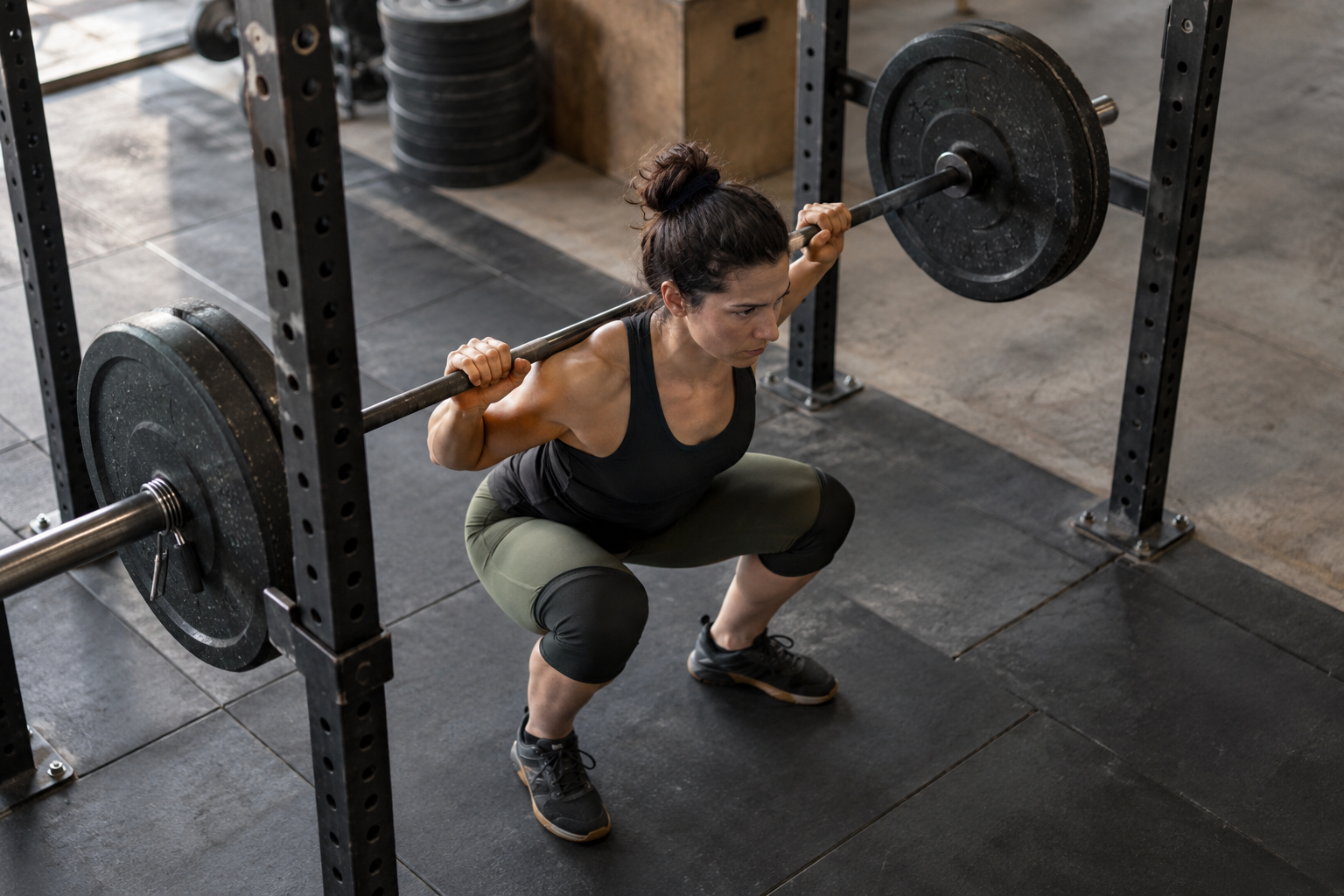
How to Increase Strength in Three Powerlifting Exercises
Building powerlifting strength means improving the squat, bench press and deadlift through technical practice, suitable loading and sustainable programming. Making every session heavier is not enough. Progress also depends on how well you repeat movements, recover and identify changes that are genuinely useful.
The three lifts share the barbell, but require different setups and management. A squat difficulty is not necessarily solved by adding deadlift sets, and an unstable bench press may need better positioning before more weight. Each programme choice should serve a concrete objective.
This guide presents principles rather than a universal routine. Experience, weekly availability, technique and recovery affect the appropriate dose. Athletes preparing for competition should also compare execution with their chosen federation's applicable official rules.
- How do you build a more consistent squat?
- How can the bench press improve?
- How do you make the deadlift more efficient?
- How should progressive overload be applied?
- How do volume and frequency fit together?
- What is the role of assistance exercises?
- How should recovery and less productive periods be managed?
- How can progress be measured without constant maximum tests?
How do you build a more consistent squat?
A repeatable squat starts with setup: bar position, grip, foot contact and trunk control must suit the person and variation. No stance width is perfect for everybody. Seek a position permitting a controlled, balanced descent and ascent. Observe whether the load remains manageable throughout or the movement changes markedly as difficulty rises. One sensation cannot identify the cause by itself: mobility, coordination, loading and fatigue can interact. Before adding weight, clarify the path you intend to repeat. This gives practice a consistent target instead of treating any completed ascent as equivalent to the planned repetition.
Rack, support and practice
Adjust supports and safety systems for the equipment and exercise. Unracking should be orderly without unnecessary steps consuming attention. Agree how assistance will be provided if used. Practise returning to the supports too: the set does not finish when the legs complete the final ascent. Useful video angles or a coach's observation can distinguish an occasional change from a recurring pattern. Avoid changing stance, bar position and loading together, because improvement becomes difficult to attribute to a specific decision. A stable setup makes future comparisons clearer.
How can the bench press improve?
The bench press needs a stable base before pressing. Arrange bench contact, feet and grip consistently with the variation and equipment. Control the bar during lowering and pressing. Avoid extreme grip merely to shorten travel. The setup should allow repeatable wrist, elbow and shoulder management without forcing positions. If stability is lost before the first repetition, review the handoff and position rather than blaming only a lack of chest strength. The initial organisation determines what can be repeated later, so it deserves attention independently of the amount on the bar.
Path and assistance
The touch point and pressing path depend on the individual's setup. Imposing an identical pattern without considering proportions is unhelpful. Control the bar rather than replacing the lowering phase with a bounce. Arrange suitable safety systems and assistance, especially for demanding sets. If help is needed for unracking, agree timing and method. An orderly start improves comparison between repetitions and reduces variation that may hide training trends. Assistance should support the agreed task rather than change unpredictably from attempt to attempt. Keep the procedure understandable to everybody involved before beginning.
How do you make the deadlift more efficient?
Position relative to the bar and coordination of the drive are essential. Choose the intended variation and learn to establish a controllable setup before pulling. Do not start every repetition with a sudden jerk simply to lift the plates. Manage loading from beginning to completion without turning the finish into a forced backward lean. Hip position and leg action should not be copied from somebody with different proportions. Observe consistency between preparation and the first phase of ascent. A clear start helps distinguish a technical change from difficulty caused mainly by a heavier or more fatiguing attempt.
Repetitions and returning to the floor
Dead-stop repetitions and continuous-contact repetitions are not automatically identical tasks. Define the method and retain it when comparing sessions. Control the return according to the variation and equipment conditions. Plates, flooring and space must suit intended use. A failing grip can limit a set even if the legs could continue; distinguish that factor from overall deadlift capacity. Grip accessories, when used, need a clear role rather than replacing setup practice or equipment assessment. The task includes handling the end of each repetition, not only getting the bar off the floor.
How should progressive overload be applied?
Progressive overload does not demand more weight every session. Work can develop through resistance, repetitions, sets or quality under similar conditions. Keep the task recognisable to interpret changes. Lifting more while substantially shortening the range or changing variation is not exactly the same performance. Define what should remain constant first. A record of exercise, resistance, sets and key observations reveals trends that memory of one day may distort. The purpose is to connect decisions with repeatable work, rather than turning each session into an isolated comparison with a previous personal best.
Assessing difficulty
Perceived effort and an estimate of remaining controlled repetitions can help regulate a set when used consistently and with experience. They are not perfect measurements or reasons to ignore an obvious technical change. A difficult day does not require completing the planned weight at any cost. Adjusting demand can preserve useful work and recovery. Equally, a good day does not oblige a maximal test. Consolidate the planned task and allow progress to emerge through repeatable performances rather than only isolated attempts. A practical effort assessment complements observation instead of replacing it.
How do volume and frequency fit together?
Frequency describes practice opportunities; volume describes work quantity. Adding sessions without reviewing the rest can accumulate unexpected fatigue. Consider squat, bench press, deadlift and assistance work together. A demanding deadlift session may affect other work even when the exercise name changes. Start with available time and recovery capacity, then distribute tasks with clear purposes. More sessions are not automatically better if each becomes less controllable or the schedule cannot be maintained. A useful arrangement should support consistent practice rather than look impressive on paper while repeatedly exceeding the athlete's actual availability.
A readable training week
Distinguishing technical emphasis from greater strength demands may help, without making that division compulsory for everyone. Know why a session occupies its place and how it prepares for the next one. When the calendar changes, assess the whole arrangement before simply moving everything closer together. Record outside activities that may affect readiness. Programming needs enough stability for comparisons and enough flexibility for real commitments. It should not require perfect conditions that rarely occur. Understanding each session's purpose makes adaptation more precise than treating every missed day as a reason to compress the entire week.
What is the role of assistance exercises?
Assistance work should address identified needs: practising a phase, developing muscle, improving control or covering work insufficiently represented in the main lift. It should not be added merely to lengthen the workout. A paused variation or another exercise can be useful if its purpose is clear and the response is observed. Avoid constant accessory changes for novelty. If everything changes, it becomes difficult to tell whether the plan works or added work supports the main lifts. Give a chosen task enough consistency to evaluate it before replacing it with the next interesting option.
Consistent equipment
Choose barbells and supports according to the task and station. Check compatibility between plates, collars, racks and supports, alongside manufacturer instructions. Changing the bar or bench can alter the experience and should be considered in comparisons. Equipment alone does not solve technique, but an unsuitable setup can make problems harder to interpret. Retain sufficiently consistent conditions during a training period. When introducing an accessory, explain what should change and assess that response instead of assigning generic benefits regardless of use. The item should support a defined task, not become a substitute for understanding it.
How should recovery and less productive periods be managed?
Strength and skill develop through work and recovery. Sleep, food and weekly organisation affect readiness. One difficult session does not prove a plateau. Look for a pattern across several opportunities and consider changes in loading, everyday life or setup. If quality repeatedly worsens, review total demand before adding work. A reduced-demand phase can be planned or context-driven rather than an automatic loss of previous progress. The aim is continued productive practice, not maintaining the same written prescription when its assumptions no longer match the athlete's circumstances.
Distinguish fatigue from issues needing assessment
Ordinary fatigue does not explain every difficulty. Pain changing movement, a persistent issue or an unusual sensation needs attention and appropriate qualified assessment where necessary. Do not improvise technique solely to continue at any cost. Tell the person overseeing training what happens and describe exercise, timing and observed change. Concrete information helps more than generic labels. Sustainable work is the goal. Following a written programme should not become a reason to ignore signals requiring another decision. Adjusting a task can be part of managing the programme rather than abandoning it.
How can progress be measured without constant maximum tests?
Compare sessions using similar variation, range, equipment and criteria. Improvement can appear as more controlled repetitions, greater stability or lower difficulty at the same weight. Every week need not produce a record. Tests have a role when answering a question at an appropriate time, not when continually replacing training. Competition execution should be compared with applicable rules rather than assuming any gym repetition automatically equals a valid competition lift. A performance comparison is useful only when the underlying task is sufficiently alike to make the difference meaningful.
Connect observations to decisions
Periodically summarise improvement, instability and changes worth trying. Select a few priorities and allow time to observe them. Effective programming is not the plan with the most exercises or extreme attempts. It makes the squat, bench press and deadlift progressively more manageable and productive. The process should remain explainable through technique practised, resistance selected, work completed and recovery. This clarity targets real problems and recognises progress that a maximum-weight comparison might miss. It also makes changes easier to discuss, because each decision has a reason grounded in the work rather than a general desire to make the next workout harder.
Comments (0)