
Trolley
You have no items in your shopping cart

 Budgets
 Dumbers
 Discs
 Benches
 Racks and Rigs
 Weights Holders
 Isotonic machines
 Calisthenics
 Cardio
 Kettlebells
 Flooring
 Gym Set
 Accessories
 Combat
 ARTI MARZIALI
 CONTAINER GYM
 Tug-Of-War
 Used Gym Equipment
 PILATES MACCHINARI
 GINNASTICA ARTISTICA
 CAMPI DA PADEL
 Prodotti in Pronta Consegna
 Informazioni
 IRONMAN
 Gift Card
- Donatif
- General information
- 0 I like it
- 164 Views
- 0 comments
- gym flooring, safety flooring, gym safety, shock-absorbing materials
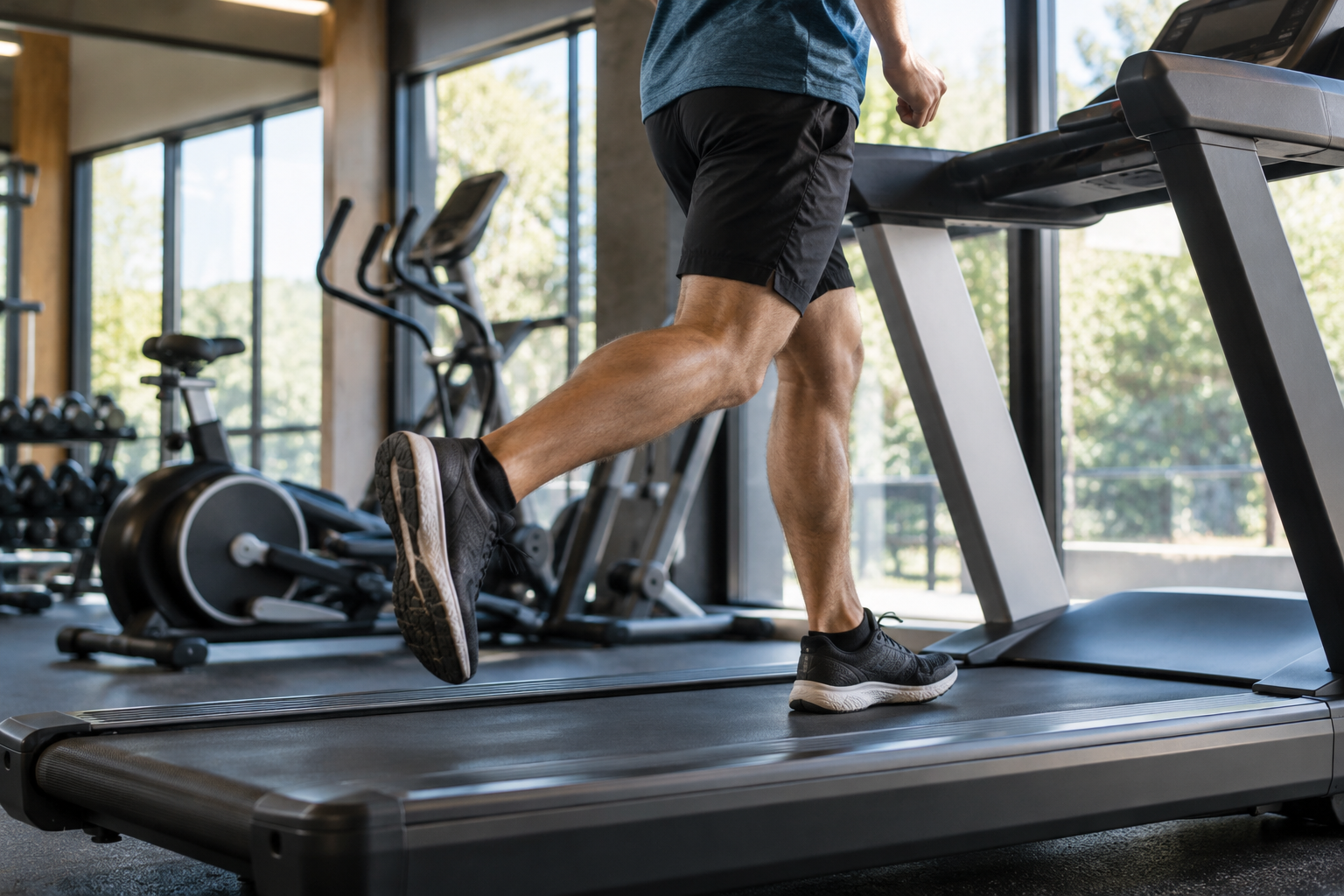
How to choose cardio equipment for a fitness room
A cardio room does not automatically improve by adding one machine per category. The equipment must address the intended people and activities while keeping access, adjustments, and training alternatives easy to understand. A center with many simultaneous users faces different needs than a fitness room used occasionally: the comparison must start from these differences before selecting products.
To understand how to choose cardio equipment for a fitness room, it is helpful to evaluate the mix as a service. Treadmills, bikes, ellipticals, and rowers offer different movement methods and occupy space in different ways. Each station must find a purpose in the project, avoiding considering the number of console functions as the sole measure of its value.
The guide compares the main questions to address by category and room organization. It does not prescribe universal equipment or individual training programs. The goal is to prepare a brief in which function, users, and installation conditions are clear, so that the manager can compare models and services through information relevant to their facility.
- Define who will use the cardio area
- Evaluate the treadmill through use and environment
- Compare bikes through access and adjustments
- Examine ellipticals and available movement
- Include the rower as a specific function
- Design the mix along with cleaning and maintenance
- Choose a justified and upgradable configuration
Define who will use the cardio area
User profiles guide priorities: habitual activities, experience, and access methods must be described without reducing them to a generic customer category.
The manager can collect requests and observations, distinguishing essential functions from occasional preferences. This information helps decide where to focus space and station availability.
The cardio equipment must also consider simultaneity. A high-demand category in the same time slot may require different organization than one used at staggered moments. The total number of members does not automatically describe the requirement: it is useful to understand when and how users ask to use the provided functions.
Distinguish frequent demand and occasional interest
Requests can be logged by desired activity, avoiding turning them immediately into a product name. Someone asking for a new treadmill might be looking for more availability to walk or run, while another user might want to vary cardiovascular work. This distinction makes it possible to compare alternatives without losing the function that originated the request.
Consider the available support in the room
Available support influences the necessary legibility of the stations. An environment with many occasional accesses requires attention to understandable information and adjustments. Staff must be able to assist users according to the planned organization, while individual programs remain separate from the commercial selection of machines and their declared characteristics.
Evaluate the treadmill through use and environment
Treadmills must be compared against intended use, distinguishing the needs and conditions of individual models.
Manufacturer information must be relevant to the room context. The manager should clarify which activities they want to make available and what data they need to verify the proposal, avoiding comparisons based solely on the maximum speed reported in the description.
The choice of treadmill includes access, controls, and operating space. A machine that fits the floor plan may require additional conditions during use and for maintenance. The model's instructions must be considered before confirming the position, especially when multiple stations share the same area or are located near a passageway.
Connect features to the intended activity
Declared features must answer concrete questions about the method of use. If a detail is not clear, it is best to request an explanation about the proposed model instead of using a generic rule found for other machines. Selection can thus remain linked to the documented function and intended use.
Verify power supply and placement
Power supply and room conditions must be verified through relevant references. Noise and vibrations also require attention regarding neighboring environments, without attributing compatibility confirmation to the flooring alone. The supplier can provide product data, while building evaluations follow competencies appropriate to the case.
Compare bikes through access and adjustments
The word bike encompasses different configurations, which must be recognized in the proposal.
Access position, seat, and adjustments influence user experience. The manager must therefore ask which features suit their audience, avoiding considering interchangeable products that present a different organization of movement or preparation.
Fitness room bikes must also be examined for the comprehensibility of controls and adjustments. Staff should know how to guide first-time use according to the model's instructions. Equipment rich in options is not automatically better suited to an environment where users change frequently and support must be organized with limited time.
Distinguish different configurations
Configurations can be compared through access and the relationship between person and station, with indications relevant to the models. The choice must not be turned into a prescription valid for anyone presenting a specific personal condition. The manager selects functions and possibilities, while individual use requires appropriate support when necessary.
Evaluate station preparation
Preparation must include adjustments and resetting the station for the next user. If controls are poorly legible, the difficulty may surface multiple times throughout the day. Comparison can include available instructions and room organization, without reducing the evaluation to the presence of preset programs or screen dimensions.
Examine ellipticals and available movement
The elliptical must be placed considering the movement of its elements and the user.
The floor footprint does not necessarily describe the entire area used during activity. The layout must therefore use relevant data and conditions indicated by the manufacturer, verifying the relationship with passageways and neighboring stations before consolidating the room arrangement.
The evaluation of the elliptical should distinguish product characteristics from responsiveness to gathered needs. The user must be able to understand how to access and use the provided controls. Available adjustments should be read on the actual model, avoiding the assumption that any configuration offers the same possibilities or the same preparation method.
Consider access and footprint during exercise
Access deserves attention because it is part of the experience, in addition to the main movement. Staff can observe what indications different users need and verify instruction legibility. If the room is small, the comparison must consider activity under real conditions and not just the stationary machine presented in commercial images.
Read the adjustments of the individual model
Adjustments must be understood through documentation and relevant explanations. The number of options is not a sufficient criterion: one needs to know what function they offer and how they fit into the planned service. The manager can thus select a proposal consistent with users and organization, keeping machine selection separate from individual exercise programs.
Include the rower as a specific function
The rower requires an evaluation of the movement sequence and how the station is reached and left.
The project must verify the operating area through product data and planned activities. The ability to fold some models should not make one forget that the machine must have the necessary conditions when in use.
The rower should not be chosen just to add variety to the list. It must respond to a recognizable function and find space in service organization. To learn more about the offer of cardio machines, relevant model data can be compared, keeping declared characteristics linked to the proposal and room audience.
Provide space for the complete sequence
Space must consider access and planned movements, without using the stored dimension as equivalent to the exercise dimension. If the configuration changes during the day, the plan must indicate how it is prepared and who follows its reset. Flexibility remains useful when supported by a clear procedure.
Organize guidance for use
Guidance for use must be consistent with instructions and staff roles. The presence of resistance or a console does not automatically teach the movement sequence. The manager must therefore consider information and support when introducing the function, without turning commercial choice into a promise of intuitive use for every person.
Design the mix along with cleaning and maintenance
A cardio room must be manageable even outside of training.
Cleaning, checks, and relevant interventions require access to machines and available instructions. A layout that is too compressed can make recurring activities difficult, while varied equipment must be accompanied by specific references for materials, products, and management procedures provided by present models.
The inventory makes it possible to link each station to documents and reports. The manager must know which machines are available and which are awaiting a maintenance pass. This picture helps evaluate the actual service, avoiding considering a category represented by multiple present products that are temporarily unusable as equivalent.
Keep stations accessible
Staff access must be considered before ordering, involving those who will oversee the room. Cleaning instructions must be compatible with products and not automatically transferred from one surface to another. The project can thus identify foreseeable difficulties and organize activities that would otherwise emerge only after installation.
Connect reports and inventory
Reports must identify the machine and observation, without asking staff to formulate improvised diagnoses. A simple channel allows following the case through to outcome. The availability of product references and history helps maintenance, while technical decisions remain linked to competencies and conditions relevant to the situation.
Choose a justified and upgradable configuration
The final configuration must explain why each category is present and what need it satisfies.
Economic comparison must refer to products and services within the same scope, distinguishing what is included from what requires further activities. A lower total does not automatically describe an equivalent proposal if equipment or installation level changes.
The mix must remain upgradable through observed usage, without turning every occasional request into a purchase. Waiting times, adjustments, and recurring difficulties offer useful information when collected methodically. Modifications must maintain the consistency of the layout and relevant conditions, rather than being introduced as isolated additions in the remaining available space.
Compare included functions and services
Functions and services can be summarized in a brief comparison, with data supporting the choice. Missing information must be requested before attributing an advantage to the proposal. This helps the manager decide based on real needs, keeping essential criteria separate from accessory features that do not determine room operation.
Observe the mix after opening
After opening, the manager can compare demand and function availability, considering representative periods. The initial choice thus becomes an organized hypothesis to observe, not a promise of uniform use. The cardio service develops through data and concrete conditions, with products and procedures consistent with the facility and the users who frequent it.
Comments (0)