
Trolley
You have no items in your shopping cart

 Budgets
 Dumbers
 Discs
Discs
 Benches
 Racks and Rigs
 Weights Holders
 Isotonic machines
 Calisthenics
 Cardio
 Kettlebells
 Flooring
 Gym Set
 Accessories
 Combat
 ARTI MARZIALI
 CONTAINER GYM
 Tug-Of-War
 Used Gym Equipment
 PILATES MACCHINARI
 GINNASTICA ARTISTICA
 CAMPI DA PADEL
 Prodotti in Pronta Consegna
 Informazioni
 IRONMAN
 Gift Card
- Donatif
- General information
- 0 I like it
- 437 Views
- 0 comments
- gym flooring, safety flooring, gym safety, shock-absorbing materials
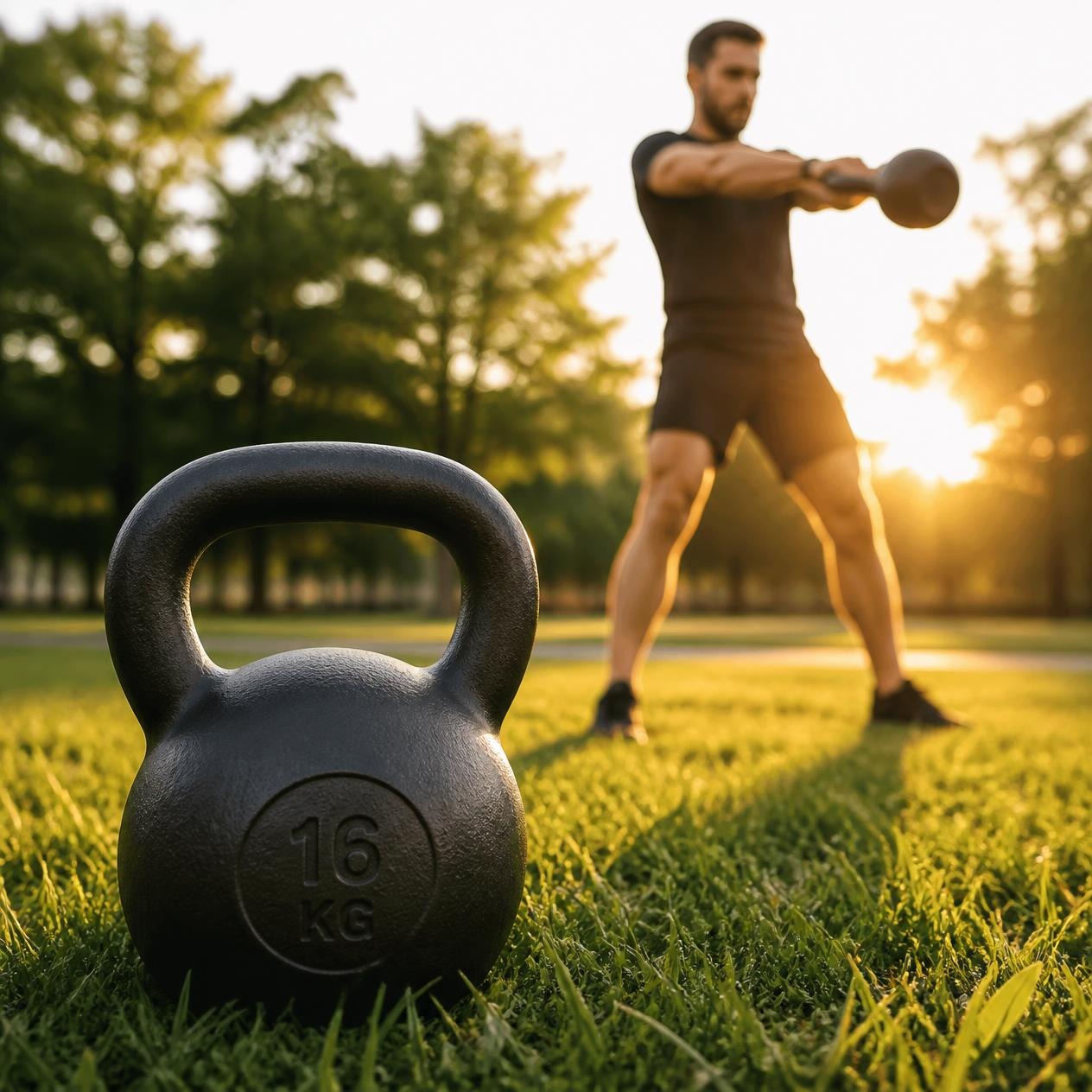
Kettlebell Flow: The Complete Guide to Developing Mobility, Coordination, and Dynamic Strength
In recent years, the kettlebell has gained an increasingly important role in the world of functional training thanks to its ability to develop strength, endurance, balance, and motor control through natural movements. Today, however, more and more enthusiasts are discovering a discipline that takes this approach to a higher level: Kettlebell Flow.
The concept of kettlebell flow exercises goes beyond simple traditional training. Instead of performing a series of isolated movements interspersed with breaks, the exercises are linked together in a continuous sequence, creating a harmonic flow that involves the entire body. The result is an extremely dynamic workout that simultaneously improves strength, mobility, coordination, cardiovascular endurance, and movement awareness.
Whether you are a calisthenics enthusiast, a Cross Training practitioner, or simply wish to make your workouts more complete and engaging, Kettlebell Flow represents one of the most interesting evolutions of modern functional training. In this guide, you will discover how it works, what benefits it offers, and how to build your first sequences safely and effectively.
- What is Kettlebell Flow
- The main benefits
- Differences compared to traditional kettlebell training
- Fundamental movements
- How to build a fluid sequence
- Errors to avoid
- How to incorporate Flow into your training
- Why Kettlebell Flow is an investment in movement
What is Kettlebell Flow
Kettlebell Flow is a training methodology in which different exercises are linked without interruptions, creating a continuous and rhythmic sequence. Each movement naturally prepares for the next, transforming the workout into a sort of functional choreography where technique, breathing, and fluidity take on the same importance as strength.
Unlike a classic workout organized into sets and repetitions, Flow prioritizes the continuity of the gesture. This forces the nervous system to constantly coordinate every body segment, improving motor control and the quality of movement.
The kettlebell, thanks to its offset center of gravity, represents the ideal tool for this type of work because it requires continuous postural adjustments throughout the sequence, increasing the involvement of stabilizing muscles.
A new training philosophy
Flow does not simply consist of joining different exercises, but in creating a continuity capable of making every movement the natural evolution of the previous one. The goal is to develop a strong, mobile, and coordinated body, capable of moving efficiently in any situation.
The value of continuous movement
By eliminating breaks, you simultaneously develop muscular endurance, cardiovascular capacity, and mental focus. The workout thus becomes more engaging and stimulating from a cognitive perspective as well.
The main benefits of Kettlebell Flow
One of the greatest strengths of Flow is the ability to train multiple physical qualities simultaneously. Each sequence involves strength, mobility, balance, coordination, and respiratory control, offering an extremely complete stimulus.
Continuous work also increases energy expenditure and improves cardiovascular capacity without sacrificing the development of functional strength. For this reason, Kettlebell Flow is used both as a primary workout and as a complement for athletes from different disciplines.
Over time, the general quality of movement also improves. The transitions between one exercise and another become more natural, the body acquires greater fluidity, and the stiffness typical of those who perform overly segmented workouts decreases.
Improving coordination and motor control
Each transition requires precision, balance, and synchronization between the upper limbs, torso, and lower limbs. This makes Flow one of the best tools for refining global coordination.
More mobility without static exercises
Kettlebell mobility means developing range of motion during real and dynamic gestures, improving joint functionality without limiting oneself to traditional stretching.
Differences compared to traditional kettlebell training
A traditional kettlebell workout generally involves exercises performed separately, with breaks between sets and a focus on a specific motor pattern. Flow completely changes the perspective, linking movements in a continuous way.
This mode increases cardiovascular system involvement and makes the work much closer to the complex movements required in daily life and sports practice.
The mental aspect also changes radically. While in isolated exercises it is possible to focus on a single gesture, during Flow you must continuously anticipate the next movement, improving concentration and adaptability.
A more dynamic approach
Dynamic kettlebell training allows you to transform every workout into a more fluid, engaging, and complete experience compared to traditional repetition circuits.
Total body involvement
Flow eliminates the concept of isolated muscle compartments. Every movement involves complete kinetic chains, favoring a more harmonious development of strength.
Fundamental movements to master
Before building a sequence, it is essential to master the basic exercises. A solid technique is the prerequisite for performing fluid and safe transitions.
Deadlift, swing, clean, press, squat, front rack, reverse lunge, halo, and windmill represent some of the fundamental movements that can be combined in many variations.
The quality of execution is always a priority over speed. Only when each exercise is performed with control is it appropriate to start joining them into a continuous sequence.
The importance of transitions
The true heart of Flow is not the individual exercise, but the passage between one movement and another. Transitions must be natural, without jerky movements or loss of balance.
Breathing and rhythm
Coordinating inhalation and exhalation with movement helps maintain fluidity, reduce fatigue, and improve the technical quality of the entire sequence.
How to build an effective sequence
The best sequences are born from a precise logic. It is advisable to start with three or four compatible exercises, gradually increasing complexity and duration.
An example can include clean, front squat, press, reverse lunge, and swing. Each exercise prepares for the next without requiring grip changes or unnecessary interruptions.
With experience, it will be possible to create increasingly articulated kettlebell flow sequences, developing creativity and adaptability without losing technical quality.
Starting with simple combinations
The first sequences should prioritize already consolidated movements, avoiding particularly complex exercises until fluidity becomes natural.
Gradual progression
Increasing the quality of movement first and only subsequently duration, weight, and complexity allows you to improve without compromising safety.
The most common errors to avoid
The most frequent error consists of wanting to create spectacular sequences without possessing a solid basic technique. This leads to compensations, loss of control, and a greater risk of injury.
Another error concerns the choice of weight. In Flow, it is preferable to use slightly lighter kettlebells compared to traditional strength training, so as to maintain precision during all transitions.
Finally, many neglect recovery. Despite the fluid appearance, Flow represents an intense workout that requires adequate programming and days dedicated to active recovery.
Choosing the correct load
The ideal weight is one that allows you to maintain control, posture, and technical quality from the beginning to the end of the sequence.
Technique comes before speed
Accelerating too soon compromises fluidity and precision. The true goal is to build harmonious and repeatable movements.
How to incorporate Kettlebell Flow into your programming
Flow can be used as a dynamic warm-up, a main workout, or a metabolic finisher at the end of a strength session.
Those who practice Cross Training, martial arts, calisthenics, or team sports can use it to improve mobility, coordination, and the ability to transfer strength during complex movements.
Even in a home gym, it represents an extremely efficient solution because it allows you to perform complete workouts with a single kettlebell and little space available.
How often to train
Two or three weekly sessions are sufficient to observe significant improvements in movement quality and endurance.
How to combine it with other workouts
Flow integrates perfectly with strength, mobility, running, calisthenics, and advanced functional training programs, increasing the variety and completeness of your preparation.
Why Kettlebell Flow is an investment in movement
Kettlebell Flow represents much more than a simple variation of kettlebell training. It is a method capable of developing strength, coordination, mobility, and body control through continuous movements that reflect the way our body is designed to move.
Learning to build effective sequences means improving not only athletic performance but also the quality of movement in daily life. Training becomes more stimulating, creative, and engaging, reducing the monotony typical of traditional programs and favoring consistent practice over time.
To get the most out of this approach, it is essential to use reliable equipment designed for intensive use. To learn more about the best solutions dedicated to advanced functional training, it is advisable to choose professional-quality kettlebells, capable of offering comfort, safety, and durability even during the most demanding sequences.
Comments (0)