
Trolley
You have no items in your shopping cart

 Budgets
 Dumbers
 Discs
Discs
 Benches
 Racks and Rigs
 Weights Holders
 Isotonic machines
 Calisthenics
 Cardio
 Kettlebells
 Flooring
 Gym Set
 Accessories
 Combat
 ARTI MARZIALI
 CONTAINER GYM
 Tug-Of-War
 Used Gym Equipment
 PILATES MACCHINARI
 GINNASTICA ARTISTICA
 CAMPI DA PADEL
 Prodotti in Pronta Consegna
 Informazioni
 IRONMAN
 Gift Card
- Donatif
- General information
- 0 I like it
- 680 Views
- 0 comments
- gym flooring, safety flooring, gym safety, shock-absorbing materials
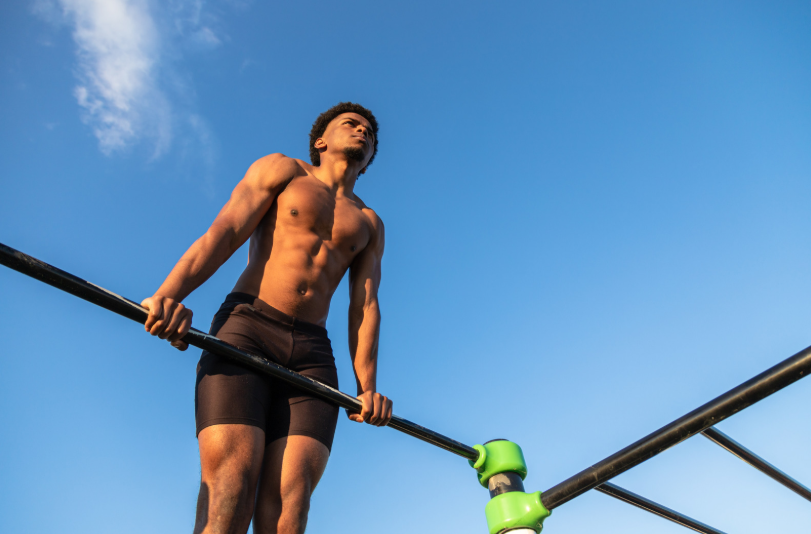
Hypoxia and Calisthenics Integration: New Frontiers
In recent years, calisthenics in hypoxia has attracted increasing interest from athletes and coaches looking to improve training quality without simply increasing workout volume. Simulated altitude training offers a unique way to alter physiological stimuli, creating new opportunities to enhance muscular endurance, recovery capacity, and control during the static positions that characterize calisthenics. When incorporated into a well-structured training program, this approach can become a valuable complement to traditional bodyweight workouts.
The objective is not to replace conventional calisthenics training, but to create an environment that promotes different metabolic and cardiovascular adaptations. Athletes aiming to improve their isometric holds, advanced skills, and high-density training sessions may benefit from hypoxic conditioning, provided it is introduced progressively and under proper guidance.
- Why Train in Hypoxia for Calisthenics
- How to Increase Training Density
- Muscular Endurance and Isometric Strength
- The Importance of Dedicated Training Structures
- When to Integrate This Training Method
Why Train in Hypoxia for Calisthenics
Training in a hypoxic environment reduces oxygen availability by simulating high-altitude conditions. This forces the body to develop physiological adaptations involving the cardiovascular, respiratory, and metabolic systems. In the context of calisthenics in hypoxia, these changes can improve fatigue management during demanding exercises and technically complex movement sequences.
Bodyweight disciplines require an exceptional balance of relative strength, coordination, and motor control. Although hypoxia does not directly improve technical skills, it can help athletes maintain movement quality even as fatigue increases. This makes training more effective, particularly during phases focused on developing muscular endurance.
Key Physiological Adaptations
The most significant adaptations include improved oxygen utilization efficiency, greater tolerance to prolonged effort, and positive metabolic responses to exercise. For calisthenics athletes, this can translate into the ability to sustain a higher training workload while preserving technical precision throughout advanced progressions.
It is important to remember that these benefits depend on the duration of exposure, training intensity, and the quality of overall programming. Hypoxia should be considered an additional training stimulus rather than a replacement for structured strength development, mobility work, and technical practice.
How to Increase Training Density
One of the most interesting applications of hypoxic training is the possibility of increasing bodyweight workout density. Training density refers to the amount of work performed within a given period of time. Improving this parameter allows athletes to complete more repetitions or sets while maintaining high-quality execution.
With carefully designed protocols, athletes can gradually learn to manage shorter recovery periods without compromising movement quality. This is particularly valuable during technical circuits, EMOM sessions, or workouts dedicated to advanced calisthenics skills, where consistency and execution quality are essential.
Managing Recovery, Volume, and Intensity
Progression should always be gradual. Simultaneously reducing oxygen availability while significantly increasing training load can create excessive physiological stress. For this reason, the most effective protocols progressively increase hypoxic exposure while continuously monitoring the athlete's response.
Recovery remains a critical component of performance. Proper nutrition, adequate sleep, and intelligent workload distribution allow athletes to maximize physiological adaptations while minimizing the risk of overtraining. The ultimate goal is not simply to train harder, but to train more effectively.
Muscular Endurance and Isometric Strength
Many of the most impressive calisthenics skills, including the Planche, Front Lever, and Human Flag, rely heavily on exceptional isometric endurance. These positions require athletes to generate high levels of muscular tension while maintaining complete body control for extended periods.
Hypoxic training may help improve the ability to sustain prolonged isometric contractions by enhancing fatigue resistance and metabolic efficiency. Rather than providing an instant performance boost, it supports the long-term development of sport-specific endurance.
Why the Planche May Benefit from Hypoxia
A stable Planche demands strength, scapular stability, core stiffness, and continuous muscular tension. During a properly structured simulated-altitude training cycle, some athletes may improve their tolerance to fatigue during extended isometric holds, allowing them to maintain better technique throughout later sets.
This does not mean that hypoxia automatically makes athletes stronger. Improvements result from combining technical practice, progressive overload, adequate recovery, and the strategic use of hypoxic exposure within a comprehensive training program.
The Importance of Dedicated Training Structures
Training effectiveness also depends on the environment. Having access to modular indoor calisthenics structures allows athletes to perform complete progressions safely while maximizing every phase of the workout without limitations imposed by available space or equipment.
Within an advanced home gym, combining a multifunctional calisthenics structure with a hypoxic chamber or simulated-altitude environment creates highly customizable training protocols. This level of flexibility benefits both experienced athletes and professional training facilities seeking to offer innovative performance solutions.
Advanced Home Gym and Modular Design
Modular structures enable smooth transitions between dynamic exercises, static holds, pull-ups, dips, ring work, and accessory movements. This versatility helps maintain high training quality even during complex and demanding workout protocols.
For athletes pursuing elite-level performance, investing in a training environment specifically designed around their needs makes it possible to develop every aspect of athletic performance consistently while improving the overall efficiency of the training process.
When to Integrate This Training Method
The integration of simulated hypoxia and calisthenics represents one of the most promising developments in modern athletic preparation. When applied using evidence-based principles, it can contribute to improved muscular endurance, enhanced recovery capacity, and better performance during advanced isometric skills.
For athletes seeking to reach the next level of performance, simulated altitude should not be viewed as a shortcut but as a strategic training tool within a comprehensive program. Technical mastery, strength development, progressive overload, and a high-quality training environment remain the essential foundations for achieving sustainable long-term results.
Comments (0)