
Trolley
You have no items in your shopping cart

 Budgets
 Dumbers
 Discs
Discs
 Benches
 Racks and Rigs
 Weights Holders
 Isotonic machines
 Calisthenics
 Cardio
 Kettlebells
 Flooring
 Gym Set
 Accessories
 Combat
 ARTI MARZIALI
 CONTAINER GYM
 Tug-Of-War
 Used Gym Equipment
 PILATES MACCHINARI
 GINNASTICA ARTISTICA
 CAMPI DA PADEL
 Prodotti in Pronta Consegna
 Informazioni
 IRONMAN
 Gift Card
- Donatif
- General information
- 0 I like it
- 522 Views
- 0 comments
- gym flooring, safety flooring, gym safety, shock-absorbing materials
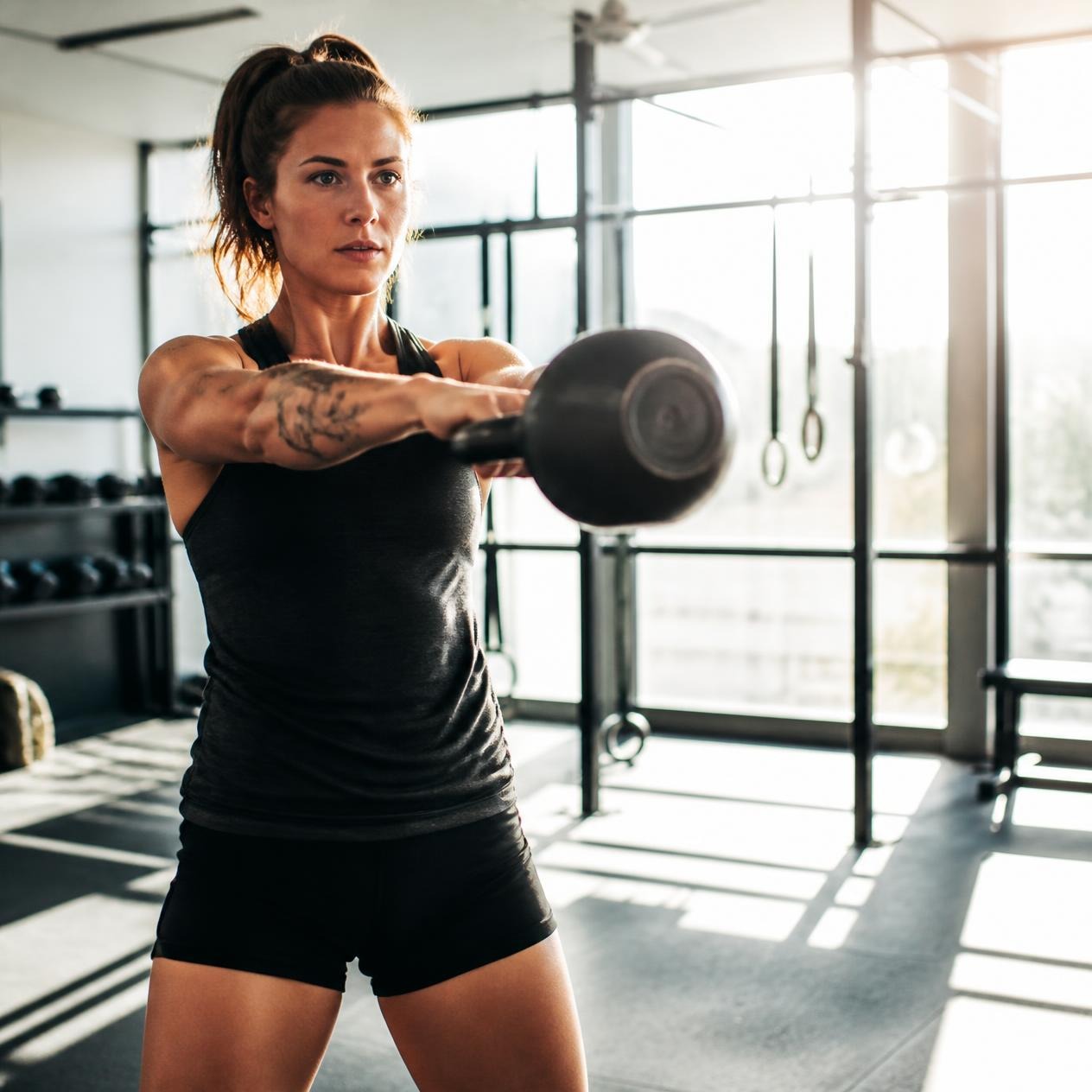
The 5 Best Kettlebell Exercises for Explosive Power
The development of explosive power represents one of the primary goals for athletes, coaches, and trainers working in the world of functional training and Cross Training. Among the most effective tools for improving power, coordination, and motor control, the kettlebell occupies a prominent role thanks to its ability to simultaneously engage numerous muscle groups and stimulate three-dimensional movements that are extremely close to real athletic gestures.
Modern athletic training programs increasingly use kettlebell exercises to increase force production in reduced time, improve the efficiency of the kinetic chain, and develop a better capacity for power transfer. This approach allows athletes to obtain concrete benefits in strength disciplines as well as in combat sports, team sports, and activities that require acceleration and changes of direction.
In this guide, we will analyze five fundamental exercises that every Cross Training coach should know, delving into execution technique, errors to avoid, specific benefits, and methods for inclusion within programming. Understanding why these exercises are also used by professional athletes allows for the design of more effective and results-oriented workouts.
- Why choose the kettlebell
- Kettlebell Snatch
- Clean and Press
- Kettlebell Thruster
- Kettlebell Swing
- Turkish Get Up
- How to program the exercises
- Why invest in quality technical preparation
Why choose the kettlebell to develop explosive power
The kettlebell allows for the execution of ballistic movements that simultaneously develop strength, speed, and coordination. Unlike isotonic machines, it forces the body to continuously stabilize the load, increasing the engagement of deep musculature and improving movement control.
In functional training, this tool promotes high transferability to athletic gestures. The athlete learns to generate force from the ground, transmit it through the trunk, and use it in the upper limbs efficiently.
Many athletic trainers also choose to integrate the kettlebell because it allows for combining metabolic and neuromuscular work in the same session, reducing time without sacrificing the quality of the training.
Functional benefits
Kettlebell accelerations force the nervous system to rapidly recruit fast-twitch muscle fibers, a fundamental element for improving explosive power.
Performance benefits
Better intermuscular coordination translates into more efficient movements during sprints, jumps, changes of direction, and Olympic lifts.
1. Kettlebell Snatch
The kettlebell snatch technique represents one of the most complete exercises for power development. It requires precision, timing, and control during all phases of the movement.
Force is produced primarily through the drive of the hips, while the arm accompanies the kettlebell, avoiding unnecessary jerks. A correct trajectory reduces impact on the forearm and improves the efficiency of the gesture.
For coaches, it is essential to dedicate time to technical learning before increasing the load or volume of work, as small errors can compromise both the safety and effectiveness of the exercise.
How to perform it
Start from a stable position, generate force with hip extension, and accompany the kettlebell to the lockout overhead while keeping the wrist neutral.
Common errors
Lifting the weight primarily with the arm, losing spinal neutrality, or pulling too early are the most frequent errors.
2. Clean and Press
The kettlebell clean and press combines explosiveness and pushing strength in a single exercise. After bringing the kettlebell into the rack position via the clean, the athlete completes the movement with an overhead press.
This exercise improves coordination between the lower and upper limbs and strengthens the shoulders, trunk, and grip. It is particularly indicated for those who wish to increase the capacity to produce force while maintaining high stability.
In Cross Training programs, it can be included both as a primary exercise and within high-intensity metabolic circuits.
Main benefits
Increases functional strength, scapular control, and the ability to transfer energy along the entire kinetic chain.
Recommended progressions
Start with just the clean, subsequently add the press, and finally work on continuous repetitions.
3. Kettlebell Thruster
The thruster simultaneously develops lower limb strength, core stability, and overhead pushing capacity.
The exercise combines a squat and a press into a continuous movement that requires perfect coordination between the legs and trunk.
Thanks to its high metabolic demand, it represents an excellent solution for increasing muscular endurance and power.
Correct technique
Keep the torso stable, perform a full squat, and use the energy from the ascent to facilitate the push.
Errors to avoid
Losing elbow position or interrupting the fluidity of the movement significantly reduces the effectiveness of the exercise.
4. Kettlebell Swing
The swing is probably the most iconic kettlebell exercise and represents the foundation for all subsequent explosive movements.
The drive derives exclusively from the hips, while the arms act as a connection between the body and the load. This allows for the development of power without unnecessarily overloading the shoulders.
Correct execution improves acceleration capacity, endurance, and horizontal force production.
Technical focus
The movement must be similar to a hip hinge and not a squat. Full hip extension is the key point.
When to include it
It can be used in dynamic warm-ups, as a power exercise, or within conditioning circuits.
5. Turkish Get Up
The Turkish Get Up develops stability, motor control, and overall strength through a complex sequence of movements.
The exercise requires concentration, mobility, and coordination, proving extremely useful for improving the quality of movement.
While not a purely ballistic gesture, it represents an ideal complement to explosive exercises thanks to the work on joint stability.
Why use it
Promotes scapular control, hip mobility, and trunk stability during complex movements.
How to learn it
Breaking the movement down into phases allows for gaining confidence before using heavy loads.
How to program kettlebell exercises
The choice of exercise order is fundamental. Explosive movements like the snatch and swing should be performed at the beginning of the session when the nervous system is fresh.
For advanced athletes, it is possible to alternate days dedicated to maximal strength with sessions oriented toward execution speed, always maintaining high technical quality.
Progressions must be gradual and based on mastery of the movement rather than immediate load increases. To delve deeper into the organization of professional programs dedicated to functional training, it is useful to consult functional strength training with specific resources for coaches and professionals.
Work volume
Generally, a few high-quality repetitions are recommended for explosive exercises, avoiding the deterioration of technique due to fatigue.
Recovery
Adequate rest periods allow for maintaining high force production and achieving superior neuromuscular adaptations.
Why invest in quality technical preparation
The best coaches know that the difference between a simple workout and a truly effective program lies in the quality of technical execution. Investing time in the correct learning of movements allows for faster progress and significantly reduces the risk of injury.
It is no coincidence that many professional MMA, combat sports, and Cross Training athletes regularly use the kettlebell to develop explosive power, endurance, and body control. The combination of ballistic movements, stabilization, and coordination makes this tool extremely versatile in any phase of athletic preparation.
For gyms and Cross Training boxes, proposing programs based on technically correct exercises also represents an important added value, improving the perceived quality of the service, member retention, and the results obtained by athletes in the long term.
Comments (0)