
Trolley
You have no items in your shopping cart

 Budgets
 Dumbers
 Discs
Discs
 Benches
 Racks and Rigs
 Weights Holders
 Isotonic machines
 Calisthenics
 Cardio
 Kettlebells
 Flooring
 Gym Set
 Accessories
 Combat
 ARTI MARZIALI
 CONTAINER GYM
 Tug-Of-War
 Used Gym Equipment
 PILATES MACCHINARI
 GINNASTICA ARTISTICA
 CAMPI DA PADEL
 Prodotti in Pronta Consegna
 Informazioni
 IRONMAN
 Gift Card
- Donatif
- General information
- 0 I like it
- 614 Views
- 0 comments
- gym flooring, safety flooring, gym safety, shock-absorbing materials
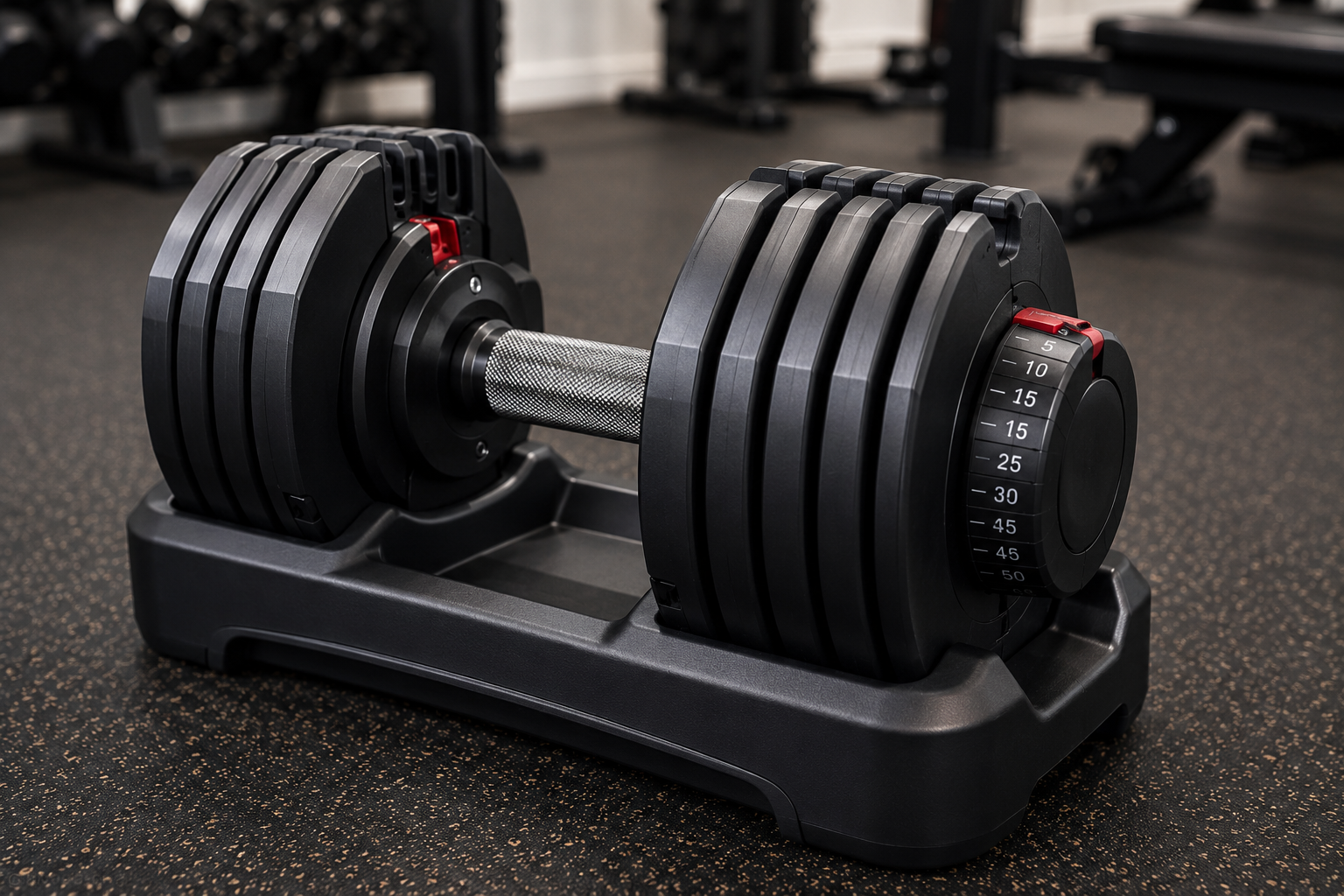
Adjustable weight dumbbell: anatomy of a professional space-saving tool
An adjustable dumbbell may seem like a simple tool: a central handle, some load elements, and a system to change the weight. However, behind a truly professional product lies a much more complex engineering project, where every component must work in perfect harmony to ensure safety, durability, and precision during training.
The value of an adjustable weight dumbbell is not measured only by the number of kilograms available or the speed with which the configuration can be changed. The real difference emerges by observing materials, production tolerances, the quality of locking systems, and the tool's ability to maintain constant performance after thousands of uses.
For those who train seriously or for those who wish to create an efficient gym with little space, understanding the internal anatomy of an adjustable dumbbell allows one to distinguish a product designed to last from an inexpensive solution based exclusively on appearance.
- The internal structure of an adjustable dumbbell
- Materials and build quality
- How the adjustment mechanism works
- The role of tolerances in product engineering
- Differences between inexpensive and professional products
- Why an adjustable system is a smart choice
- How to evaluate the quality of an adjustable dumbbell
The internal structure of an adjustable dumbbell
Designing an adjustable dumbbell requires a precise balance between robustness, functionality, and ease of use. Each element must contribute to the overall stability of the tool, because during an exercise, the load is subjected to dynamic forces much higher than simple static weight.
A professional system is composed of several elements that work together: handle, weight supports, selection systems, and safety components. The quality of the final result depends on the design of the whole and not on a single isolated component.
When an athlete uses a dumbbell with heavy loads, they must perceive solidity and control. This sensation derives from the precision with which each part has been designed and assembled.
The importance of the handle
The handle represents the direct point of contact between the athlete and the tool. Ergonomics, diameter, and materials used influence comfort during the execution of exercises and the ability to maintain a stable grip.
Accurate design allows for reduced hand fatigue and improved control of movement, especially during sessions with heavy loads.
The system connecting the loads
The connection between the handle and the plates represents one of the most delicate aspects of the design. It must ensure that the weights remain in the correct position during controlled and dynamic movements.
The precision of the connection system directly determines the perceived quality of the training and the user's safety.
Materials and build quality
The materials used are one of the main factors that distinguish a professional product from an inexpensive solution. A dumbbell intended for frequent use must withstand continuous stress, load variations, and thousands of adjustment cycles.
Metal components must ensure mechanical strength, while any coatings must protect the surfaces and maintain a good user experience over time.
The quality of the materials also influences the perception of the tool: a well-built product immediately communicates reliability and precision.
The role of resistant materials
Cast iron adjustable dumbbells represent a widespread solution thanks to the robustness and durability characteristics typical of this material. Cast iron allows for the creation of resistant components suitable for prolonged use.
The final quality still depends on the overall project and the ability to integrate the material into an efficient adjustable system.
Finishes and protection over time
Surface finishes have both an aesthetic and a practical function. They protect the components from wear and contribute to keeping the equipment in optimal condition even after numerous workouts.
A professional product also considers these details because overall durability is born from the sum of many design choices.
How the adjustment mechanism works
The heart of an adjustable dumbbell is the system that allows the weight to be changed. This component must allow for a rapid transition between different configurations while always maintaining a stable connection between the handle and the loads.
The dumbbell mechanism must be designed to work with precision, because every imperfection can influence safety and the feeling during training.
An advanced system allows the load to be changed in a few seconds without compromising the solidity of the tool.
Precision of the selection system
Weight selection requires components made with precise tolerances. A smooth movement and a reliable lock are indicators of accurate design.
The precision of the selector becomes particularly important for those who use the dumbbell daily and need a product that is always predictable.
Safety of the locking system
During an exercise, the weight must remain firmly connected to the handle. The locking system must therefore ensure stability even under mechanical stress.
A professional design reduces the risk of unwanted movements and allows the athlete to focus exclusively on the execution.
The role of tolerances in product engineering
Production tolerances represent one of the least visible but most important aspects in the creation of quality equipment. They indicate the level of precision with which the various components are produced and assembled.
When tolerances are controlled correctly, the parts work together more efficiently, reducing play, vibrations, and premature wear.
This aspect often distinguishes a professional product from an inexpensive one, because the difference is not always evident at first use but emerges over time.
The importance of assembly
Precise assembly allows components to correctly distribute the forces generated during training.
Each element must respect the initial design to ensure reliability and durability.
Effects on long-term durability
Components produced with greater precision tend to maintain their initial characteristics for longer.
This means fewer operational problems and a better experience for the user.
Differences between inexpensive and professional products
The difference between an inexpensive and a professional product emerges above all during prolonged use. A basic model may offer a convenient initial solution, but it may present limitations when subjected to frequent adjustments and heavy loads.
A professional product, on the other hand, is created to ensure operational continuity, precision, and greater resistance over time.
The choice therefore depends on the level of expected use and the importance attributed to the duration of the investment.
Performance after many uses
Quality equipment more easily maintains its characteristics even after numerous sessions.
This reliability represents a concrete advantage for athletes and professionals.
The real cost of the equipment
Evaluating only the initial price can lead to an incomplete choice. Durability, maintenance, and the need for any replacements affect the overall value.
An investment in quality can prove to be more cost-effective in the long run.
Why an adjustable system is a smart choice
One of the main advantages of adjustable dumbbells is the ability to offer many weight configurations while occupying minimal surface area. This feature makes them ideal for home gyms, professional studios, and environments where space is a limited resource.
A single system can replace numerous pairs of traditional dumbbells, simplifying the organization and management of the training area.
Compactness, however, does not mean sacrificing performance: a correctly designed product can offer features suitable even for advanced athletes.
Maximizing space efficiency
Reducing the number of tools needed allows for the creation of more orderly and functional environments.
This advantage is particularly important when every square meter must be utilized to the maximum.
A tool for many programs
The ability to quickly change the load makes the adjustable dumbbell suitable for numerous exercises and training methodologies.
Versatility increases the value of the initial investment.
How to evaluate the quality of an adjustable dumbbell
The choice of an adjustable dumbbell should be based on technical criteria and not just on external appearance. Materials, precision of components, safety of the adjustment system, and general reliability are fundamental elements.
Understanding the anatomy of the tool allows for a more informed evaluation and the choice of a solution consistent with one's level of use.
Aspects to analyze before purchasing
A good product must offer a balance between robustness, practicality, and durability. Each component contributes to the overall quality of the system.
Investing in gym equipment quality
Gym equipment quality directly influences safety, performance, and training continuity. Choosing an adjustable dumbbell designed with care means purchasing a tool intended to support the athlete's growth over time.
Comments (0)