
Trolley
You have no items in your shopping cart

 Budgets
 Dumbers
 Discs
Discs
 Benches
 Racks and Rigs
 Weights Holders
 Isotonic machines
 Calisthenics
 Cardio
 Kettlebells
 Flooring
 Gym Set
 Accessories
 Combat
 ARTI MARZIALI
 CONTAINER GYM
 Tug-Of-War
 Used Gym Equipment
 PILATES MACCHINARI
 GINNASTICA ARTISTICA
 CAMPI DA PADEL
 Prodotti in Pronta Consegna
 Informazioni
 IRONMAN
 Gift Card
- Donatif
- General information
- 0 I like it
- 1 Views
- 0 comments
- gym flooring, safety flooring, gym safety, shock-absorbing materials
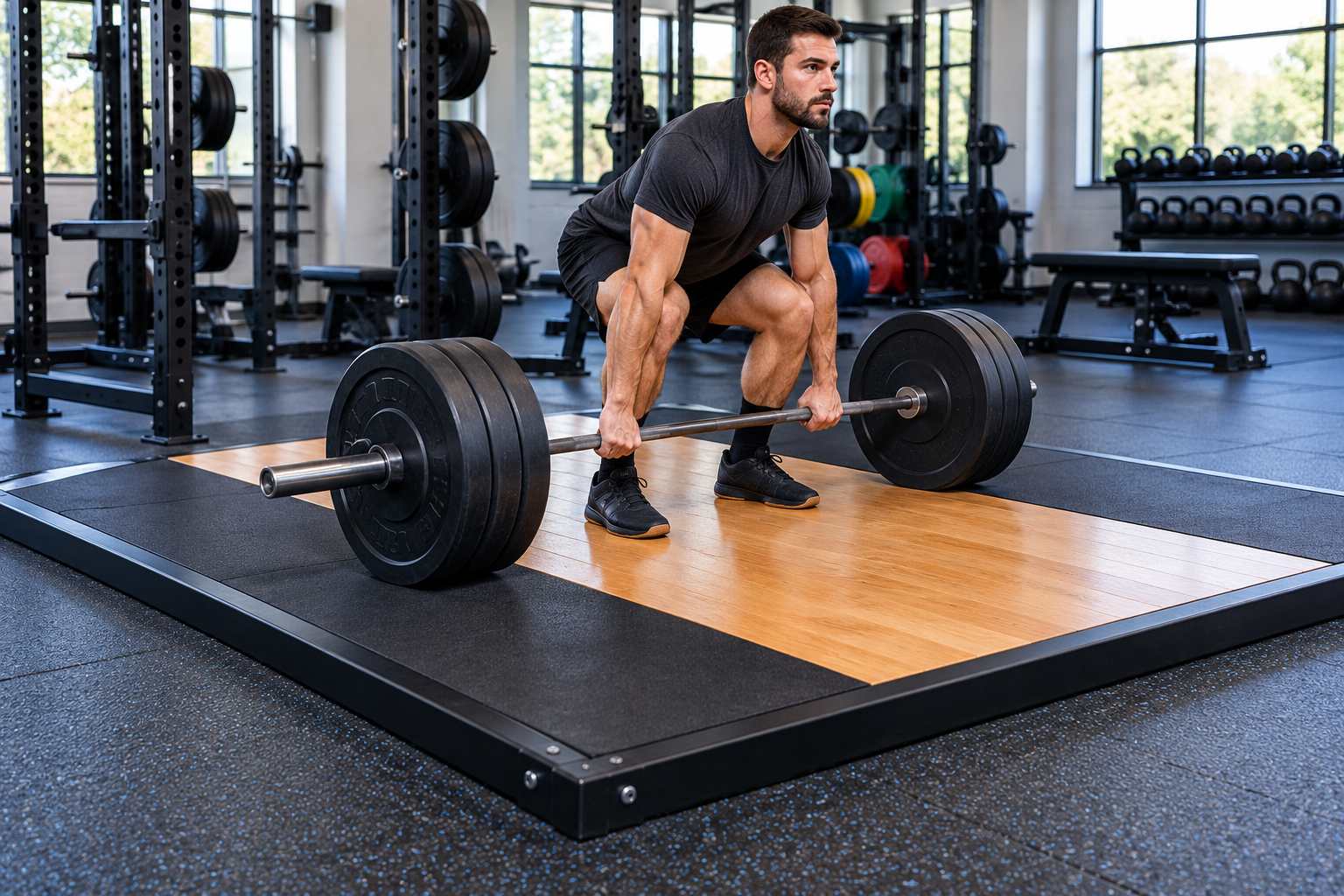
Lifting Platform Maintenance: Insert Inspection and Cleaning
The lifting platform is designed to withstand heavy loads during barbell workouts, but its durability largely depends on periodic maintenance. Checking the inserts, verifying the stability of the structure, and keeping the surfaces clean helps preserve performance, safety, and functionality over time.
Regular maintenance is not only useful for improving the appearance of the platform. Indeed, preventive inspections make it possible to identify worn components, loose fixings, deformations, or anomalies early on, which could compromise the stability of the workstation during workouts.
This guide illustrates the main checks to perform, the signs of wear to monitor, and the best practices for keeping a platform intended for professional or intensive training efficient.
- Quick answer
- What to check periodically
- How often to perform checks
- How to clean the platform
- How to check the inserts
- Signs of wear to monitor
- When to intervene or replace components
- Mistakes to avoid
- Why maintenance is an investment
How to keep a lifting platform efficient?
The lifting platform should be maintained through regular checks of the inserts, verification of structural stability, surface cleaning, and inspection of areas most subject to wear. Following the manufacturer's instructions and scheduling periodic checks helps preserve safety, durability, and continuity of use.
Preventive maintenance also allows for the timely identification of any anomalies, limiting more complex interventions.
When applicable, it is also appropriate to refer to the manufacturer's technical manuals and the guidelines of sports federations or safety regulations for training equipment.
Maintenance protects performance and safety
A platform subjected to regular checks more easily maintains stability, functionality, and comfort during use.
Scheduling interventions
Recording checks and maintenance facilitates monitoring the state of the platform throughout its lifecycle.
Which elements must be checked?
Checks should include the support surface, supporting structure, inserts, fixings, rubber elements, any wooden panels, and the continuity of the surrounding flooring.
Particular attention should be paid to areas subjected to barbell impacts and parts most exposed to wear caused by daily use.
A complete inspection makes it possible to plan interventions before small defects can compromise the functionality of the workstation.
Visual inspection of the surface
Regularly checking for any deformations, abrasions, detachments, or signs of deterioration facilitates the early identification of critical issues.
Checking the structure
The stability of the platform and the absence of abnormal movements represent fundamental elements for safe use.
How often should checks be performed?
The frequency of checks depends on the intensity of use of the platform and the number of athletes who use it every day.
In professional gyms, it is advisable to perform frequent visual checks and schedule more in-depth inspections according to an internal maintenance plan.
The manufacturer's instructions represent the main reference for defining the most appropriate verification intervals.
Routine checks
Daily checks allow you to quickly identify obvious anomalies without interrupting the gym's activity.
In-depth inspections
Scheduled maintenance also allows you to check less visible components and structural fixings.
How to clean the platform correctly?
Cleaning should be carried out using products compatible with the materials that make up the platform, avoiding substances that could alter rubber, wood, or protective surfaces.
Regularly removing dust, chalk, and residue improves surface grip and facilitates visual inspections.
To learn more about the different configurations available, you can consult the section dedicated to lifting platforms, which is useful for comparing solutions intended for barbell training.
Use suitable products
It is advisable to follow the manufacturer's instructions by choosing detergents compatible with the platform's materials.
Ordinary cleaning
Constant cleaning reduces the accumulation of residue and helps keep the surface in optimal condition.
How to check the inserts?
The inserts must maintain stability, continuity, and correct positioning relative to the rest of the platform. Any movement, detachment, or abnormal wear may require a technical check.
The verification should also include the fixing systems, the couplings between different materials, and the absence of perceptible play during use.
Intervening promptly often makes it possible to limit the extent of subsequent interventions.
Verify stability
The inserts must be well integrated into the structure without presenting shifts or height differences.
Check fixings
Connection elements and assembly systems must be verified according to the manufacturer's instructions.
What signs indicate the onset of wear?
The main signs include abrasions, deformations, loss of grip, abnormal noises during use, movements of the structure, and deterioration of the support surfaces.
These phenomena do not necessarily imply the complete replacement of the platform but require a technical evaluation of the causes.
Constantly monitoring the state of the workstation allows you to plan interventions before the problem spreads.
Surface wear
Areas subject to barbell impact may require more frequent checks than the rest of the platform.
Noises and movements
Creaking or swaying may indicate the need to check the structure and fixing systems.
When to replace components or intervene?
Replacement should be considered when the inserts, coverings, or other components no longer guarantee the correct functioning provided by the manufacturer.
In many cases, it is possible to intervene locally without replacing the entire platform, provided the construction system allows it.
Each intervention should be carried out using compatible components and following the procedures indicated in the technical documentation.
Replacement of worn elements
Localized interventions often make it possible to restore performance while limiting maintenance time and costs.
When to request a technical check
If the problems affect the supporting structure or the underlying support, it is advisable to carry out an in-depth check before resuming intensive use.
What mistakes compromise the durability of the platform?
One of the most frequent mistakes is postponing maintenance until obvious problems appear. Even neglecting small loosenings or using products incompatible with the materials can accelerate deterioration.
It is also advisable to avoid modifying the platform's structure without following the manufacturer's instructions or without a technical evaluation.
Preventive maintenance is generally more effective than purely corrective interventions.
Inadequate cleaning
The use of unsuitable products can alter the surface characteristics of the platform and reduce its durability.
Absence of periodic checks
Regularly monitoring the platform makes it possible to promptly identify anomalies and schedule the necessary interventions.
Why is maintenance an investment?
A platform subjected to regular maintenance maintains stability, safety, and performance for longer, contributing to the operational continuity of the gym.
Periodically evaluating the state of the inserts, structure, surface, and technical documentation makes it possible to plan interventions more efficiently and contain costs in the long term.
Preventive management allows you to preserve the value of the equipment, improve the athletes' training experience, and reduce the likelihood of unexpected downtime during daily activity.
Comments (0)