
Trolley
You have no items in your shopping cart

 Budgets
 Dumbers
 Discs
Discs
 Benches
 Racks and Rigs
 Weights Holders
 Isotonic machines
 Calisthenics
 Cardio
 Kettlebells
 Flooring
 Gym Set
 Accessories
 Combat
 ARTI MARZIALI
 CONTAINER GYM
 Tug-Of-War
 Used Gym Equipment
 PILATES MACCHINARI
 GINNASTICA ARTISTICA
 CAMPI DA PADEL
 Prodotti in Pronta Consegna
 Informazioni
 IRONMAN
 Gift Card
- Donatif
- General information
- 0 I like it
- 26 Views
- 0 comments
- gym flooring, safety flooring, gym safety, shock-absorbing materials
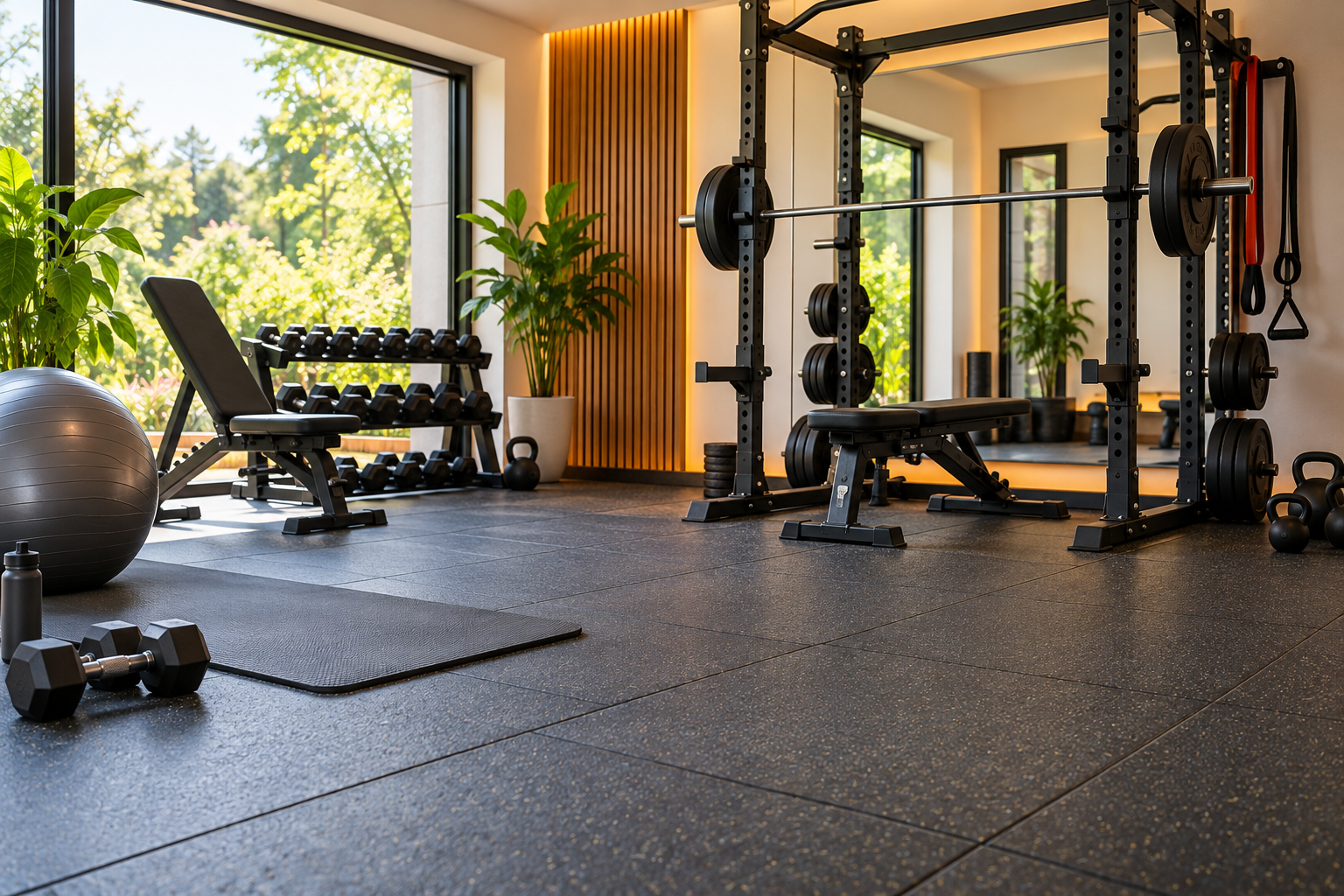
Anti-Shock Flooring Maintenance: Cleaning and Joint Inspection
Anti-shock flooring maintains its performance over time only when accompanied by a regular maintenance program. Cleaning, joint inspection, and checking the most heavily stressed areas allow for the prompt identification of any anomalies and reduce the risk of more complex interventions.
Effective maintenance is not just about the aesthetic appearance of the surface. The main objective is to preserve the stability, safety, and continuity of use of the gym, preventing minor defects from evolving into structural problems or leading to the premature replacement of the flooring.
This guide illustrates recommended checks, wear signs to monitor, and good practices for keeping sports flooring intended for professional use efficient.
- Quick Answer
- What to Check Periodically
- How Often to Perform Checks
- How to Clean the Flooring
- How to Check the Joints
- Signs of Wear Not to Underestimate
- When to Intervene or Replace Modules
- Mistakes to Avoid
- Maintenance as an Investment
How to Keep Anti-Shock Flooring Efficient?
Anti-shock flooring should be maintained through regular cleaning, joint inspection, checking areas subject to greater wear, and prompt intervention on identified anomalies. Following the manufacturer's instructions and scheduling periodic inspections helps preserve the safety, stability, and durability of the surface.
Preventive maintenance also helps reduce facility downtime and limit extraordinary interventions.
When applicable, reference should also be made to the manufacturer's technical documentation and standards relating to sports surfaces, such as the EN 14904 series for indoor flooring, always verifying relevance with respect to the usage environment.
Maintenance is Part of Safety
Regular checks allow for the timely identification of minor defects before they can compromise flooring performance.
Scheduling Interventions
A documented maintenance plan facilitates the monitoring of surface conditions throughout its life cycle.
What Elements Must Be Checked?
Checks should cover the entire surface, with particular attention to zones subjected to heavier traffic, spaces intended for free weights, and areas where large equipment is present.
Checks include flooring stability, joint continuity, any deformations, loss of flatness, signs of surface wear, and the presence of damaged elements.
Monitoring these aspects allows for more efficient scheduling of interventions and limits the risk of progressive deterioration.
Visual Inspection
A periodic check makes it possible to quickly identify obvious anomalies such as joint openings, abrasions, or localized deformations.
Heavily Stressed Areas
Areas dedicated to weights and those affected by heavy user traffic require more frequent checks.
How Often to Perform Checks?
The frequency of checks depends on the intensity of gym use, the number of users, and the type of activities carried out.
In facilities with daily use, it is advisable to provide frequent visual checks and more in-depth inspections at scheduled intervals according to the internal maintenance plan.
The flooring manufacturer can provide specific instructions on recommended operations and verification methods.
Routine Checks
Routine checks allow for the prompt identification of minor defects before they become more extensive problems.
Scheduled Inspections
A documented verification of surface conditions facilitates the planning of any maintenance interventions.
How to Correctly Clean the Flooring?
Cleaning must be carried out using products compatible with the material and following the instructions provided in the manufacturer's technical documentation.
The accumulation of dust, magnesite residue, dirt, or liquids can accelerate surface wear or compromise the comfort of use in the gym.
To learn about the main available types, you can consult the section dedicated to anti-shock flooring, which is useful for comparing solutions designed for different sports contexts.
Use Suitable Detergents
It is advisable to use exclusively products compatible with rubber, avoiding substances that could alter its surface characteristics.
Ordinary Cleaning
Constant removal of dust and dirt helps maintain the appearance and performance of the flooring for longer.
How to Check the Flooring Joints?
Joints represent one of the most important elements to monitor, especially in modular flooring. Any openings, misalignments, or level differences may indicate the need for a technical check.
Checks should be performed both visually and by checking surface stability in the most heavily used areas.
Intervening in the initial stages often makes it possible to prevent the spread of the problem to other areas of the flooring.
Check Stability
Joints must maintain continuity and not present anomalous movements during normal use.
Intervene Promptly
Promptly correcting any anomalies helps limit more extensive interventions.
What Signs Indicate Early Wear?
Main indicators include a perceptible loss of elasticity, surface abrasions, localized deformations, joint openings, and deterioration of areas subject to repeated loads.
The appearance of these signs does not necessarily imply the complete replacement of the flooring but requires technical evaluation.
Continuous monitoring makes it possible to plan interventions at the most appropriate time.
Surface Wear
Abrasions may be more evident in high-traffic zones or near equipment.
Localized Deformations
Variations in flatness can indicate critical issues related to the material or the subfloor.
When to Replace a Module or Intervene?
In modular flooring, it is often possible to replace individual damaged elements without working on the entire surface.
The decision should be based on the actual state of the flooring, the stability of the joints, and the instructions provided by the manufacturer.
Localized interventions help contain downtime and maintenance costs when the problem affects only a part of the surface.
Module Replacement
Modularity facilitates targeted interventions and helps reduce the impact on gym activities.
When to Request a Technical Check
If anomalies are widespread or affect the subfloor, it is appropriate to carry out an in-depth evaluation before proceeding with further interventions.
What Mistakes Compromise Flooring Durability?
One of the most frequent mistakes is performing maintenance only when the problem is already evident. Using products not compatible with rubber or neglecting joint checks can also accelerate surface deterioration.
It is also important to avoid ignoring minor misalignments or localized deformations, as they can progress with daily use.
Scheduled maintenance is generally more effective than exclusively corrective interventions.
Inadequate Cleaning
The use of unsuitable detergents can compromise the surface characteristics of the material.
Absence of Periodic Checks
Regular checks allow for the early identification of anomalies and the planning of targeted interventions.
Why Is Maintenance an Investment?
A well-organized maintenance program helps extend the useful life of the flooring, improve the operational continuity of the gym, and reduce the probability of extraordinary interventions.
Periodically evaluating the state of joints, surface conditions, technical documentation, and manufacturer instructions makes it possible to maintain high flooring performance throughout its life cycle.
Preventive management thus represents an effective tool to preserve safety, quality of sports spaces, and long-term investment sustainability.
Comments (0)