
Trolley
You have no items in your shopping cart

 Budgets
 Dumbers
 Discs
Discs
 Benches
 Racks and Rigs
 Weights Holders
 Isotonic machines
 Calisthenics
 Cardio
 Kettlebells
 Flooring
 Gym Set
 Accessories
 Combat
 ARTI MARZIALI
 CONTAINER GYM
 Tug-Of-War
 Used Gym Equipment
 PILATES MACCHINARI
 GINNASTICA ARTISTICA
 CAMPI DA PADEL
 Prodotti in Pronta Consegna
 Informazioni
 IRONMAN
 Gift Card
- Donatif
- General information
- 0 I like it
- 26 Views
- 0 comments
- gym flooring, safety flooring, gym safety, shock-absorbing materials
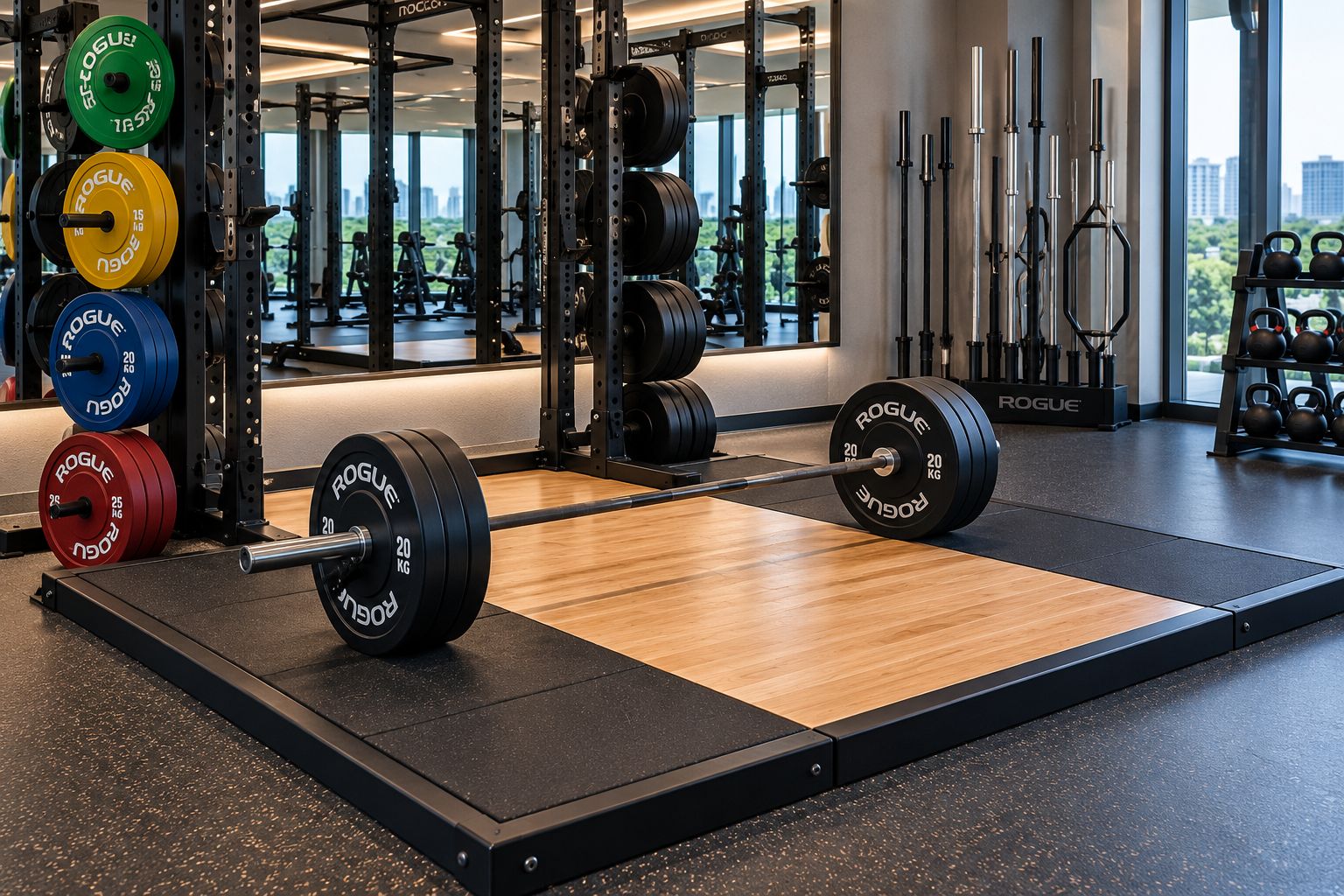
Deadlift Platform vs Weightlifting Platform: Differences and Selection Criteria
The lifting platform is one of the fundamental elements for training safely with a barbell, but not all platforms are designed for the same use. The main distinction concerns the difference between a platform dedicated to the deadlift and a platform designed for Olympic weightlifting, two disciplines that present different technical requirements.
Although both aim to protect the flooring, improve athlete stability, and distribute loads, they differ in configuration, materials, intended use, and application methods. Understanding these differences allows you to choose the most suitable solution while avoiding investments inconsistent with the planned type of training.
This guide analyzes the main comparison criteria between the two types of platforms, highlighting the technical aspects that genuinely impact the choice and design of a professional weight room or an advanced home gym.
- Quick Answer
- What Are the Main Differences
- How to Choose the Platform
- When to Choose a Deadlift Platform
- When to Choose a Weightlifting Platform
- Dimensions, Materials, and Configuration
- Errors to Avoid
- FAQ
- Evaluating the Investment
Deadlift Platform or Weightlifting Platform: Which One to Choose?
The lifting platform dedicated to the deadlift is primarily designed for exercises like the deadlift, whereas a weightlifting platform is intended for Olympic movements such as the snatch and the clean and jerk. The choice depends on the exercises practiced, the available space, the gym layout, and the required protection for the flooring and structure.
Both solutions must be sized according to their intended use and installed following the manufacturer's instructions.
When applicable, it is advisable to consult the technical documentation of the equipment and the relevant standards regarding sports surfaces and the safety of training environments.
Training Objectives Guide the Choice
Before comparing the two types, it is necessary to define which exercises will be performed with greater frequency and what level of intensity will characterize the platform's use.
The Platform Must Integrate with the Room Design
The platform configuration should be evaluated together with the overall gym layout rather than as an independent element.
What Are the Main Differences Between the Two Platforms?
The main difference concerns the intended use. A deadlift platform is generally designed for exercises where the barbell starts from the floor and is returned to the ground in a controlled manner, whereas a weightlifting platform is intended for Olympic movements that also involve dropping the barbell at the end of the lift.
This difference influences materials, surface configuration, shock absorption systems, and installation methods.
The management of the surrounding space also changes depending on the discipline practiced.
Type of Exercises
The deadlift requires different operational needs compared to the snatch or the clean and jerk, influencing the platform's design.
Mode of Use
The stresses generated during Olympic exercises may require specific configurations for impact distribution.
How to Choose the Most Suitable Platform?
The choice should simultaneously consider the discipline practiced, user level, frequency of use, available space, and flooring characteristics.
A gym dedicated primarily to powerlifting presents different needs compared to a facility where Olympic weightlifting represents a significant part of the activity.
To explore the various available solutions in detail, you can consult the section dedicated to lifting platforms, which is useful for comparing configurations designed for different training methods.
The Discipline is the Primary Criterion
The choice of platform should be consistent with the exercises that will be performed in most sessions.
Evaluating Available Space
Area dimensions, passageways, and the position of other equipment affect the platform configuration.
When Is It Advisable to Choose a Deadlift Platform?
The deadlift platform is suitable for environments dedicated primarily to powerlifting or strength exercises where the deadlift represents one of the main movements.
The design is oriented toward athlete stability, load distribution, and flooring protection when setting down the barbell.
The configuration should still be evaluated in relation to the loads used and the characteristics of the subfloor.
Strengths
Stability, construction simplicity, and specialization for the deadlift represent the main features of this type.
Aspects to Consider
A platform designed exclusively for the deadlift may not be optimal for Olympic exercises performed with high frequency.
When Is a Weightlifting Platform Preferable?
A weightlifting platform is designed to support training dedicated to Olympic movements and their related lifting techniques.
The surface characteristics are engineered to promote stability during the execution phase and help manage the impact of the barbell during a controlled drop.
This solution is frequently adopted in specialized centers, multidisciplinary boxes, and rooms dedicated to technical training.
Key Features
The configuration is tailored to the specific needs of the snatch, clean and jerk, and Olympic drills.
Repeated Training
In environments dedicated to weightlifting, the platform is generally used continuously throughout the entire day.
How Much Do Dimensions, Materials, and Configuration Matter?
The dimensions of the platform must be consistent with the planned movements, available space, and the arrangement of other stations.
Materials, shock absorption systems, and installation methods also impact overall performance and flooring protection.
Rather than seeking standard measurements, it is advisable to develop a configuration consistent with the gym project and the manufacturer's instructions.
Material Selection
Materials must guarantee wear resistance, stability, and ease of maintenance during daily use.
Flooring Protection
The platform configuration should contribute to load distribution and the protection of the subfloor.
What Errors Are Best Avoided?
One of the most common mistakes is choosing a platform solely based on price without considering the discipline practiced and the room setup.
Another critical issue involves failing to evaluate the operational space, existing flooring, and the slab's capacity to support the anticipated loads.
It is also advisable to avoid using a specialized platform for applications very different from those for which it was designed.
Ignoring the Intended Use
The specialization of the platform represents an important element in choosing the most suitable solution.
Neglecting the Layout
A correct arrangement improves safety, functionality, and the management of the training area.
Frequently Asked Questions
Can a Single Platform Be Used for Both Disciplines?
It depends on the gym project and the platform's features. Some configurations can be versatile, but it is advisable to verify the intended use indicated by the manufacturer.
Is the Thickness the Same for All Platforms?
No. The thickness depends on the platform configuration, the materials used, the anticipated loads, and the absorption system designed by the manufacturer.
Does the Choice Change Between a Professional Gym and a Home Gym?
Yes. Available space, intensity of use, and the environment's configuration influence the choice of the most suitable solution in both contexts.
How to Evaluate Long-Term Investment?
The choice between a deadlift platform and a weightlifting platform should be made considering durability, maintenance, the future evolution of the room, and compatibility with training goals.
Comparing technical documentation, materials, installation methods, and manufacturer instructions allows you to make decisions based on verifiable criteria rather than initial cost alone.
A design consistent with the discipline practiced allows you to obtain a more efficient station that is easier to manage and more adaptable to the future needs of the sports facility.
Comments (0)