
Trolley
You have no items in your shopping cart

 Budgets
 Dumbers
 Discs
Discs
 Benches
 Racks and Rigs
 Weights Holders
 Isotonic machines
 Calisthenics
 Cardio
 Kettlebells
 Flooring
 Gym Set
 Accessories
 Combat
 ARTI MARZIALI
 CONTAINER GYM
 Tug-Of-War
 Used Gym Equipment
 PILATES MACCHINARI
 GINNASTICA ARTISTICA
 CAMPI DA PADEL
 Prodotti in Pronta Consegna
 Informazioni
 IRONMAN
 Gift Card
- Donatif
- General information
- 0 I like it
- 1 Views
- 0 comments
- gym flooring, safety flooring, gym safety, shock-absorbing materials
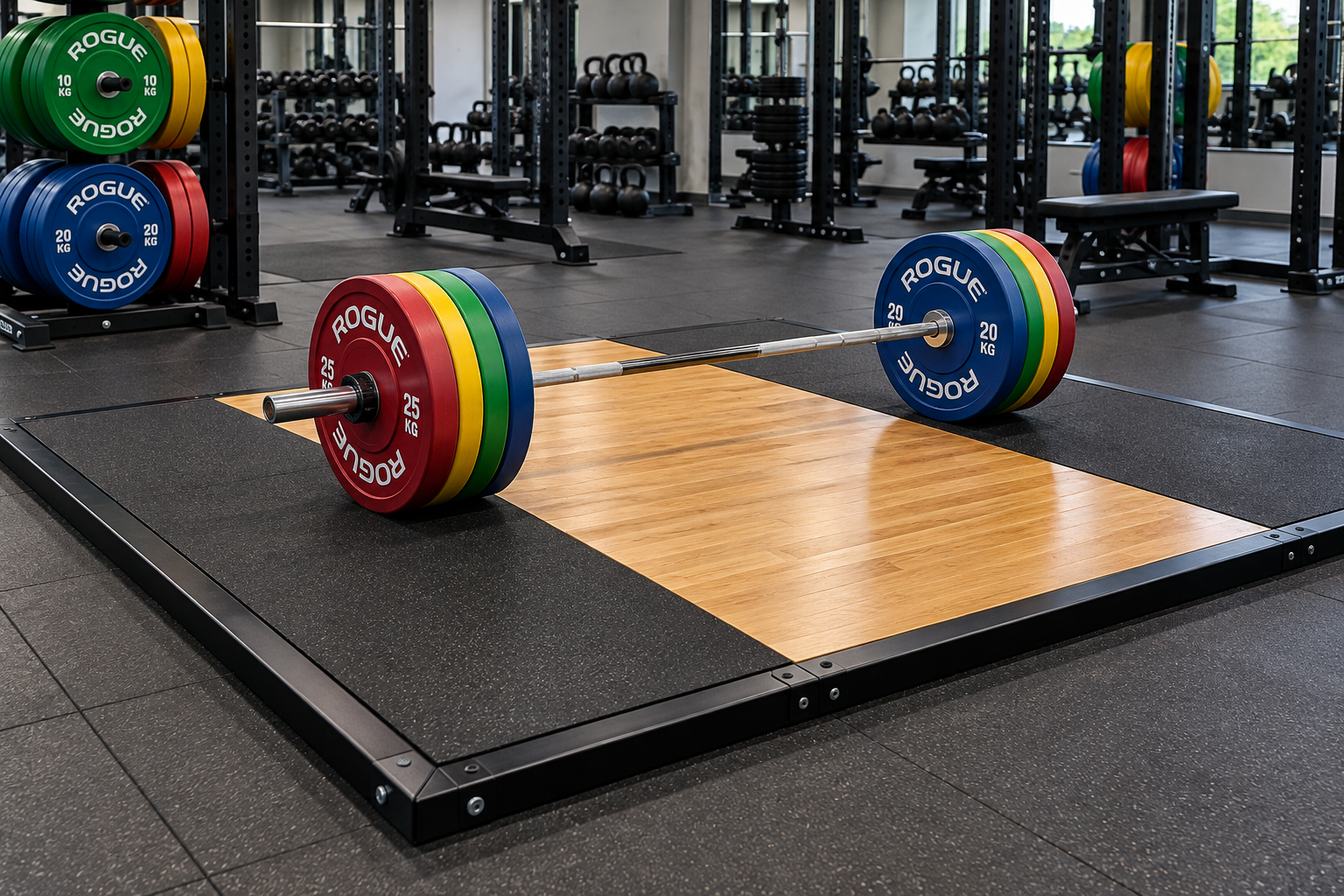
Deadlift platform vs Olympic platform: which one to choose?
The lifting platform is an essential element for training with a barbell in a stable and organized manner, but not all platforms are designed for the same use. The difference between a deadlift platform and an Olympic platform mainly concerns the type of exercises performed, the surface configuration, impact management, and the organization of the training space.
An informed choice allows you to improve the functionality of the weight room, protect the flooring, and optimize the athlete's experience. Conversely, using a platform unsuited to the discipline practiced can limit training effectiveness and increase equipment wear.
This guide analyzes the main differences between the two types of platforms, illustrating practical and verifiable criteria to identify the solution best suited to your needs without relying solely on price or aesthetic appearance.
- Quick answer
- What are the differences
- How to correctly use each platform
- When to choose a deadlift platform
- When to choose an Olympic platform
- Practical selection criteria
- Errors and safety
- FAQ
- Evaluating the investment
What is the difference between a deadlift platform and an Olympic platform?
The lifting platform intended for deadlifts is primarily designed for exercises such as the deadlift, while the Olympic platform is developed for movements such as the snatch and clean and jerk. The choice depends on the discipline practiced, the gym setup, the available space, and the characteristics of the flooring.
Both solutions must be installed according to the manufacturer's instructions and sized based on the intended use.
When applicable, it is advisable to consult the technical documentation of the equipment and the guidelines of the competent sports federations to verify requirements and methods of use.
The discipline is the first selection criterion
Before choosing a platform, it is necessary to identify the exercises that will be performed most frequently and the intensity of the training.
The platform must integrate into the room project
The station configuration should be evaluated together with the overall gym layout and the arrangement of other equipment.
What are the main differences?
The main difference concerns the intended use. A deadlift platform is designed for exercises where the barbell is returned to the floor in a controlled manner, while an Olympic platform is developed to also support impacts deriving from Olympic weightlifting movements.
This different function influences materials, structure, shock absorption systems, and the organization of the surrounding space.
The management of accessories and placement in the weight room can also vary depending on the discipline practiced.
Type of movements
Powerlifting and Olympic weightlifting generate different needs that must be considered during the design of the station.
Load management
The characteristics of the platform must be consistent with the usage methods and the type of impacts expected during training.
How to correctly use each platform?
Each platform should be used for the applications intended by the manufacturer, respecting the usage methods indicated in the technical documentation.
A platform designed for a specific discipline generally offers performance more consistent with the type of training for which it was developed.
To explore the different available configurations, you can consult the section dedicated to lifting platforms, useful for comparing the main solutions dedicated to barbell training.
Technical training
The choice of the platform should facilitate the execution of the expected movements and guarantee a stable surface during all phases of the exercise.
Environmental compatibility
The configuration of the station must be consistent with the available space and the arrangement of other equipment present in the room.
When should you choose a deadlift platform?
The deadlift platform represents a suitable solution for gyms or home gyms where the deadlift constitutes one of the main exercises of the training program.
The design prioritizes surface stability, load distribution, and flooring protection when setting down the barbell.
This solution is frequently adopted in environments dedicated to powerlifting and strength training.
Main advantages
Specialization for the deadlift, simplicity of configuration, and operational stability represent the main characteristics.
Aspects to evaluate
A specialized platform might not be the most suitable choice for programs focused primarily on Olympic weightlifting.
When is an Olympic platform preferable?
The Olympic platform is designed for disciplines that involve dynamic movements such as the snatch and the clean and jerk.
The structure is developed to offer a surface suitable for technical training and contribute to managing the impacts deriving from the controlled release of the barbell.
It finds application in specialized centers, multidisciplinary gyms, and rooms dedicated to weightlifting.
Main characteristics
The configuration is oriented to the needs of Olympic weightlifting and high-repetition technical training.
Professional use
Structures dedicated to weightlifting can benefit from a platform designed specifically for this discipline.
What practical criteria to use in the selection?
The evaluation should include the discipline practiced, available space, station dimensions, quality of materials, flooring characteristics, and overall room organization.
The number of users and training frequency also represent important elements during the design phase.
A choice based on technical criteria allows you to correctly compare different solutions, avoiding exclusively economic evaluations.
Importance of space
The station must guarantee freedom of movement, access to accessories, and adequate distance from other equipment.
Evaluating materials
Resistance to wear, ease of maintenance, and construction quality affect the durability of the investment.
What errors are best avoided?
One of the most frequent errors consists of using a platform designed for a different discipline than the training actually performed.
It is also advisable to avoid choosing exclusively based on price without considering technical characteristics, installation methods, and the room configuration.
Neglecting the subfloor or the position of the platform in the room can also affect the overall functionality of the station.
Inconsistent use
Each platform should be used according to the destination intended by the manufacturer.
Unplanned layout
An incorrect arrangement can limit safety, comfort, and the organization of the weight room.
Frequently asked questions
Can a single platform be used for both disciplines?
It depends on the construction characteristics of the platform and the intended use declared by the manufacturer. It is advisable to verify compatibility before purchase.
Do dimensions change between the two types?
Dimensions can vary based on the project and the manufacturer. The choice should be made considering available space and usage methods.
Which solution is most suitable for a home gym?
The answer mainly depends on the discipline practiced, training frequency, and the configuration of the available environment.
Why choosing the correct platform represents an investment?
A platform consistent with the type of training improves station organization, facilitates maintenance, and contributes to the protection of flooring and equipment.
Analyzing technical documentation, materials, installation methods, and intended use allows you to make a more informed choice compared to solely evaluating the initial cost.
Accurate design makes the station more efficient, easier to manage, and more adaptable to the future evolution of the gym or home gym.
Comments (0)