
Trolley
You have no items in your shopping cart

 Budgets
 Dumbers
 Discs
Discs
 Benches
 Racks and Rigs
 Weights Holders
 Isotonic machines
 Calisthenics
 Cardio
 Kettlebells
 Flooring
 Gym Set
 Accessories
 Combat
 ARTI MARZIALI
 CONTAINER GYM
 Tug-Of-War
 Used Gym Equipment
 PILATES MACCHINARI
 GINNASTICA ARTISTICA
 CAMPI DA PADEL
 Prodotti in Pronta Consegna
 Informazioni
 IRONMAN
 Gift Card
- Donatif
- General information
- 0 I like it
- 9 Views
- 0 comments
- gym flooring, safety flooring, gym safety, shock-absorbing materials
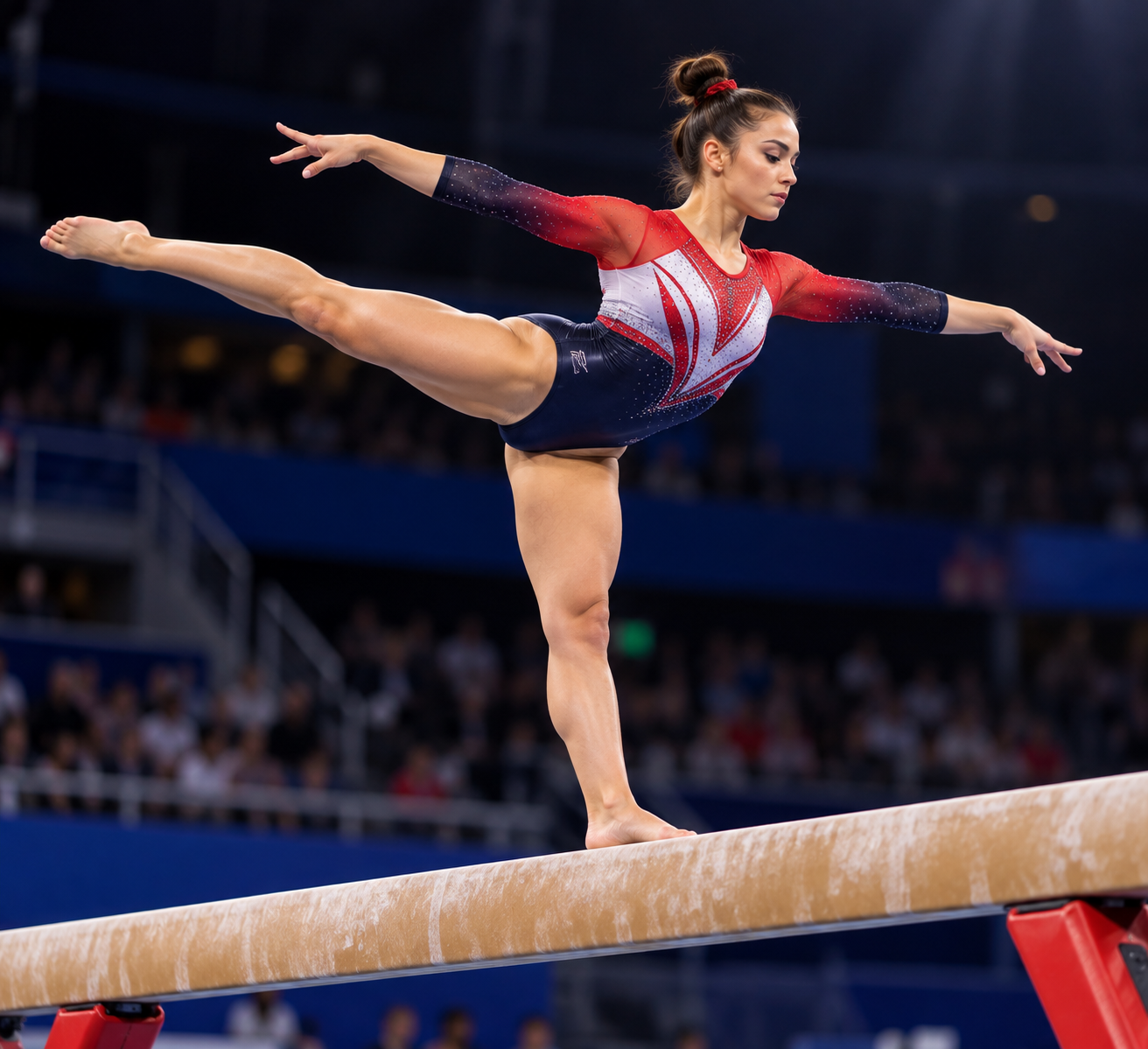
Which equipment is needed for artistic gymnastics: a practical guide to selection and use
Artistic gymnastics equipment includes the main apparatus used during training and competitions, along with the support supplies necessary to carry out the activity under adequate organizational and safety conditions. The choice must take into account the available space, the level of the athletes, the planned activities, and the technical guidelines of the manufacturers.
Setting up an artistic gymnastics gym means designing an environment in which each piece of equipment is placed in a way that is consistent with the overall layout. In addition to the main apparatus, flooring, mats, anchoring systems, safety areas, and internal pathways that allow activities to take place without interference between the different training zones play an important role.
For sports associations, public bodies, and facility managers, it is useful to identify the truly necessary equipment while avoiding random configurations. Indeed, a modular project allows the gym to be developed progressively while maintaining operational continuity and simplifying equipment maintenance.
- Quick answer
- What equipment is necessary
- How to choose the equipment
- How to use the equipment correctly
- Safety and checks
- Mistakes to avoid
- FAQ
- How to plan the setup
Which equipment is needed for artistic gymnastics?
The equipment to provide depends on the activities carried out and the level of the athletes. A professional gym normally includes specific apparatus for the discipline, dedicated surfaces, safety mats, anchoring systems when required, technical preparation areas, and complementary supplies for training and maintenance.
The configuration should be defined by evaluating the intended use, available surface area, and number of simultaneous users.
Each piece of equipment should be installed and used following the instructions provided in the manufacturer's technical documentation.
Objective of the choice
To create a functional, safe gym that is easily expandable over time.
General criteria
The equipment should be selected as part of a unitary project that includes layout, maintenance, and operational management.
What equipment to include in the project?
A gym can be organized by including the equipment necessary for the planned activities, integrated with warm-up areas, athletic preparation, and technical work.
| Category | Function | Aspects to verify |
|---|---|---|
| Main gymnastic apparatus | Technical training | Installation and technical documentation |
| Mats | Protection of work areas | Integrity and correct positioning |
| Technical accessories | Support for training | Compatibility with activities |
| Flooring | Work surface | Continuity and maintenance |
| Anchoring systems | Equipment stability | Installation according to the manufacturer |
The final composition depends on the technical program of the facility and the disciplines practiced.
Main equipment
Each piece of equipment should be chosen according to the activities actually carried out in the gym.
Complementary supplies
Accessories, protections, and support materials complete the project and contribute to the organization of training.
How to choose the equipment?
The choice should start from the analysis of the available surface area and the number of athletes who will use the facility simultaneously.
It is also necessary to verify compatibility with the building's structure, installation methods, maintenance possibilities, and the availability of technical documentation.
A modular configuration makes it possible to gradually expand the gym without completely modifying the initial layout.
Space evaluation
Each piece of equipment requires adequate operating areas and pathways.
Modular development
Flexible design facilitates future updates and expansions.
How to use the equipment correctly?
Use should take place following the manufacturer's instructions and the procedures defined by the sports facility.
Before each training session, it is advisable to check the general conditions of the equipment, the positioning of the protection mats, and the state of the surfaces.
To explore dedicated solutions, you can consult artistic gymnastics equipment.
Initial checks
A visual check before use helps identify any anomalies.
Activity management
The organization of the areas facilitates the work of instructors and the management of training.
Which safety aspects to verify?
Verifications should concern equipment, anchors, safety spaces, work surfaces, and the condition of the sports flooring.
The equipment must be maintained according to the maintenance schedule provided by the manufacturer.
Manuals, instructions for use, and intervention logs should be kept and updated.
Maintenance
Scheduled checks help maintain reliability and operational continuity.
Technical documentation
The documentation represents the main reference for installation and maintenance.
What mistakes to avoid?
One of the most frequent mistakes consists in purchasing equipment without having previously defined the layout and destination of the areas.
It is also advisable to avoid modifications to anchors or equipment configurations without following the manufacturer's technical documentation.
Neglecting maintenance and periodic checks can compromise facility management and increase equipment downtime.
Improvised layout
The arrangement of the equipment should be planned before installation.
Insufficient checks
Scheduled maintenance facilitates the management of the entire facility.
FAQ
Is all equipment necessary right from opening?
No. A modular design allows the gym to be developed progressively based on the planned activities.
How important is the flooring?
Flooring represents an essential element of the project and must be consistent with the sports activities practiced.
Which documents to keep?
Manufacturer manuals, installation instructions, maintenance logs, and technical documentation of the equipment.
How to plan the gym setup?
Design should begin with the analysis of sports activities, available surface area, and the expected number of users. Subsequently, it is possible to define the layout, select the equipment, organize safety areas, and prepare the maintenance plan.
When applicable, the main references include current building regulations, technical standards applicable to sports equipment, the guidelines of the competent federation, and manufacturer manuals regarding installation, use, and maintenance. Each configuration should be verified against the intended use of the facility and applicable regulatory requirements.
A modular approach makes it possible to optimize investments, maintain high structural quality, and progressively adapt the gym to the evolution of sports activities.
Comments (0)