
Trolley
You have no items in your shopping cart

 Budgets
 Dumbers
 Discs
Discs
 Benches
 Racks and Rigs
 Weights Holders
 Isotonic machines
 Calisthenics
 Cardio
 Kettlebells
 Flooring
 Gym Set
 Accessories
 Combat
 ARTI MARZIALI
 CONTAINER GYM
 Tug-Of-War
 Used Gym Equipment
 PILATES MACCHINARI
 GINNASTICA ARTISTICA
 CAMPI DA PADEL
 Prodotti in Pronta Consegna
 Informazioni
 IRONMAN
 Gift Card
- Donatif
- General information
- 0 I like it
- 10 Views
- 0 comments
- gym flooring, safety flooring, gym safety, shock-absorbing materials
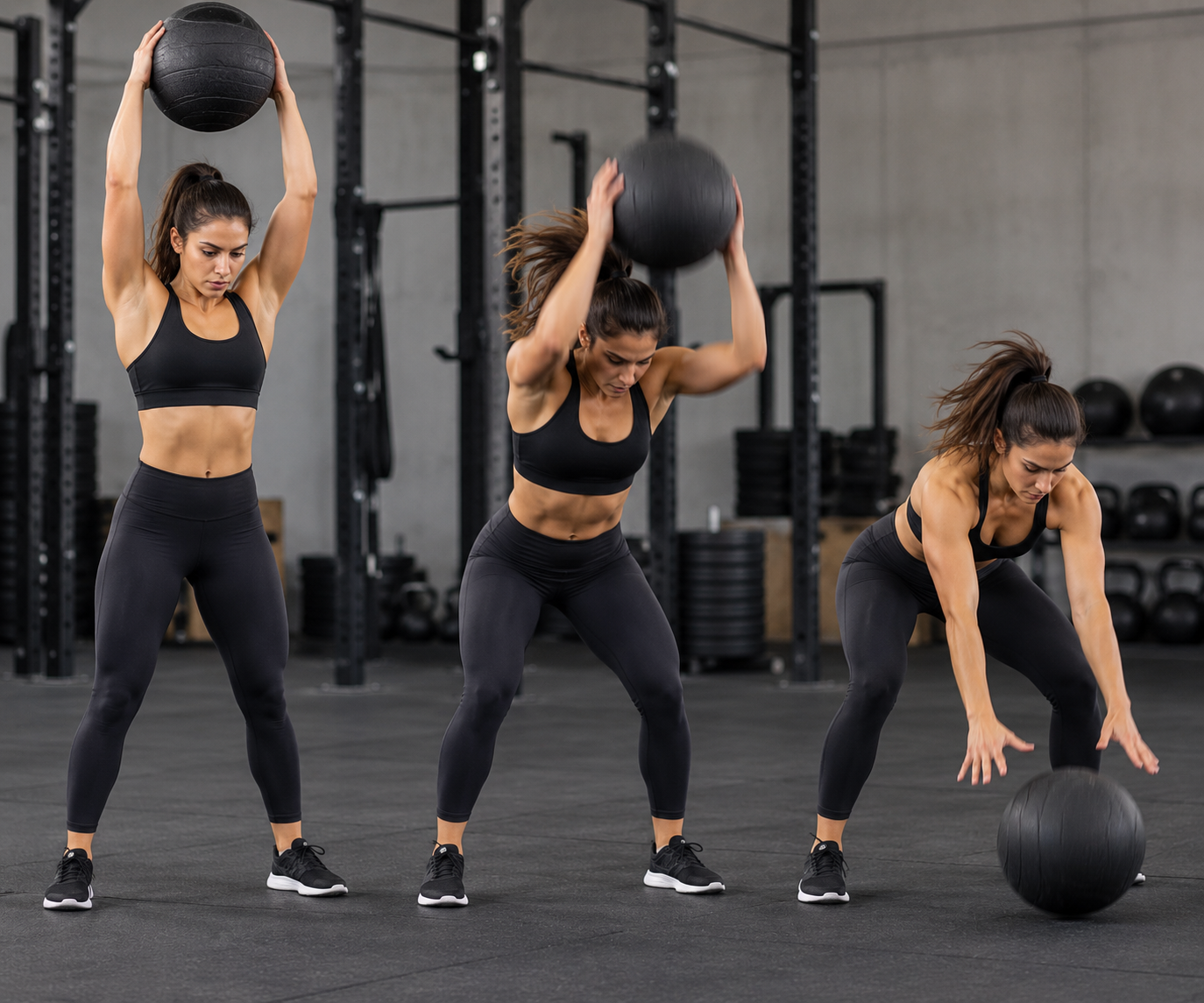
Slam ball safety: throwing near others and unsuitable flooring
Slam ball is designed for dynamic exercises that involve controlled throws to the floor, explosive movements, and high-intensity repetitions. Precisely because of these characteristics, it is essential to use the equipment in a properly organized area, with sufficient space and a surface suitable for absorbing impacts.
Training too close to other people or using unsuitable flooring increases the risk of collisions, loss of ball control, premature equipment wear, and damage to the training surface. Safety therefore depends on the interaction between the environment, equipment, and method of use.
This guide compiles practical criteria for using a slam ball safely, illustrating the main risks, pre-workout checks to perform, and the most common mistakes to avoid. For technical characteristics and limits of use, it is always necessary to refer to the manufacturer's documentation.
- Quick answer
- What are the main risks?
- What requirements must the training area meet?
- Checks before use
- Why is the floor important?
- Mistakes to avoid
- FAQ
- Evaluating the investment
How to use a slam ball safely?
The slam ball must be used by maintaining a clear area around the athlete, verifying that no one is in the ball's trajectory, and choosing a surface compatible with repeated impacts. Before each session, it is advisable to check the condition of the ball and the order of the training area.
Safety depends on the organization of the space just as much as on the correct execution of the exercises.
The manufacturer's instructions always represent the primary reference for equipment use, maintenance, and checks.
Decision criteria
Available space, flooring, ball condition, number of users present, and type of exercises are the main elements to check before training.
Technical sources
For methods of use, maintenance, and construction characteristics, it is advisable to consult the technical documentation of the slam ball manufacturer and of any installed flooring.
What are the main risks?
The most obvious risk stems from performing slams too close to other users. During the movement, the ball can change its trajectory after impacting the floor or be retrieved in an unpredictable way.
Even an unsuitable surface can compromise the quality of the workout by increasing the wear on the ball and the floor.
Additional critical issues can stem from congested spaces, obstacles in the ball's path, or the use of equipment not designed for ground slams.
Throwing near other users
Every athlete should have a dedicated working zone, avoiding overlaps with other stations or passageways used during training.
Unsuitable equipment
Before use, it is important to verify that the ball is intended for slams and not for other types of exercises with different characteristics.
What requirements must the training area meet?
The space should allow complete movements without interference with other people or equipment.
The area must remain orderly and free of obstacles that could compromise the retrieval of the ball after the throw.
A rational arrangement of the stations reduces the risk of interference during group sessions.
Space organization
Every user should have sufficient free area to perform the exercise and retrieve the ball safely, avoiding crossing the zone destined for other athletes.
Gym layout
Stations dedicated to slams should be separated from areas used for exercises with barbells, kettlebells, or other moving equipment.
What checks to perform before training?
Before starting, it is advisable to visually check the condition of the slam ball, verifying the absence of obvious damage to the coating.
It is appropriate to ensure that the floor is clean, dry, and free of objects that could alter the bounce or obstruct movement.
Clothing and footwear must also be appropriate for the planned activity.
Equipment check
Periodically checking the ball's coating helps identify any signs of wear that might require equipment replacement.
Area check
Before training, it is useful to make sure that no one is crossing the zone designated for slams and that all equipment is properly stored away.
Why is the floor important?
Slams produce repeated impacts that can stress both the ball and the support surface.
An anti-shock flooring designed for functional activities helps protect the subfloor and make the area dedicated to slam ball workouts more suitable.
The choice of surface should be made considering the intensity of use, environmental characteristics, and manufacturer instructions.
Benefits of a suitable surface
Adequate flooring helps preserve the equipment and improve the management of the training area over time.
Complete functional area
To organize a versatile station, it is possible to integrate the slam ball with functional training accessories while maintaining orderly and easily manageable pathways.
What mistakes should be avoided?
Training in shared spaces without delimiting one's own area is one of the most frequent mistakes.
It is equally important to avoid surfaces not designed for repeated impacts or using a ball intended for applications different from slams.
Neglecting pre-workout checks can increase the risk of inconveniences during use.
Insufficient space
Performing slams too close to other users reduces the margin of safety and can interfere with surrounding activities.
Unsuitable floor
An inadequate surface can favor equipment wear and subfloor damage, as well as compromise workout management.
FAQ
Can I perform slams near other users?
It is preferable to maintain a free area around the station to avoid interference during throws and ball retrieval.
Which floor is recommended?
A surface designed for functional activities and repeated impacts generally represents the most suitable choice. Compatibility must be verified according to the manufacturer's specifications.
Do I need to check the ball before every workout?
Yes. A visual check of the coating and the general conditions of the equipment is a good practice before starting the session.
Can the slam ball replace a wall ball?
No. Slam balls and wall balls are designed for different uses and should not be considered interchangeable for all exercises.
Evaluating the investment
Using a slam ball safely means correctly designing the training area, choosing flooring compatible with ground slams, maintaining adequate distances between users, and periodically checking the condition of the equipment. Careful management of space and maintenance makes it possible to create a functional, orderly station suitable for both individual training and group activities.
Comments (0)