
Trolley
You have no items in your shopping cart

 Budgets
 Dumbers
 Discs
Discs
 Benches
 Racks and Rigs
 Weights Holders
 Isotonic machines
 Calisthenics
 Cardio
 Kettlebells
 Flooring
 Gym Set
 Accessories
 Combat
 ARTI MARZIALI
 CONTAINER GYM
 Tug-Of-War
 Used Gym Equipment
 PILATES MACCHINARI
 GINNASTICA ARTISTICA
 CAMPI DA PADEL
 Prodotti in Pronta Consegna
 Informazioni
 IRONMAN
 Gift Card
- Donatif
- General information
- 0 I like it
- 1 Views
- 0 comments
- gym flooring, safety flooring, gym safety, shock-absorbing materials
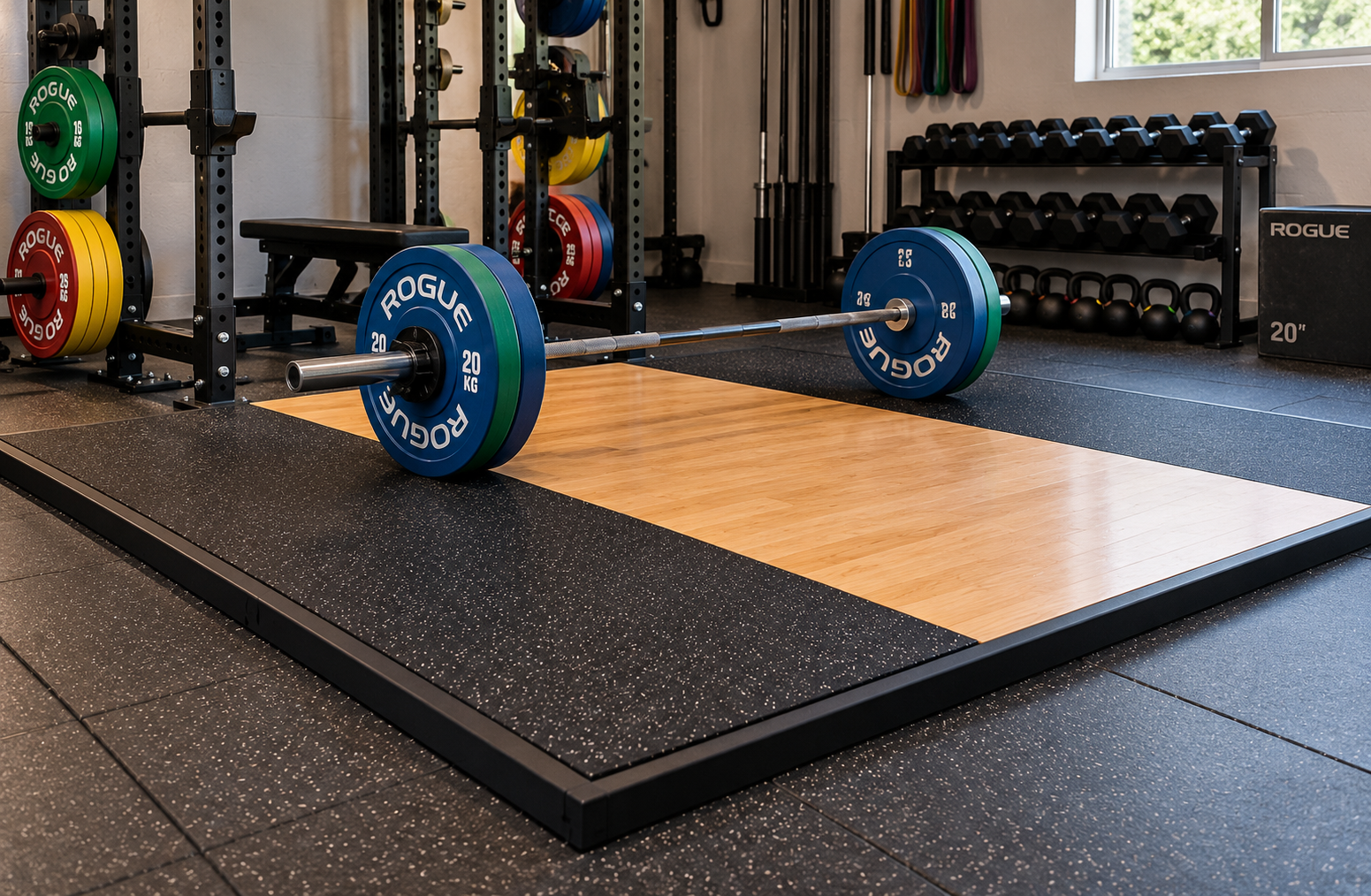
Lifting platform safety: unstable edges and insufficient thickness
The lifting platform represents the point of contact between the athlete, the barbell, and the flooring. For this reason, its stability directly affects the quality of the training and the safety of the weightlifting area. Seemingly minor issues, such as unstable edges or a thickness unsuited for the intended use, can compromise the correct functioning of the workstation.
A properly designed platform distributes loads, protects the underlying flooring, and provides a stable surface during exercises such as deadlift, snatch, and clean and jerk. Conversely, a configuration inconsistent with the type of use can increase material wear and require more frequent maintenance interventions.
This guide analyzes the main factors affecting the safety of a lifting platform, illustrating practical checks, preventive inspections, and design criteria useful for reducing the risk of critical issues during daily use.
- Quick answer
- What are the main risks
- Why thickness matters
- How to recognize unstable edges
- Checks before use
- Correct installation
- Preventive maintenance
- Errors to avoid
- Evaluating safety over time
How to ensure the safety of a lifting platform?
The lifting platform should be designed and installed considering structural stability, adequate thickness, material quality, proper flooring support, and the absence of unstable edges. Periodic checks and scheduled maintenance allow for maintaining high performance and continuity of use.
Every installation should be verified according to the discipline practiced, the expected loads, and the characteristics of the environment.
When applicable, it is advisable to consult the manufacturer's technical documentation and the guidelines of sports federations or standards concerning the safety of equipment and training environments.
Safety involves the entire system
The quality of the platform represents only one of the elements affecting the overall safety of the workstation. Flooring, subfloor, and installation methods must also be carefully evaluated.
Prevention reduces corrective interventions
Regular checks allow for the timely identification of any anomalies before they can compromise the functionality of the platform.
What are the main risks?
The most frequent problems involve platform movements, material wear, localized deformations, loss of stability, and edge deterioration.
These situations can affect the quality of training and increase the need for maintenance interventions, especially in facilities subject to intensive use.
Periodic checks of the entire workstation allow for identifying any critical issues before they spread to other parts of the structure.
Unwanted movements
A platform that exhibits wobbling or shifting during use requires an inspection of the structure and the underlying support.
Progressive wear
Clear signs of deterioration may indicate an inadequate configuration or a use different from the destination intended by the manufacturer.
Why can insufficient thickness create problems?
The thickness of the platform contributes to load distribution and flooring protection. A solution undersized compared to the intended use can reduce the system's ability to manage the impacts generated during workouts.
Thickness must be evaluated together with the materials used, the platform structure, and the characteristics of the subfloor.
The correct choice therefore depends on the overall project and not exclusively on a single dimensional value.
Load distribution
Design should allow for proper distribution of stresses on the flooring and, when necessary, the floor slab.
Materials and construction
Constructive quality and platform composition also influence the overall behavior of the workstation.
How to recognize unstable edges?
The edges represent one of the areas most subject to wear and must maintain continuity with the rest of the surface. Lifting, misalignments, or perceptible movements during use may require a technical inspection.
Causes can include incorrect installation, material deterioration, or improperly prepared support.
Intervening in the early stages generally limits the extent of subsequent interventions.
Visual inspection
A simple inspection allows for verifying any deformations, gaps, or irregularities along the perimeter of the platform.
When to intervene
Any variation in surface stability should be checked before proceeding with intensive use of the workstation.
What checks to perform before use?
Before each session, it is advisable to check the stability of the platform, the integrity of the surface, correct positioning, and the absence of loose elements.
Periodic checks should also include inspecting the support surfaces, the surrounding area, and the underlying flooring.
To learn about the different available configurations, you can consult the section dedicated to lifting platforms, useful for comparing solutions intended for different training modes.
Initial checklist
Verifying stability, absence of deformations, material conditions, and surface continuity represents a good practice before training.
Scheduled monitoring
Planning checks facilitates the identification of anomalies and maintenance management.
How much does correct installation matter?
Even a high-quality platform can offer lower performance if installed on an unsuitable subfloor or irregular flooring.
The support must be stable, regular, and compatible with the platform's construction system, following the manufacturer's instructions.
In existing buildings or in the presence of high loads, it may also be appropriate to evaluate the structure's capacity to support the expected stresses.
Subfloor preparation
Support verification represents an essential phase of design and contributes to the durability of the workstation.
Correct positioning
The platform should be placed in an area that promotes safety, freedom of movement, and proper room organization.
How to prevent problems with maintenance?
Regular maintenance includes cleaning the surface, checking parts subject to wear, and monitoring structural stability.
Scheduling periodic inspections allows for intervening quickly on any anomalies, avoiding the worsening of platform conditions.
Following the manufacturer's instructions helps preserve the characteristics of the workstation for longer.
Routine cleaning
Keeping the surface free of dust and debris helps preserve grip and facilitates visual inspections.
Scheduled inspections
Preventive maintenance reduces the risk of extraordinary interventions and improves continuity of use.
What errors most often compromise safety?
Among the most common errors are choosing a platform unsuited for the practiced discipline, installation on a non-compliant support, and failing to periodically check stability.
Another critical issue consists of neglecting small structural movements or initial signs of wear, postponing maintenance interventions.
Complete design and scheduled maintenance help reduce the likelihood of these problems.
Neglecting design
The choice of the platform should always be consistent with the type of training planned and the room configuration.
Postponing checks
Promptly identifying any anomalies allows for limiting the costs and times of subsequent interventions.
Why is safety an investment?
A properly designed, installed, and maintained platform contributes to the operational continuity of the gym, improves workstation management, and reduces the likelihood of extraordinary interventions.
Evaluating technical documentation, constructive quality, installation methods, and maintenance schedule allows for making a more informed choice compared to solely evaluating the initial price.
A complete design that considers materials, thickness, stability, and periodic checks allows for maintaining high platform performance throughout its lifecycle.
Comments (0)