
Trolley
You have no items in your shopping cart

 Budgets
 Dumbers
 Discs
Discs
 Benches
 Racks and Rigs
 Weights Holders
 Isotonic machines
 Calisthenics
 Cardio
 Kettlebells
 Flooring
 Gym Set
 Accessories
 Combat
 ARTI MARZIALI
 CONTAINER GYM
 Tug-Of-War
 Used Gym Equipment
 PILATES MACCHINARI
 GINNASTICA ARTISTICA
 CAMPI DA PADEL
 Prodotti in Pronta Consegna
 Informazioni
 IRONMAN
 Gift Card
- Donatif
- General information
- 0 I like it
- 612 Views
- 0 comments
- gym flooring, safety flooring, gym safety, shock-absorbing materials
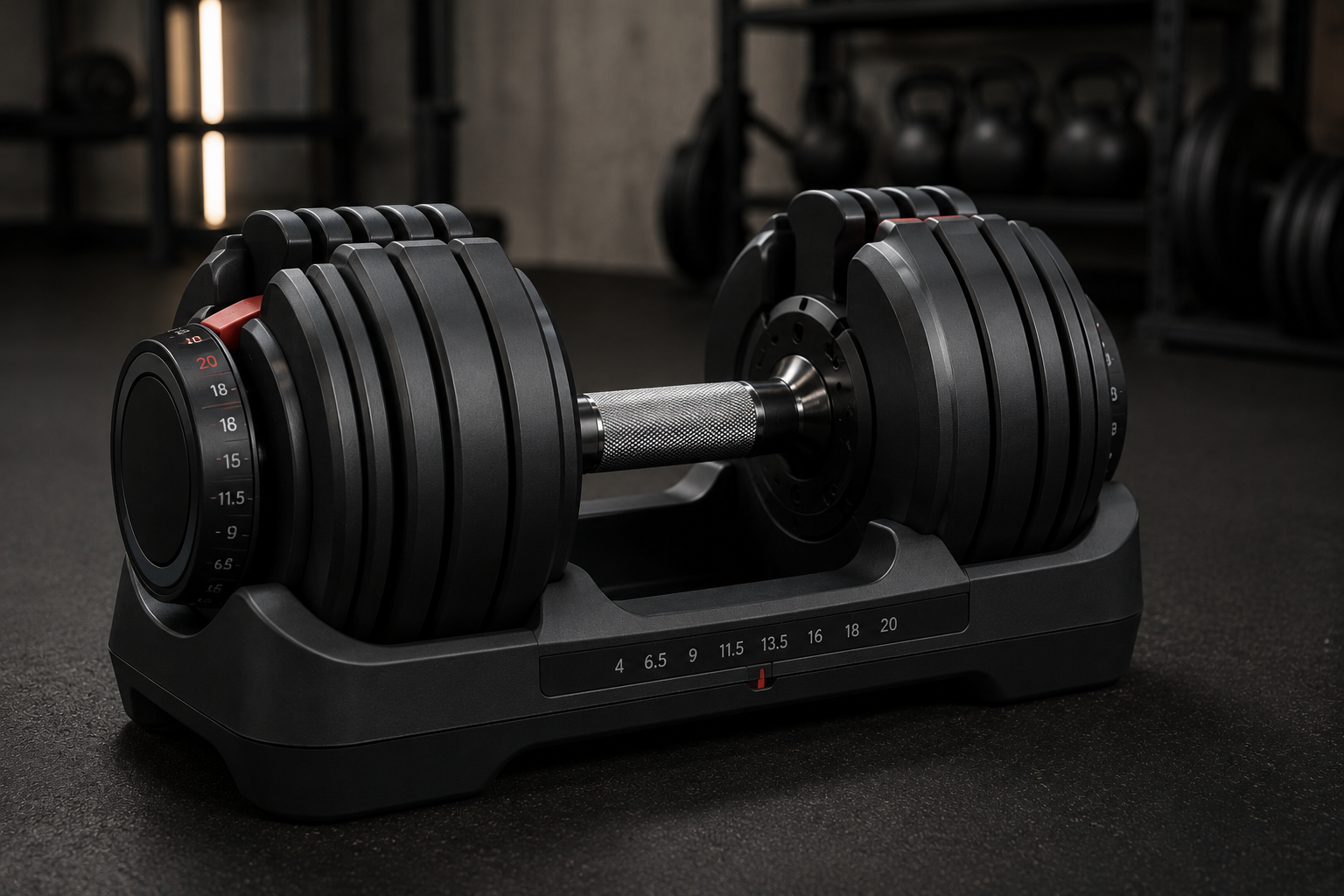
Adjustable dumbbell safety: how click-lock mechanisms work
When choosing equipment for home workouts, safety is one of the most important aspects to evaluate. An adjustable dumbbell must offer not only convenience and space-saving, but also the certainty that every component remains stable during the execution of exercises, especially when heavy loads are used.
The internal operation of an adjustable weight dumbbell is much more complex than a standard traditional dumbbell. The system must allow for rapid load changes, keep the plates in the correct position, and ensure a reliable connection between the handle and the discs during every phase of the movement.
Understanding how locking mechanisms work allows you to better evaluate the quality of a product and choose equipment designed to reduce risks. Safety does not depend solely on the maximum declared weight, but on the precision with which each component has been designed and assembled.
- Why safety is fundamental in adjustable dumbbells
- How a click-lock system works
- The components that ensure stability
- Differences between budget and professional adjustable systems
- Reducing the risk of accidents during training
- The importance of build quality
- How to choose a safe adjustable dumbbell
Why safety is fundamental in adjustable dumbbells
A traditional fixed-weight dumbbell has a relatively simple structure: the weight is permanently connected to the handle and there are no moving parts that must adapt to different configurations. In adjustable systems, however, the design must manage greater complexity because the load can change continuously.
During a workout, especially with exercises like bench presses, shoulder presses, or overhead movements, the dumbbell is subjected to significant dynamic forces. The locking system must therefore maintain its effectiveness even when the tool is accelerated, decelerated, and stabilized in different positions.
Proper design allows the athlete to focus on execution without worrying about the stability of the equipment.
The risk of accidental disc drops
One of the main fears related to adjustable dumbbells concerns the possible unwanted movement of the plates. An effective safety system must prevent components from detaching during normal use.
The prevention of this risk depends on the quality of the locking mechanism, the tolerances of the components, and the proper maintenance of the tool.
Safety in home environments
When training at home, safety takes on even greater importance because the space may be shared with other people. Those who live with family members or children must be able to use the equipment knowing that it is designed for reliable use.
A well-built solution reduces risk and makes home training calmer and more organized.
How a click-lock system works
The heart of a modern adjustable dumbbell is the system that allows you to select the weight and keep unnecessary components locked during exercise. The mechanism must be precise, intuitive, and resistant to numerous usage cycles.
In click-lock systems, the load change occurs through a selector that allows you to choose the desired configuration. When the dumbbell is lifted, the system keeps only the selected discs connected, while the others remain in the support base.
This technology allows for a combination of adjustment speed and operational safety.
The operation of the selection mechanism
The click-lock dumbbell mechanism uses components designed to control the connection between the handle and the weights. The precision of the system allows you to change the load without having to manually intervene on every single disc.
The quality of the selector directly influences the feeling of reliability perceived during training.
Stability during movement
The lock must maintain its effectiveness not only when the dumbbell is stationary, but also during dynamic movements. The forces generated during a repetition can in fact be much higher than in a simple static position.
For this reason, professional systems are designed considering real-world usage conditions.
The components that ensure stability
The safety of an adjustable dumbbell does not depend on a single element, but on the interaction of different components. The handle, locking systems, selectors, and supports must work together to keep the load stable.
Professional design considers every detail because even a small inaccuracy can influence the overall behavior of the tool.
Quality therefore arises from the set of solutions adopted.
The role of mechanical tolerances
Tolerances indicate the level of precision with which components are manufactured. When properly controlled, they reduce play and unwanted movement between parts.
This allows the system to function more smoothly and reliably over time.
Materials and structural resistance
The materials used must withstand repeated load and adjustment cycles. Resistant components contribute to the durability of the equipment and the safety of the user.
The choice of materials therefore represents a fundamental element in the design of a professional product.
Differences between budget and professional adjustable systems
Not all adjustable dumbbells use the same levels of design. Some budget models focus primarily on the ability to change the weight, while professional solutions pay greater attention to precision, reliability, and durability.
The difference may not be evident during the first few uses, but it emerges over time and with increased training frequency.
For those who use the dumbbell regularly, the quality of the locking system becomes a decisive element.
Performance after many uses
A correctly designed mechanism more easily maintains its characteristics after numerous adjustment cycles.
This means greater continuity in training and fewer operational issues.
The value of production controls
Accurate production processes allow for more uniform components and more predictable systems.
The quality of the control contributes directly to the final safety of the product.
Reducing the risk of accidents during training
Proper equipment design is a first form of prevention. However, the user's behavior also remains fundamental to maintaining high levels of safety.
Using the appropriate weight, verifying the correct functioning of the system, and following the manufacturer's instructions are important practices.
Reliable equipment must be accompanied by responsible use.
Pre-workout checks
Before starting a session, it is advisable to check that the adjustment system is working correctly and that the selected load is the desired one.
These simple checks help keep the equipment in the best condition.
Organizing the training space
The surrounding environment also influences safety. An area free of obstacles allows you to perform movements correctly.
Good organization complements the work done by the quality of the equipment.
The importance of build quality
The safety of an adjustable dumbbell arises from the combination of design, materials, and production precision. A professional product must be designed to accompany the user over time while maintaining constant reliability.
Build quality therefore represents an investment in training continuity.
The engineering behind a reliable system
Each component must be designed to work together with the others. This approach allows for the creation of a system capable of handling complex loads and movements.
Risk reduction as a core value
Adjustable dumbbell safety is one of the most important elements for those looking for reliable home equipment. Reducing risk means training with greater peace of mind and concentration.
How to choose a safe adjustable dumbbell
The choice of an adjustable dumbbell should consider several factors: mechanism quality, materials, system stability, and overall reliability. The initial price is not the only parameter to evaluate when the goal is to purchase a tool intended to be used frequently.
A carefully designed system allows you to train with greater peace of mind and represents an investment in your own safety.
Analyzing real features
Before purchasing, it is important to understand how the locking system works and what technical solutions are used.
Investing in reliability
Choosing a quality adjustable dumbbell means aiming for equipment capable of offering constant performance, safety, and durability over time, which are essential elements for uncompromising home training.
Comments (0)