
Trolley
You have no items in your shopping cart

 Budgets
 Dumbers
 Discs
Discs
 Benches
 Racks and Rigs
 Weights Holders
 Isotonic machines
 Calisthenics
 Cardio
 Kettlebells
 Flooring
 Gym Set
 Accessories
 Combat
 ARTI MARZIALI
 CONTAINER GYM
 Tug-Of-War
 Used Gym Equipment
 PILATES MACCHINARI
 GINNASTICA ARTISTICA
 CAMPI DA PADEL
 Prodotti in Pronta Consegna
 Informazioni
 IRONMAN
 Gift Card
- Donatif
- General information
- 0 I like it
- 25 Views
- 0 comments
- gym flooring, safety flooring, gym safety, shock-absorbing materials
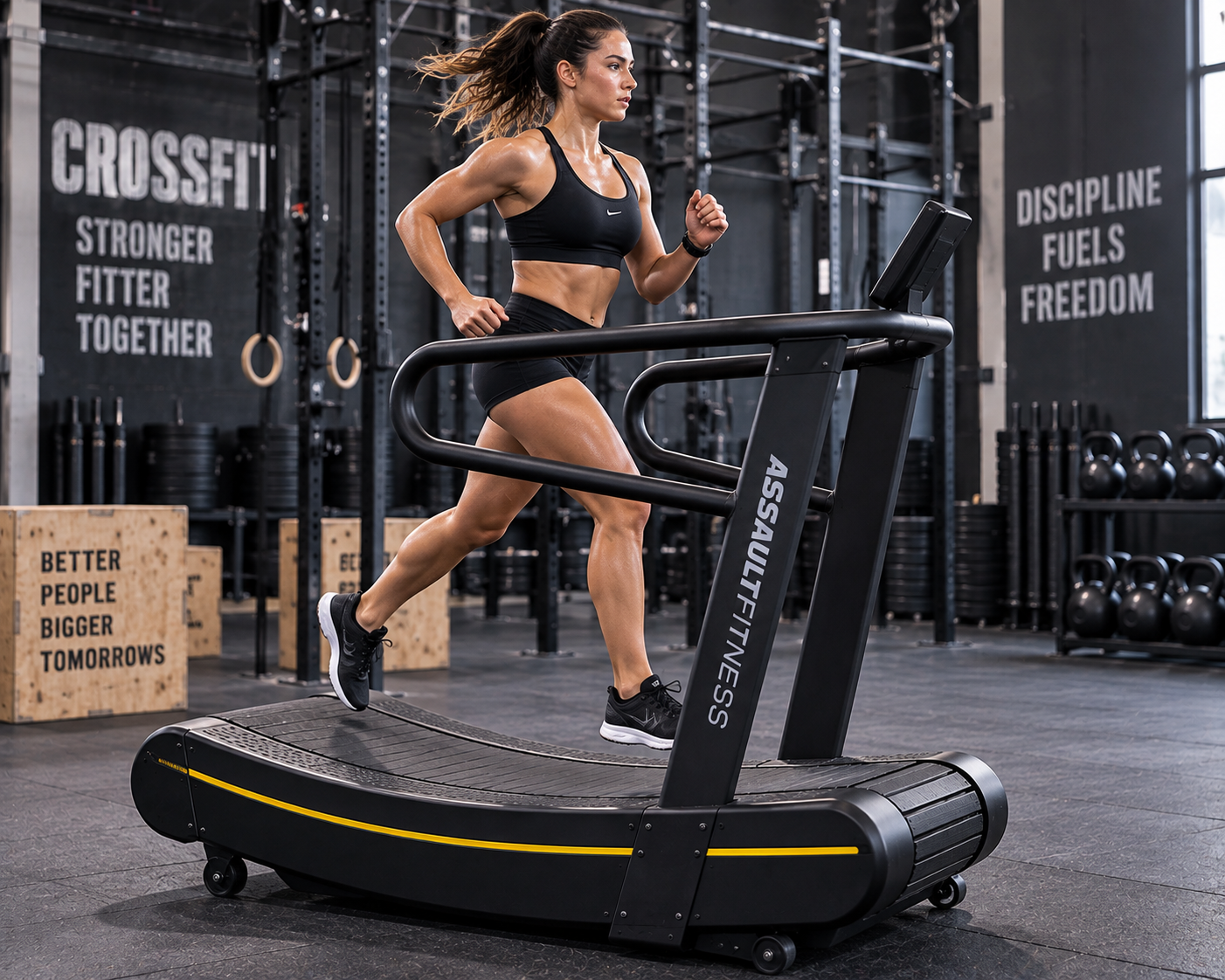
Curved Treadmill Safety: Technical Adaptation, Mounting, and Dismounting
Using a curved treadmill requires a period of technical adaptation because the machine's operation differs from that of a motorized treadmill. The belt movement is directly generated by the user's running, making control of the technical gesture, body position, and correct mounting and dismounting procedures essential.
Safe use depends not only on the quality of the machine but also on compliance with the manufacturer's instructions, user preparation, and pre-use equipment checks. A gradual progression facilitates learning the technique and helps reduce the most common errors.
This guide illustrates the main safety checks, recommended procedures for adapting to the curved treadmill, aspects to verify before use, and the most frequent errors to avoid during mounting, running, and dismounting.
- Quick response
- What are the main safety aspects
- How to approach technical adaptation
- How to mount and dismount correctly
- Pre-use checks
- Maintenance and periodic checks
- Errors to avoid
- Why safety protects your investment
How to use a curved treadmill safely?
Safety depends on a gradual progression, compliance with the manufacturer's instructions, and pre-use equipment checks. Before starting, it is advisable to check the stability of the machine, understand the belt's operating principle, and devote the necessary time to technical adaptation.
Each session should begin with a familiarization phase that allows you to gain confidence in your movements before increasing intensity and speed.
Following a consistent procedure facilitates the correct use of the machine and contributes to operational continuity in sports facilities.
What is the first step?
Read the manufacturer's manual and verify that the treadmill is installed and ready for use according to the provided instructions.
Why is it important to proceed gradually?
An adaptation period allows you to become familiar with the behavior of the belt and the required running technique.
What are the main safety aspects?
Operating the curved treadmill requires attention during the first sessions because the belt's movement depends directly on the user.
The curvature, the running surface, and the resistance system should be used as indicated in the manufacturer's technical documentation.
Consistent use with the machine's intended purpose helps maintain proper operating conditions.
Why understand how it works?
Understanding the operating principle helps you better manage the initial phases of your workout.
Why respect the intended use?
Each machine is designed for specific modes of use that should be followed during training.
How to approach technical adaptation?
Learning should begin with controlled gaits, progressively increasing the intensity and duration of sessions only after gaining confidence in managing the machine.
During this phase, it is useful to focus on the quality of movement and running continuity, avoiding sudden accelerations until the technical gesture feels natural.
Activities such as sprinting or technical running should only be introduced once the user has completed the adaptation phase outlined in their training program.
Why increase the load gradually?
A controlled progression facilitates learning the technique and improves running management on the curved treadmill.
When is supervision useful?
During the first sessions, the support of a qualified instructor can facilitate learning the correct methods of use.
How to correctly mount and dismount the curved treadmill?
Mounting and dismounting operations should be performed calmly, following the instructions in the machine's manual and always maintaining control of the movement.
It is advisable to avoid sudden rhythm changes in the initial phases and to conclude the run progressively before stepping off the treadmill.
A consistent procedure reduces errors and helps improve safety during every use.
What is the mounting procedure?
Before starting, verify that the surrounding area is clear and follow the operating procedures indicated by the manufacturer.
How to end the session?
Gradually reduce your pace and complete the dismounting only after regaining full control of your movement.
What checks should be performed before use?
Each session should be preceded by a visual check of the machine and the surrounding environment.
It is advisable to check the stability of the structure, the general condition of the running surface, the absence of visibly damaged components, and the availability of the necessary operating space.
To create a dedicated conditioning area, you can integrate the treadmill with other professional cardio machines while maintaining uniform control procedures for all equipment.
Why check the available space?
A clear area around the machine facilitates use, access, and emergency management.
How much does flooring matter?
A stable surface that complies with the manufacturer's instructions contributes to the correct positioning of the machine.
Why are maintenance and checks important?
Scheduled maintenance keeps the treadmill efficient and available over time.
Checks should follow the maintenance plan indicated by the manufacturer and include inspections of the components most subject to wear.
Recording interventions facilitates equipment management and the planning of maintenance activities.
How to organize maintenance?
Following the schedule provided by the manufacturer and documenting each intervention represents a good management practice.
Why check spare parts and assistance?
The availability of components and technical support contributes to the operational continuity of the machine.
What errors are best avoided?
One of the most common errors is attempting high-intensity workouts without having completed the technical adaptation period.
It is also advisable to avoid neglecting preliminary checks, using the machine in a manner inconsistent with its intended purpose, or ignoring the instructions in the official documentation.
Inadequate design of the surrounding space can also affect the overall safety of the training area.
Why avoid rushing the learning process?
Gradually becoming familiar with the machine allows you to develop a more controlled technique.
Why not skip initial checks?
Preventive checks help identify any anomalies before use.
Why does safety also protect your investment?
Correct use of the curved treadmill, accompanied by periodic checks and scheduled maintenance, helps maintain the reliability and operational continuity of the equipment.
Following the manufacturer's instructions, planning maintenance, and favoring a gradual technical adaptation allows you to maximize the value of the machine throughout its entire life cycle.
Integrating safety procedures into the daily management of the cardio area is a useful choice both for users and for protecting the investment made by the facility.
How long does adaptation to a curved treadmill take?
The duration varies depending on the user's experience and the training program. It is advisable to proceed gradually following the instructions of the manufacturer and any instructor.
What is the most important check before use?
Verify that the machine is stable, correctly installed, free of visible anomalies, and ready for use in accordance with the manufacturer's technical documentation.
Comments (0)