
Trolley
You have no items in your shopping cart

 Budgets
 Dumbers
 Discs
Discs
 Benches
 Racks and Rigs
 Weights Holders
 Isotonic machines
 Calisthenics
 Cardio
 Kettlebells
 Flooring
 Gym Set
 Accessories
 Combat
 ARTI MARZIALI
 CONTAINER GYM
 Tug-Of-War
 Used Gym Equipment
 PILATES MACCHINARI
 GINNASTICA ARTISTICA
 CAMPI DA PADEL
 Prodotti in Pronta Consegna
 Informazioni
 IRONMAN
 Gift Card
- Donatif
- General information
- 0 I like it
- 8 Views
- 0 comments
- gym flooring, safety flooring, gym safety, shock-absorbing materials
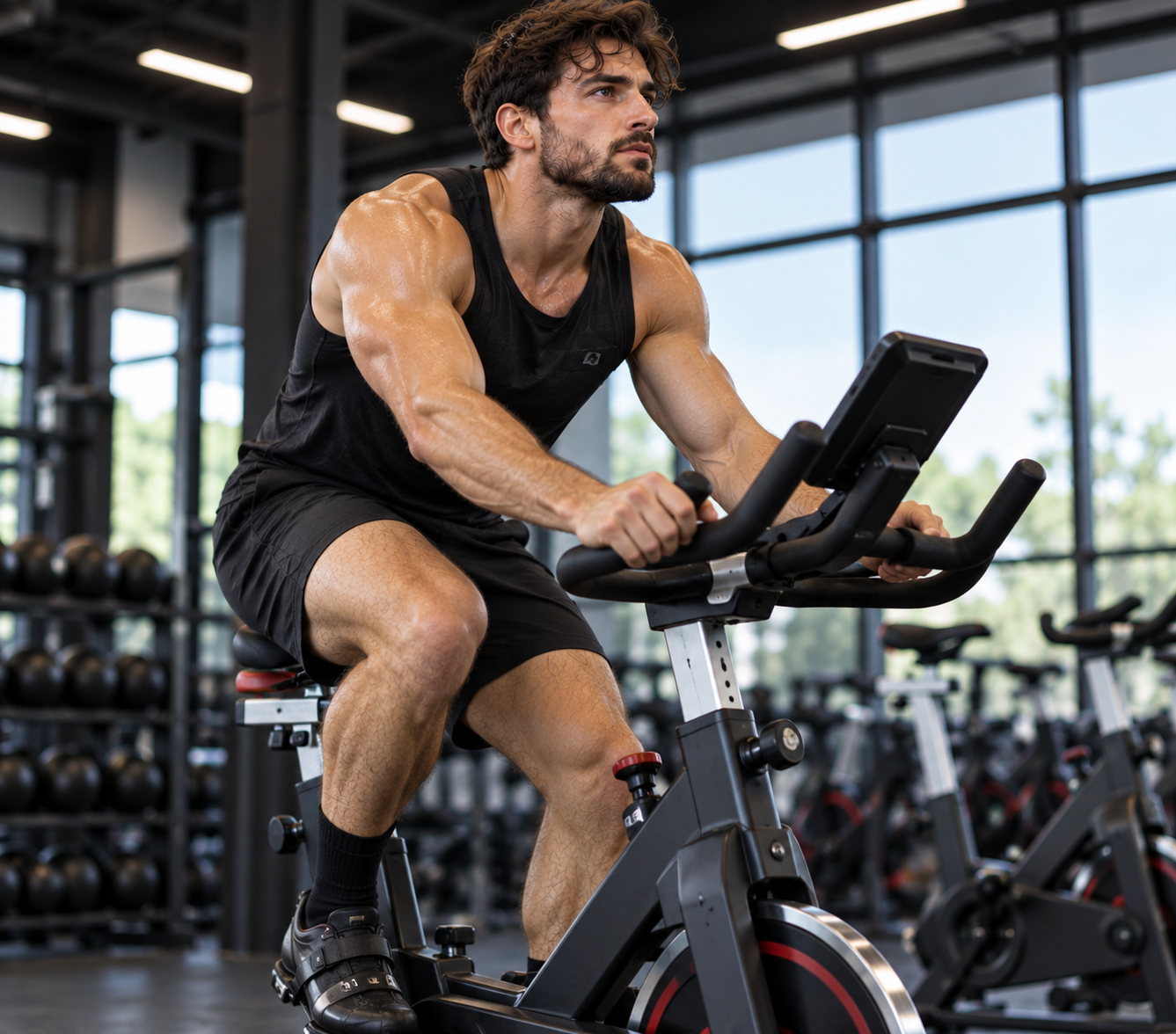
Indoor cycling safety: incorrect adjustment and excessive intensity
Indoor cycling is a discipline that allows cardiovascular workouts on stationary bikes with variable intensity. To practice it safely, it is essential to correctly adjust the bike before the class and adapt the effort level to one's own capabilities. The most frequent errors stem from an incorrect configuration of the position and an intensity higher than what the user is able to sustain with adequate technique.
Safety depends not only on the quality of the equipment but also on the preparation of the workstation, the progression of the workout, and compliance with the instructions provided by the bike manufacturer and the instructor when the activity is carried out in a group.
This guide illustrates the main risks, checks to be performed before the class, the most common errors, and practical procedures to reduce criticalities during indoor cycling. When applicable, it is appropriate to consult manuals, user instructions, and the manufacturer's technical documentation, which represent the primary sources for adjustments, maintenance, and correct use of the bikes.
- Why safety is important
- What the main risks are
- How to correctly adjust the bike
- How to manage intensity
- Checks before the workout
- Safety and maintenance
- Errors to avoid
- How to create a safe training environment
Why is safety in indoor cycling fundamental?
Indoor cycling involves variations in rhythm, position, and resistance that require a correctly adjusted bike and controlled execution of movements.
An inadequate configuration or an excessive increase in intensity can compromise comfort, workout continuity, and pedaling quality.
The preparation of the workstation therefore constitutes the first step before starting any session, whether in a group class or during an individual workout.
Properly preparing the bike
Every user should dedicate a few minutes to adjusting the bike following the manufacturer's and instructor's directions before the start of the class.
Workout progression
Intensity should increase progressively as a function of experience, programming, and the ability to maintain correct technique.
What are the main risks?
The most frequent criticalities concern incorrect position adjustments, inappropriately set resistance, and overly rapid progressions.
Failure to check the bike before the class can also favor inconveniences related to adjustment systems or components subject to wear.
A preventative check reduces the risk of interrupting the workout for easily identifiable problems.
Incorrect adjustment
A position not adapted to the user can make pedaling less efficient and compromise comfort during the session.
Excessive intensity
Rapidly increasing resistance or workout duration without adequate progression can make it difficult to maintain stable technique.
How to correctly adjust the bike?
Before the workout, it is necessary to adapt the saddle and handlebars to the user's characteristics using exclusively the adjustment systems provided by the manufacturer.
Each adjustment must be completed by verifying the correct locking of the mechanisms before starting to pedal.
Configuration methods may vary between different models and must always follow what is reported in the bike manual.
Saddle adjustment
The position of the saddle must allow for fluid and natural pedaling according to the bike manufacturer's directions.
Handlebar adjustment
The handlebars must be positioned so as to allow a stable grip without resorting to improvised or unforeseen adjustments.
How to correctly manage intensity?
Workout intensity should be adapted to the user's capabilities and increased progressively over time.
During the class, it is preferable to maintain control of the movement rather than chasing resistance levels superior to one's own possibilities.
A gradual progression allows for consolidating technique and improving workout continuity.
Load progression
Gradually increasing resistance, duration, and workout complexity allows one to adapt progressively to the demands of the discipline.
When to reduce intensity
If technique deteriorates or it is no longer possible to maintain control of the pedaling, it is appropriate to decrease resistance and re-establish a stable position.
What checks to perform before the workout?
A simple verification procedure reduces the risk of problems during the session.
Checks should include bike adjustments, correct locking of mobile systems, cleaning of the workstation, and verification of the general state of the equipment.
In professional facilities, it is useful to adopt a standardized procedure before the start of every class.
Safety checklist
1. Check the locking of the saddle and handlebars.
2. Verify the stability of the bike.
3. Check the correct functioning of the resistance adjustment system.
4. Ascertain that the area around the bike is clear.
5. Verify the general state of the workstation.
Instructor's role
In collective classes, the instructor can verify that initial adjustments have been made correctly before the start of the session.
What maintenance aspects affect safety?
A frequently used bike requires scheduled checks of parts subject to wear, adjustment systems, and transmission according to the manufacturer's provisions.
Preventive maintenance contributes to maintaining efficiency and operational continuity over time.
Regular cleaning of surfaces also improves comfort and equipment durability.
Periodic checks
Verifications must follow the maintenance schedule indicated in the bike's technical documentation.
Technical documentation
Manuals and official instructions constitute the main reference for correct adjustments, maintenance, and safe use of the equipment.
What errors is it appropriate to avoid?
One of the most frequent errors consists of rapidly modifying adjustments without verifying their correct locking.
Another criticality concerns increasing resistance to follow the pace of the class while sacrificing pedaling quality.
It is also appropriate to avoid unauthorized modifications to the bike or the use of accessories not compatible with the installed model.
Ignoring the correct position
Skipping the initial adjustment phase can compromise comfort and make the entire workout session less effective.
Seeking intensity instead of control
A stable technique represents a more reliable criterion than just the resistance set during pedaling.
How to create a safer indoor cycling environment?
Safety stems from the combination of properly maintained bikes, appropriate adjustments, workout progression, and effective room organization. A well-designed environment facilitates the work of instructors and allows users to focus on pedaling quality.
To explore solutions dedicated to cardiovascular training, it is possible to consult the cardio machines category, useful for comparing different types of equipment destined for fitness areas.
Before use, it is advisable to consult manuals, technical data sheets, and the bike manufacturer's instructions, which represent primary sources for adjustments, maintenance, configuration, and limits of use. An approach based on systematic checks and verifiable criteria allows for reducing the most common errors, improving safety and workout continuity without relying exclusively on personal experience.
FAQ: is it necessary to adjust the bike at every class?
Yes. Every user should verify and adapt the saddle and handlebars before starting the session, following the manufacturer's and instructor's directions.
FAQ: is it correct to always increase resistance during the class?
No. Resistance should be adapted to one's own capabilities and workout objectives, always maintaining controlled technique and following the directions provided during the session.
Comments (0)