
Trolley
You have no items in your shopping cart

 Budgets
 Dumbers
 Discs
Discs
 Benches
 Racks and Rigs
 Weights Holders
 Isotonic machines
 Calisthenics
 Cardio
 Kettlebells
 Flooring
 Gym Set
 Accessories
 Combat
 ARTI MARZIALI
 CONTAINER GYM
 Tug-Of-War
 Used Gym Equipment
 PILATES MACCHINARI
 GINNASTICA ARTISTICA
 CAMPI DA PADEL
 Prodotti in Pronta Consegna
 Informazioni
 IRONMAN
 Gift Card
- Donatif
- General information
- 0 I like it
- 12 Views
- 0 comments
- gym flooring, safety flooring, gym safety, shock-absorbing materials
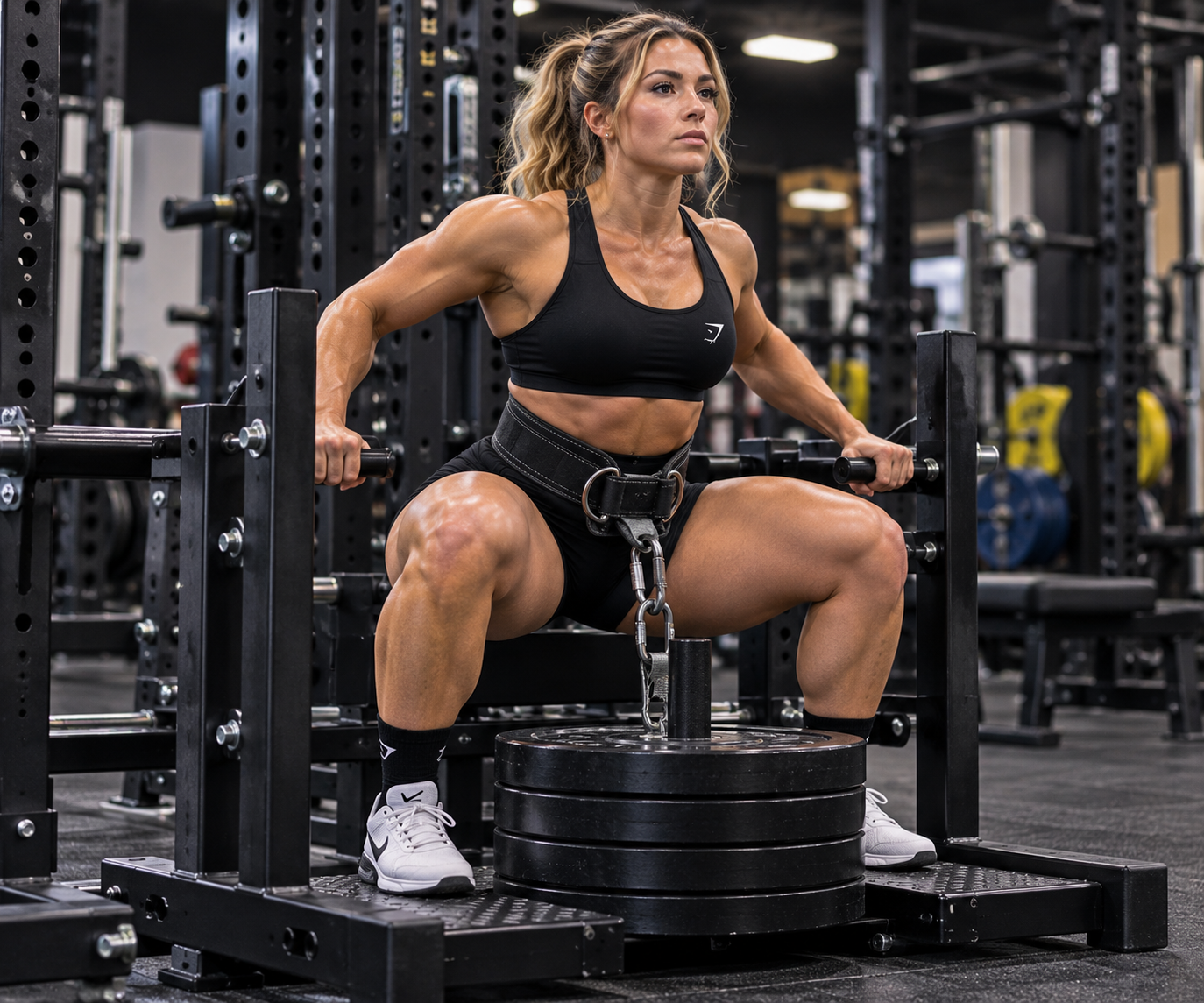
Belt squat for powerlifting: requirements and use
The belt squat is a machine that can be included in powerlifting preparation as a complementary exercise to barbell squat training. It does not replace the lifts of the discipline, but represents a solution that allows expanding strength programming through a different method of load application.
In powerlifting, each accessory exercise should be chosen according to the objectives of the technical programming. For this reason, the belt squat must be evaluated considering the build quality of the machine, adjustment possibilities, movement fluidity, and compatibility with the work done in sessions dedicated to the three lifts.
Understanding requirements and usage methods allows athletes, coaches, and gym managers to integrate this machine coherently, avoiding considering it as a direct alternative to the barbell squat or as a valid solution for any context.
- Quick answer
- What role does the belt squat play in powerlifting
- How to use the belt squat
- What requirements to evaluate
- How to include it in the programming
- Errors to avoid and safety
- How to evaluate the investment
How to use the belt squat in powerlifting
In powerlifting, the belt squat can be used as a complementary exercise to develop lower limb work within the programming. The choice of the machine should be based on build quality, loading system, available adjustments, and compatibility with the athlete's technical objectives, always maintaining correct execution of the movement.
The machine does not replace the exercises of the discipline, but can help make preparation more varied when included within a structured plan.
Before increasing the load, it is advisable to become familiar with adjustments, the belt, and the movement system by following the manufacturer's instructions.
Decision criteria
The main criteria concern the lever or cable system, structure quality, platform stability, movement fluidity, ease of adjustment, and the ability to adapt the machine to programming needs.
Technical references
For correct use, it is appropriate to consult the manufacturer's manual and follow the instructions regarding installation, maintenance, and adjustment. For fitness equipment, EN ISO 20957 series standards can also represent a reference when applicable.
What role does the belt squat play in powerlifting
In the context of powerlifting, the belt squat is generally used as a complementary exercise integrated alongside the main lifts of the discipline. The machine allows performing a motor pattern attributable to the squat using a different loading system compared to the barbell.
Its presence in the programming depends on the athlete's objectives, the phase of preparation, and the coach's preferences. Some programs may include regular use, while others may exclusively favor barbell exercises.
The choice should always stem from a technical evaluation rather than the simple availability of the machine.
Complementary exercise
The belt squat is generally considered an accessory exercise to be integrated into preparation when it is consistent with the program's objectives.
Context of use
It can be used in centers dedicated to strength preparation, commercial gyms, and weight rooms that have specific equipment.
How to use the belt squat
Before the exercise, it is necessary to correctly adjust the belt, check the attachment system, and prepare the load foreseen by the programming. Every adjustment should be made following the manufacturer's instructions.
During the movement, it is important to maintain control of execution, continuity of the range of motion, and stability of the footing on the platform. A gradual progression of the load allows developing familiarity with the machine while maintaining consistent technique.
At the end of the set, it is good practice to unload the machine, check the correct repositioning of accessories, and leave the area ready for the next user.
Initial adjustment
A correctly positioned belt and a checked connection system before training contribute to more stable use of the machine.
Movement execution
The movement should be fluid and controlled, avoiding sudden accelerations or variations in technique during the set.
What requirements to evaluate
When choosing the machine, it is useful to consider structural robustness, material quality, simplicity of maintenance, and spare parts availability. A machine designed for professional use should maintain consistent characteristics even in the presence of frequent use.
The possibility of easily adjusting the belt, loading system, and operating position is also an important element to adapt the machine to users with different characteristics.
Before purchasing, it is advisable to compare multiple models using the same technical parameters rather than limiting to economic evaluation alone.
Build quality
Robust materials and a stable structure favor continuity of use and reduce the need for extraordinary interventions.
Maintenance
An easily inspectable machine simplifies periodic checks of cables, pins, and connection systems.
How to include it in the programming
The inclusion of the belt squat should be planned according to the preparation period and overall training volume. The machine can be used as a complementary exercise within sessions dedicated to lower limb strength.
The frequency of use depends on the programming developed by the coach and the athlete's objectives. It is preferable to avoid sudden increases in training volume without consistent progression.
A balanced planning allows integrating the machine while maintaining continuity with the rest of the training program.
Volume management
The working volume should be consistent with the rest of the preparation, avoiding unplanned overlaps.
Load progression
The increase in load should follow a gradual progression while keeping execution quality constant.
Errors to avoid and safety
One of the most common errors consists in considering the belt squat a direct substitute for the barbell squat without evaluating the different functioning of the machine and its role in programming.
It is also appropriate to avoid approximate adjustments of the belt, overly rapid increases in load, and insufficient maintenance of mechanical components.
The quality of the installation area also contributes to overall safety. An anti-shock flooring helps protect the floor and equipment during use. To explore available solutions, you can consult gym anti-shock flooring.
Inconsistent programming
Integrating the machine without technical planning can reduce the overall effectiveness of the training.
Neglected adjustments
Always checking the belt, attachment system, and moving components before use helps improve safety and operational continuity.
How to evaluate the investment
For a gym oriented towards strength preparation, the belt squat can represent complementary equipment capable of expanding the training possibilities offered to users.
The choice should consider build quality, simplicity of maintenance, space availability, compatibility with the rest of the equipment, and expected frequency of use.
Analyzing the technical specifications of the machine, correctly organizing the installation area, and including it in coherent programming allows exploiting its characteristics effectively and in compliance with the objectives of powerlifting preparation.
Comments (0)