
Trolley
You have no items in your shopping cart

 Budgets
 Dumbers
 Discs
Discs
 Benches
 Racks and Rigs
 Weights Holders
 Isotonic machines
 Calisthenics
 Cardio
 Kettlebells
 Flooring
 Gym Set
 Accessories
 Combat
 ARTI MARZIALI
 CONTAINER GYM
 Tug-Of-War
 Used Gym Equipment
 PILATES MACCHINARI
 GINNASTICA ARTISTICA
 CAMPI DA PADEL
 Prodotti in Pronta Consegna
 Informazioni
 IRONMAN
 Gift Card
- Donatif
- General information
- 0 I like it
- 714 Views
- 0 comments
- gym flooring, safety flooring, gym safety, shock-absorbing materials
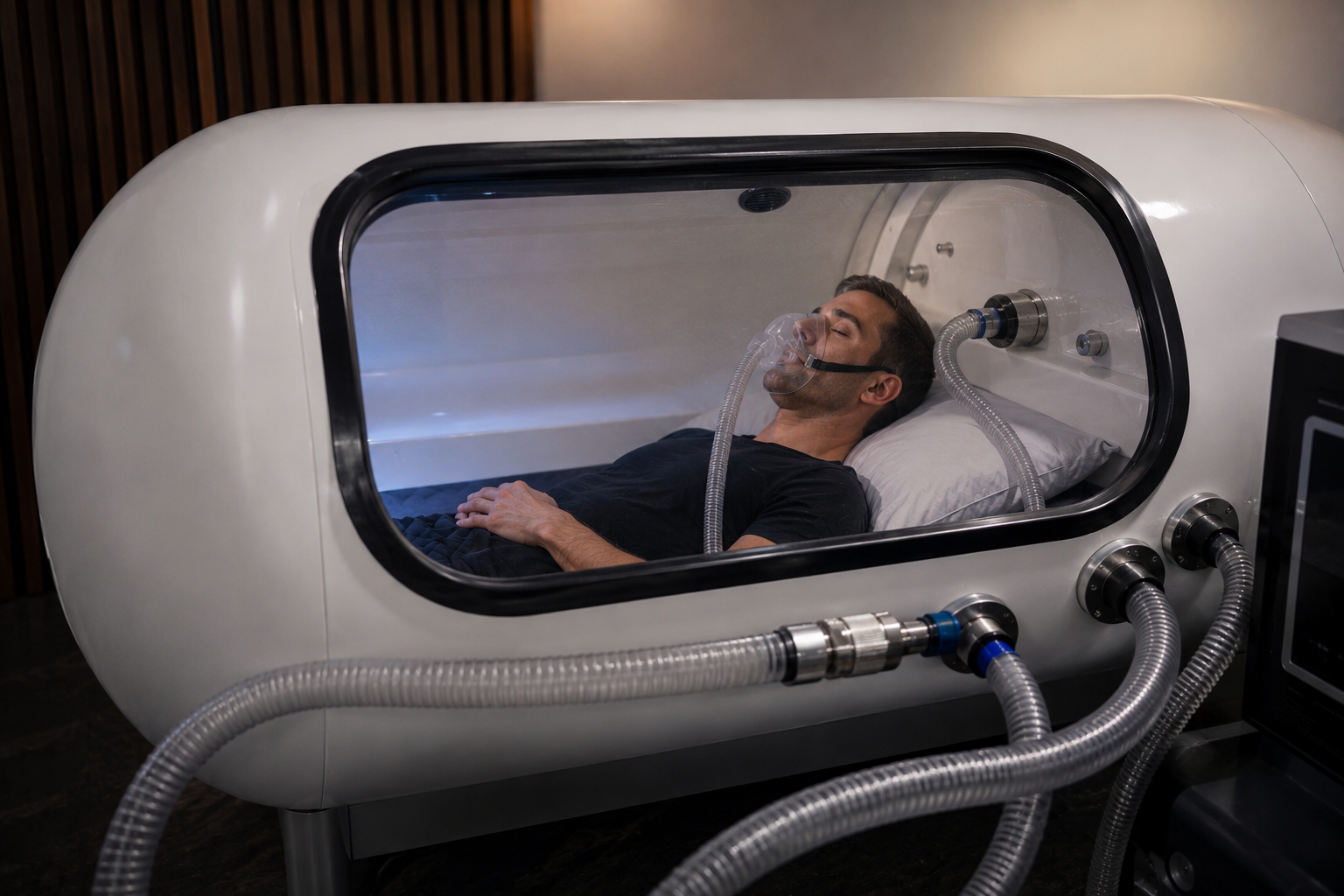
Hoses and Fittings for Hypoxic Systems: optimizing flow for maximum performance
In a professional hypoxic system, the generator is certainly one of the most important elements, but the quality of the entire installation also depends on less visible components that play a fundamental role in air transfer. Hoses, fittings, and connection systems determine how the flow is distributed within the hypoxic chamber or tent.
A correctly designed system must not only produce air with the desired oxygen concentration, but must also be able to transport it efficiently, stably, and quietly to the point of use. Pressure drops, non-optimal connections, or incompatible components can reduce the overall performance of the system and compromise the user experience.
The choice of hypoxic chamber installation accessories therefore requires a technical approach. Adequate piping, reliable fittings, and systems dedicated to noise management allow for the creation of a more efficient, organized environment that is also suitable for advanced home installations such as sophisticated home gyms.
Role of hoses and fittings in hypoxic systems
Within a hypoxic configuration, piping and fittings represent the physical connection between the generator and the environment in which the modified air is used. This path must be designed to keep the flow stable and minimize leaks or inefficiencies.
Many performance problems do not necessarily stem from the generator, but from the quality of the overall installation. A system with inadequate components may require the generator to work harder to reach the desired conditions, increasing consumption and reducing the stability of the result.
For this reason, connection components must be considered an integral part of the project and not just secondary accessories. The correct choice of materials and dimensions allows for the enhancement of the entire system's performance.
Hidden but essential components
Hoses and fittings are not normally the most visible elements of a hypoxic system, but they perform an indispensable function. All the airflow that makes the technology work passes through these components.
Their quality directly influences the reliability, durability, and ease of maintenance of the installation.
Connection between generator and chamber
The connection between the generator and the hypoxic chamber must ensure continuity and precision. Each connection point represents a potential area where leaks or efficiency reductions can occur.
Accurate design allows the system to remain stable even during prolonged use.
Pressure drops and flow efficiency
One of the most important aspects in the design of piping is the management of pressure drops. Every bend, restriction, or connection influences the movement of air and can modify the efficiency of the system.
Excessive pressure loss forces the generator to work in less than optimal conditions and can slow down the achievement of set parameters. In a professional hypoxic environment, where flow stability is fundamental, this aspect takes on great importance.
The correct choice of components instead allows for more efficient air transfer and a faster system response.
Piping sizing
The diameter and length of the hoses must be evaluated in relation to the generator's power and the system configuration. Piping that is too small can create excessive resistance to airflow.
Correct sizing improves overall performance and reduces stress on the main components.
Generator efficiency and consumption
When the flow is managed correctly, the generator can work more efficiently. This contributes to reducing energy waste and maintaining more constant performance.
The installation therefore becomes an important element from an economic point of view as well.
Choosing hoses for hypoxia generators
The hoses used in a hypoxic system must meet specific technical requirements related to flexibility, resistance, and the ability to maintain the intended flow. Not all materials are suitable for this type of application.
Hoses for hypoxia generators must ensure a reliable connection between the equipment and the controlled environment, maintaining their operational characteristics over time.
The choice must also consider the installation context. A home solution may require more attention to space management, while a professional system might prioritize more permanent configurations.
Hose materials and flexibility
A quality hose must combine robustness and ease of installation. Flexibility allows the path to be adapted to the characteristics of the environment without creating kinks that hinder the flow.
The resistance of the materials contributes to durability over time and a reduction in replacement interventions.
Reducing leaks
Correctly installed piping limits leaks and keeps the system more stable. Even small problems in the connections can influence general performance.
For this reason, it is important to use components designed to work together.
Fittings and connectors for professional installations
Fittings represent the junction points between the different parts of the system. Their quality determines the safety of the connections and the ease with which the system can be installed or modified.
In a professional configuration, every fitting must ensure a stable connection without compromising airflow. Inadequate components can create leaks that are difficult to detect.
Choosing systems specifically designed for hypoxic applications improves reliability and practicality.
Advantages of quick connectors
Hypoxia quick connectors allow for the simplification of installation, maintenance, and daily system management. The ability to quickly connect and disconnect components facilitates technical interventions.
This feature is particularly useful for configurations that require periodic modifications or maintenance.
Connection safety
A reliable connection reduces the risk of leaks and ensures greater operational stability. The safety of the entire system also depends on the quality of the connection points.
For this reason, fittings must be chosen with professional criteria.
Noise management with hypoxia silencers
In addition to airflow, an important aspect in hypoxic systems concerns noise management. Generators and pneumatic components can produce vibrations and sounds that, particularly in home installations, must be controlled.
The integration of dedicated systems allows for the shifting or reduction of noise perception without compromising system performance.
Intelligent design therefore allows for a more comfortable environment while maintaining high technical efficiency.
Reducing generator noise
Hypoxia silencers can help attenuate the noise produced during system operation. This element is particularly important in sophisticated home gyms or shared environments.
The solution must be integrated correctly to avoid interference with the airflow.
Balance between silence and performance
A good installation must find the right balance between acoustic comfort and efficiency. Reducing noise should not mean limiting the system's capacity.
Adequate components allow both objectives to be achieved.
Correct installation of the hypoxic system
The quality of the components must be accompanied by a correctly executed installation. Even the best hoses and fittings can lose effectiveness if the assembly does not meet adequate technical criteria.
The design of the piping path, the positioning of the generator, and the management of connections influence the final result.
Correct installation allows for greater reliability and simplifies future maintenance.
Organizing the air path
The path followed by the air should be designed to avoid unnecessary obstacles and configurations that increase resistance. An orderly layout also improves space management.
This aspect is particularly important in home installations.
Component maintenance
Periodically checking hoses, fittings, and connections allows the system to remain efficient over time. Preventive maintenance reduces the risk of sudden problems.
Attention to detail protects the investment made.
Investing in component quality
In a professional hypoxic system, every component contributes to the final result. Hoses, fittings, and silencers may seem like secondary elements, but they determine the system's ability to work efficiently and reliably.
Choosing quality components means reducing the risk of performance loss, improving acoustic comfort, and achieving greater installation longevity. A well-designed configuration allows the generator to express its full potential.
For those building a sophisticated home gym or a professional hypoxic environment, taking care of the technical side represents a concrete advantage. The value of the system does not depend only on the main technology, but on the quality of every connection that allows the technology to function.
Avoiding performance loss
Accurate design reduces the risk of small technical problems compromising general operation. Every detail contributes to the stability of the system.
Prevention allows for high performance to be maintained over time.
Technical quality and installation convenience
Well-designed components also simplify daily system management. Installation, maintenance, and future modifications become simpler and safer.
Technical quality therefore becomes an element that improves both performance and the user experience.
Comments (0)