
Trolley
You have no items in your shopping cart

 Budgets
 Dumbers
 Discs
 Benches
 Racks and Rigs
 Weights Holders
 Isotonic machines
 Calisthenics
 Cardio
 Kettlebells
 Flooring
 Gym Set
 Accessories
 Combat
 ARTI MARZIALI
 CONTAINER GYM
 Tug-Of-War
 Used Gym Equipment
 PILATES MACCHINARI
 GINNASTICA ARTISTICA
 CAMPI DA PADEL
 Prodotti in Pronta Consegna
 Informazioni
 IRONMAN
 Gift Card
- Donatif
- General information
- 0 I like it
- 49 Views
- 0 comments
- gym flooring, safety flooring, gym safety, shock-absorbing materials
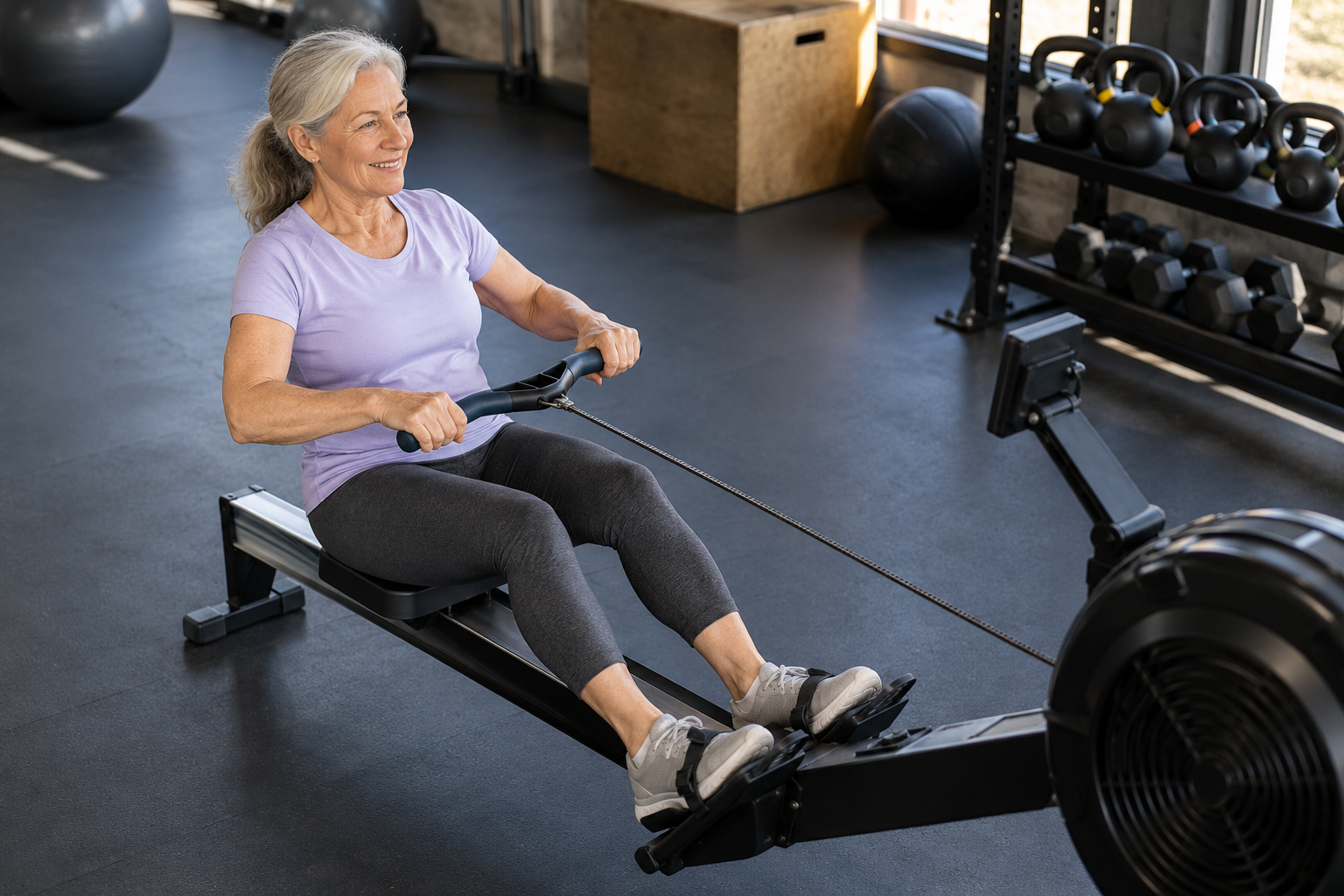
Training Equipment for Older Adults: Access, Adjustment and Control
Training equipment for older adults should reflect abilities and context, not age alone. People of the same age can have very different experience, independence and goals. A product labelled simple or dedicated is not automatically suitable for everyone.
Compare entering, adjusting, moving and finishing. Stability, understandable controls and assistance matter alongside resistance type. The environment contributes: suitable equipment may be difficult to use with poorly organised access.
This guide offers selection criteria rather than clinical exercise prescriptions. Health needs and specific limitations require qualified assessment and appropriate programming. Connect person, activity and product without universal safety promises.
- Which needs should selection begin with?
- Which strength-equipment features matter?
- How should cardio equipment be compared?
- How should balance work be considered?
- How can controls and adjustments become understandable?
- How should the training area be organised?
- Which inspections and maintenance are needed?
- How can continued suitability be assessed?
Which needs should selection begin with?
Define the task and planned assistance. Consider experience, room familiarity, control comprehension and access to position. Do not derive everything from age or a label. Experienced users and beginners differ even when peers. Gather relevant information with the support team and distinguish gym observations from matters needing other expertise. Equipment serves the programme rather than replacing individual assessment with a senior-friendly promise.
Understandable goals
Clarify learning, strength, cardiovascular activity or balance. These are not interchangeable because offered to one person. Define observable criteria and adjustments. Clarity supports user, instructor and manager communication. Avoid goals defined only as more fatigue or prestigious equipment. Explain activity and conditions rather than treating a product category as a universal prescription.
Which strength-equipment features matter?
Examine access, support, adjustments and starting resistance. Guided motion still needs compatibility with the person. A constrained path is not automatically appropriate. Seats and supports should allow positioning without unintended extra effort. Check increments: starting load and the next step need to fit the programme. A high maximum capacity does not establish usefulness for someone working with different demands.
Free weights and support
Dumbbells and other tools require grip, placement and return management. They are neither automatically excluded nor universally preferable. Support should be stable and intended, not a convenient movable object. Benches and seats must suit the task. Compare the whole action, including collecting and storing weights. Controlled repetitions do not solve unmanageable entry or finishing.
How should cardio equipment be compared?
Observe entry, seat or supports, resistance adjustment and stopping. Bikes, reclined models, treadmills and other devices have distinct tasks. Seating can simplify some aspects without guaranteeing individual suitability. Position should be reachable and adjustable comfortably. Controls must remain understandable during use. Programme quantity alone is not the criterion. Essential functions and transitions may matter more than console complexity.
A supported trial
Where appropriate, assess through a suitable assisted trial without immediately seeking intensity. Observe entry, understanding, starting and finishing. Difficulty may arise from product, setting or familiarity. Do not equate an uncertain first attempt with permanent inability, but do not force use to prove the model works. Specific needs belong within the appropriate support process. The criterion is understandable activity management rather than merely moving the machine.
How should balance work be considered?
Select tasks for ability and objective with suitable environment and assistance. An unstable surface is neither compulsory nor automatically a better progression. Support, movement and task changes can also adjust demand. Before choosing an accessory, define use and available reference points. Unpredictable difficulty is not proof of effectiveness. Training should permit learning and repetition rather than simply avoiding loss of support at any cost.
Supports and help
Any support must be stable and intended. Nearby furniture is not automatically suitable. Define the instructor's role and intervention space. Explain alternatives before difficulty appears. Adaptation can preserve the objective rather than require identical setups for everyone. Groups do not remove individual differences. When uncertain about a variation, select a controllable approach with the person overseeing training instead of relying on accessory labels.
How can controls and adjustments become understandable?
Assess readability, placement and operating sequence. Small text, unclear symbols and awkward reach complicate use. Observe actual users without assuming identical difficulties. Intuitive settings and consistent guidance help occasional visitors too. Multiple steps must be explainable and repeatable. Many functions may be less useful than clear daily operations. Prioritise understanding necessary tasks.
Learning a procedure
Demonstrate start, adjustment and ending according to the manual, then practise appropriately. A hurried explanation during effort is insufficient. Previous shared settings may need changes. Allow time and help. Instructions should not invent shortcuts bypassing required controls. Simplicity arises from equipment, explanation and environment, not only button count.
How should the training area be organised?
Routes, lighting, arrangement and order affect access. Keep movement paths clear and allow operating space, not only stationary footprint. Stored objects or crossing cables can undermine a suitable station. Provide control access and assistance without obstructing others. Specific accessibility or technical requirements need relevant assessment rather than an impression of sufficient space.
Group management
Group size, station availability and transitions must match attention needs. Simultaneous adjustments can create waiting and confusion. Organise explanation and adaptation without rushing. Managers need reporting and intervention responsibilities. Instructor presence does not automatically compensate for poor layout. Service quality connects people, routes and equipment, including preparation and finishing.
Which inspections and maintenance are needed?
Follow installation, inspection and care instructions. Observe accessible parts and address loose elements, damaged contact or settings that fail to hold. Do not improvise repairs to continue. Separate user observation and skilled intervention. Cleaning should suit material instructions rather than assuming one method fits everything. Simple equipment still needs maintenance to preserve characteristics.
Purchasing and support
Compare gym equipment through configuration, spares, assistance and service continuity. Initial price is not the full service. Suitable adjustments may still create downtime if repairs are difficult. Request model-specific documents and clear inclusions. Do not assign undeclared meanings to certifications or descriptions. Selection should be assessable against the project rather than a universal suitability promise.
How can continued suitability be assessed?
Observe understanding, task control and participation over time. Responses can change, requiring programme or setup adjustments. Weight lifted and time are not the only measures. More orderly access, fewer corrections and familiarity provide information. Those overseeing the person should interpret changes, especially new difficulties. Suitable selection needs ongoing review rather than one irreversible decision.
Adapt without stereotypes
Age informs context but does not replace the individual. Avoid both identical demands and automatic restrictions without reason. Persistent movement-changing pain or problems require stopping or adaptation and appropriate assessment. Explain goal, equipment and chosen modification. Quality management connects actual abilities, understandable tools and available support. This keeps focus on controlled activity rather than the age category printed in a catalogue.
Comments (0)