
Trolley
You have no items in your shopping cart

 Budgets
 Dumbers
 Discs
Discs
 Benches
 Racks and Rigs
 Weights Holders
 Isotonic machines
 Calisthenics
 Cardio
 Kettlebells
 Flooring
 Gym Set
 Accessories
 Combat
 ARTI MARZIALI
 CONTAINER GYM
 Tug-Of-War
 Used Gym Equipment
 PILATES MACCHINARI
 GINNASTICA ARTISTICA
 CAMPI DA PADEL
 Prodotti in Pronta Consegna
 Informazioni
 IRONMAN
 Gift Card
- Donatif
- General information
- 0 I like it
- 1 Views
- 0 comments
- gym flooring, safety flooring, gym safety, shock-absorbing materials
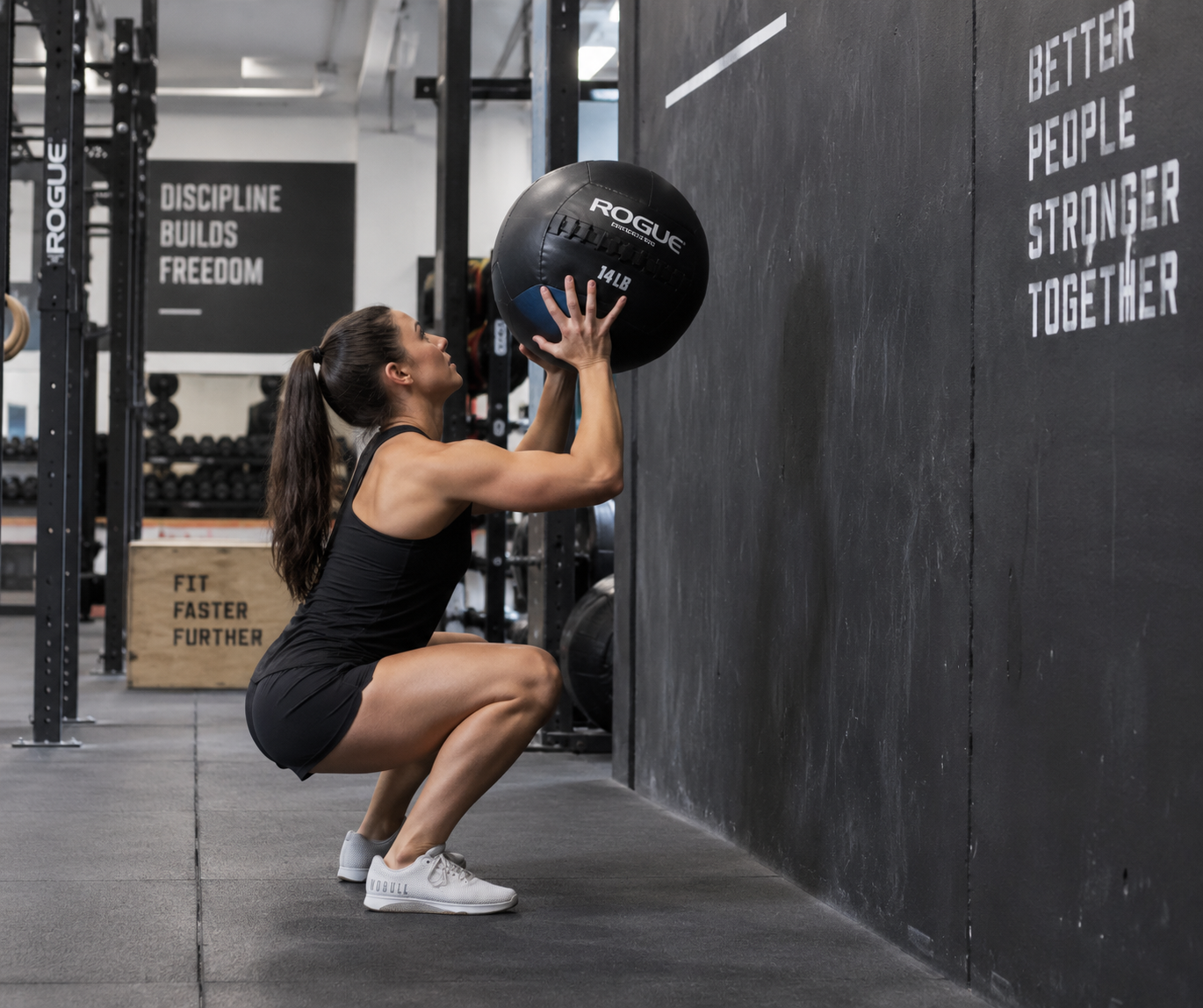
Wall ball in a professional gym: how to design a dedicated wall and target
Creating an area dedicated to the wall ball requires a design that takes into account the throwing wall, the target, the available space, and user safety. A correct setup makes training smoother, protects surfaces, and allows multiple stations to be managed simultaneously without interference.
Wall ball exercises involve repeated throws against a vertical surface and catching the ball after the rebound. For this reason, the quality of the wall, the position of the target, and the layout of the area directly affect the training experience and the durability of the structures.
This guide gathers the main criteria for designing a professional station dedicated to the wall ball, analyzing space requirements, wall configuration, safety, maintenance, and design errors to avoid.
- Quick answer
- What requirements the area must have
- How to organize space and layout
- How to design the wall and target
- Safety and maintenance
- Design errors to avoid
- FAQ
- How to evaluate the project over time
Quick answer
A professional station for the wall ball must include a stable wall, a clearly identifiable target, free space for the athlete's movement, and flooring compatible with training. Target height, materials, and configuration must always comply with the instructions of the equipment manufacturer and the structure used.
Accurate design improves gym organization and reduces the risk of interference between users.
Before installation, it is also useful to evaluate the intended use of the area and the expected intensity of the training sessions.
Why create a dedicated station
A specific zone for wall ball exercises makes it possible to keep the functional area tidy and limit the use of walls not designed for this purpose.
Designing with use in mind
The configuration should be defined considering the number of users, frequency of use, and type of workouts offered.
What requirements the area must have
The area designated for the wall ball should be easily accessible, free of obstacles, and organized to allow full movement during squats, throwing, and catching the ball.
The space must allow working without interference from other stations and without continuous crossings by other gym users.
The wall surface must also be uniform and kept in good condition to ensure predictable ball behavior during the rebound.
Dedicated work area
It is advisable to avoid the presence of racks, benches, or other equipment in the immediate vicinity of the throwing zone.
Path management
Passageways used by other users should remain separate from the area designated for wall ball exercises.
How to organize space and layout
The layout must allow the athlete to perform the full movement while maintaining an appropriate distance from the wall and other users.
When multiple stations are installed, it is useful to provide a distribution that reduces interference between the trajectories of the different balls.
Proper organization also facilitates the management of classes and group sessions.
Station distribution
Each area should allow ball retrieval without invading the space dedicated to other athletes.
Organizing storage
The balls should be stored in a dedicated area that does not obstruct access to the training wall.
How to design the wall and target
The wall designated for throws must be structurally suitable for the intended use, and the target must be clearly identifiable during the execution of exercises.
The height of the target should be defined according to the training program, any applicable regulations, and the instructions of the equipment manufacturer used, avoiding improvised references or poorly visible markings.
To complete the functional area, you can consult the section dedicated to gym accessories by choosing exclusively products compatible with the gym configuration.
Wall characteristics
The surface should be uniform, resistant, and kept in good condition to ensure regular ball behavior.
Target installation
The target must be easily recognizable and maintain consistent characteristics over time through regular checks.
How to ensure safety and maintenance
Before each session, it is advisable to verify that the wall, target, and work zone are free from damage or obstacles.
The sports flooring should also be kept clean and in good condition to promote stability during squats and ball retrieval.
Scheduled checks of the structure help preserve the functionality and safety of the station over time.
Preliminary checks
Make sure that the target, wall, and training area do not show anomalies before the activity begins.
Scheduled maintenance
Periodic inspections allow any signs of wear on the used surfaces to be identified promptly.
Design errors to avoid
One of the most frequent errors is using walls not designed for repeated throws or located in passageways.
Also, the lack of a dedicated space for ball retrieval can make training less efficient and less safe.
Neglecting the maintenance of the wall and target signage can compromise the quality of the experience in the long run.
Using an unsuitable wall
Before installation, it is advisable to verify that the structure is compatible with the intended type of use.
Neglecting the layout
An irrational distribution of stations increases the risk of interference during sessions with multiple users.
FAQ
Is it possible to use a normal gym wall?
It depends on the construction characteristics of the wall and the instructions of the structure's manufacturer or designer. Before use, its suitability should be verified.
Is a zone dedicated exclusively to the wall ball needed?
In facilities with frequent use, a dedicated station facilitates workout management and reduces interference with other gym activities.
How to evaluate the project over time
Accurate design makes it possible to improve organization, safety, and operational continuity of the functional area, reducing corrective interventions and facilitating routine maintenance.
During the investment evaluation, it is useful to consider wall quality, ease of maintenance, the possibility of reconfiguring stations, compatibility with different training programs, and the availability of spare parts or replaceable components.
When applicable, it is advisable to consult the equipment manufacturer's manual, the instructions of the support structure, and any references to relevant technical standards, always respecting the instructions regarding installation, use, and maintenance.
Elements to compare
Wall robustness, space organization, ease of maintenance, target visibility, and integration with the rest of the functional area represent the main evaluation criteria.
Designing with growth in mind
A modular configuration allows the area dedicated to the wall ball to be expanded and adapted over time to the evolution of training programs and the increase in the number of users.
Comments (0)