
Trolley
You have no items in your shopping cart

 Budgets
 Dumbers
 Discs
Discs
 Benches
 Racks and Rigs
 Weights Holders
 Isotonic machines
 Calisthenics
 Cardio
 Kettlebells
 Flooring
 Gym Set
 Accessories
 Combat
 ARTI MARZIALI
 CONTAINER GYM
 Tug-Of-War
 Used Gym Equipment
 PILATES MACCHINARI
 GINNASTICA ARTISTICA
 CAMPI DA PADEL
 Prodotti in Pronta Consegna
 Informazioni
 IRONMAN
 Gift Card
- Donatif
- General information
- 0 I like it
- 65 Views
- 0 comments
- gym flooring, safety flooring, gym safety, shock-absorbing materials
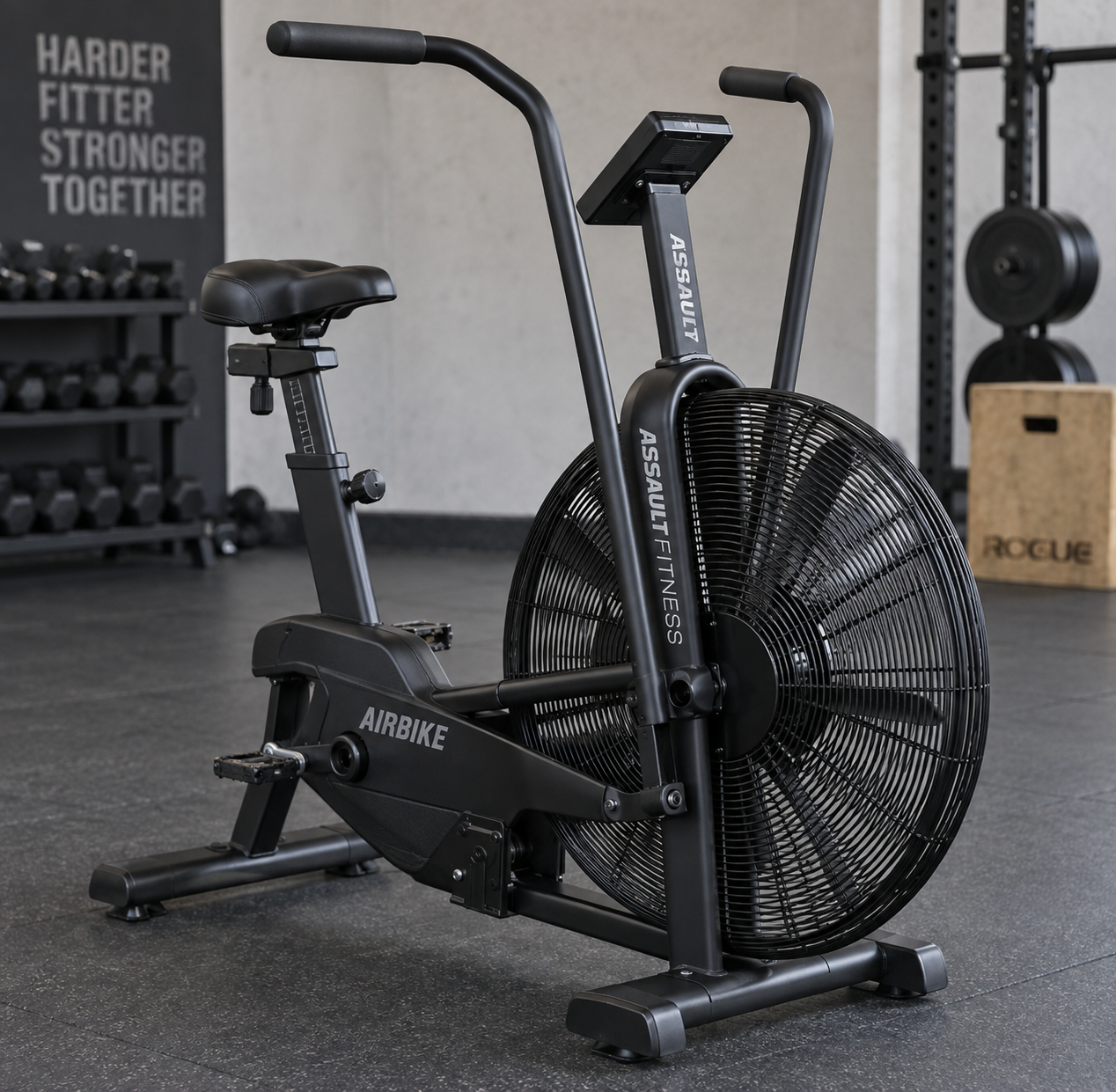
Air bike vs spin bike: which one to choose based on your goals
The air bike vs spin bike comparison involves two cardio machines designed for different needs. Although both allow for cardiovascular workouts, they differ in their resistance system, muscle engagement, usage method, and the context in which they offer the best results. The choice should therefore be based on training goals and the type of facility where they will be used.
The air bike is widely used in functional training boxes and gyms offering high-intensity circuits, while the spin bike is often used for indoor cycling workouts, continuous sessions, and group spinning classes. Understanding operational differences helps make a choice consistent with your training program.
Before purchasing, it is also advisable to evaluate build quality, ease of adjustments, expected maintenance, available space, and number of users. A complete analysis helps avoid investments that are unsuited to real needs.
- What are the main differences?
- How does an air bike work compared to a spin bike?
- Which one to choose based on goals?
- How much space do they require?
- What maintenance differences exist?
- How to use them safely?
- Mistakes to avoid in the choice
- How to evaluate the investment
What are the main differences?
The air bike uses a fan connected to the transmission to generate resistance that automatically increases with the intensity of the pedaling and arm movement. The spin bike instead uses a flywheel with a resistance adjustment system defined by the manufacturer and designed to simulate outdoor bicycle pedaling.
Another difference concerns body engagement. The air bike simultaneously engages upper and lower limbs through movable handles, while the spin bike focuses work primarily on pedaling.
These features make the two machines suitable for different training contexts rather than directly interchangeable.
Resistance system
The ways in which resistance is generated influence the feel of use, the progression of effort, and the type of workout that can be programmed.
Muscle engagement
The air bike involves a synchronized movement of arms and legs while the spin bike focuses the technical gesture mainly on the lower limbs.
How does an air bike work compared to a spin bike?
Understanding air bike: how it works and what it is for helps clearly distinguish the two pieces of equipment. In the air bike, resistance grows progressively as the intensity expressed by the user increases, without requiring continuous modifications during exercise.
In the spin bike, resistance adjustment is instead set through the system provided by the machine, allowing you to simulate different pedaling conditions according to the training program.
Both allow for cardiovascular workouts but respond to different usage logics.
Air bike usage
The air bike is frequently used for warm-ups, metabolic circuits, and interval training, thanks to the immediate response of the resistance.
Spin bike usage
The spin bike is often chosen for continuous workouts, specific drills dedicated to indoor cycling, and group classes.
Which one to choose based on goals?
Those who practice functional training or wish to integrate the machine into high-intensity workouts generally tend toward the air bike, while the spin bike finds a natural place in programs focused on pedaling.
For a commercial gym, the choice should consider the type of clientele, class programming, and the role the equipment will play within the overall offering.
In some facilities, the two machines are used complementarily to expand the training possibilities offered to users.
Functional training
The air bike easily integrates into circuits thanks to rapid transitions from one station to the next.
Cycling training
The spin bike represents a dedicated solution for programs where pedaling constitutes the main technical gesture.
How much space do they require?
Space evaluation should include not only the footprint of the machine but also the area needed to use it safely, make adjustments, and allow user traffic.
Before installation, it is advisable to check the dimensions listed in the manufacturer's technical documentation and prepare a layout that keeps main pathways clear.
To explore solutions dedicated to the cardio area, you can consult the cardio machines category.
Space organization
An orderly layout facilitates equipment usage and improves overall management of the cardio area.
Operational pathways
Passage areas should always remain free of obstacles and accessories.
What maintenance differences exist?
Both air bike and spin bike require scheduled checks, cleaning, and inspections of wear-and-tear parts. However, specific procedures depend on the transmission system and the construction characteristics of the individual machine.
It is advisable to strictly follow the maintenance schedule provided by the manufacturer, periodically checking fasteners, adjustments, and mechanical components.
Preventive maintenance helps maintain consistent performance and operational continuity.
Routine cleaning
Removing dust and debris preserves surfaces and facilitates periodic inspections.
Scheduled checks
Technical checks should be performed according to the intervals indicated in the machine's documentation.
How to use them safely?
Before training, it is advisable to check the stability, adjustments, and general condition of the machine, ensuring that all locking systems are properly engaged.
Each user should adjust the saddle and handlebars following the instructions in the manufacturer's manual and use the machine exclusively for its intended purpose.
Installation must also comply with the operational spaces indicated by the manufacturer to allow safe and easy use.
Initial adjustments
Adjustments should be completed before starting the workout by verifying the correct locking of the dedicated systems.
Pre-use check
A quick visual inspection allows you to identify any anomalies before using the machine.
What mistakes should be avoided?
One of the most common mistakes is considering the air bike and spin bike as equivalent machines without analyzing the type of workout you want to perform.
It is also advisable to avoid choosing solely based on price while neglecting build quality, maintenance, spare parts availability, and the real intended use.
Ignoring the space needed for installation or adjustment procedures can also make the equipment less effective and less safe to use.
Evaluating only the initial cost
Price represents only one of the criteria to consider when choosing the machine.
Neglecting the usage context
Number of users, training frequency, and facility type influence the choice just as much as technical characteristics.
How to evaluate the investment?
The air bike vs spin bike comparison should be approached by evaluating training goals, usage methods, expected maintenance, available space, and compatibility with the overall gym or home gym project. A coherent choice allows you to obtain equipment that is truly functional for your needs and easier to manage over time.
Before purchasing, it is advisable to consult the manufacturer's technical documentation to check dimensions, adjustment systems, installation requirements, and maintenance plans. For operational features and usage procedures, you should refer exclusively to the manuals of the specific machine, avoiding comparisons based solely on commercial data or declared performance without considering the context of use.
Comments (0)